
We experienced a special moment recently. We found ourselves in a room full of design professionals absolutely transfixed — so much so that a heavy sigh or buzz of an insect would have sounded like a tsunami of sound crashing the room’s collective daydream. Captivated doesn’t cut it and now, months later, it’s hard to describe the inspiration-inducing presentation we witnessed from Stacilyn Feldman, Principal at the renowned landscape architecture firm Oehme van Sweden.
When we say the room had tunnel vision for Stacilyn’s perspective, we truly mean it. We were among the many scrounging for a nearby notebook to jot down Feldman’s illustrative — yet approachable — insights into the New American Garden.
From seasonal installations to planting annual gardens on projects ranging from Tippet Rise in Fishtail, Montana to the Federal Reserve Campus in Washington, DC, Stacilyn’s robust project portfolio and contributions to her practice are profound. It’s clear to us that Stacilyn is the landscape architect powerhouse we’ve been craving to learn from.
We’re honored that Stacilyn Feldman agreed to sit down with us and share her favorite tools and tips she’s cultivated through the years in her field. When we launched this column we had no idea how critical duck boots could be to the creative process but Stacilyn has proved their prowess as an agent of agility.
Kathryn Sanders & Leana Becker: What tool changed the way you practice your craft?
Stacilyn Feldman: 3D modeling has evolved our design work and detailing in a way I could have never imagined. The precision of developing an interfacing detail with a collaborator has been elevated to a new dimension thanks to tools like Revit.
KS & LB: What are three tools you can’t live without?
SF: Pilot Razor point pens: I’m a pen snob and while it’s a simple, common pen, it’s my ride or die. I keep the old ones that have gotten thicker points and the new ones that have the fine points and I have them arranged in this very specific system that only I understand. While sketching anything I tool around between the different widths and enjoy it immensely. No matter how much technology advances, an actual sketch will always be how I develop my designs and details.
My iPhone: Cliché as it may be, it quickly captures moments of inspiration, snapshots of historic details, and keeps me on top of deadlines and meetings. I love staying in touch with other designers on social media and enjoy rapid-fire texting with friends and family.
Caffeine: As a mother of two young children, I thrive on the energy they bring into my world, but sometimes that extra boost makes my day so much better!
KS & LB: If you could recommend one tool to other artists/designers, what would it be?
SF: Call me old-fashioned, but a pen and paper! Technology can be an incredible tool, but nothing speaks like a hand drawing. Being able to communicate your thoughts in front of a client or quickly sketch out an idea to a collaborator. At the end of a project, I love going back through the sketches to see how things evolved and storing ideas for future projects.
KS & LB: Do you have any tools that you can’t leave home (or studio) without?
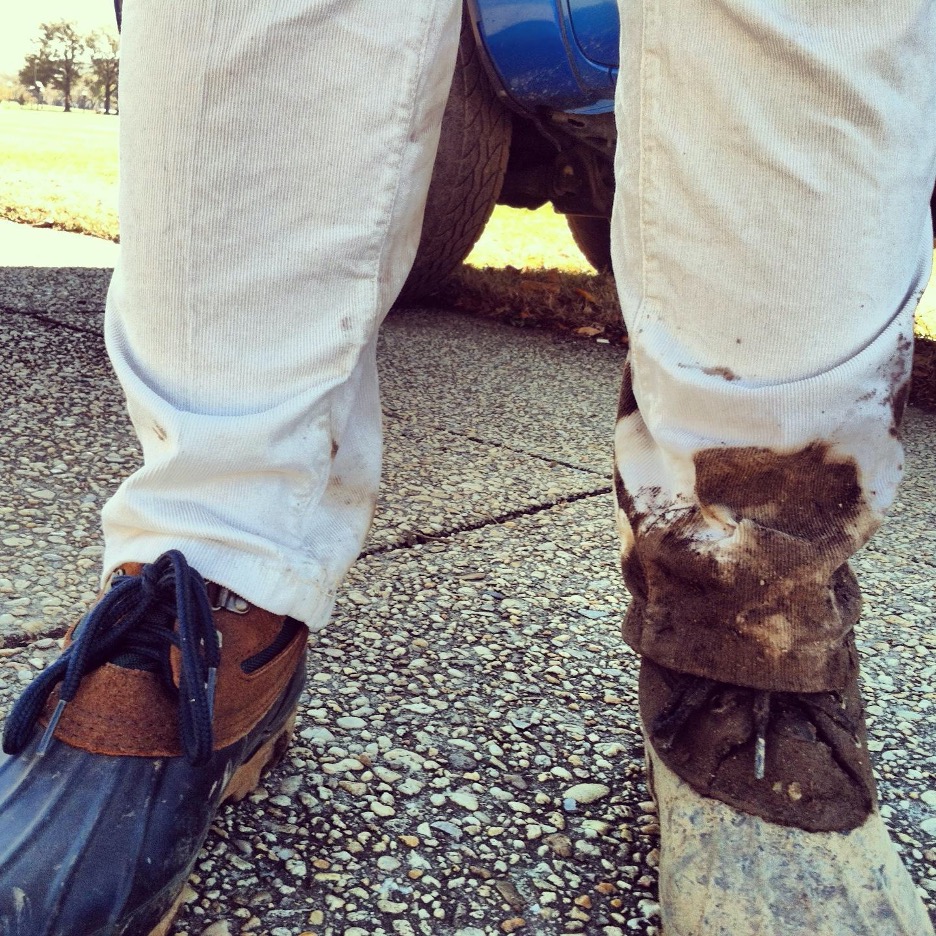
SF: My LLBean duck boots. I own three pairs in varying heights and they’re always in the trunk of my car. Rain, muddy puddles, mucky terrain can’t best the duck boot. I never want to miss the chance to get into a site at first glance, so if I’ve got the footwear with me, we’re going in!
KS & LB: What tool in your toolkit gives you and your practice an edge?
SF: Knowledge and experience: There’s no substitute for experience and our firm’s venerable knowledge in plants, science, art, and materials has always made us stand out. Thanks to my family, I started my love affair with plants early and found an affinity for getting to know a plant’s needs and habits in high school while working at a nursery. My knowledge has grown over the years and been bolstered by years of learning about hardscape materials and how things go together. My favorite part of our job is finding new plants, new materials and working through the science and art of putting it all together.
KS & LB: If you had a magic tool, what would you have it do?
SF: I’d love to have a tool to give people the ability to see opportunity. So often I hear, “My garden could never look like that”. Gardens don’t happen overnight and the planning for them also doesn’t happen overnight! A magic pair of glasses that would open the lens of possibility would be a game-changer. A blank canvas can be overwhelming and I often see people try to tackle it with one or two things, rather than a cohesive plan. Putting pen to paper (notice a theme here?) helps create an overarching plan and distinct zones. Once that exists, the focus can shift to specific zones to tackle each season or year. A garden is not going to appear overnight and neither should the vision. Opportunity and good design take time.
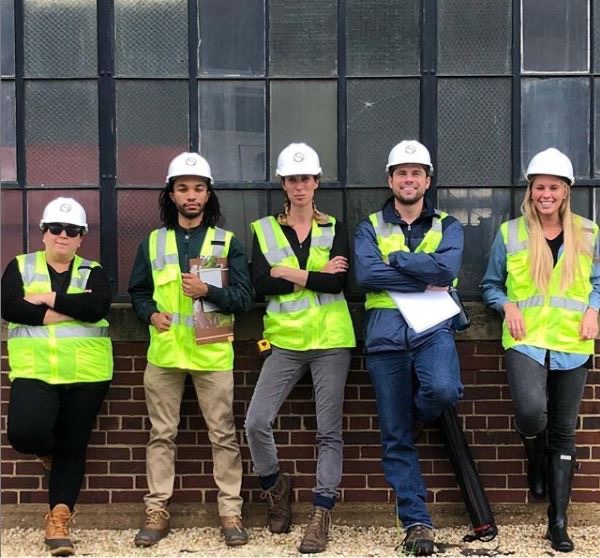
DC Water Planting Crew (Photo: Lisa Delplace)
KS & LB: How or when do you bend or even break the rules?
SF: I push the boundaries with planting zones and utilize plants from a zone or two south in some of my gardens. Climate change has evolved our planting capabilities with less hardy plants now thriving in more northern climates. We are seeing the historically southern palette (Magnolias, Camellias, Rodgersia, Fatsia, etc.) moving ever northward and the northern growing seasons becoming longer. Say what you will about climate change, but it has pushed the evolution of plants forward in a much more accelerated speed than we’ve experienced previously.
KS & LB: If anything was possible, what way would you like to be more sustainable or efficient?
SF: I’d love to convince more people to evolve their gardens past the “traditional American lawn”. The construct of a perfectly green lawn has drastically impacted our landscape in the last 70 years and isn’t all that traditional when you get down to it. The American home landscape thrived most when people used their land for more practical purposes like subsistence farming. Most sweeping lawns that people think of in grand estates or sprawling vistas were actually clover or chamomile. Practicality and beauty are not divergent concepts; they can exist simultaneously!
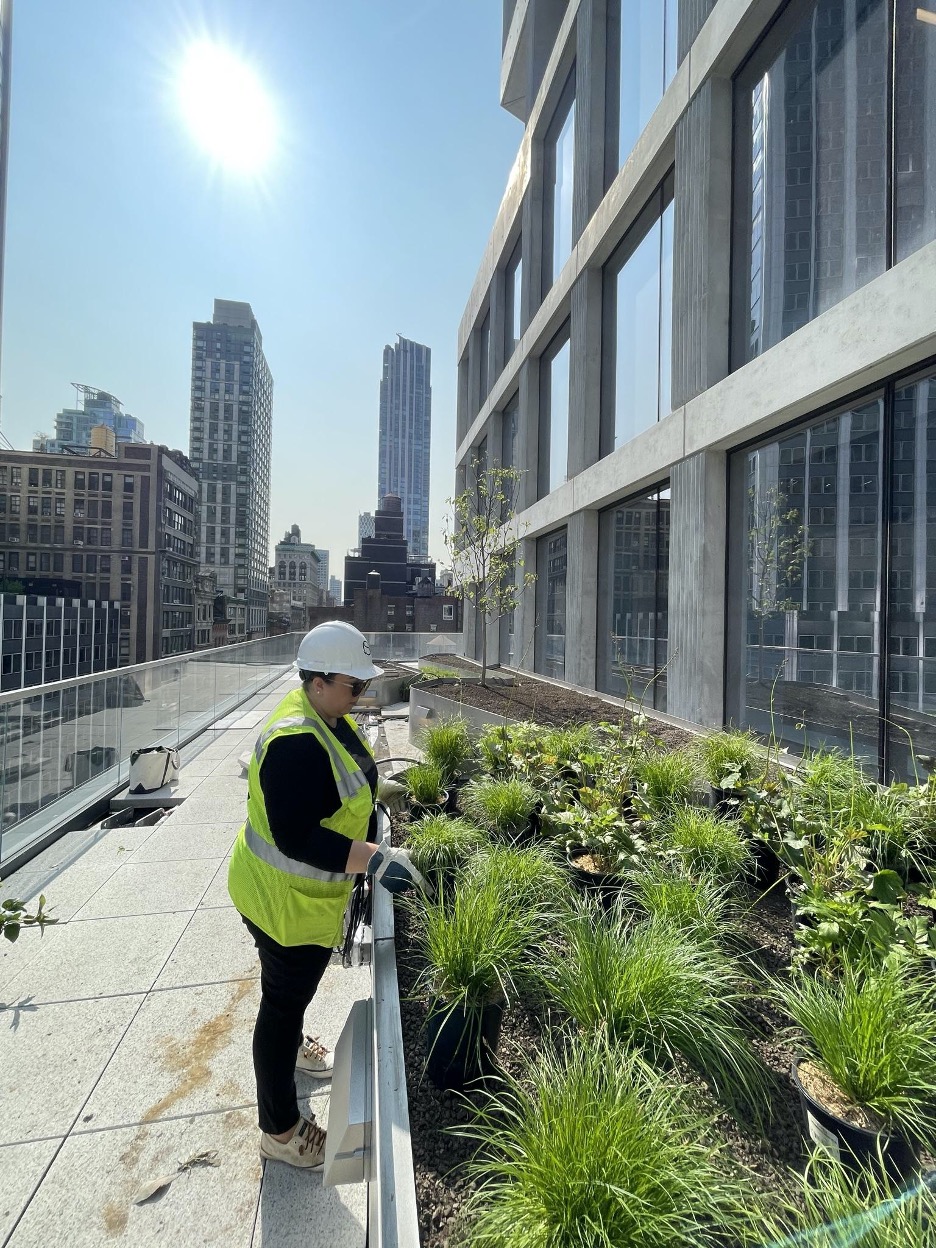
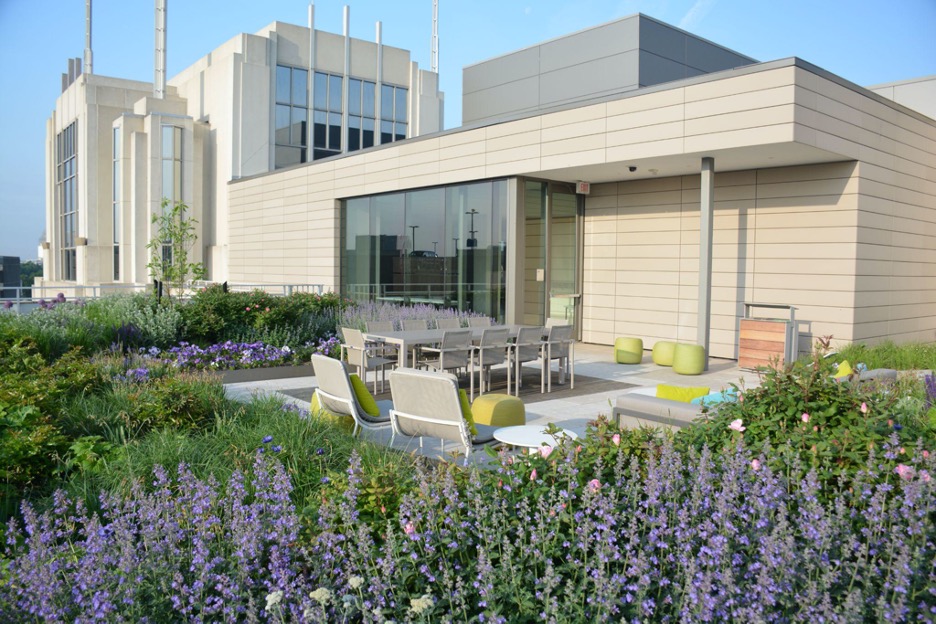
NYC Green Roof Install (Photo: John Wray IV)
KS & LB: In a world full of distractions, how do you carve out time to grow, to learn, to be inspired?
SF: In these times, the time to dedicate fully to learning, growing or inspiration is a luxury. As I’ve grown, I’ve learned to keep my eyes open. It started as a wide-eyed student in Rome and has evolved to daily travels around town. I challenge myself to find newness in the existing. What could be mundane deserves fresh eyes. And I use my phone to help me catch those snippets whenever I can. Those snapshots are often printed and taped up on the wall alongside my desk, mixed in with family photos, sketches, stickers from my children. Changing the relationship of something that could be commonplace challenges me and helps my own thoughts evolve.
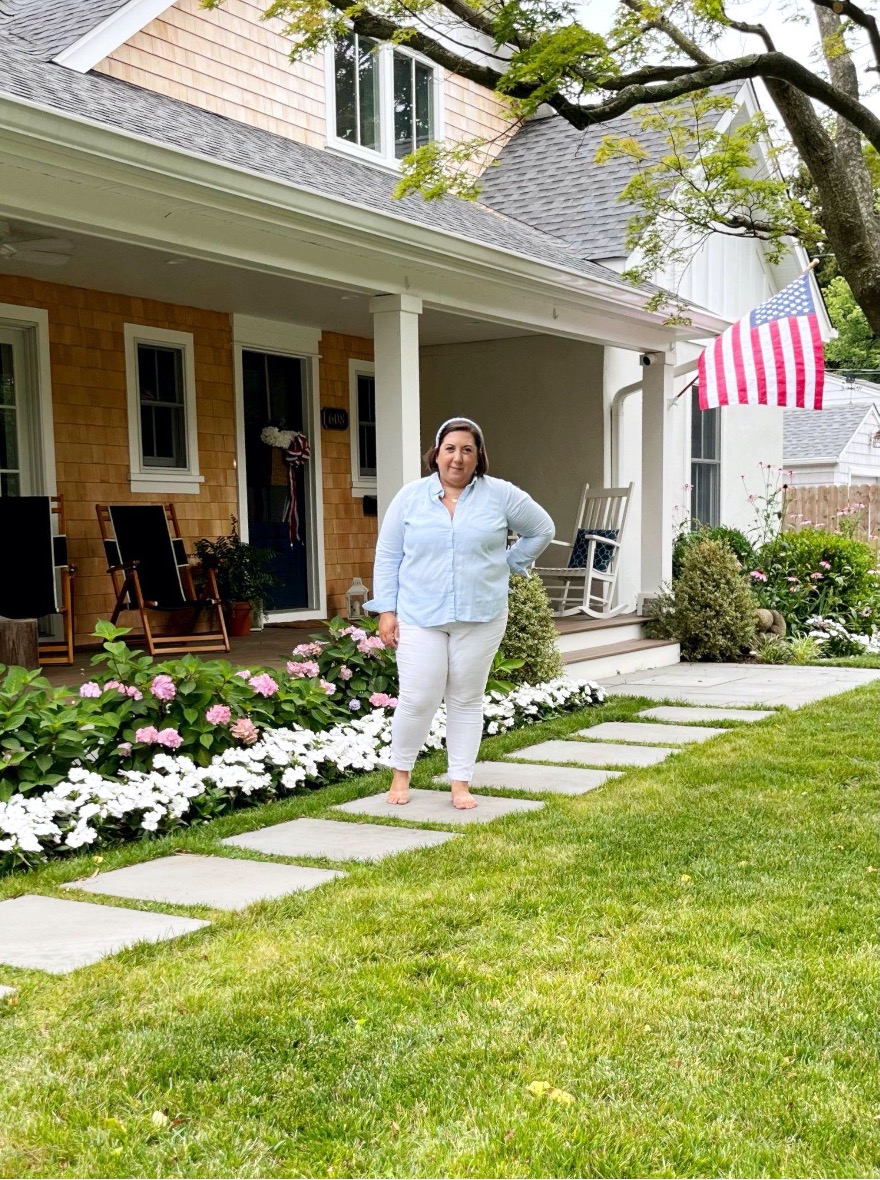
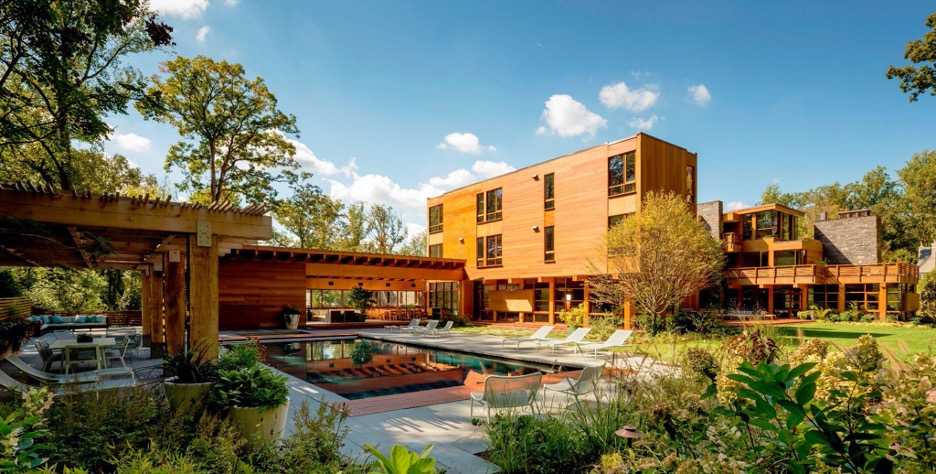
Bethesda Residence (Photo: Paul Warchol)
We hope Stacilyn’s insights have you mesmerized and have you reaching for Oehme van Sweden’s newest book, BEYOND BOLD: Inspiration | Collaboration | Evolution, which explores the firm’s design portfolio from the past 15 years — much of which was managed by Stacilyn. Better yet, catch Stacilyn’s presentation, Civic Design for the Next Generation: DC Water Headquarters on the Capital Riverfront, this October at the American Society of Landscape Architects’ Conference in Minneapolis, Minnesota.
Read more of The Toolkit here.
Like what you see? Get it first with a subscription to aspire design and home magazine.