


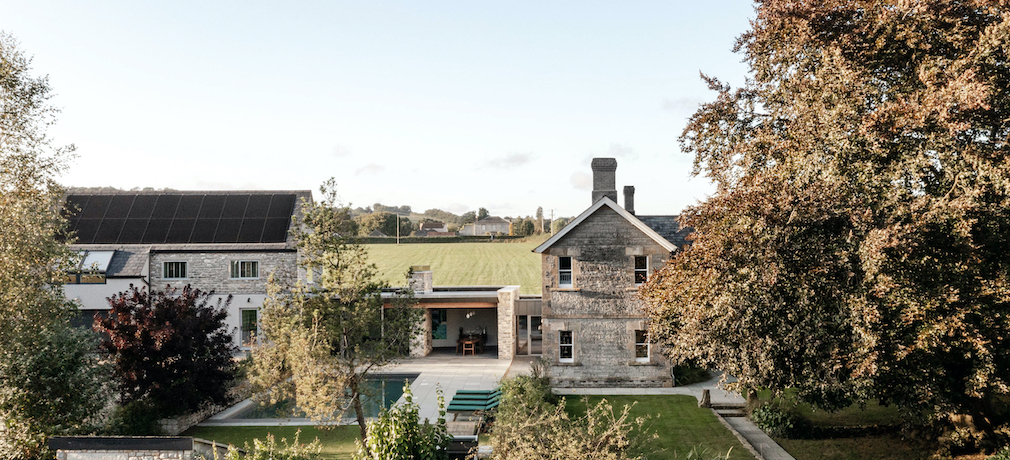
Interior bridges connecting one section of a home to another improve the flow while adding a distinctive architectural element; and they’re the link between these two distinctive projects.
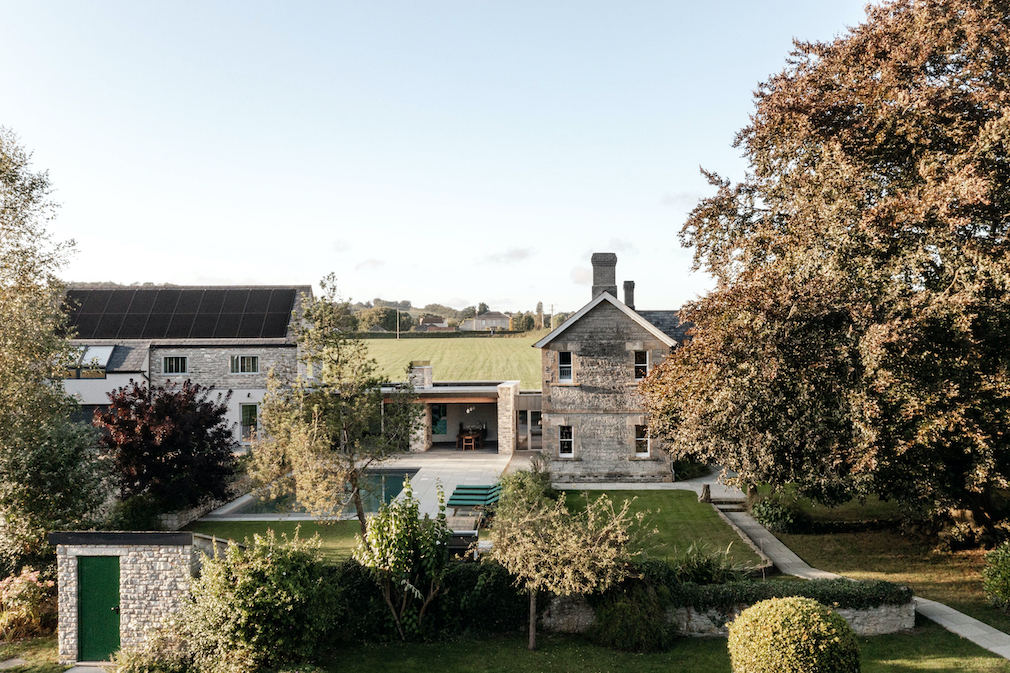

SOMERSET, U.K.
Architecture: Forgeworks
Photography: French & Tye
Specializing in modern residential design, Forgeworks is an architectural studio based in London and Wiltshire, England, founded by Chris Hawkins. The firm’s recent project in the Mendip Hills of Somerset cleverly linked a 19th-century farmhouse to an existing period barn. The resulting glassed-in passageway provides a visually light touch positioned between the substantial, original structures. Affectionally called A House of Blue Lias, the property’s colorful name is a nod to the locally quarried stone used in both the past and present construction. Hawkins explains how this innovative project turned the two halves into a whole.
How did you balance the look of the two original structures with this modernist link?
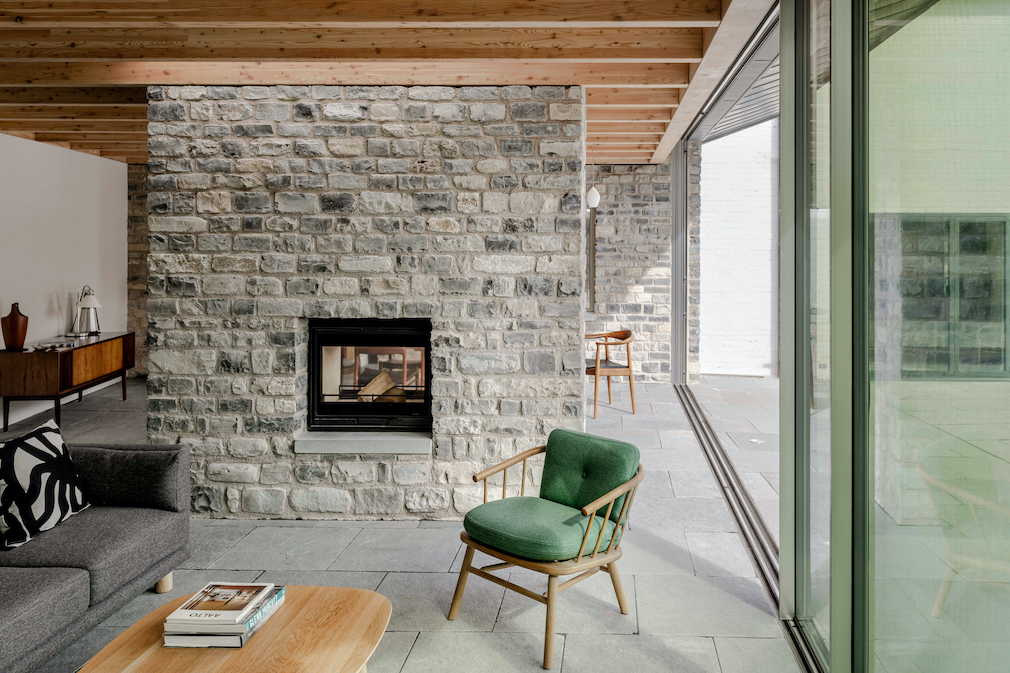
We took a deliberately restrained approach. The link is contemporary in form but built with the same local blue lias stone as the farmhouse and barn. The internal structure expresses a similar sense of rhythm and material clarity. It’s deliberately deferential, but with its own quiet confidence.
Is the barn also usable space now?
Yes, the barn was fully retrofitted and reorganized. It now contains bedrooms, bathrooms, a study, a playroom and a garage space for the owner’s vintage cars. The structure was kept, but the layout and performance are entirely new.
What do the owners now say about living in their home?
It’s a completely different experience. What was once fragmented now feels calm and coherent. The family naturally gravitates to the central space, and the improved insulation and energy systems have made the entire house more comfortable and efficient.

SONOMA COUNTY, CALIFORNIA
Architecture: MDa Studios
Photography: Joe Fletcher
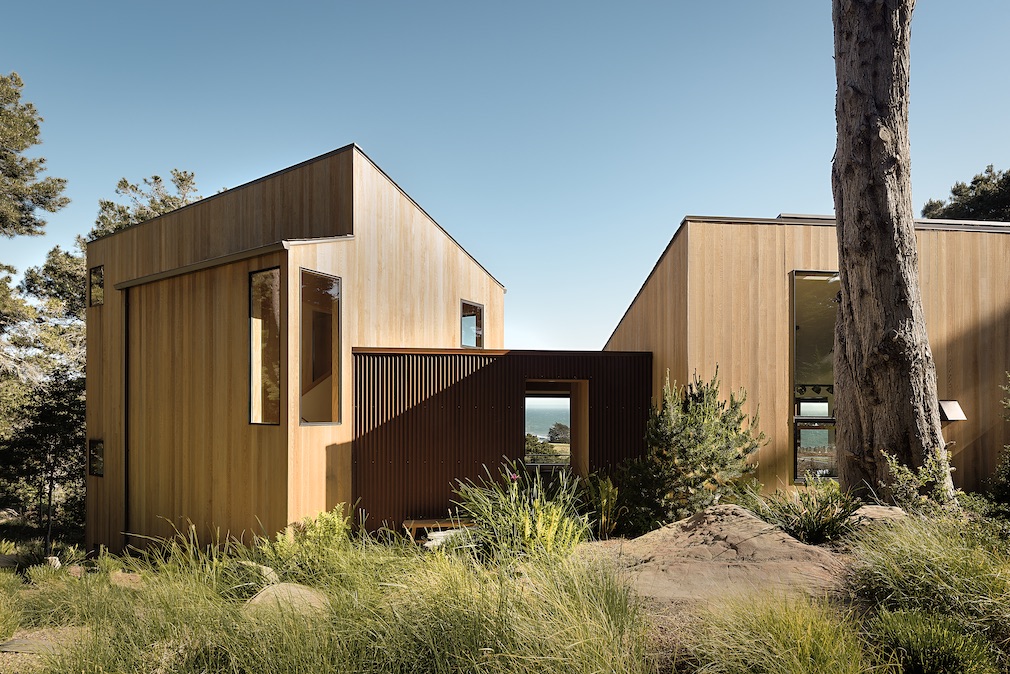
Legendary architect Malcolm Davis of MDa Studios in San Francisco designed a clean-lined oceanfront home where two cedar-clad volumes are bridged by corrugated steel to form an eye-catching entry. Inspired by the simplicity of the iconic 1960s Sea Ranch community in Sonoma County, Davis poetically blended the daily interplay of changing light with mindful indoor and exterior sequences, creating a magical living experience.
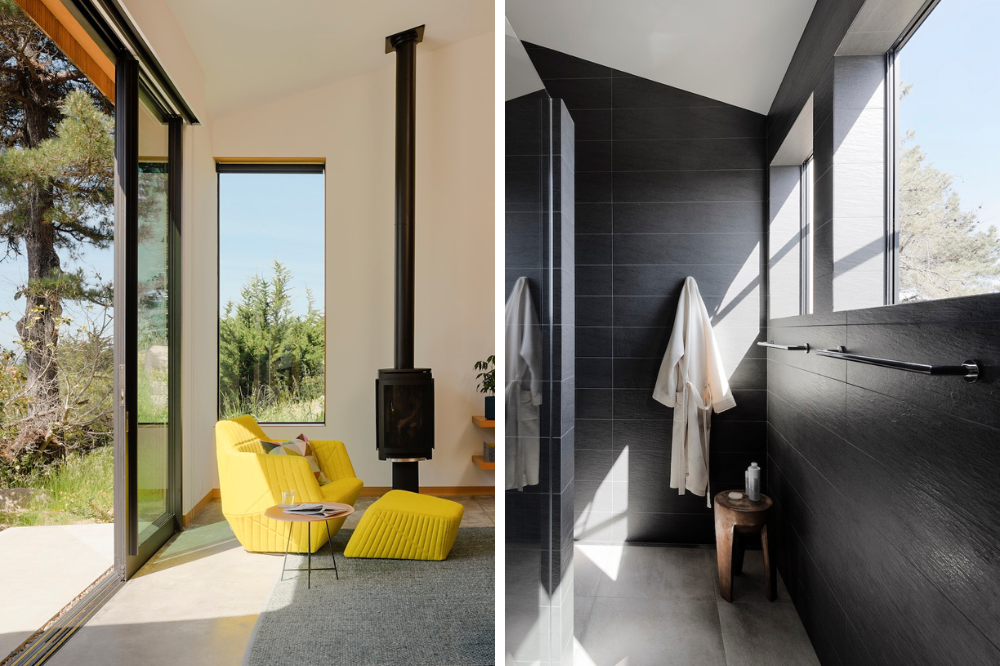

Was embracing indoor-outdoor living an important theme for you to explore as an architect?
Yes, the separation of volumes was fundamentally about creating clarity between public and private spaces while maintaining a strong indoor-outdoor connection throughout. The two-bedroom, two-bath residence structures its 1,800 square feet thoughtfully: one cedar-clad wing houses the social living spaces, while the other contains the private bedroom quarters. This physical separation allows each wing to function independently, with the light-filled link serving as both a threshold and a visual extension of the outdoors.
Why did you decide to finish the entry in corrugated steel?
We liked the honest, unfussy character of the corrugated metal. It feels inherently vernacular, with an agricultural quality that references local barns and sheds scattered throughout this coastal landscape. Just above Bodega Bay, there are expansive ranches dotted with low sheep sheds, simple structures with single-sloped roofs that speak to a practical, regional building tradition. We wanted to evoke that straightforward, unpretentious spirit while employing the material in a decidedly contemporary manner. The corrugated steel will continue to change over time, in conversation with the coastal environment.
Like what you see? Get it first with a subscription to aspire design and home magazine.