
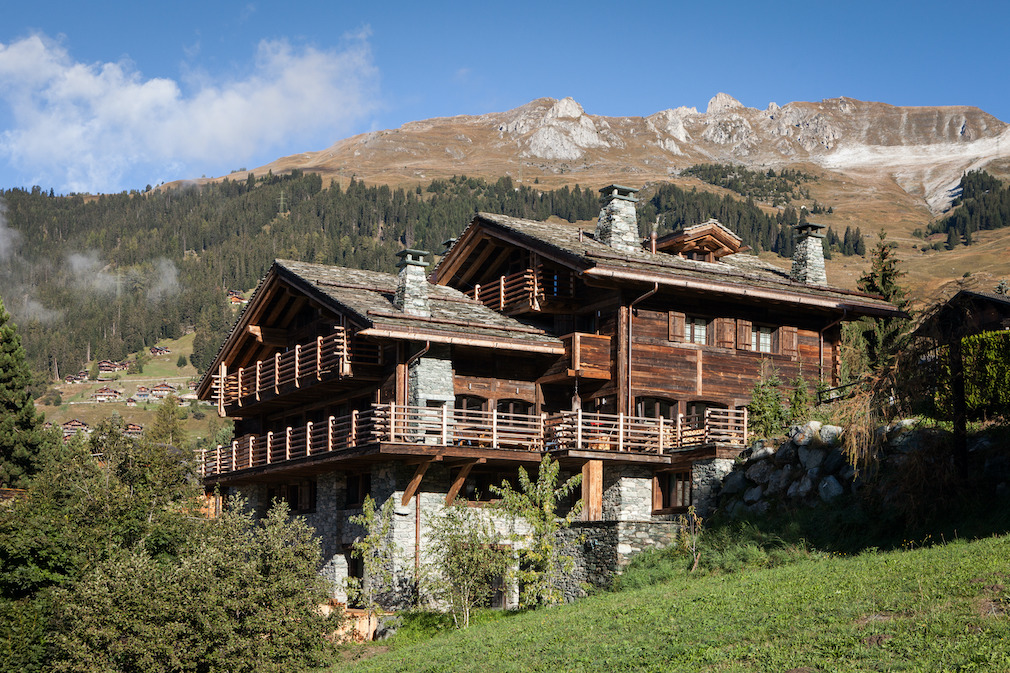
To transform a former hotel in Verbier, Switzerland into a private family home, designer Marianne Tiegen focused on scale, and a material palette that feels welcoming and personal, rather than commercial. Located in the heart of the Swiss Alps, the over 10,000-square-foot property has been redesigned as a seasonal retreat with a focus on reclaimed materials and bespoke detailing.
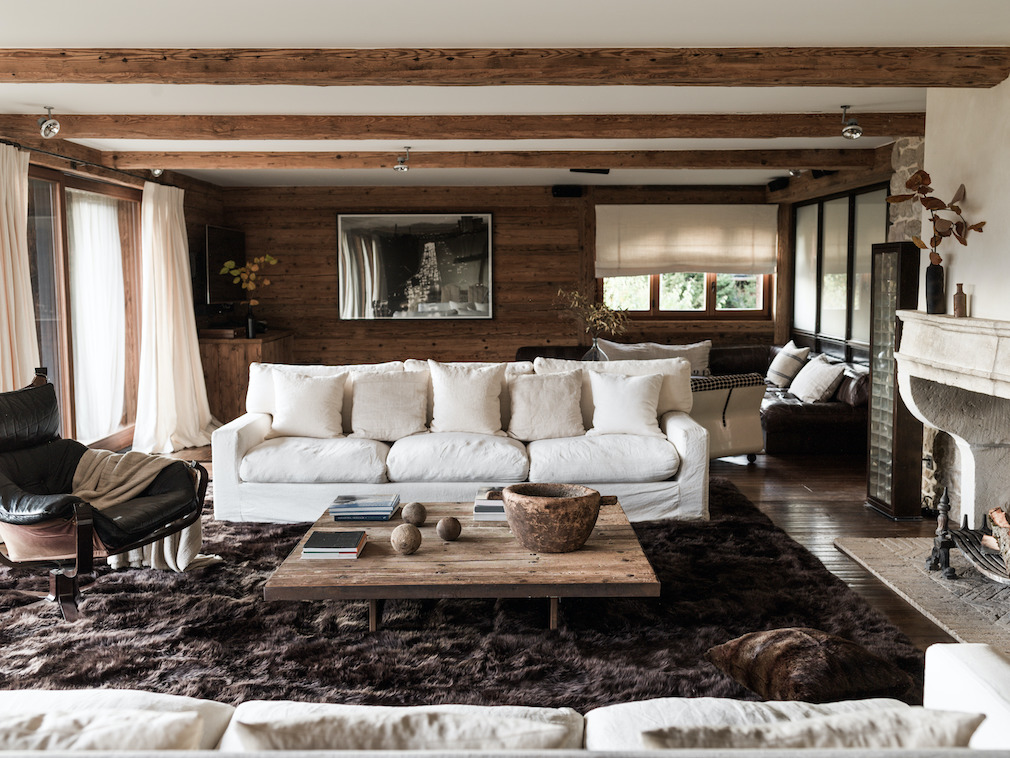
The project began with a clear goal: to reuse existing resources whenever possible. Tiegen sourced furniture and architectural elements from antique markets, second-hand dealers, and reclaimed construction sites. Many of the pieces were adapted or repurposed by local artisans to suit the specific needs of the home.
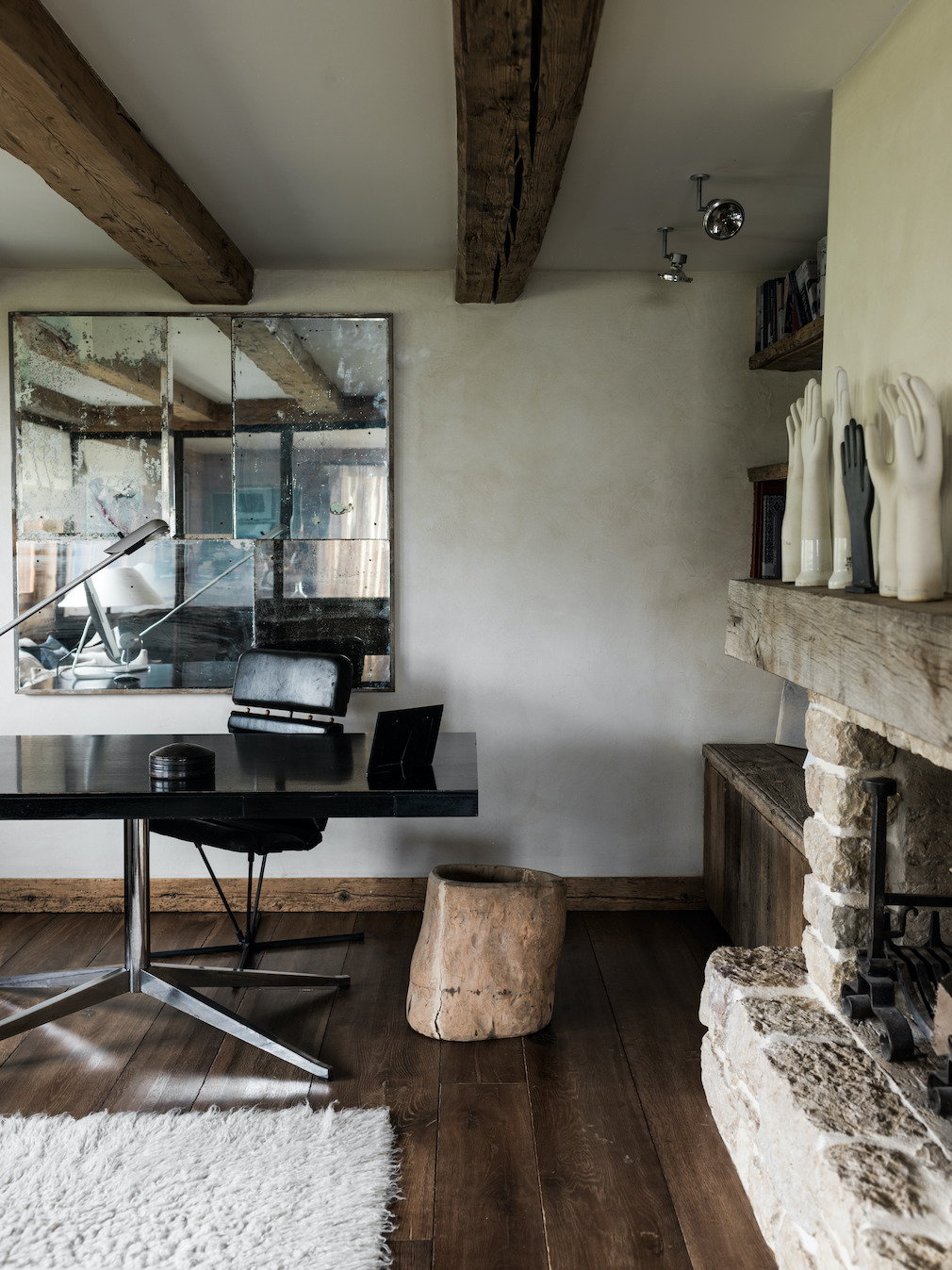
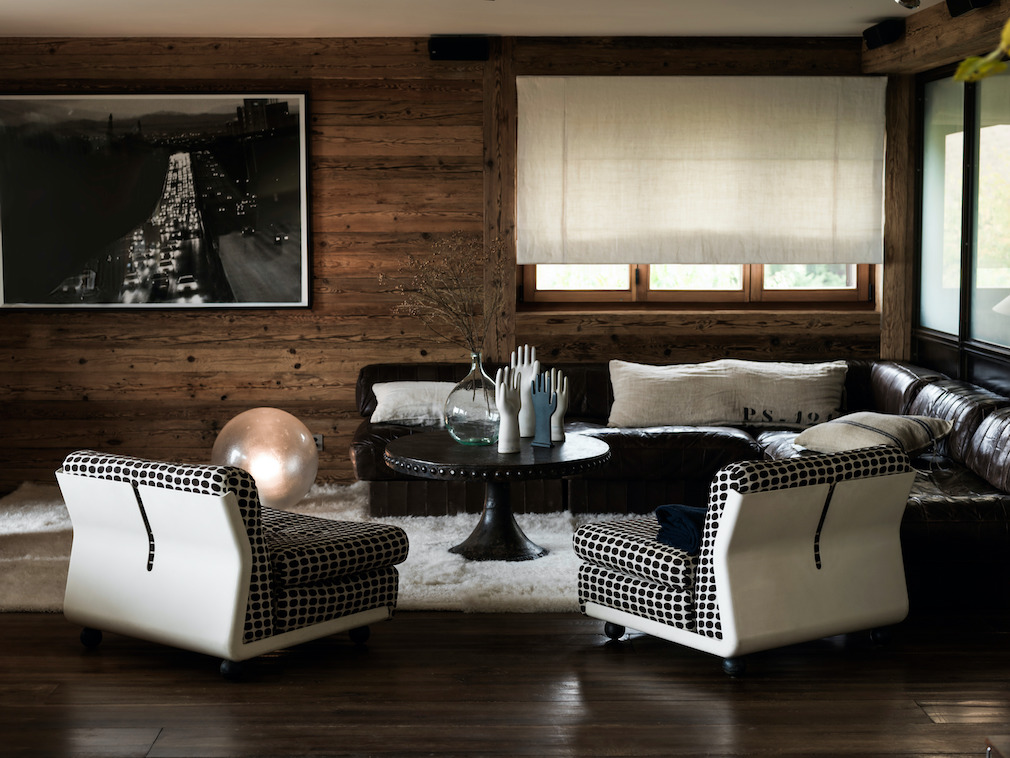
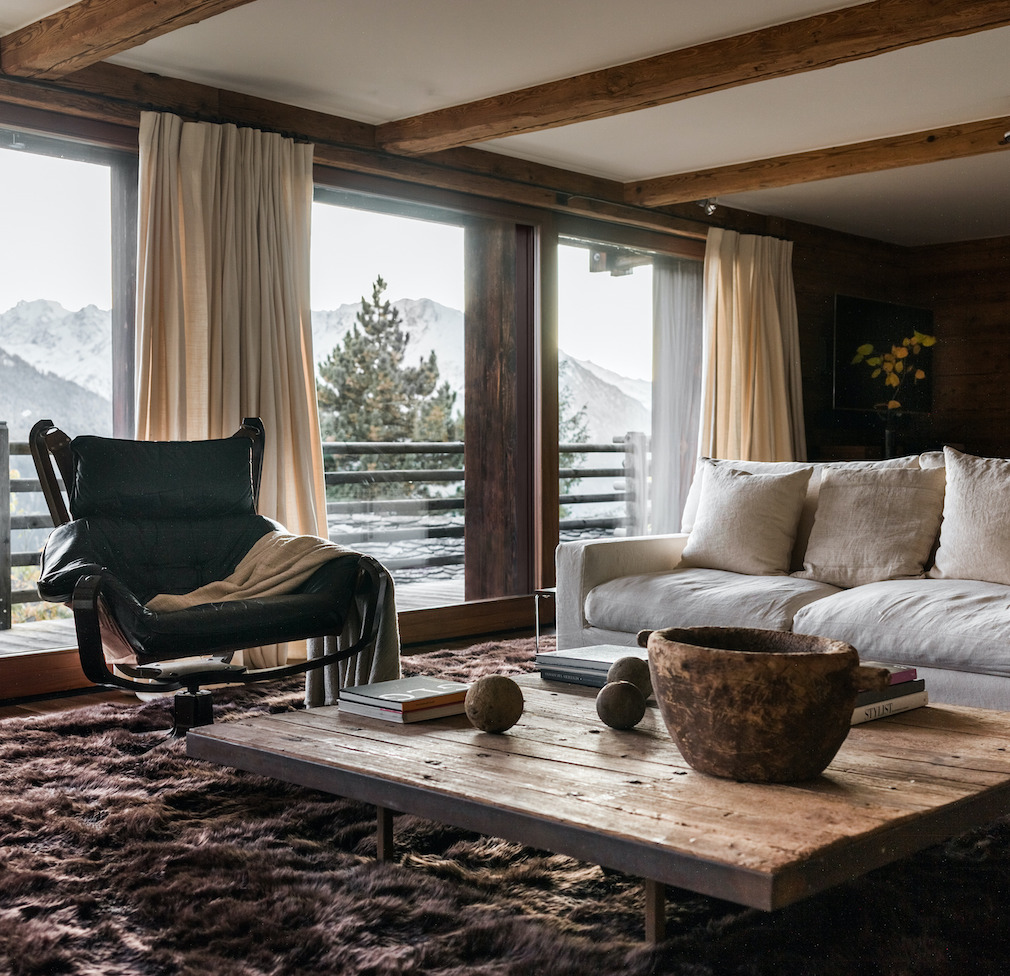
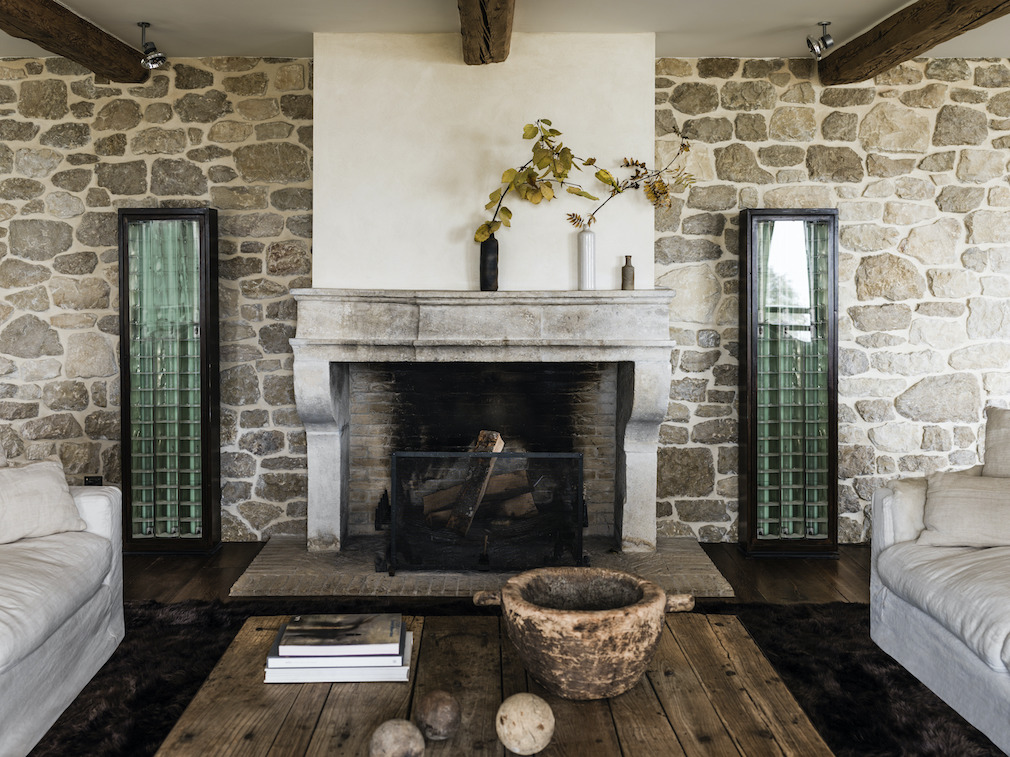
In the main living areas, Belgian linen sofas were custom-made and paired with coffee tables made from salvaged wood. Fireplaces from previous centuries were restored and reinstalled. A zinc gutter, originally used in an agricultural setting, was suspended above a 15-foot-long wooden dining table and reimagined as a light fixture.
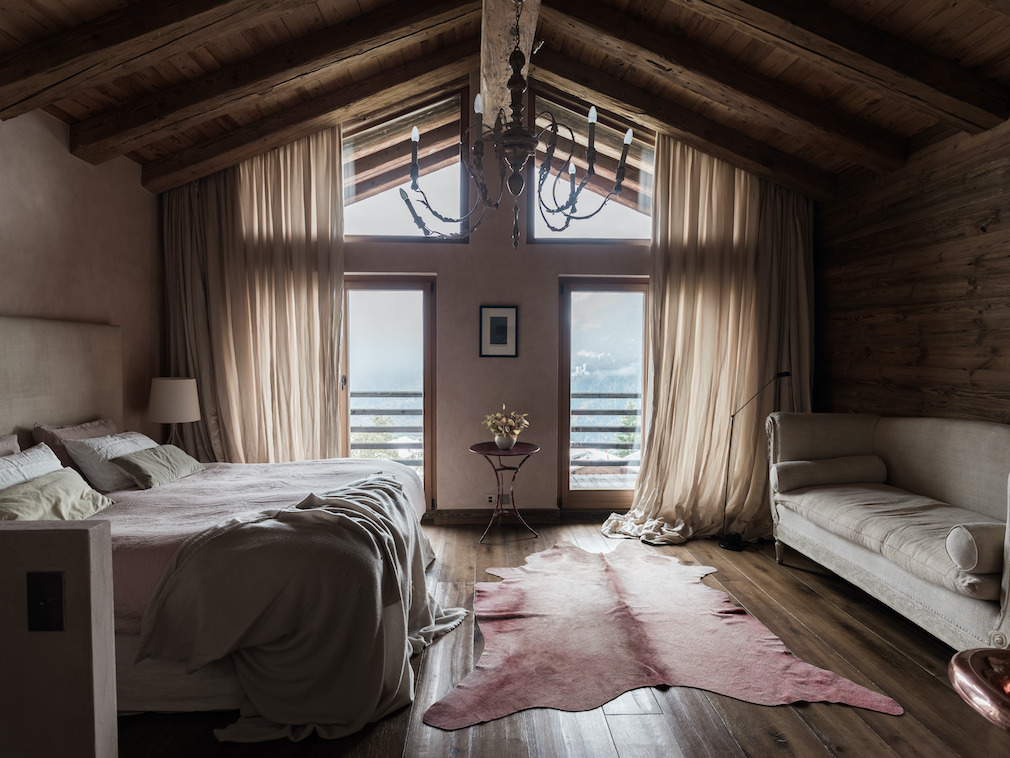
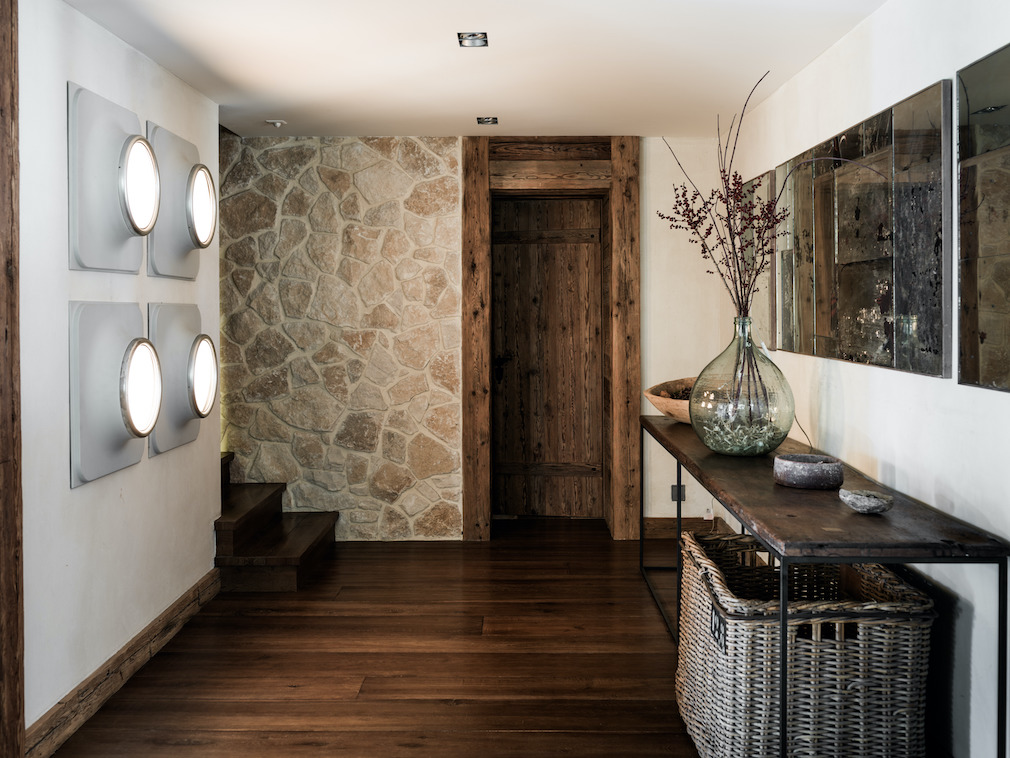
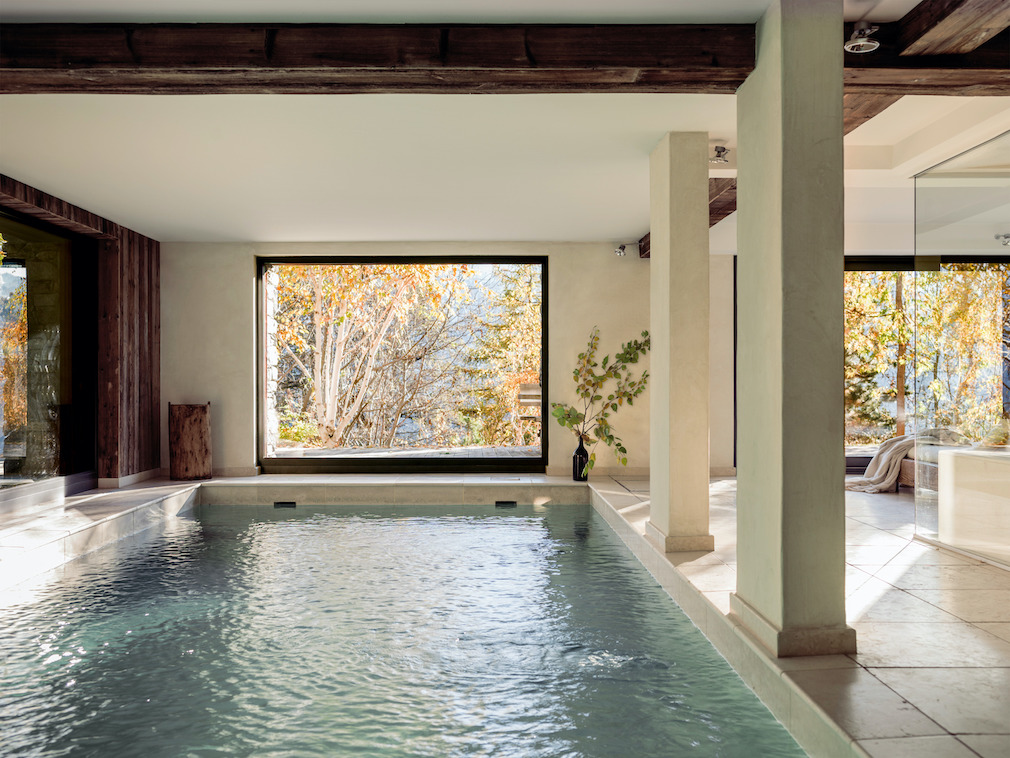
Throughout the property, the materials have been selected to age naturally over time. The walls are covered in mineral-based limestone paint and finished with cladding from dismantled alpine barns. The palette includes a range of neutral tones, with an emphasis on earth browns and soft creams.
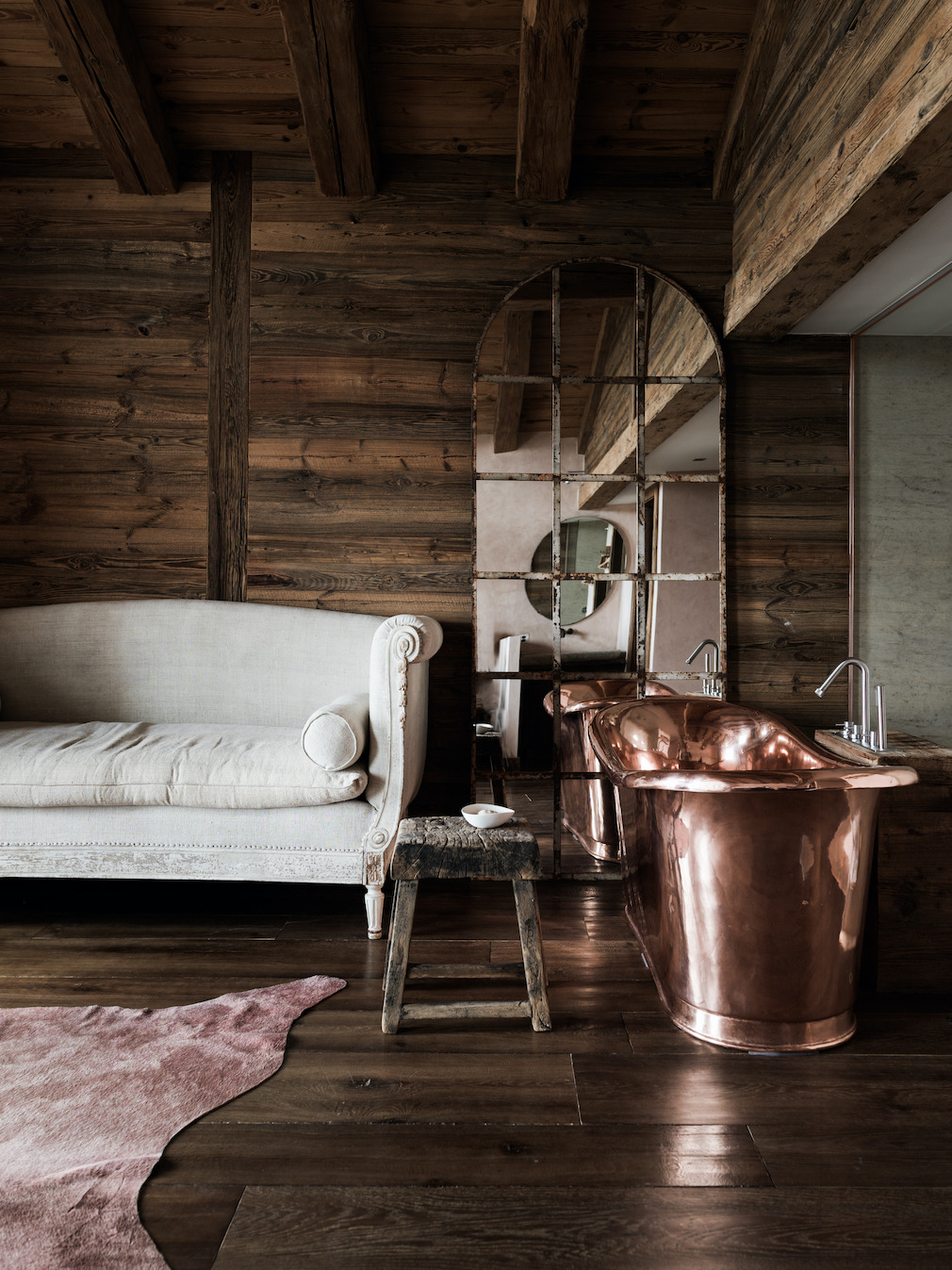
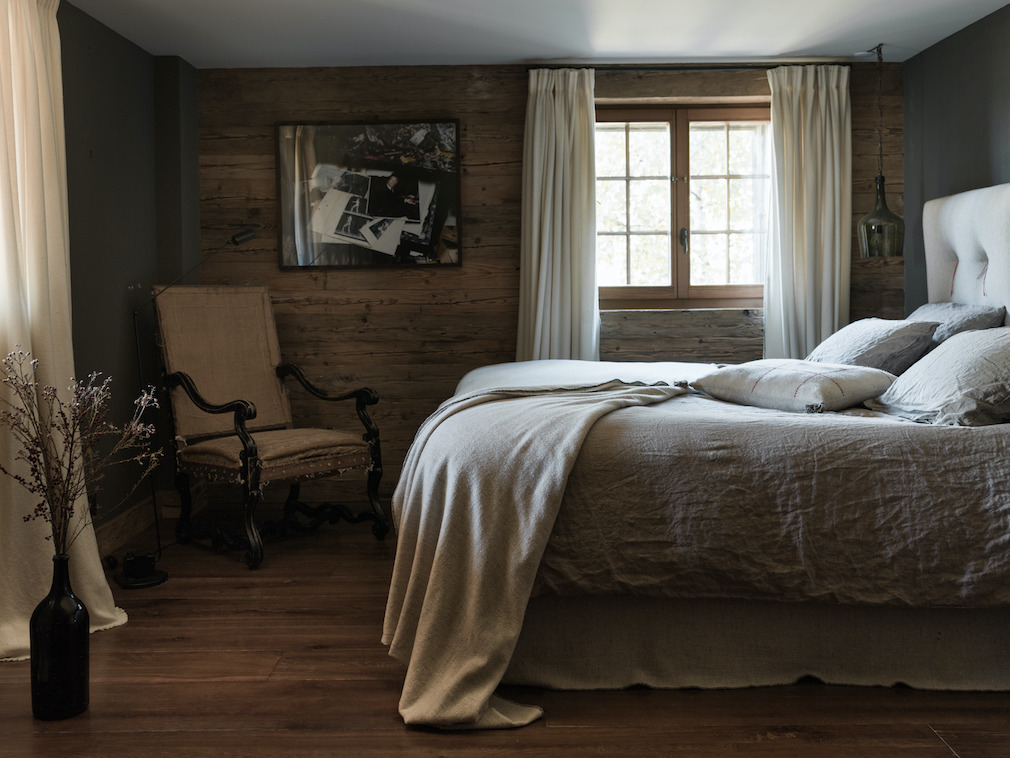
In the bedrooms, reclaimed beams and antique textiles define the atmosphere. Bathrooms feature restored basins, vintage mirrors, and stone surfaces. These details, combined with a restrained use of color and natural finishes, support a consistent design approach throughout the residence.
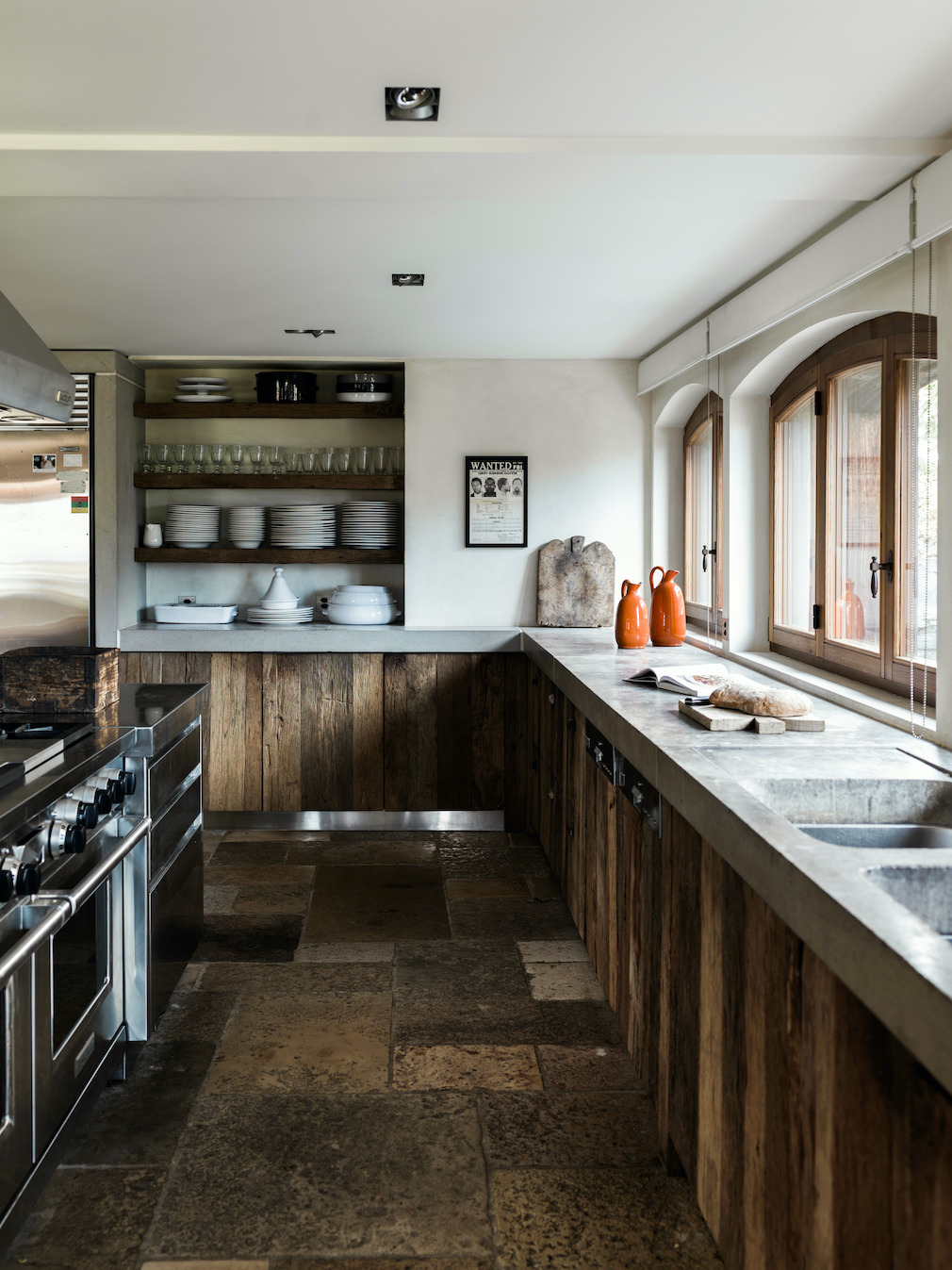
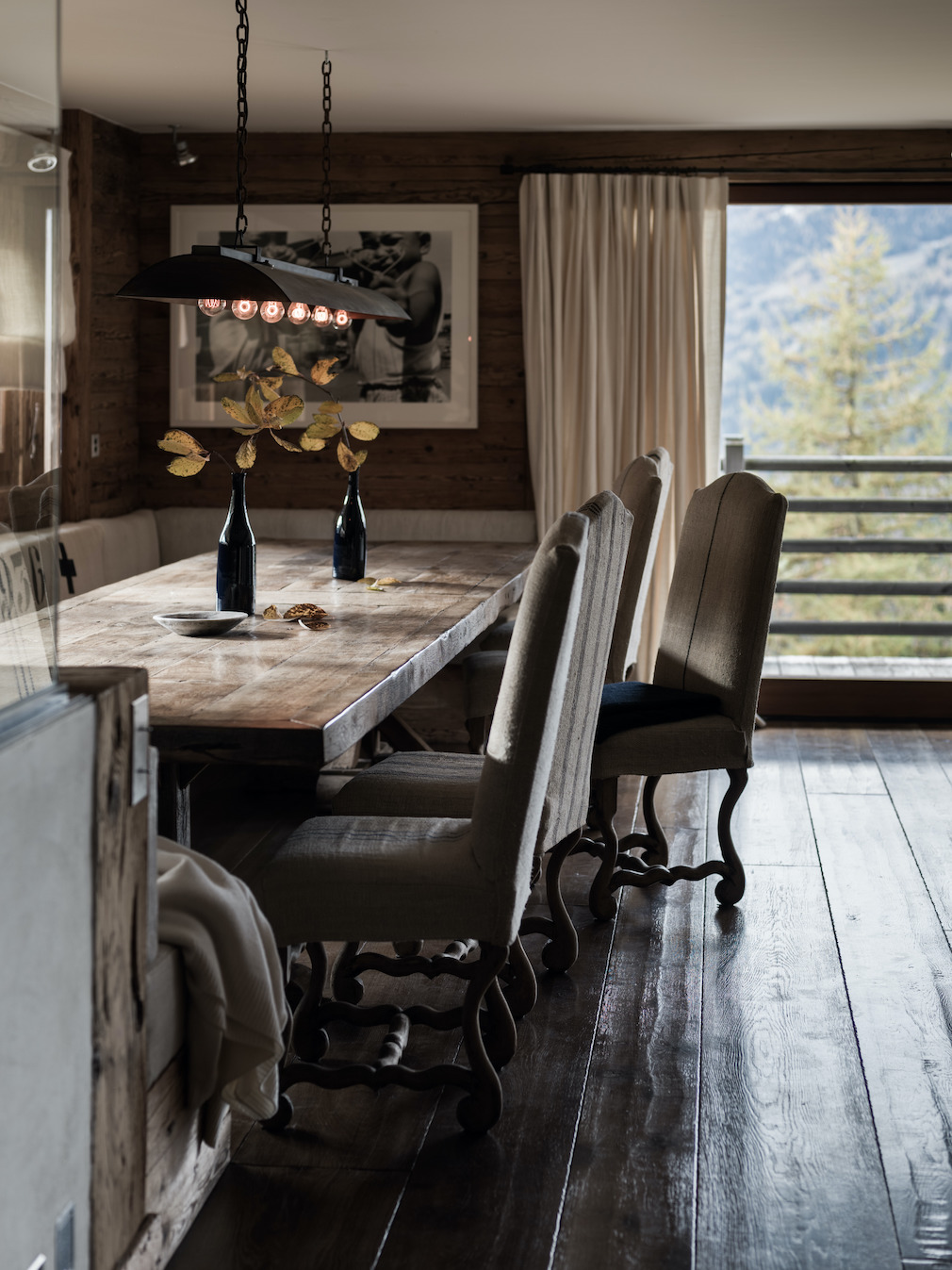
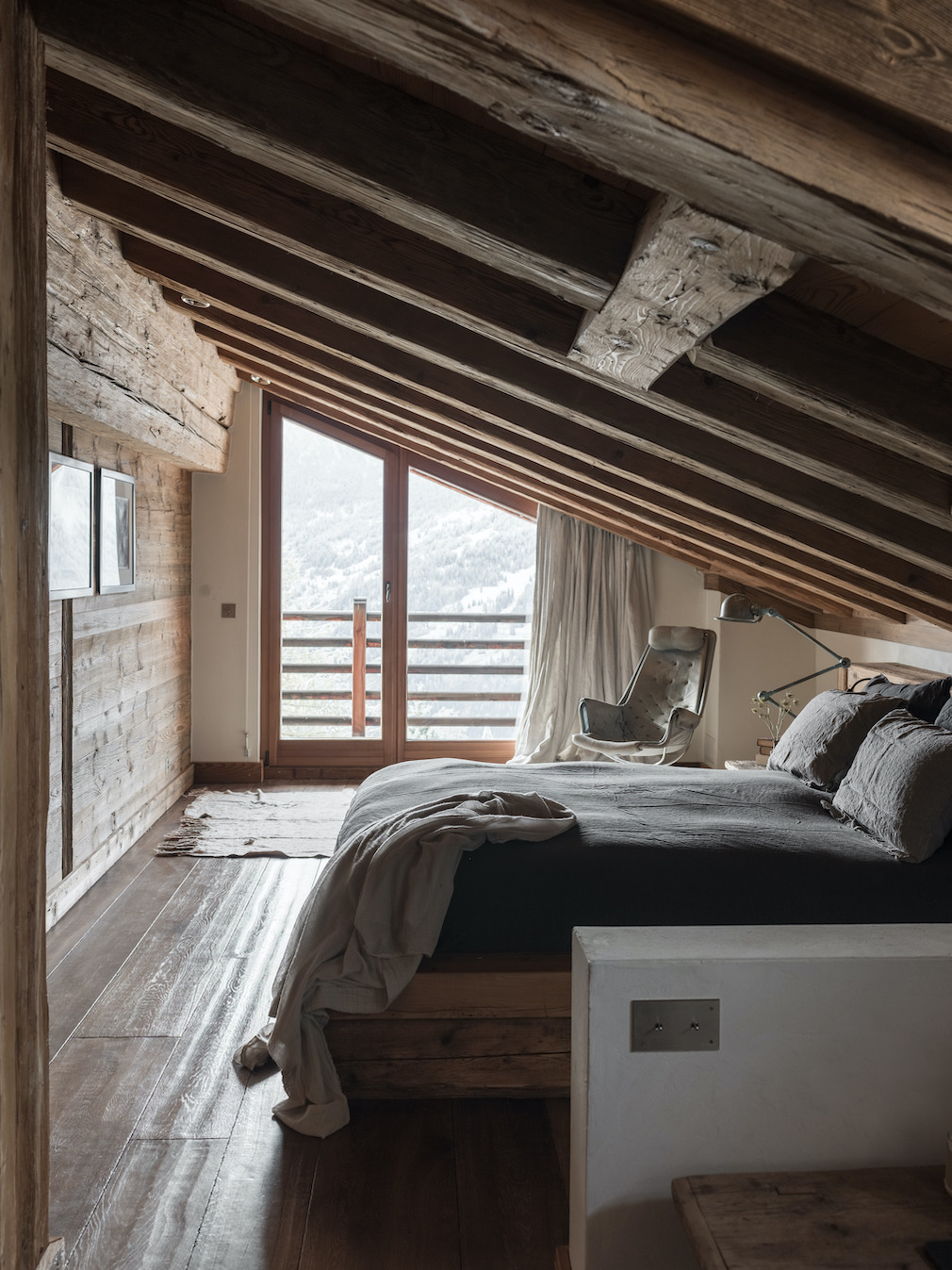
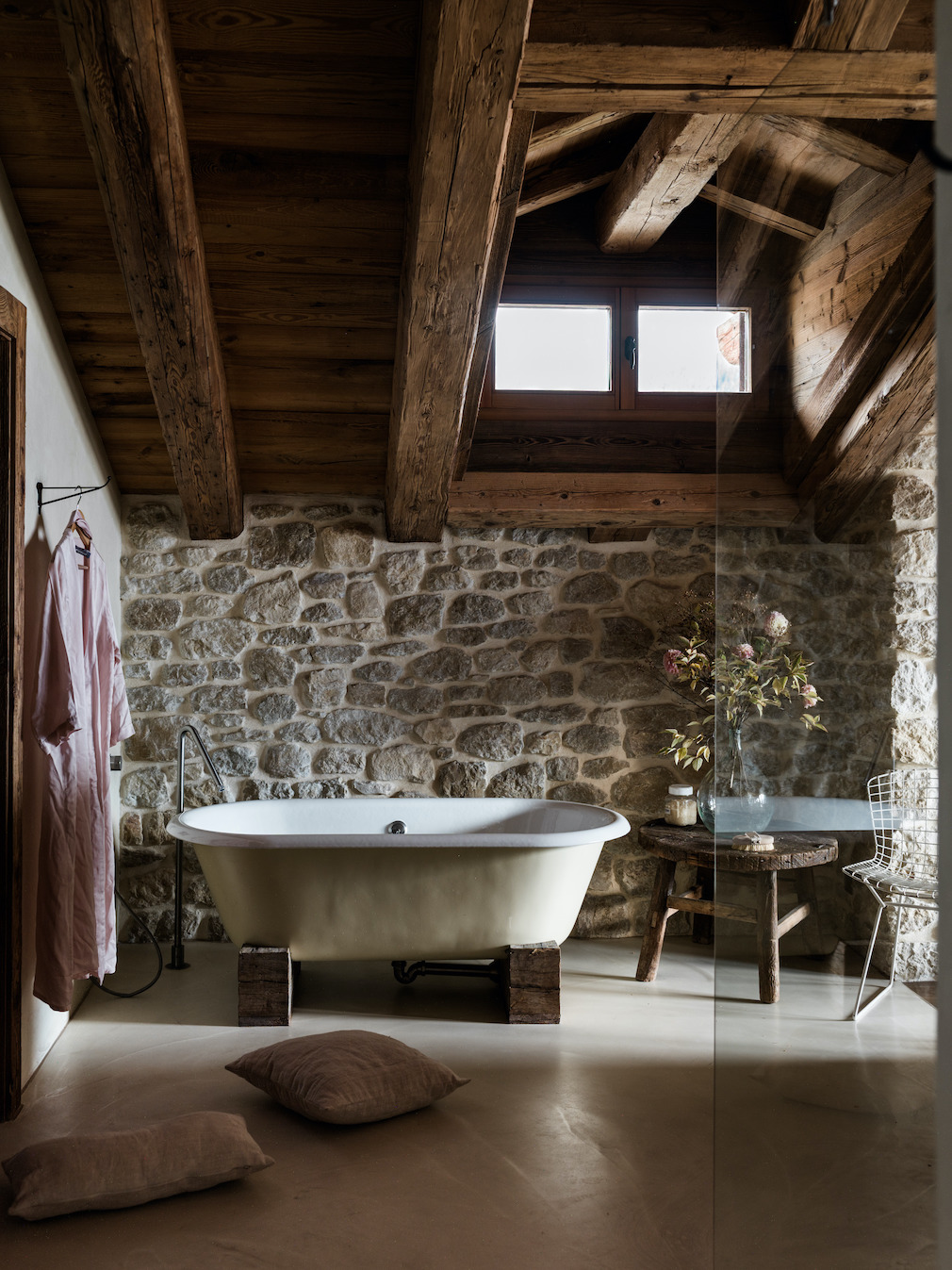
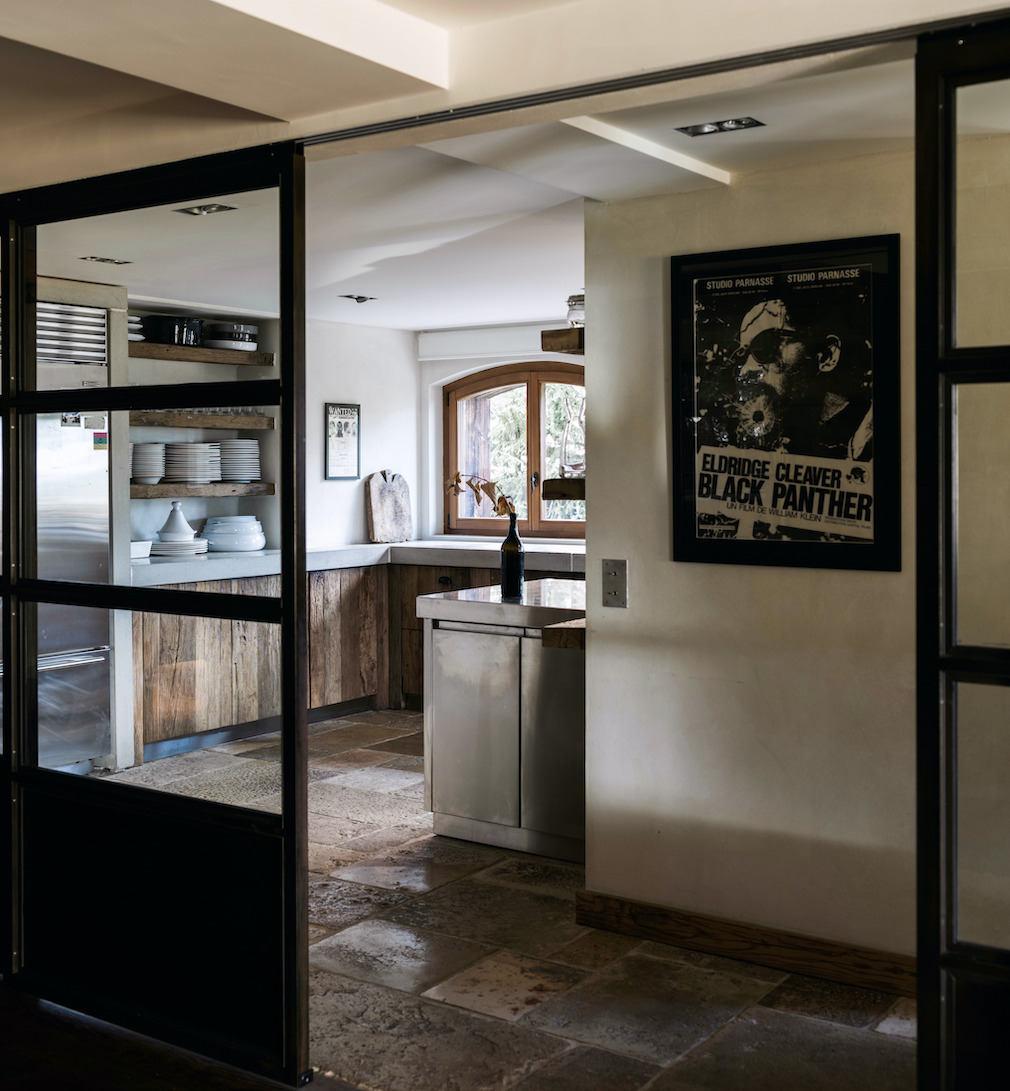
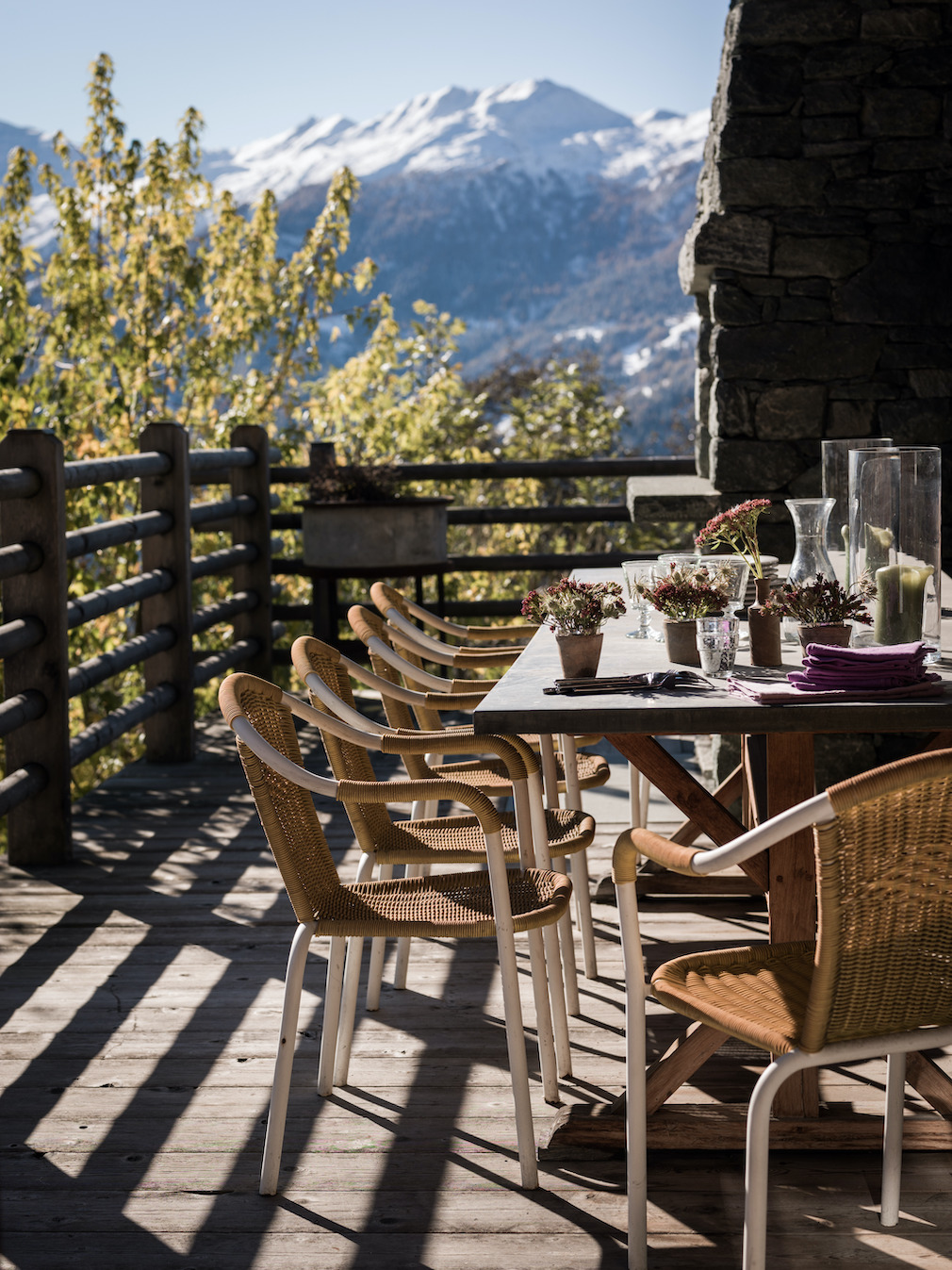
The Verbier project, named “1936” after the year the original hotel was built, was developed over several seasons, and reflects Tiegen’s ongoing interest in circular design methods. The goal was to create a space that is comfortable, durable and tied to its context through the reuse of local materials.
Tiegen’s approach avoids mass production and standardization. Instead, the home has been furnished with a mix of French antiques from the 18th and 19th centuries, midcentury American and European design, and vernacular alpine objects. Every item was selected with the intention of retaining its original character, even when adapted for a new purpose.
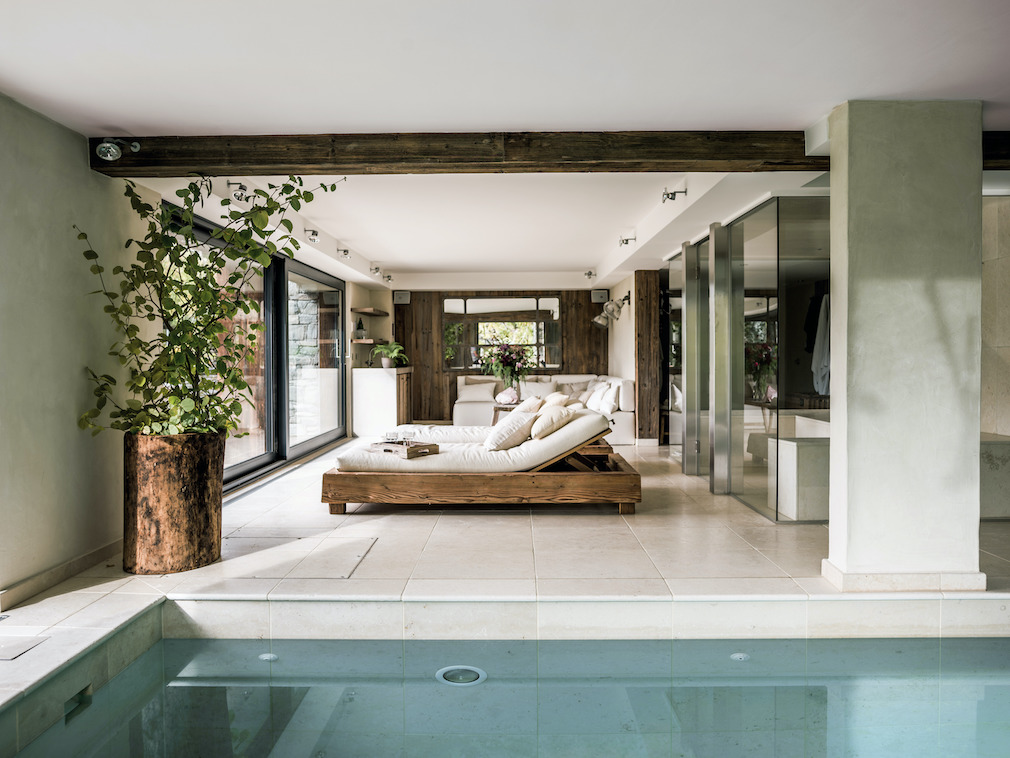
This renovation joins a growing number of projects across Europe and North America where Tiegen applies similar principles. The designer often collaborates with craftspeople to extend the life cycle of furniture and textiles, seeking out natural dyes, repurposed objects and construction salvage.
Photography by J. Wilson.
Like what you see? Get it first with a subscription to aspire design and home magazine.