


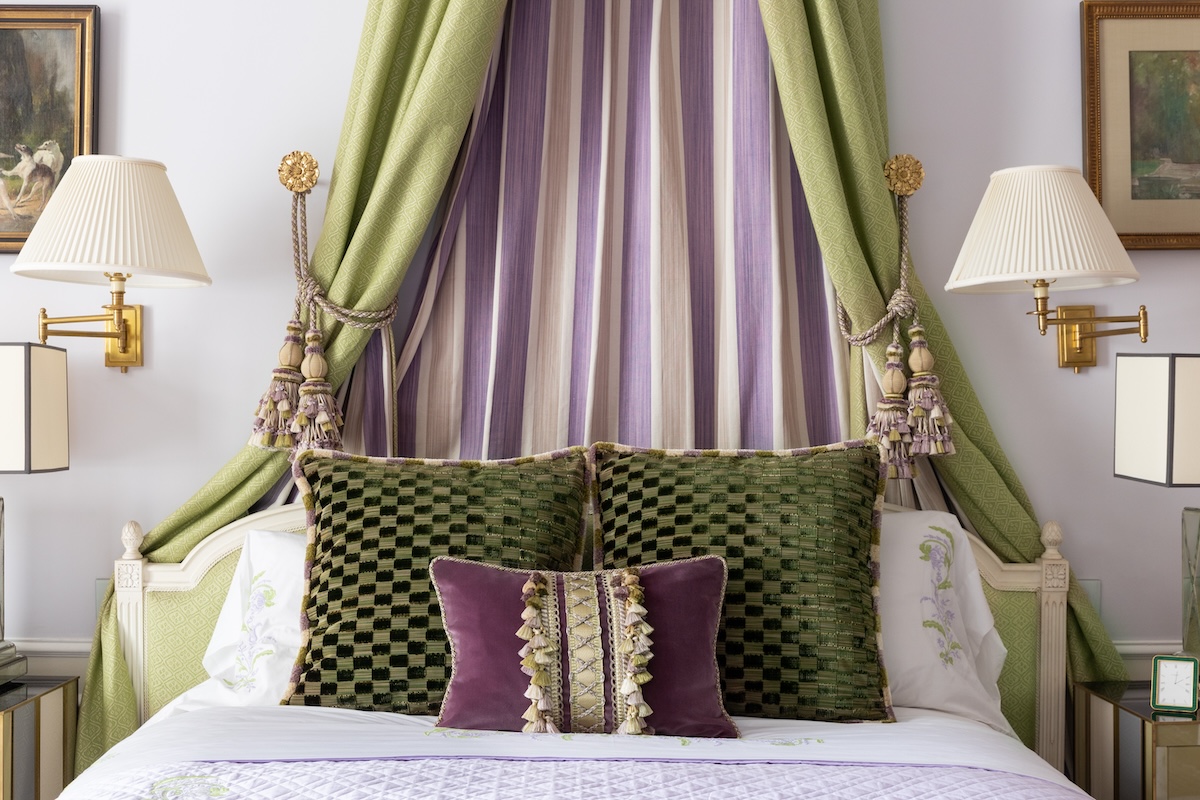
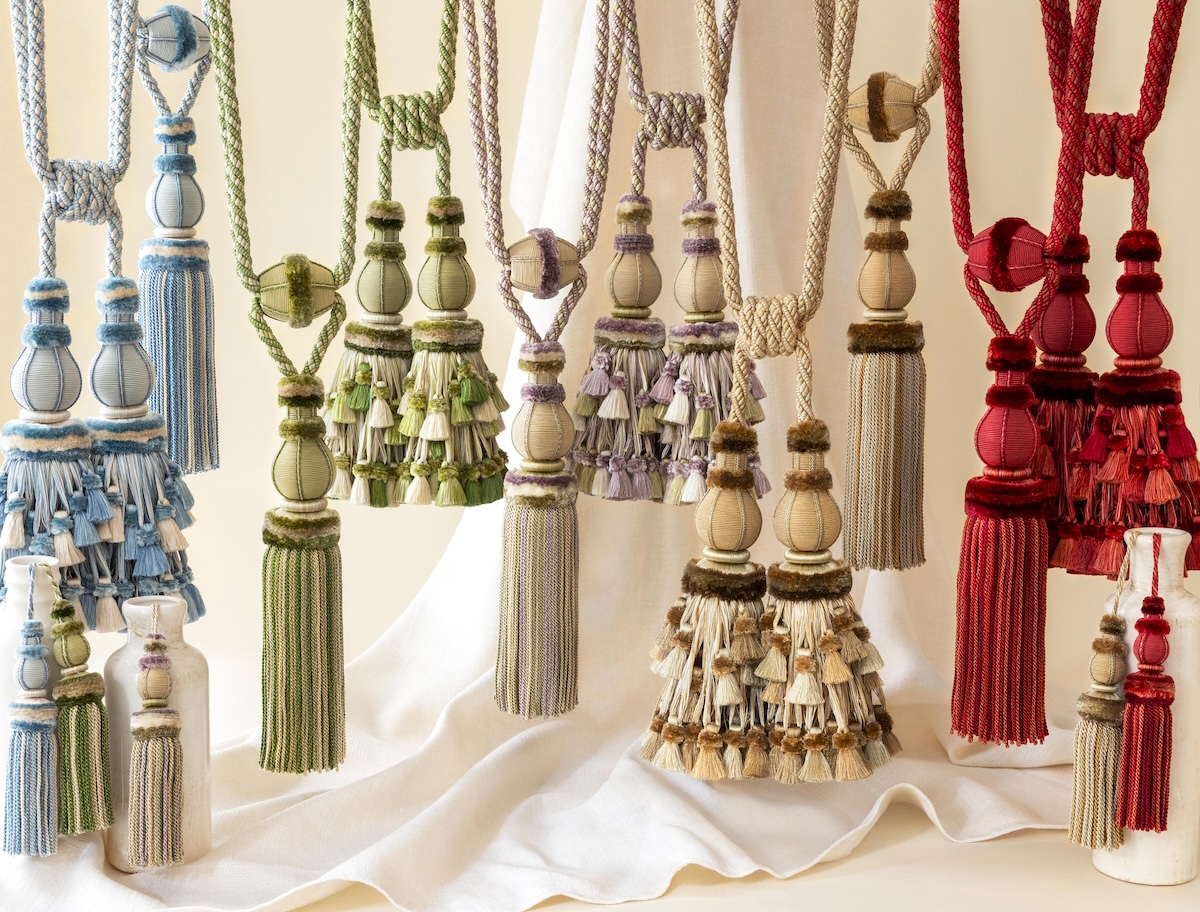
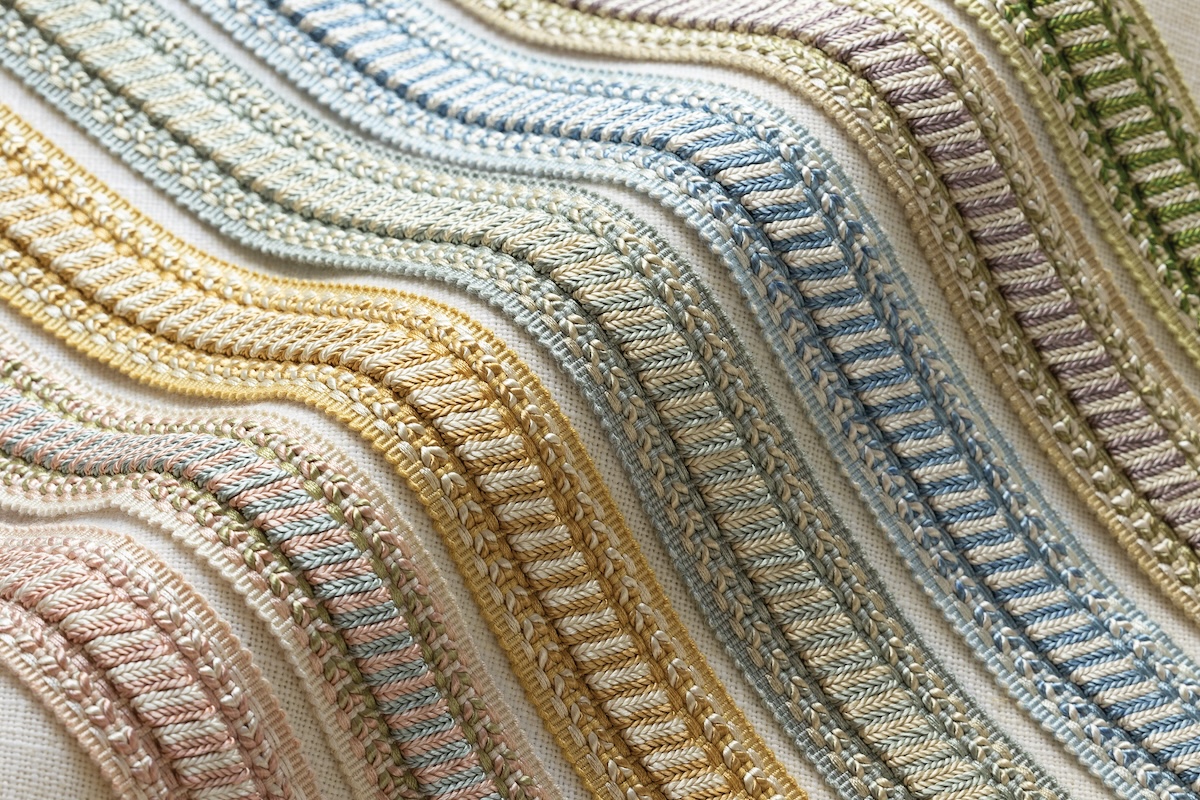
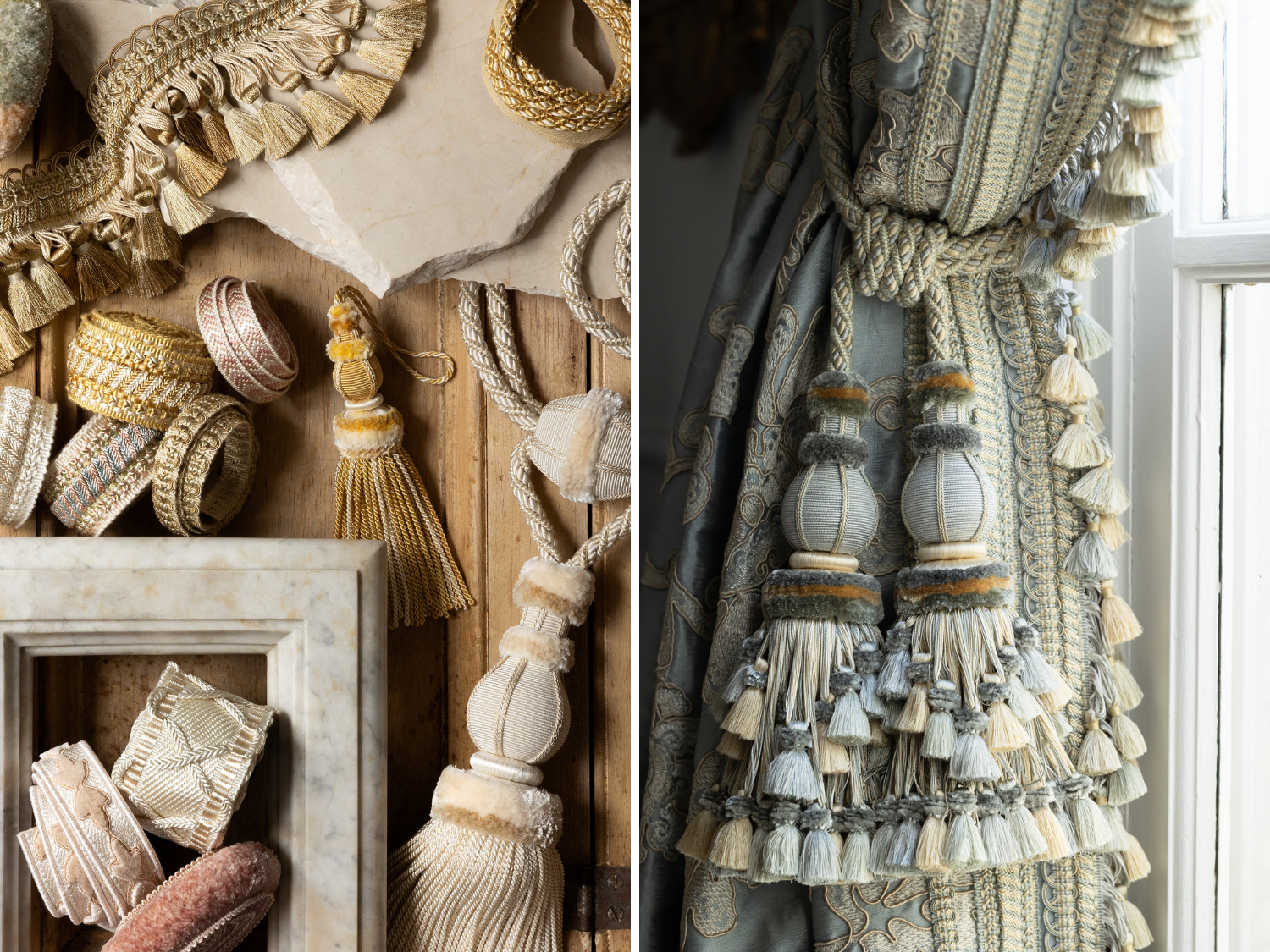
Timothy Corrigan joins us this week to discuss his latest collection of trims and tassels with Samuel & Sons. Bagatelle is inspired by neoclassical French passementerie in a palate of sumptuous sherbert-like colors. The collection translates classical details into a contemporary context by striking a balance between grace and warmth.

Raymond Paul Schneider: When did you first start to develop this new collection and what was the overall timeline from conception to achieving the final design?
Timothy Corrigan: I started to work on the new collection in the summer of 2021 and presented several different concepts to the creative team at Samuel & Sons in October of that year. There were originally 20 different pieces in the collection that we trialed and then narrowed it down to the winning 13 items. From a color perspective, we started with 16 different color combinations and finally came down to the 10 that best fit the way that colors are moving today. We intentionally added different colors in the same piece so that any individual piece could be used with a broad number of different color schemes. The creation of the collection involved a lot of going back and forth with different materials (silk, polyester, etc.) because we were trying to achieve the maximum sense of luxury and quality with a reasonable price point.
RPS: What was your initial inspiration, and where did the idea(s) come from?
TC: In the late summer of 2021, I went to the then-newly opened, Hotel de la Marine Museum in Paris, and was struck by the combination of elegant sophistication of the fabrics and colors used in the restoration of the private apartments. Louis XV has always been my favorite period in French architecture and design and that visit to the new museum inspired me to go back and delve more into the textiles and passementerie of that particularly elegant period. The Bagatelle collection is a direct result of that research and the ideas that presented themselves.

RPS: Please describe your overall creative and design process.
TC: Interestingly enough, for me, developing a trim collection is not that different from designing a home because in both cases, I strive to create something with a timeless feeling that doesn’t tie into any specific trend. We have all seen homes or products that feel as if they are so “on trend” that they will soon look out of date. To me, the best-designed homes or products are those that are as appropriate ten years from now as they are today.
RPS: Did you have a specific audience or theme in mind?
TC: It is so great to see how strongly trim has come back into style. Young designers see it as an opportunity to take a standard product and make it bespoke for that client. Trim is being used in fun new ways and it is one of the easiest and least expensive ways to make each piece in a home unique.
The French Neoclassical period is a direct result of the revival of interest in classical (both Greek and Roman) architecture and design. Like all design trends, it took from the past and re-interpreted it for the mid-18th to the early 19th century. The Bagatelle collection is very much the same, in that it draws upon some of the design motifs of that earlier period but presents them in fresh new ways in terms of construction and mixture of styles in the same piece, whether it is a tape or tassel.
RPS: Please describe the methods, tools, and materials you used to develop and prototype this design.
TC: I always start with very basic sketches of the various patterns just to present the overall concept… just enough to convey the idea but not so specific that people get caught up in discussing how it can be achieved. Once the overall patterns have been approved, I go into much more detail in terms of construction, dimensions, materials, etc. This is where Samuel & Son‘s VP of Design, Marisa Gutmacher’s encyclopedic knowledge of passementerie construction really comes into play. We had a terrific time exploring all sorts of different options for how to create a winning collection.
RPS: Did you utilize a new technique or technology to conceptualize or create this product?
TC: Samuel & Son’s has always been synonymous with the highest level of craftsmanship. Developing this collection with them was so much fun because we wanted to really push the borders in terms of materials, detail and luxury. So many of Samuel & Son’s products have a handmade component that when I explain the construction process to clients, they are always surprised that the product is not more expensive! I am so incredibly proud of the collection that we accomplished together.

RPS: Describe your overall brand DNA and Ethos
TC: When I first started in design, I trademarked the phrase: “A World of Comfortable Elegance.” This simply means that I don’t believe in sacrificing livability to achieve a specific look – if a room isn’t comfortable, no matter how beautifully it might be decorated, to me, it’s not successful. And comfort is more than just the way a chair feels when you sit down – it is also a state of mind, the assurance that you can be yourself in a space and do as you please, like put your feet up on a coffee table or set down a glass without worrying about leaving a water mark.
Imagery courtesy of Samuel & Sons.
Click here to see more of our “Anatomy of a Design” series.
Like what you see? Get it first with a subscription to aspire design and home magazine.