


MXMA Architecture & Design and Chamberland Design proudly introduce the MBM House, an English-style manor house located in the heart of Montreal that takes a step back in time to an era when the Tudor style dominated England between 1479 and 1607.
The owners, a blended family with six children, decided to leave Montreal’s South Shore to move closer to the city center. The move was designed to enhance their quality of life, while also adopting a more sustainable lifestyle through easier access to local services and community facilities, reducing their carbon footprint.


Situated on the western flank of Mount Royal, close to the Queen Elizabeth Gardens, the MBM House offers breathtaking views of the city from its imposing south-facing rear façade. Originally built in 1936, its majestic, all-stone structure rises two stories, with an attic and garden level at the rear. Its Tudor style is characterized by an irregular facade and elevation composition featuring slender doors and windows with mullions and leaded stained glass, and a steeply pitched roof clad in terracotta tiles. With its original layout, authentic materials, and distinctive form, the MBM House is of inestimable historic and artistic value, and is a preserved example of a singular architectural style contributing to Montreal’s rich built heritage.
Despite the great heritage value of the house’s exterior, the interiors had lost their coherence due to multiple transformations over time. The layout of the rooms created a maze of spaces, fragmenting the different rooms. These interior layouts reflected the home’s origins and domestic lifestyle of yesteryear. In addition, two staircases, located in different parts of the residence, failed to effectively link the four levels. Only the main staircase, aligned with the entrance hall, stood out for its imposing character.
Following discoveries of severe water and structural damages, it was clear that two major projects needed to take place simultaneously: the renovation of the house’s exterior envelope, and the complete overhaul of its interior spaces. The main challenge lay in finding a balance between the neo-Tudor style of the original residence and the contemporary aesthetic sought by the clients. To bring their architectural vision to life, the couple sought the expertise of architect Maxime Moreau of MXMA Architecture & Design.
“We started from scratch,” Moreau explains. “With its heritage status, the design of the house required several elevation studies and many exchanges with the authorities and manufacturers to obtain the numerous building permits. The renovation also required a prodigious amount of structural gymnastics to achieve the house the clients had in mind. The result is perfect.”
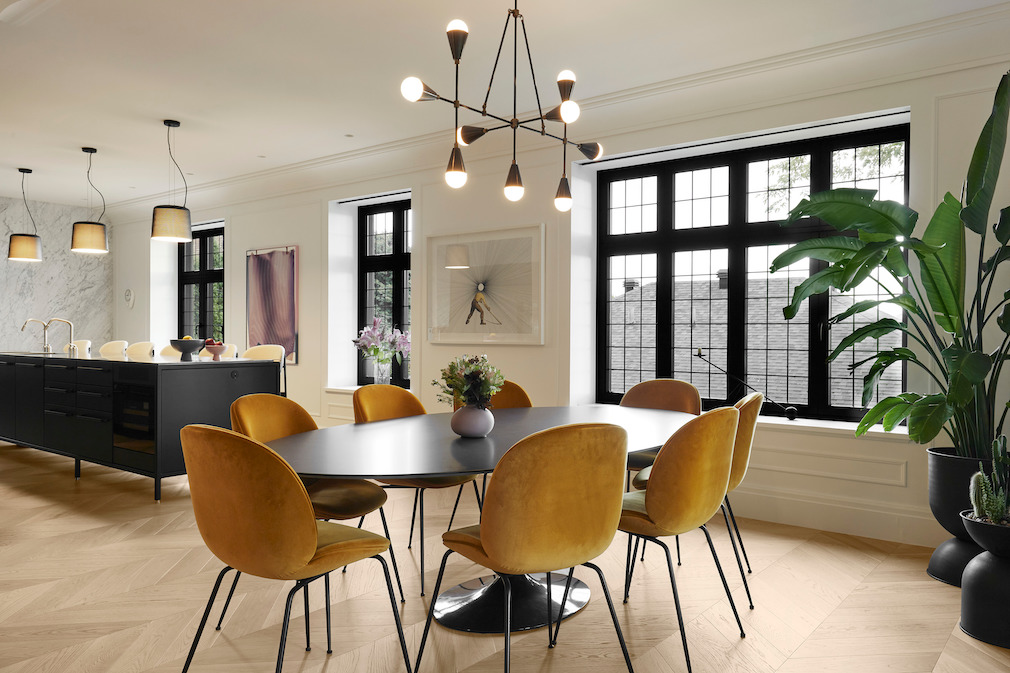
To meet the client’s needs, the architect undertook a complete interior renovation, removing all the house’s partitions. With heritage preservation in mind, the composition of the original windows on the south side of the rear elevation was carefully rethought. The aim was to create a vast, fluid living space, open and flooded with natural light. This approach made it possible to redevelop the kitchen along the courtyard, while respecting the historic value of the original paned windows. It also enabled the dining room and living room to be designed in an “L” shape, guaranteeing abundant light from morning to night.
Furthermore, the “L”-shaped layout extends to a large covered outdoor terrace, accessible via imposing French doors from the living and dining rooms. Thus, both indoors and out, the home’s residents enjoy panoramic views of the surrounding landscape, vistas of the St. Lawrence River, and the splendor of century-old trees in the courtyard.
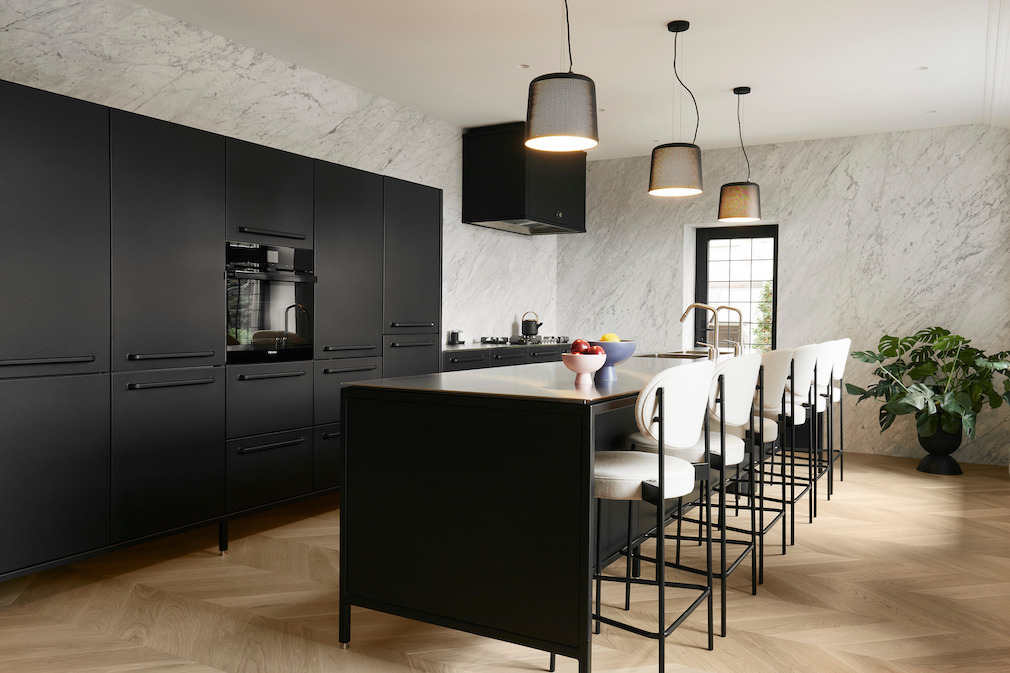
The kitchen has been cleverly fitted out with minimalist modules from the renowned Danish company VIPP, harmoniously blending functionality and aesthetics. These wall-mounted modules cleverly conceal all the necessary equipment and storage space, adding a touch of modernity to the house’s historic setting. A vast central island provides a generous workspace and dining area for the whole family.
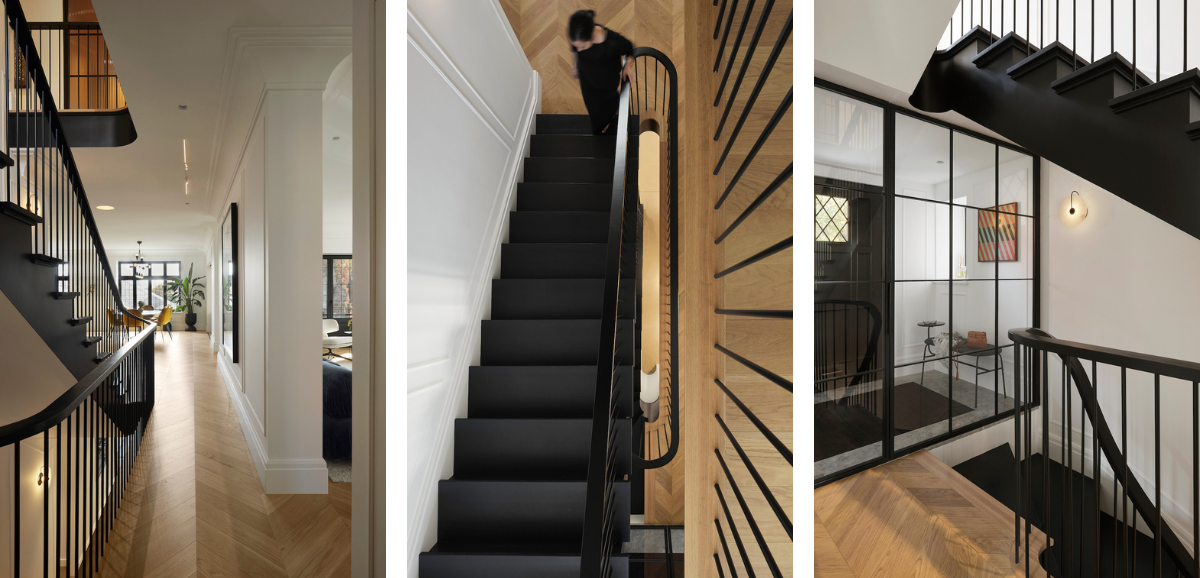

At the heart of this home, the architect transformed the original entrance hall and staircase into an innovative staircase that extends like a continuous ribbon, centrally linking all levels of the house. The new staircase, in elegant black, emphasizes the simplicity and refinement of the contemporary style desired by the clients. Its design represents a true technical feat, combining exceptional craftsmanship with a subtle use of materials and ornamentation.
The new black oak staircase echoes its predecessor, incorporating delicate moldings under the nosing and graceful curves at the landings. Sleek detailing translates into a continuous handrail and minimalist metal balusters, meticulously integrated into each step and the herringbone floors. It embodies refined luxury, while harmonizing the different levels of the house and contributing to its singular charm.
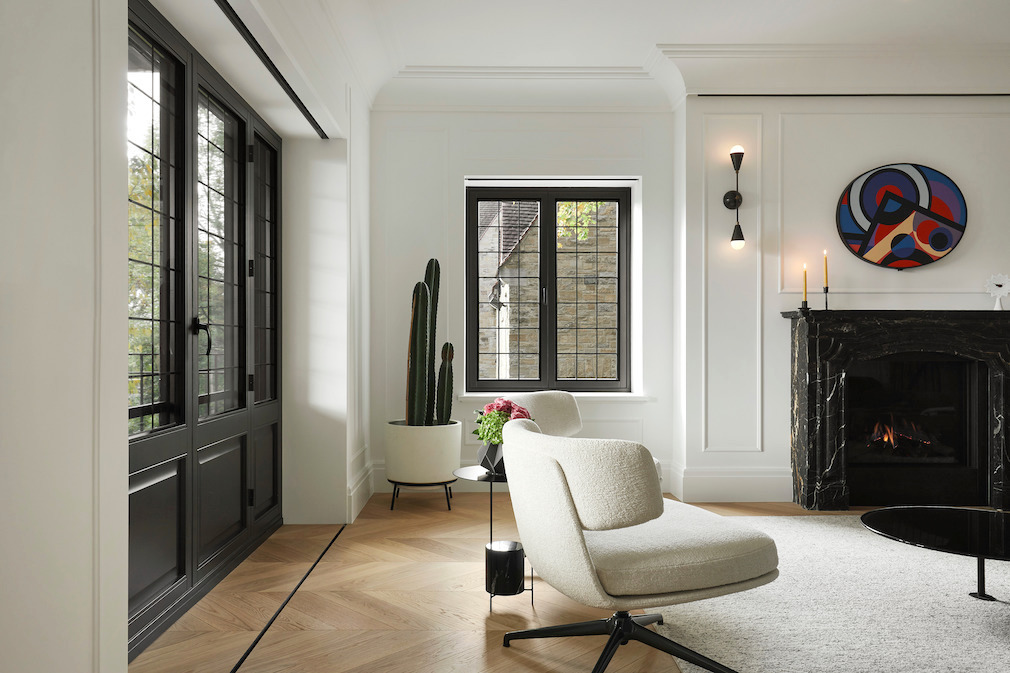
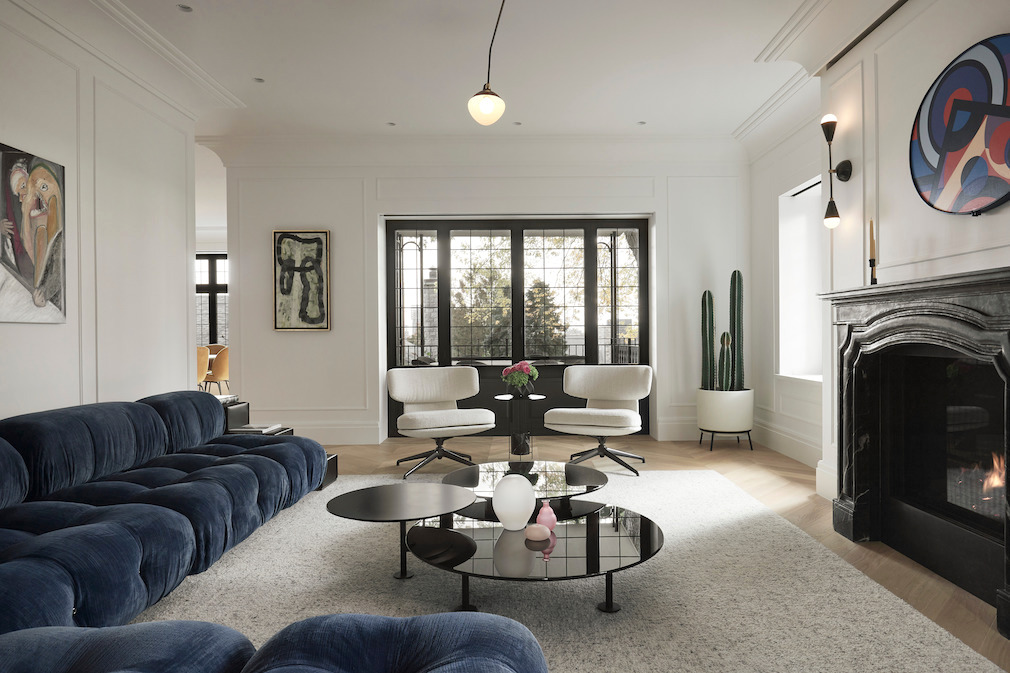
Luminous white-panelled walls throughout create a calm, refined backdrop for the couple’s contemporary art collection. Subtle sophistication permeates every room, thanks to a meticulous selection of brightly colored, minimalist furnishings carefully integrated into the architecture. Family members live in an atmosphere of light and airiness, where every space is harmonious. But color comes into play in certain spaces.
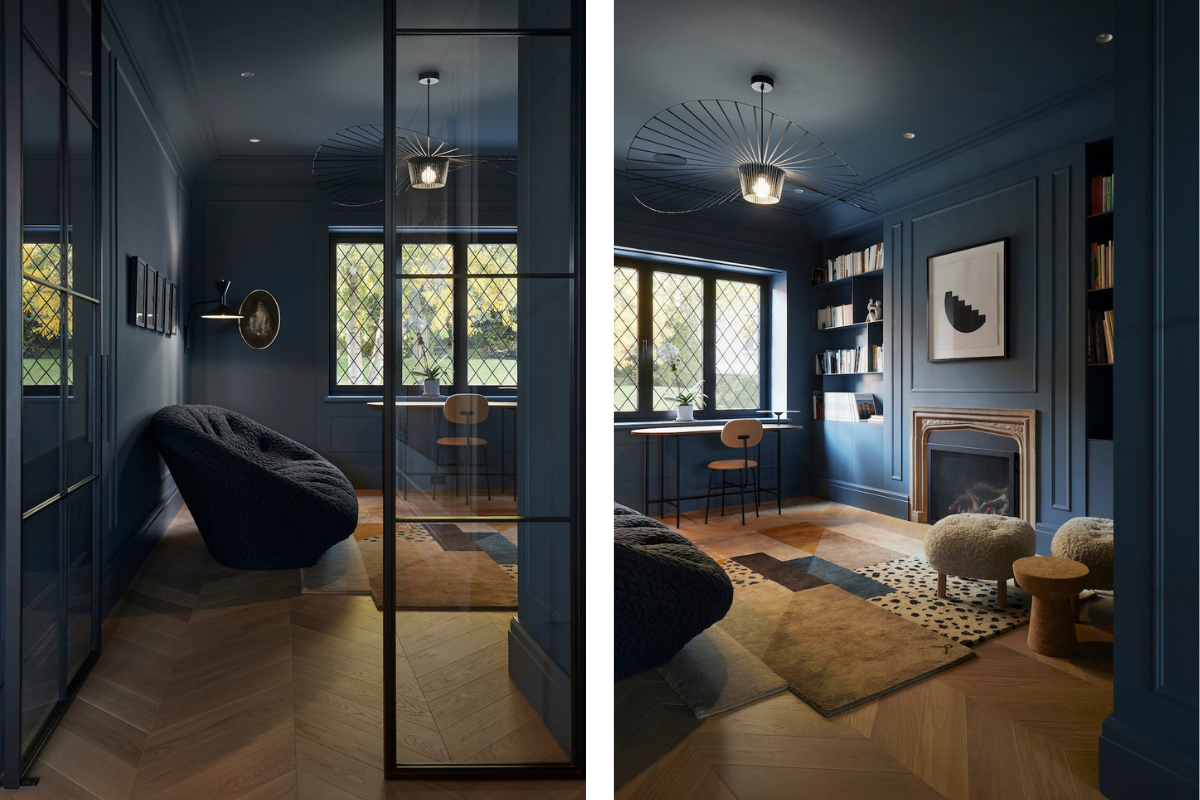

On the first floor, the library, with its bold navy blue color, offers an immersive experience. From the ceiling and woodwork to the pedestals and built-in furniture, blue creates a clean, playful atmosphere, inspired by the Danish expression “hyggelig”, which evokes a sense of well-being. This warm, intimate space is ideal for reading, study, and contemplation. The original grey stone fireplace mantel recalls the house’s past, while complementing the white oak floor.
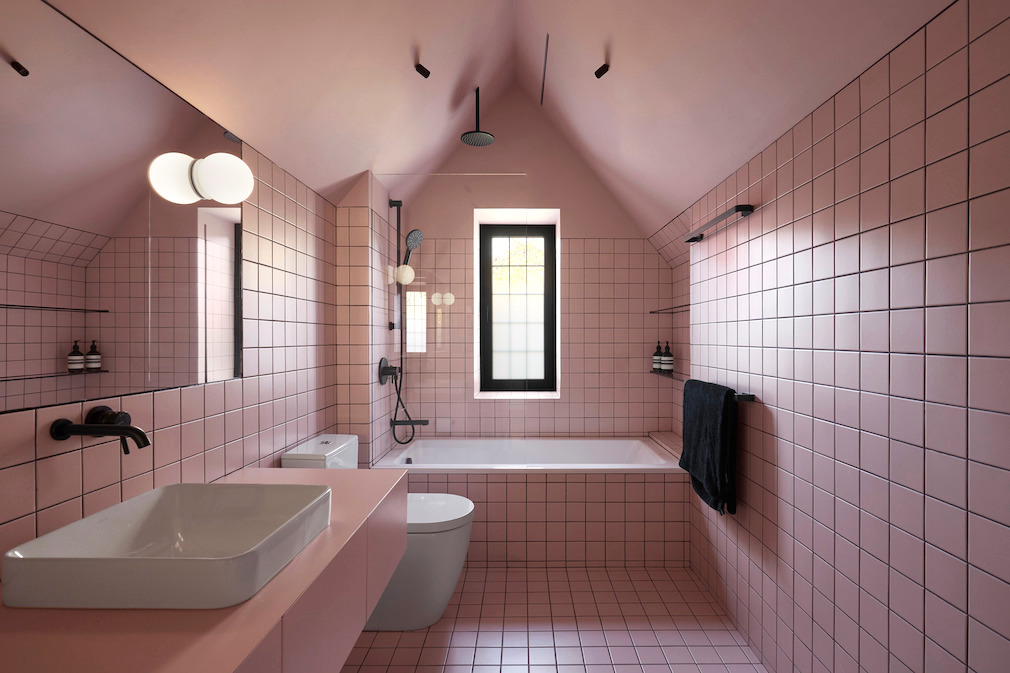
In the attic, hidden behind a secret door, a bright pink bathroom comes into view. Walls, floors, ceilings, and even countertops are adorned with pink ceramic tiles, creating a playful yet romantic ambience. This enchanting space is a source of joy for the youngest member of the family, who is lucky enough to occupy it.
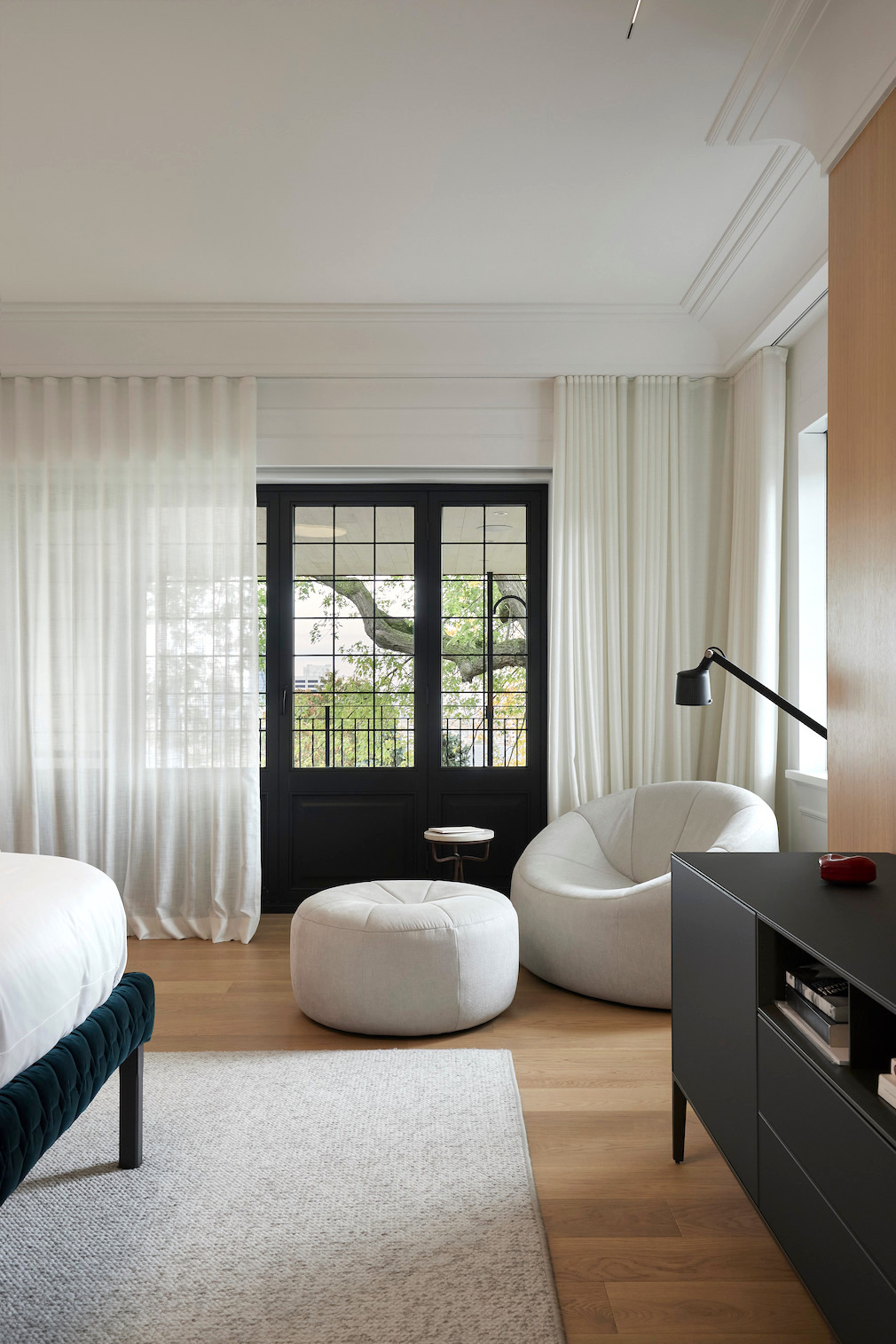

This renovation represents a real tour de force in terms of the mastery of materials and the art of combining tradition and modernity. The design approach was a lesson in modernization and heritage preservation, subtly blending past and present. The result is a classic setting with a modern, European-style interior, where a sophisticated ambience perfectly reflects the personality of its residents. This transformation is a testament to the magic that happens when history meets modernity.
Photography by Maxime Brouillet.
Like what you see? Get it first with a subscription to aspire design and home magazine.