

When building a dream home in Austin, widely recognized as a top “eco-friendly city,” Mark Canada, custom home builder and owner of Maci Homes, wanted to create a net-zero energy residence. It seemed fitting for an urban oasis that backs up to Shoal Creek, surrounded by a canopy of trees characteristic of the Allendale neighborhood in the heart of the city.
But while Canada accomplished his eco-conscious mission—and even earned a five-star green rating—the endeavor wouldn’t have been possible without some top-of-the-line technology that ensures a brighter, greener future.
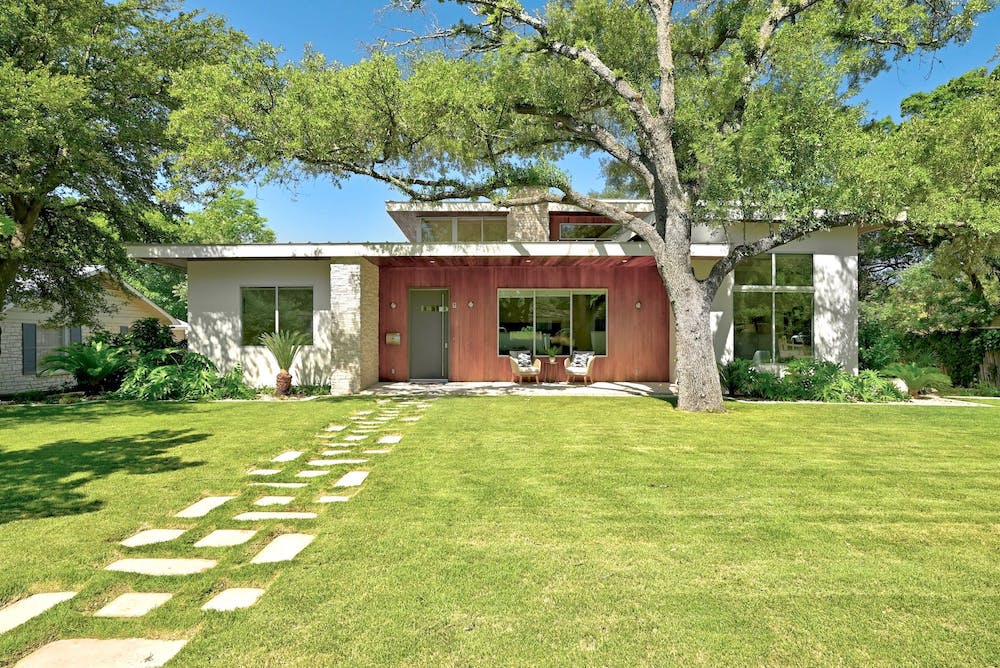

Though renewable energy powers much of the 5,400-square-foot home, Canada took a holistic approach that incorporated several strategic design elements. Solar panels keep energy bills to a minimum. As an added bonus, the panels, installed on the modern flat roof, are not visible from the ground.
Rather than using a conventional HVAC system, heating and cooling is done completely through geothermal energy. The system uses 14 water wells that run 400 feet into the ground. Heat is pulled out or pushed into the pipes to heat or cool the house, depending on the season.
Structurally, the cantilevered roof adds dimension to the front of the house and has a cooling effect on the home’s interior.
But perhaps the biggest architectural element was the assortment of windows, which Canada deftly used to make the space as aesthetically appealing and energy efficient as possible.
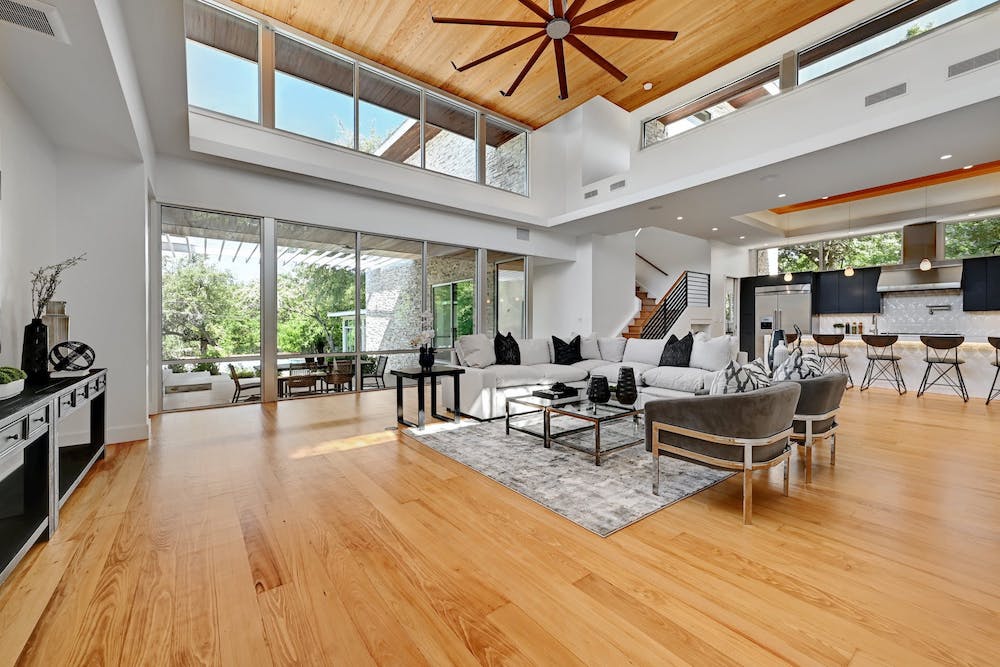

Clerestory windows are strategically placed in both common areas and bedrooms to bring in maximum natural light, particularly in the main living room and kitchen. To counter the brutal Texas summer sun, smaller south-facing windows sit high to minimize direct summer sun, while still allowing ample natural light into the room.
Windows at the back of the house include a unique feature that uses thermodynamics to create a natural circulation of cooling air. At the touch of a button, the windows can be opened about six inches. When casement windows set close to the floor are cracked open at the same time, the resulting natural flow of air creates a nice breeze in the house.
Once the foundation was built, Canada filled the home with fixtures that bridged the gap between style and sustainability. Sleek, high-end Haiku ceiling fans from Big Ass Fans hang throughout the house. A stunning, custom-made fan in the living room makes for a dramatic centerpiece with its 9-foot blade span. The premium fixtures act as energy-efficient partners to the home’s heating and cooling system.
Water is also not wasted on this property. A private water well provides all the water needed for the pool and landscaping. The flat roof can be easily configured for rainwater collection, supplying 80 percent of the water needed for the house.
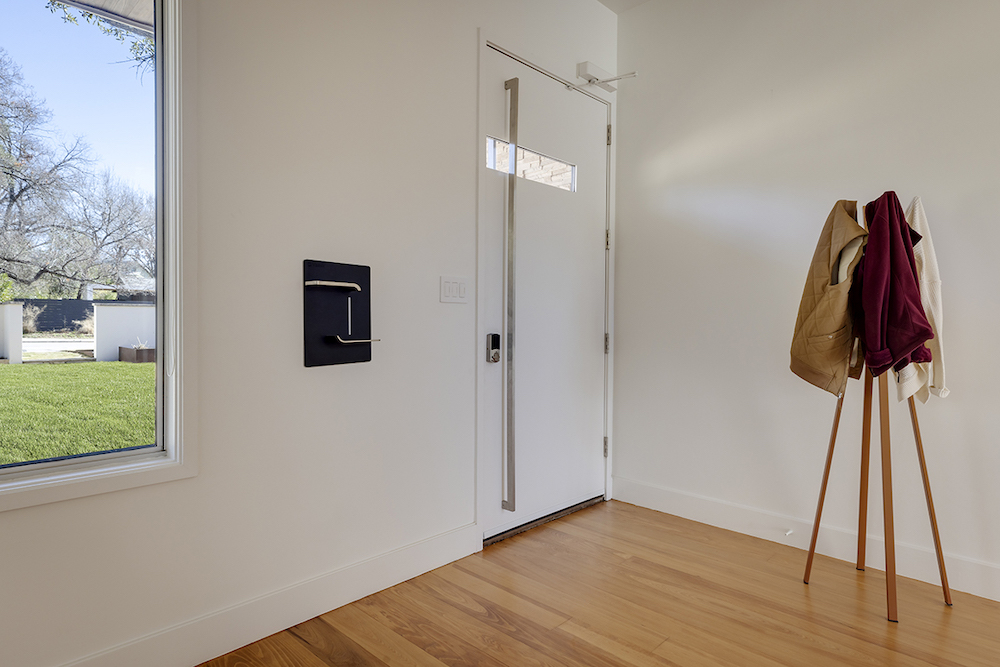
To give this eco-conscious home a timely twist, Canada added two Vaask touchless hand sanitizing fixtures. One is recessed into the wall by the front door. Another is in the casita, a separate 300-square-foot building that can be used for entertaining, as an exercise space, or as a guest room. Stopping the spread of germs was especially important with three young children living in the house. Everyone can clean their hands as they enter and exit these key areas.
Vaask’s hand sanitizing fixtures run on AC power, using less energy than a nightlight, and eliminating the need for batteries. Like the rest of the property’s sustainable wares, the fixtures are built to last. They are constructed of cast aluminum and come with a five-year warranty. They also feature a high-capacity cartridge that can be refilled with any bulk sanitizer gel, cutting down on single-use plastic waste.
Sustainable, sanitary, and stylish, Canada’s project is paving the way for the next generation of homes. For more information, go to Vaask.com.
Like what you see? Get it first with a subscription to aspire design and home magazine.