


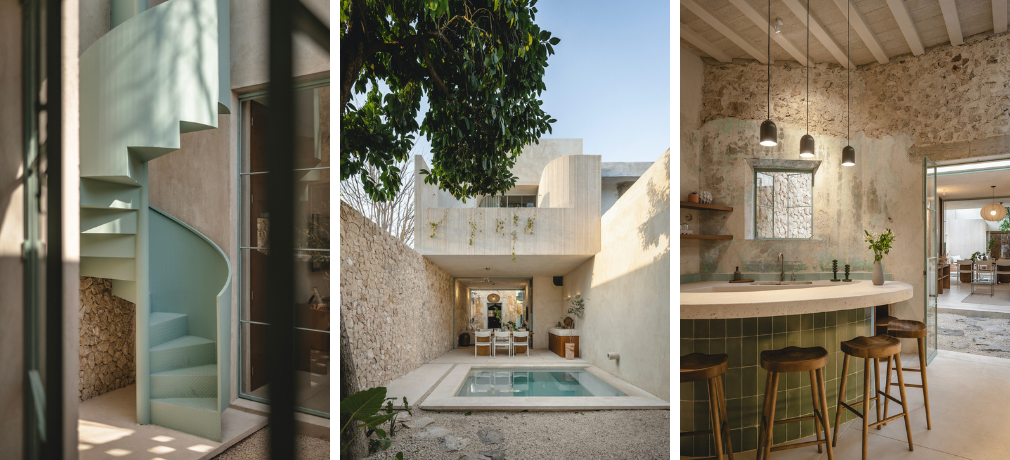

What was once a forgotten property in the historic center of Mérida, Yucatán, has been transformed into a serene indoor-outdoor dwelling by Veinte Diezz Arquitectos. Designed as a vacation rental, the project reimagines a long-abandoned home through a series of open-air patios and closed modules, balancing continuity with intervention. The new layout privileges natural light, ventilation and material honesty, while preserving as much of the original structure as possible.
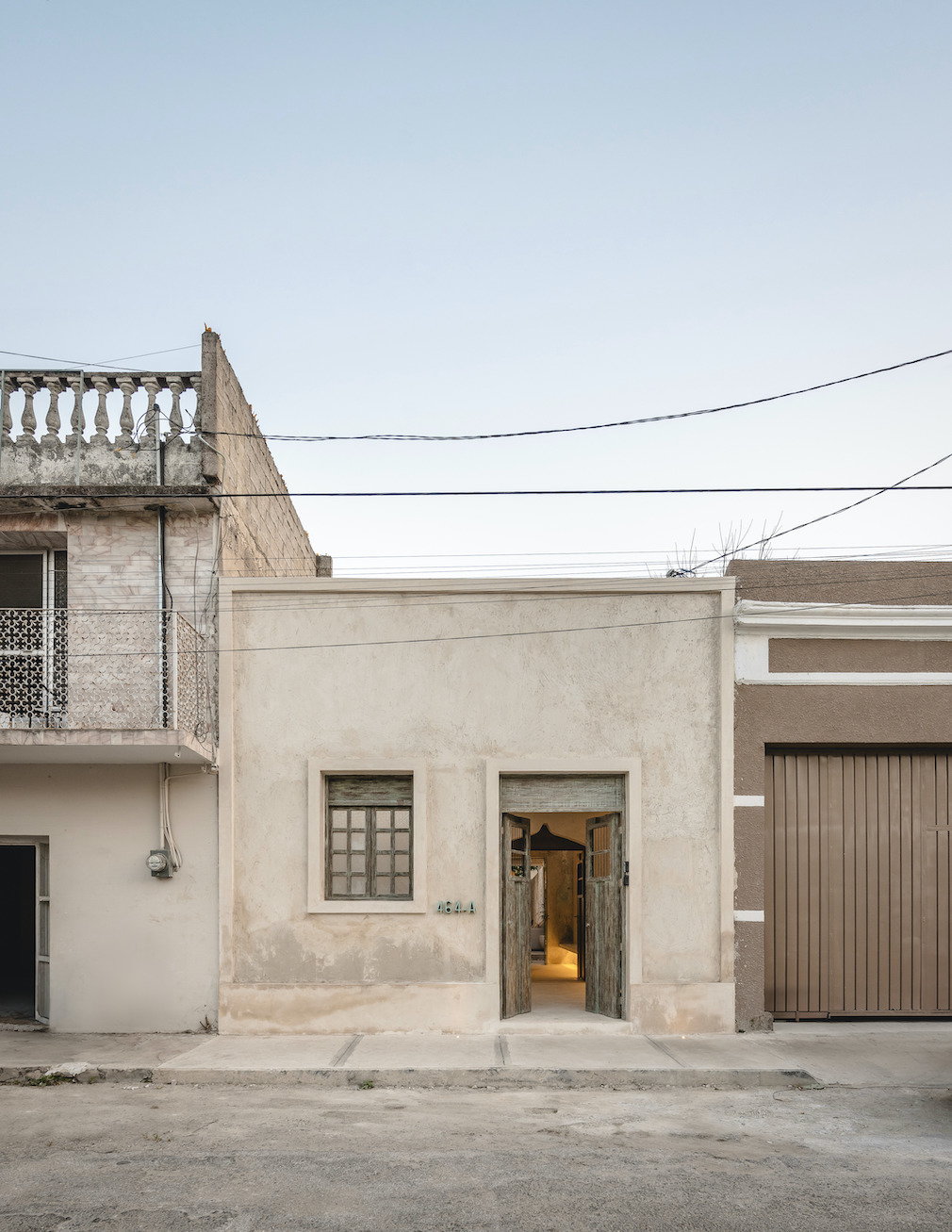
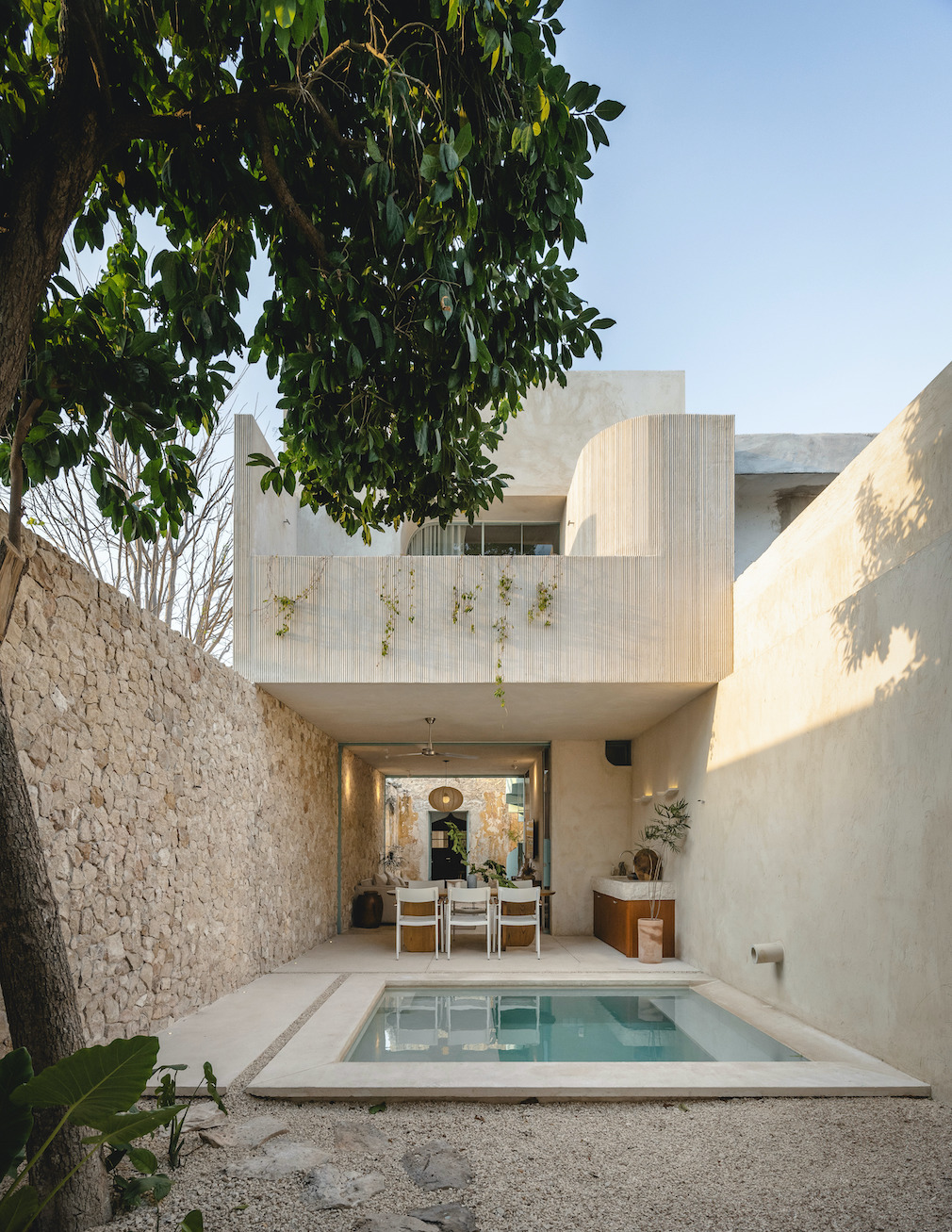
Located on a narrow urban lot, the existing house was in a state of structural neglect, with collapsed roofs and overgrown vegetation. Rather than demolish the house, the architects proposed a minimal and respectful strategy: conserve the historic masonry walls, introduce light through patios and skylights, and organize the home into six distinct volumes — three covered and three open. This layout generates visual transparency, cross-ventilation, and a seamless indoor-outdoor experience.
“Rather than creating a new house, we wanted to recover the one that was already there, revealing its potential through the rhythm of patios, curves and light,” says architect José Luis Irizzont Manzanero.
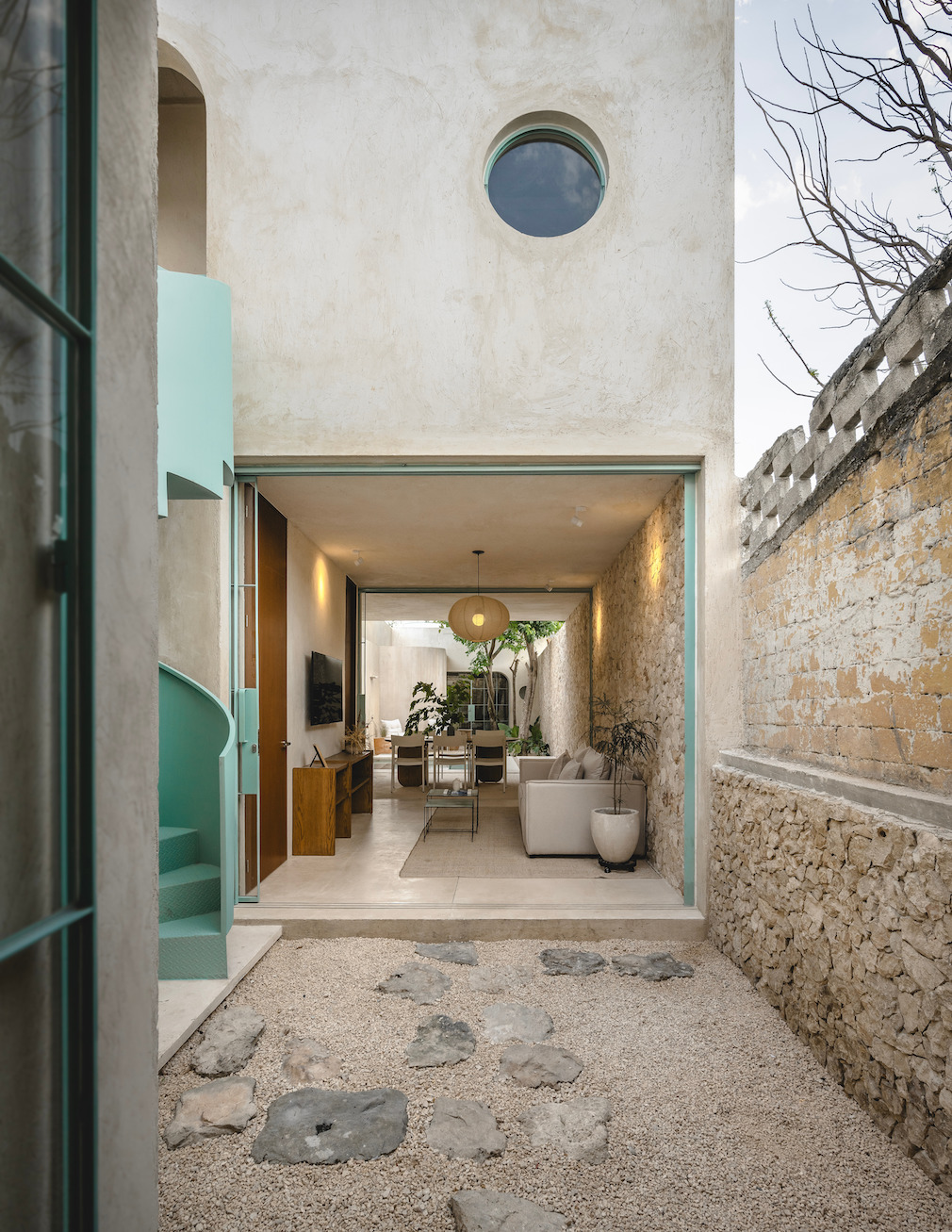
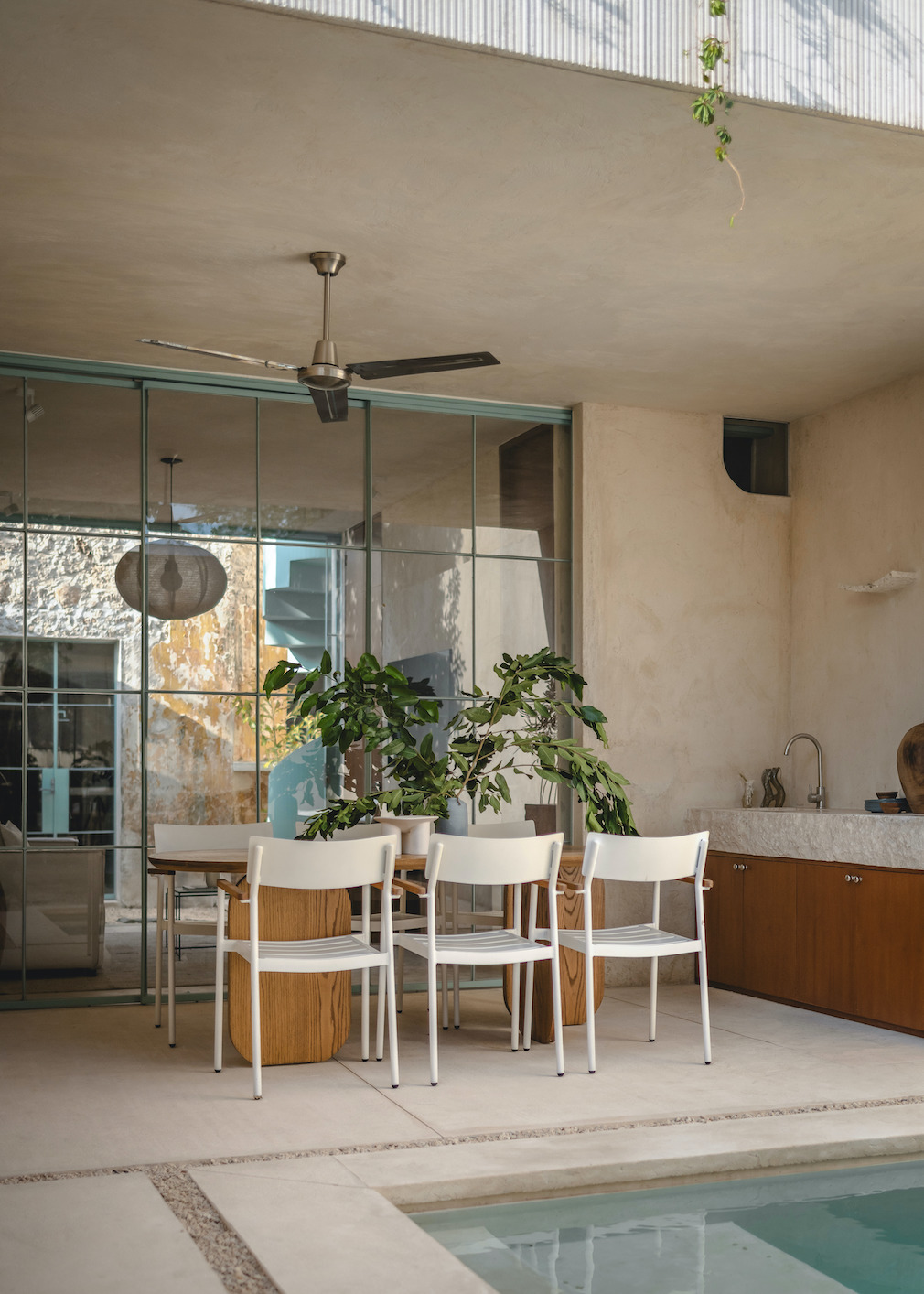
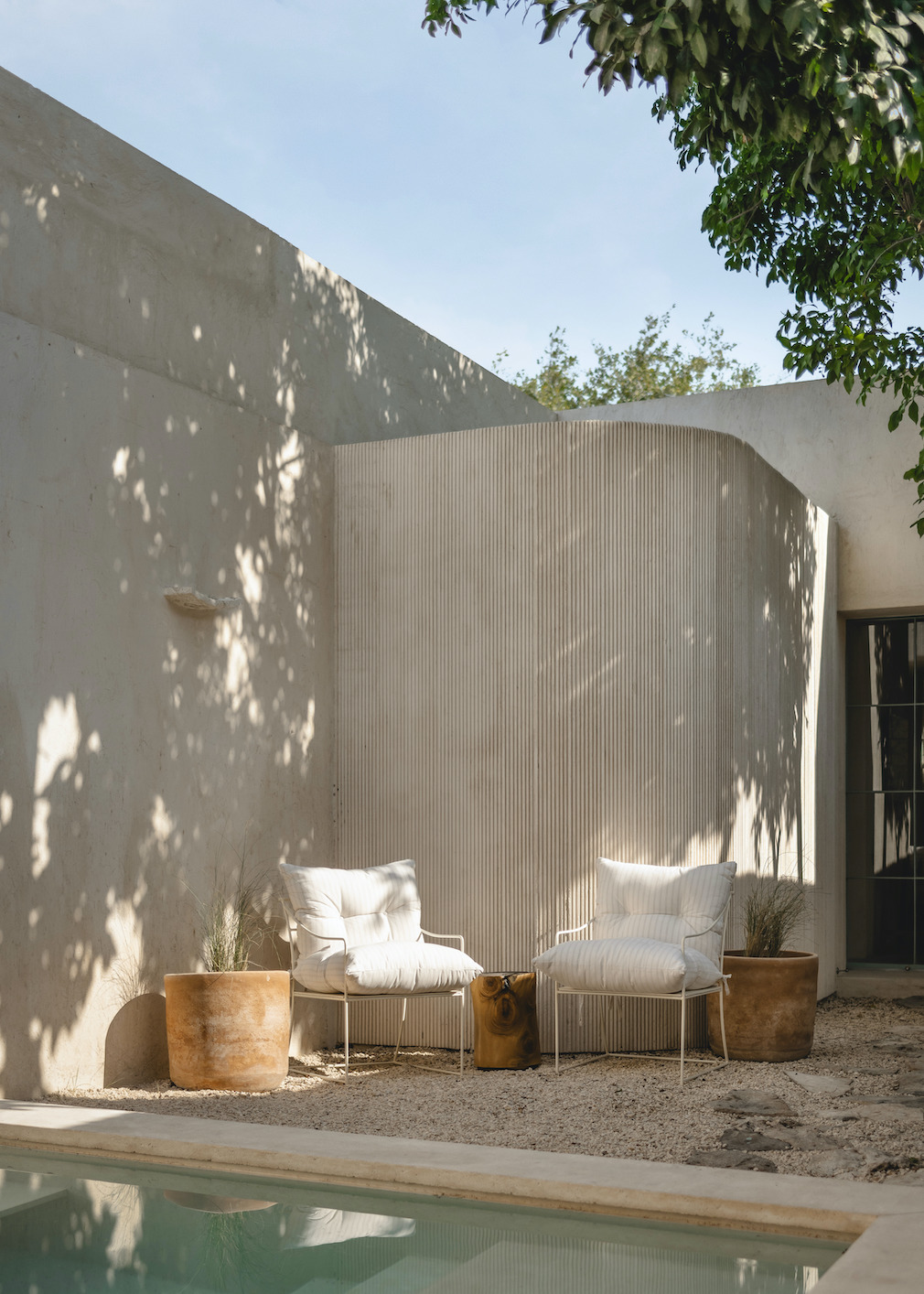
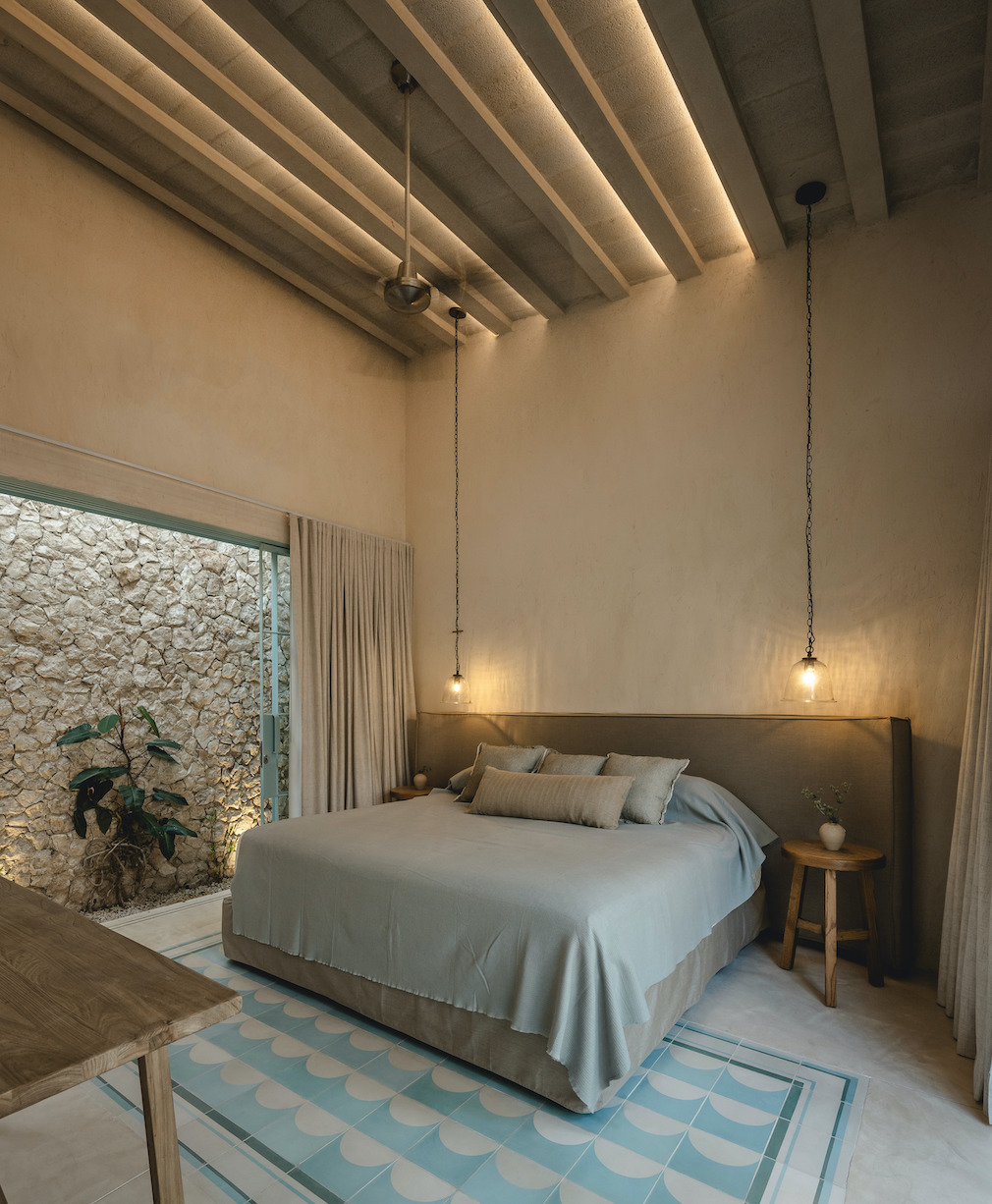
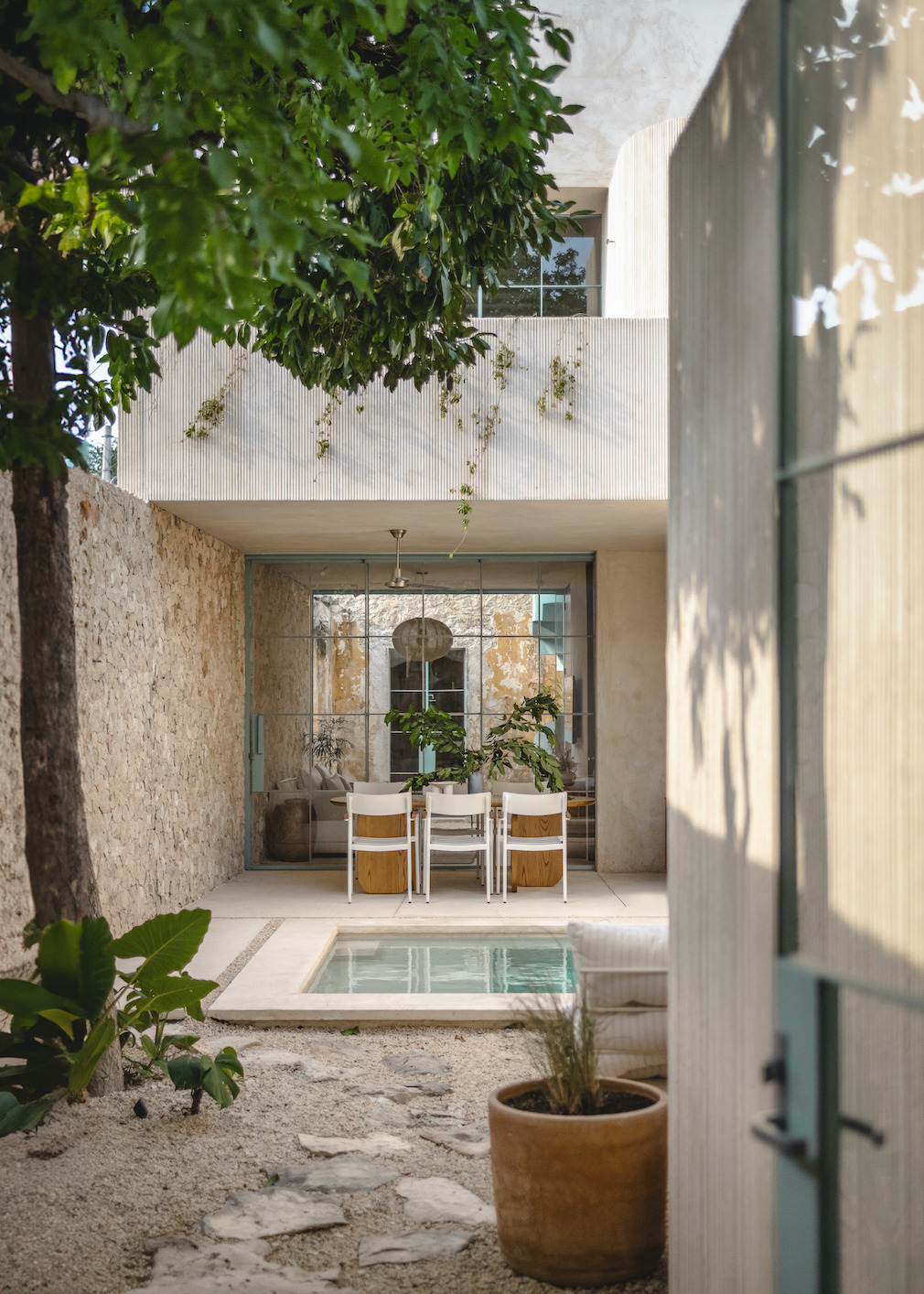
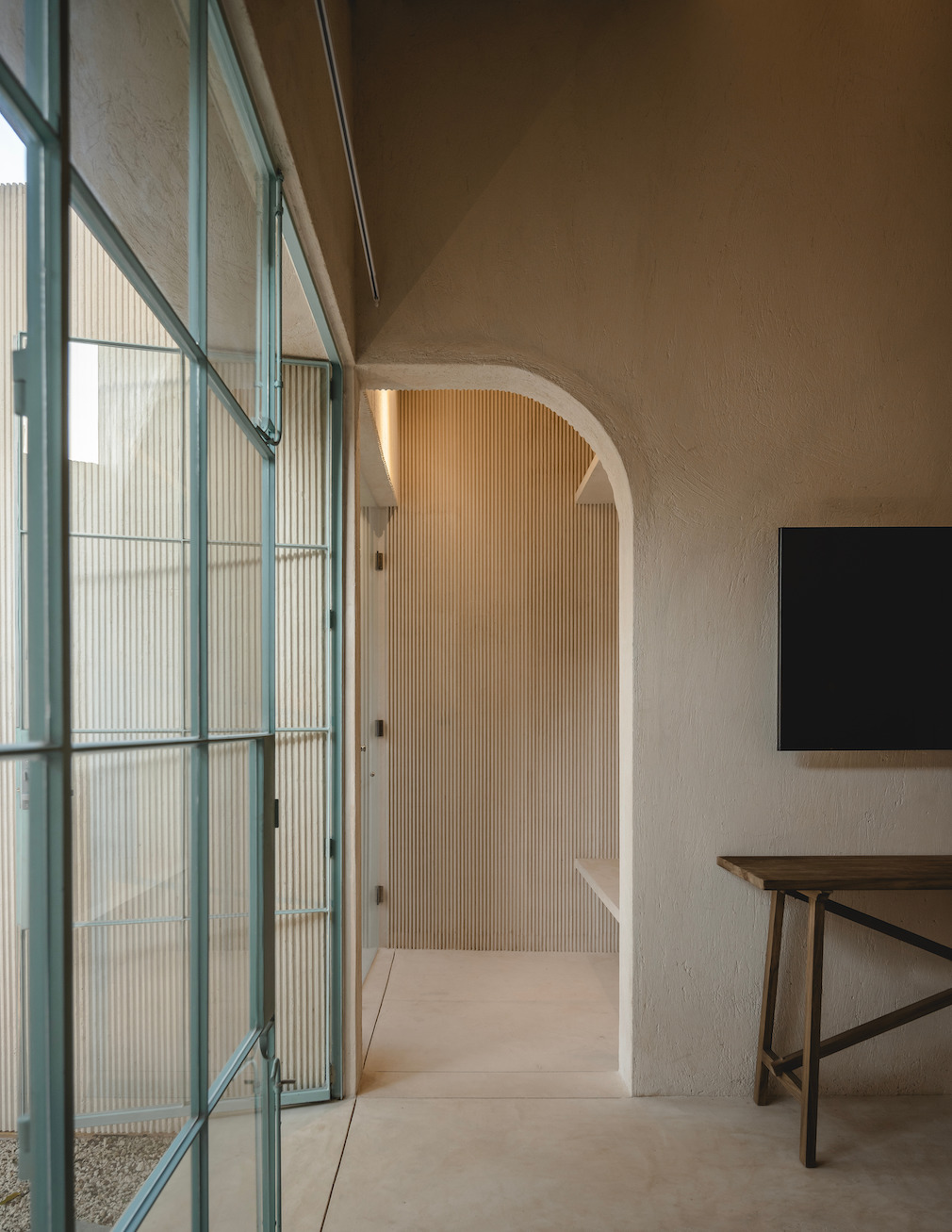
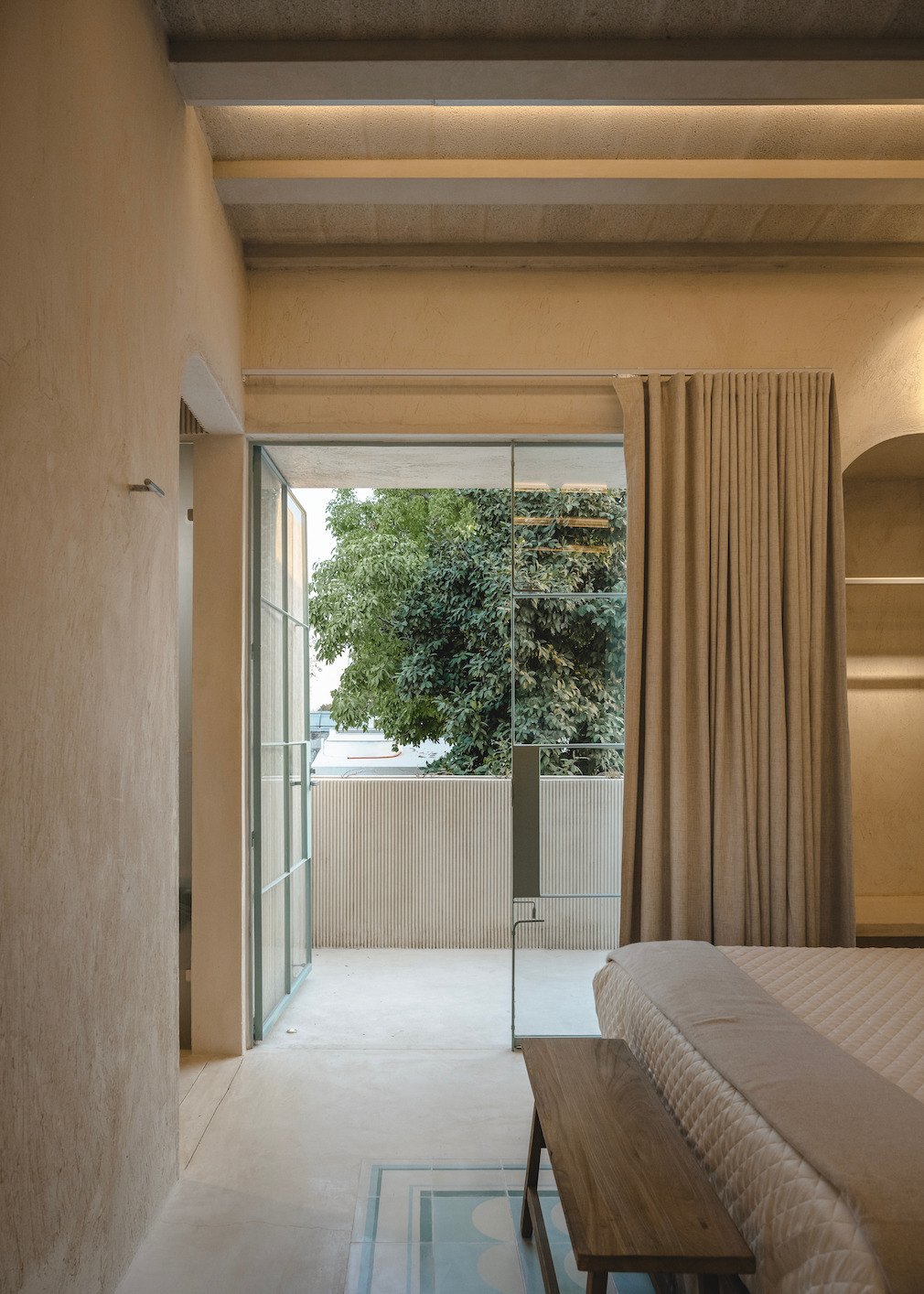
From the street, a sequence of spaces unfolds: entrance garden, social core (kitchen and living room), central patio, guest suite, rear garden with pool and a master suite at the back. The central patio becomes the heart of the house, not only organizing circulation, but also acting as a passive cooling element. Curved walls, patios, and open-air connections ensure that every area is naturally lit and ventilated, offering changing atmospheres throughout the day.
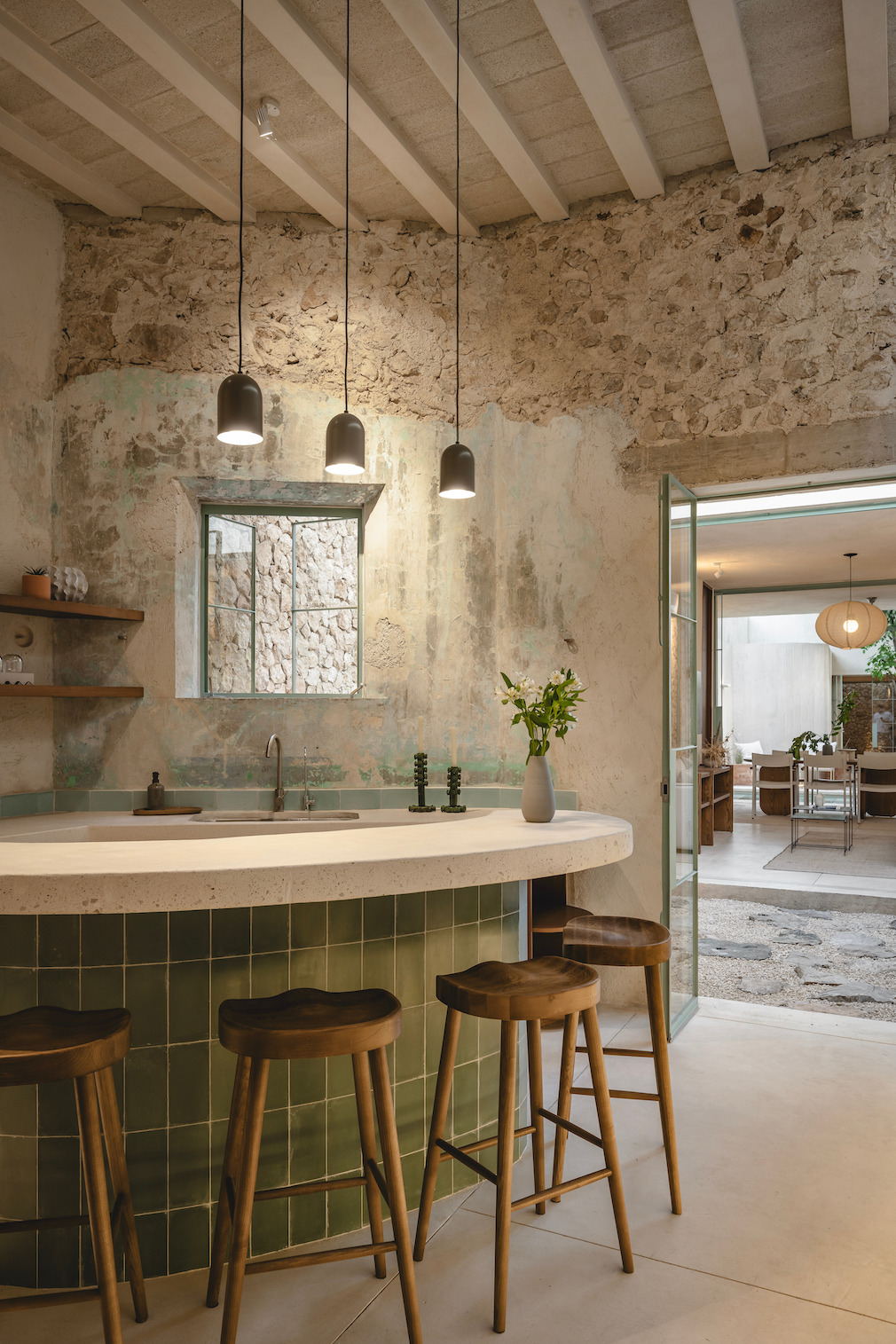

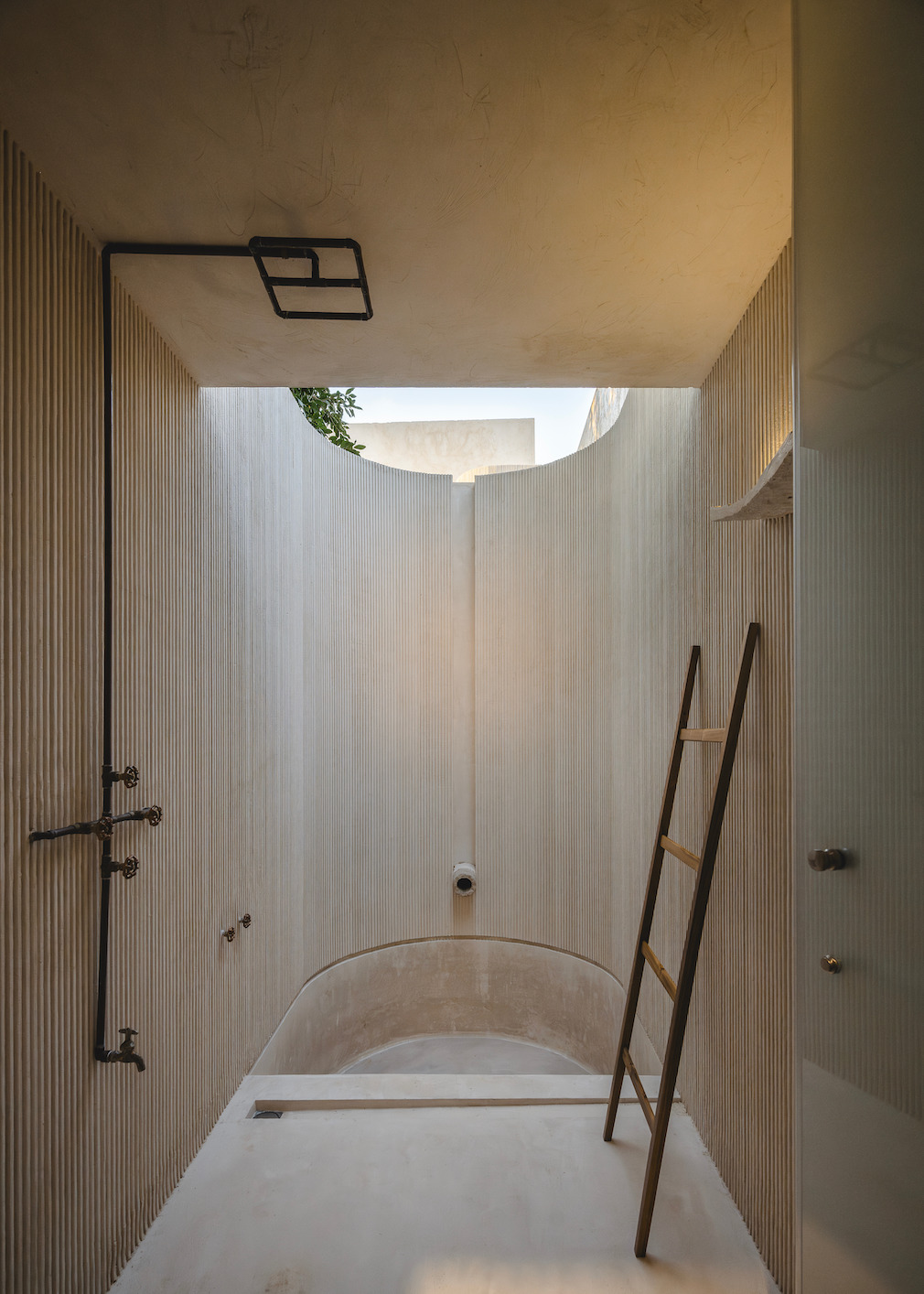
A restrained palette of local materials and textures defines the intervention. The main finishes include natural-tone lime plaster and hand-striated concrete in wet areas. Original masonry was stabilized and reused wherever possible. New roof slabs were left exposed, revealing their beam structures as a nod to traditional wooden rollizos. Every bathroom volume includes a crescent-shaped skylight, framing a direct view of the sky.
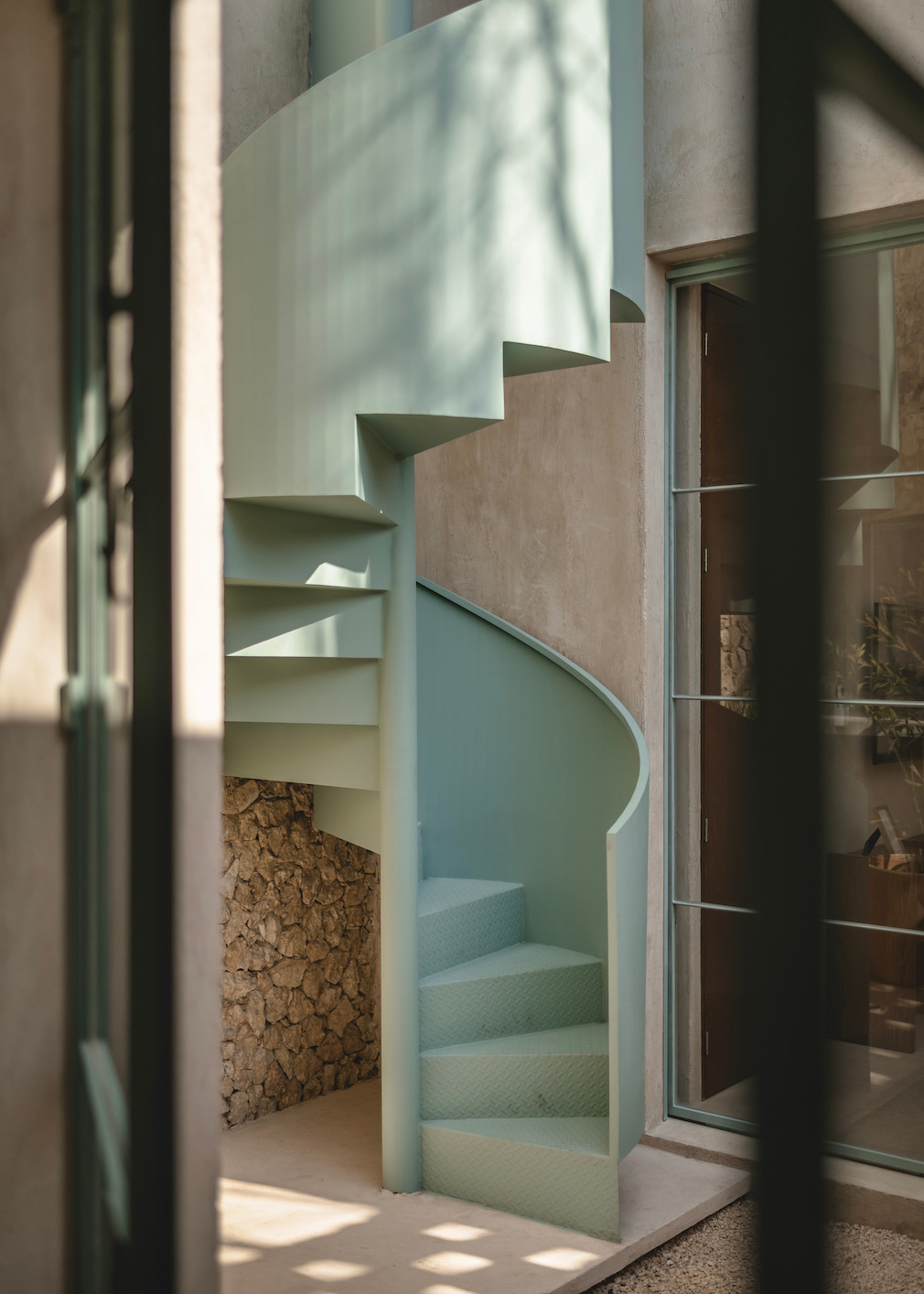
The steel window grilles were painted in the house’s original tone — a soft sky blue — while the paved areas combine regional stone and minimal landscaping to evoke calm and continuity.
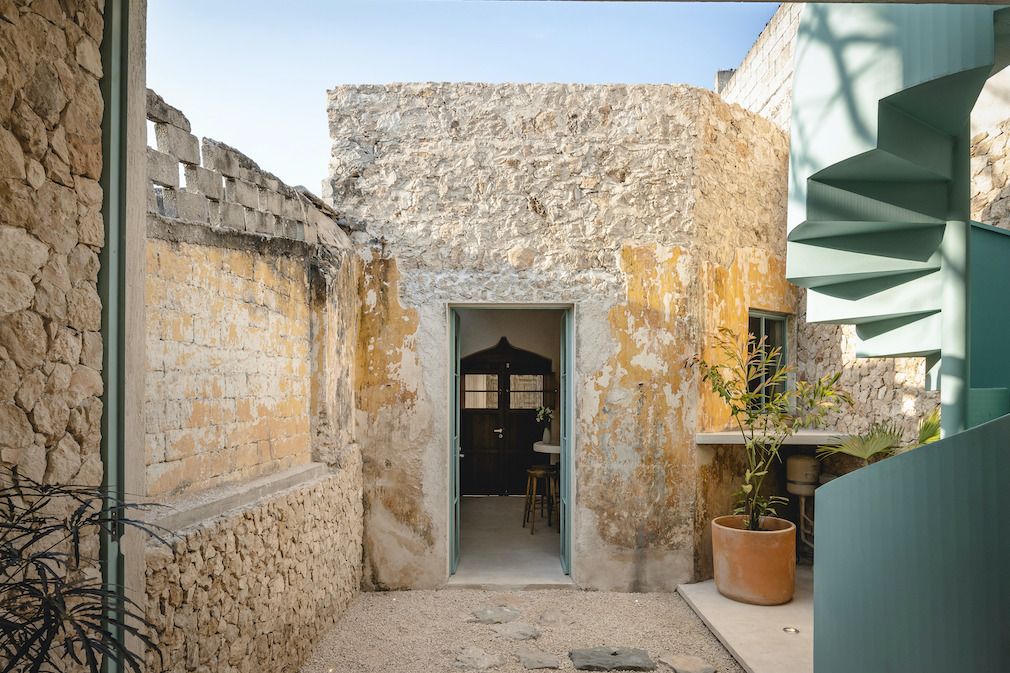

Approximately 70% of the original structure was retained, significantly reducing demolition waste and construction footprint. The project’s passive design strategies — including natural ventilation, shading and low-energy materials — contribute to a sustainable approach, both environmentally and culturally.
Vistalcielo is an example of how small-scale architectural interventions can offer meaningful alternatives to demolition. By balancing restoration and reinterpretation, the project breathes new life into a forgotten corner of Mérida’s built heritage, offering a serene and contemporary living experience rooted in place.
Photography by Manolo R. Solís.
Like what you see? Get it first with a subscription to aspire design and home magazine.