


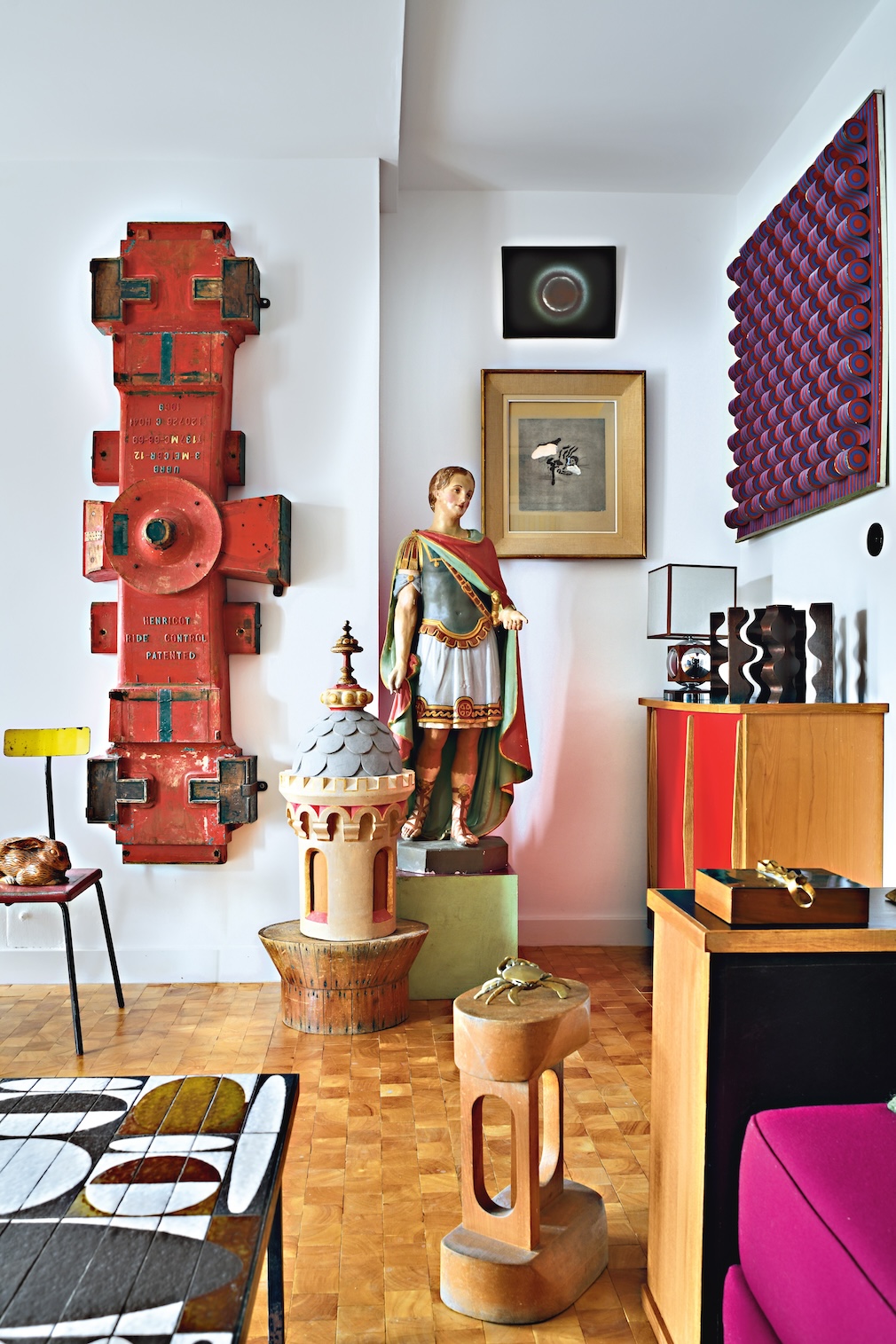

Atop an 18th-century building in the Ainay neighborhood of Lyon’s second arrondissement, surrounded by antique dealers, bouchon lyonnaise and quaint local markets, sits the apartment of Serge Rosenzweig, gallery owner and collector of objets d’art.
Rosenzweig embodies an ease and candor that comes from an early life spent pivoting numerous careers and titles, from painter in theater décor at the Comédie-Française to eight years as a retail buyer identifying covetous home goods for the popular American company Anthropologie. In 2012, he let his feet settle under the red rooftops of Lyon, opening his jewel box of a store, Galerie du Desordre, then finding his jewel of an apartment.
“I decided to design the restructuring myself in a somewhat selfish approach,” Rosenzweig recalls. “There would be only one bedroom and one bathroom, illuminated by skylights, and a large living space overlooking the river.”
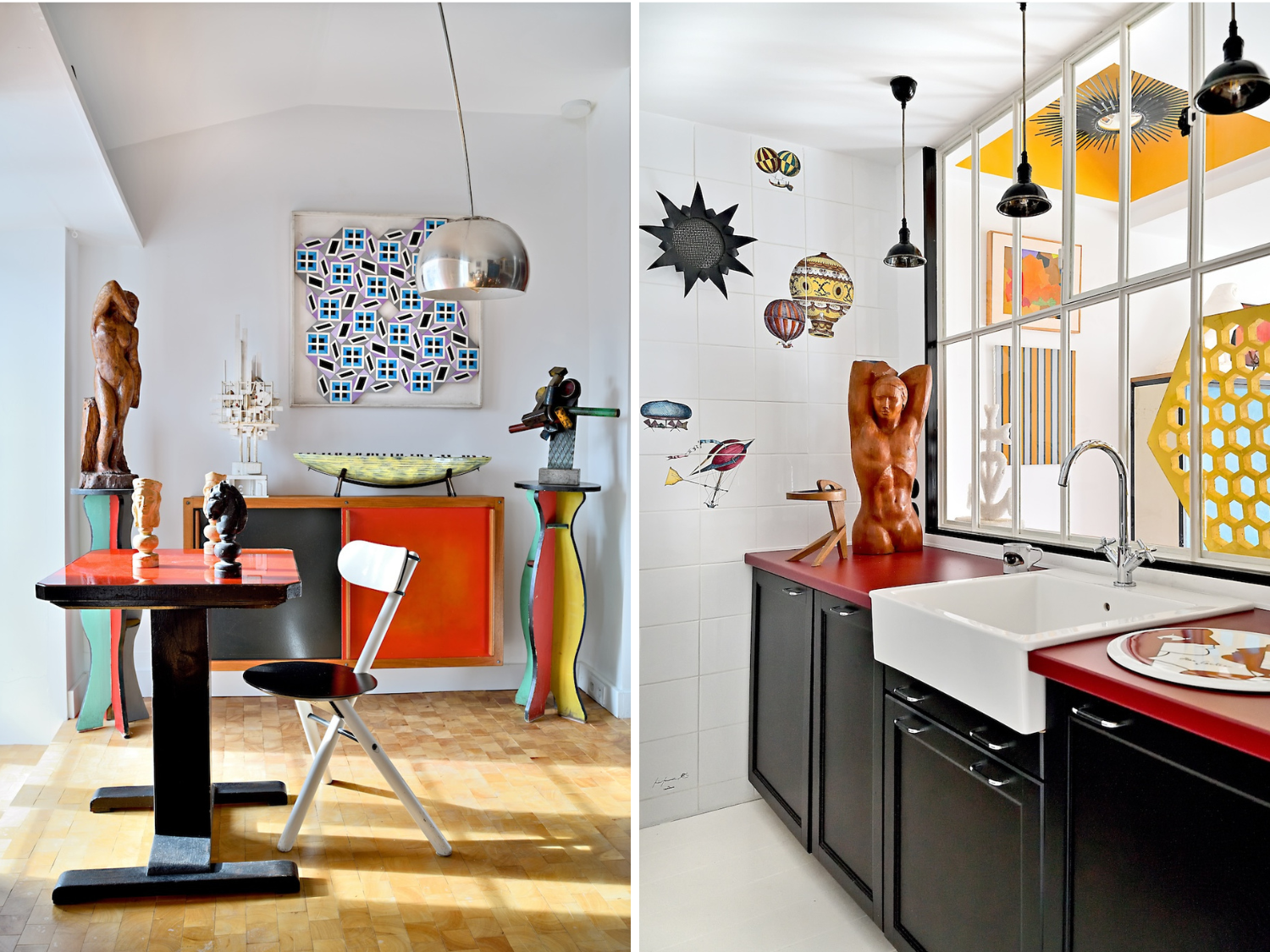

Rosenzweig’s apartment is an embodiment of home as a living archive, and the impression of French designers is ever present, each objet distinct in its own beauty yet operating in tandem with others, like a song. The 1950s black and red André Sornay credenza with sliding doors in the dining room sits adjacent to a bistro table from Auvergne and accompanied by 1970s tripod folding chairs by Paolo Orlandini and Roberto Lucci. A noticeable point of pride for Rosenzweig are the stunning azulejos, Portuguese façade tiles, that he carried back from a trip to Lisbon and date back to the beginning of the 20th century.
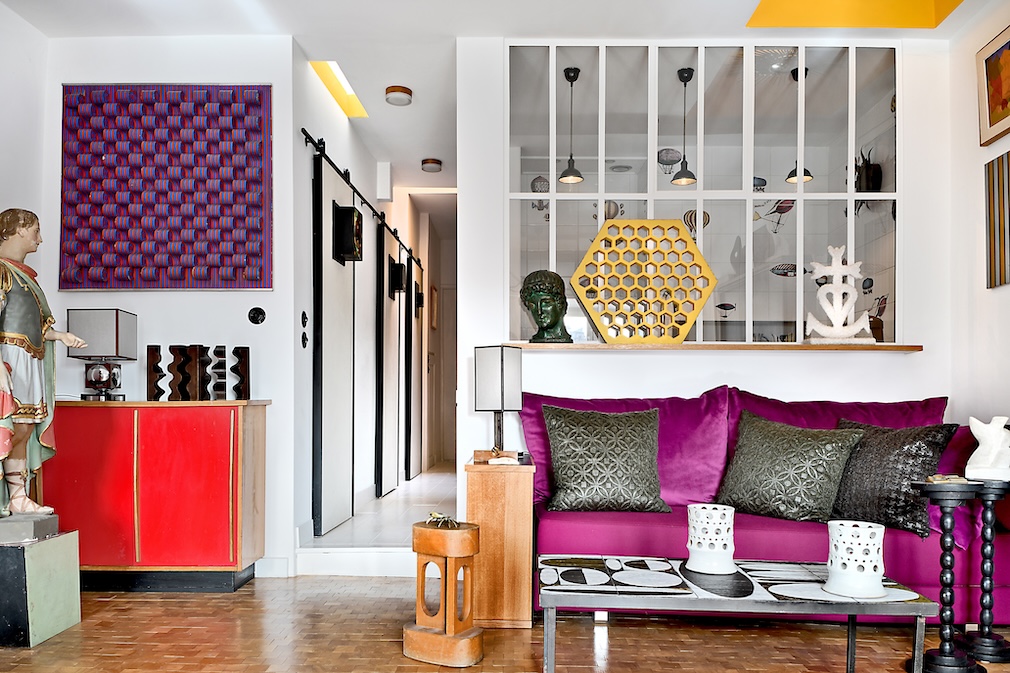

“The apartment was a favorite from my first visit because of the exceptional and immutable view,” Rosenzweig shares. “I immediately understood the potential offered by the ceiling-to-floor windows.”
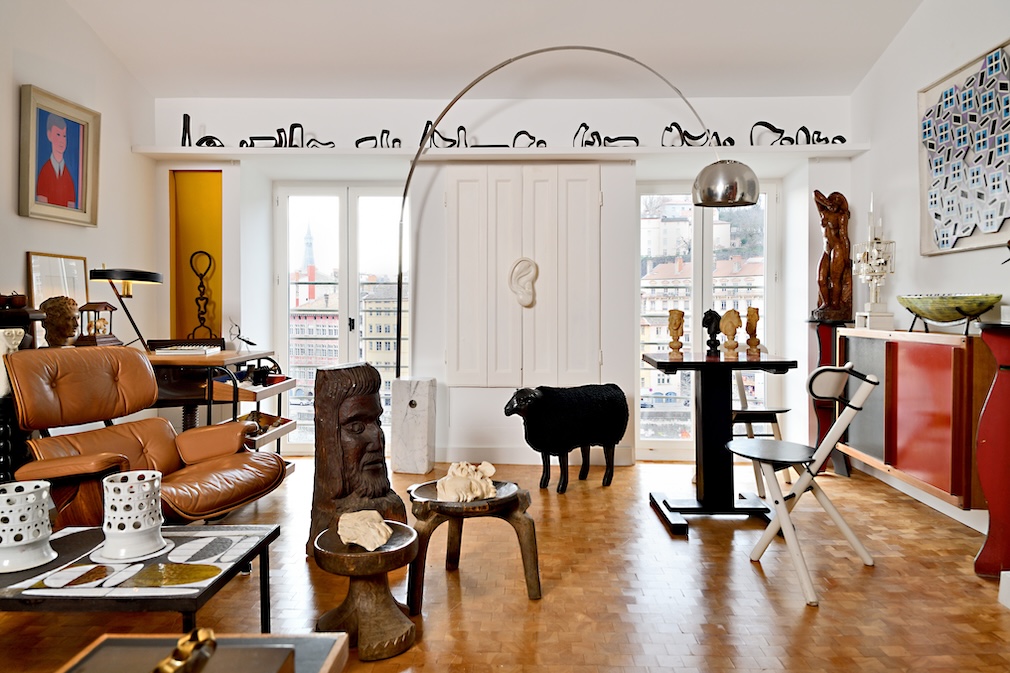
The living room effortlessly balances comfortable furnishings with objets d’art that cheekily call for individual attention but do not compete with one another. South-facing windows overlook stunning views of the river and the hill of Fourvière, while light dances down smooth white walls before spilling across the Pavés de Paris–designed wooden parquet floors.
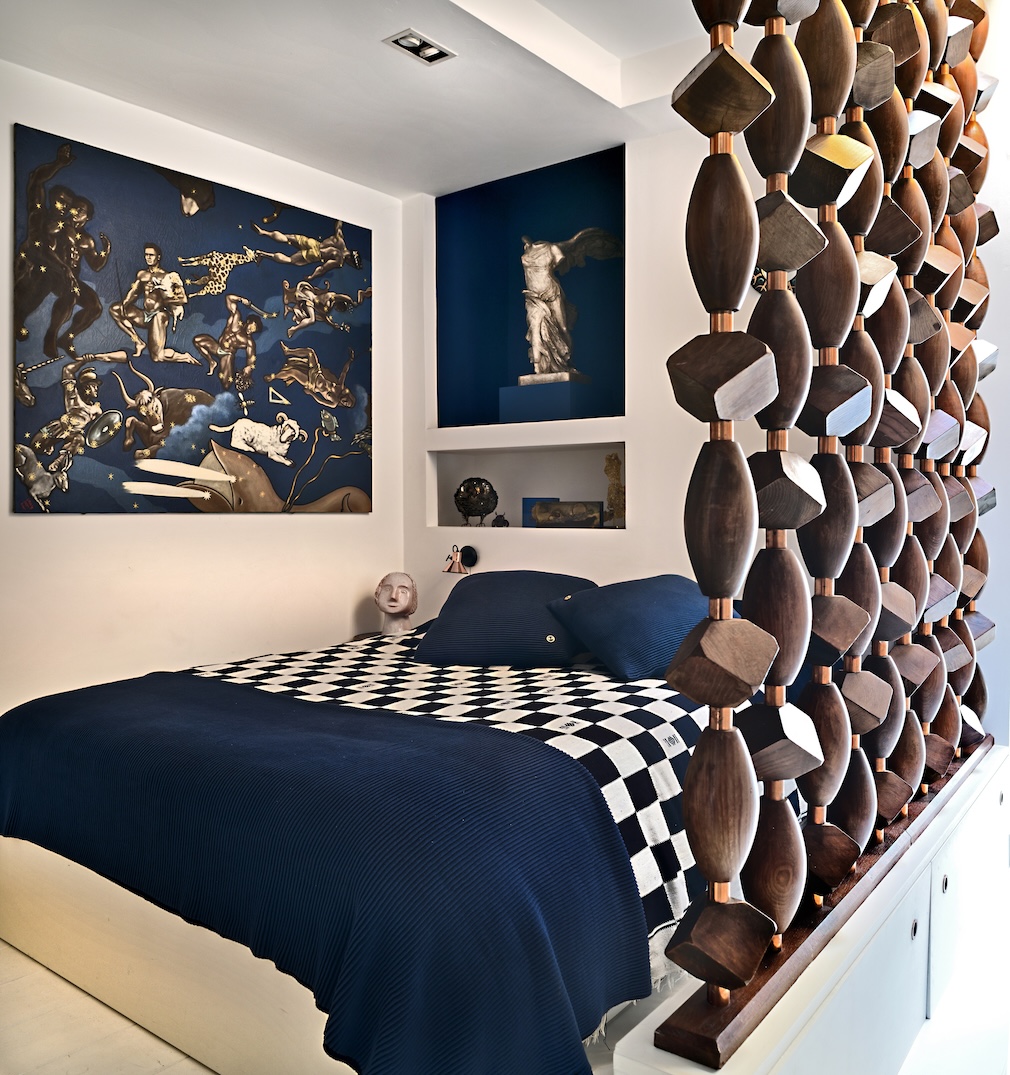

A tall partition, composed of wood and copper elements from the 1950s, designates the sleeping nook complete with the artist Eric Domalain’s work representing a celestial map and astrological signs, and a plaster copy of the Winged Victory of Samothrace, whose original is at the Louvre Museum.
Perhaps only second to Rosenzweig’s penchant for detailed curation of the many pieces he collects is his extraordinary way of describing them with lyrical adoration, suggesting that, from being a painter and buyer, a designer and a historian in this lifetime, perhaps he was also a poet in another.
Photography by Erick Saillet.
Like what you see? Get it first with a subscription to aspire design and home magazine.