

Known for his dynamic thought process, Mlondolozi Hempe founded Umongo and Co-Founded Broad Based Design on the foundation of giving creatives a platform to conceive and construct beautiful design. Having obtained his Bachelor of Architectural Studies Degree in 2011, he is currently registered with the South African Council of Architectural Professionals and uses his professional prowess to conceptualize and organize spaces all over Africa. Mlondolozi has a love for design as he marries furniture, interior and architectural design, viewing design as a uniform language to be explored and constantly studied. Introducing this week’s Voice of Africa, Mlondolozi Hempe.


Take a look inside this contemporary and tranquil master bedroom. Hempe implores angular design principles with few free-flowing edges to draw the eye through the space, without obstruction.
Reed Davis: How has your heritage inspired your work?
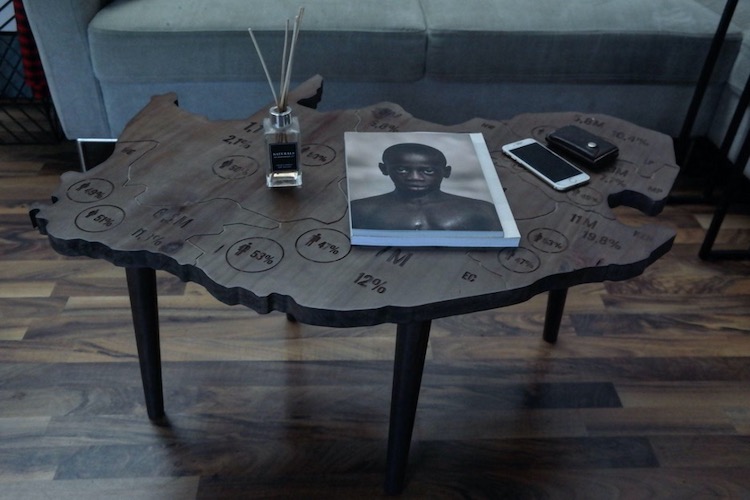
Mlondolozi Hempe: My heritage has had an impact on my work, especially my furniture and interior design work. Some of my furniture pieces tell stories, like the Imbadu bench which tells the story of a ritual around community gathering and problem-solving.
Reed: What does design mean to you? What does African design mean to you?
Mlondolozi: Design to me means the ability to solve problems creatively, to create beautiful pieces that inspire others, and manifest thoughts in the real world. African design means the ability to preserve culture through creativity which is something we have already done as people through storytelling. Now Africans can tell their story through design work at different scales.


This rounded couch is begging you to carve out some time for conversation. It’s situated around small tables and a beautiful stitched rug, giving the space a minimalist vibe, while still harkening to Hempe’s culture and design doctrines.
Reed: What is something you hope to see trending in design in the future?
Mlondolozi: Something I hope to see trending in design in the future is sustainable design, not only from a material sourcing perspective but from a human capital point of view. How design networks are nurtured and grown by private and public institutions to manifest the true value of the creative economy and how it can impact the African economy.
Reed: If you had one more hour in the day what would you do with it?
Mlondolozi: An extra hour in the day, I think I would use it on reading design literature. It’s something I seldom find time for.
Reed: What inspired you to start designing/creating?
Mlondolozi: I grew up a creative child so one can say it was a natural step. Also I come from a family of trades people, carpenters, bricklayers, etc so using my hands and thinking creatively has been in my DNA.


Click here to see more of the Voices of Africa series.
Like what you see? Get it first with a subscription to aspire design and home magazine.