

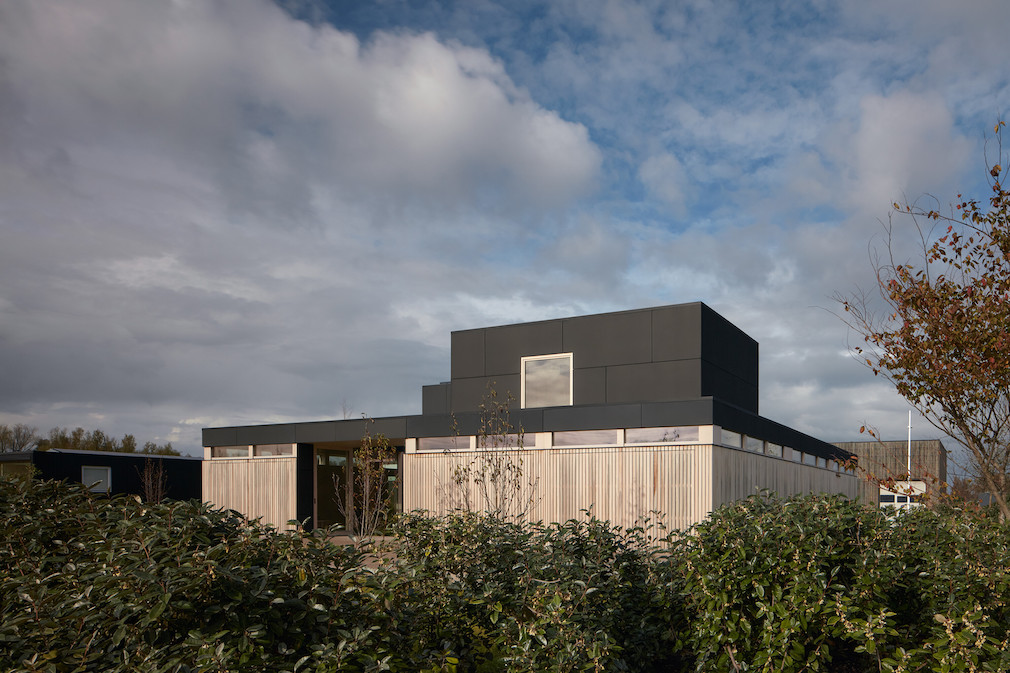

With locations throughout the United Kingdom and Hong Kong, Maggie’s Centres are a network of drop-in care facilities that aim to help anyone who has been affected by cancer. Thanks to Ark-Shelter, a studio specializing in prefabricated modular architecture, and ARCHEKTA, Belgium is now home to a Maggie’s-inspired cancer care facility of its very own.
The project concept is based on the idea of a “warm nest”, a welcoming and calm space in which one can embark on the journey to recovery. The Ark-Shelter modules house “brain healthy spaces”, designed by implementing UX principles and understanding human biological and neuroscientific perspectives. Although the Ark-Shelter modules are placed in a strict and rational grid, from the user’s point of view the movement through the space, permeated with nature, is fluid and organic.
From the Architect | Designing a healing and restorative facility like a Maggie centre is an honour for any architect. Many architects have designed Maggie centres before such as Gehry, Zaha Hadid, Rem Koolhaas and many more, it was inevitable to do research on what was designed before. Seeing this project as a snapshot in the long list of initiatives to support truly restorative design, one piece to contribute to the honourable path of creating healthy and healing environments.
In 1995, the founder Maggie Keswick Jencks, wrote this about her experience of cancer: “A diagnosis of cancer hits you like a punch in the stomach…No road. No compass. No map. No training…At one time, I could not sit, or lie, or stand, listen or speak coherently because my shattered mind vibrated so violently through my body I felt I might disintegrate.”
When Martin, Michiel and Viktor from Ark-shelter started to work together with me, Menno, it was to focus on the users. Applying UX Principles to the design process and understanding the human from a biological and neuroscience perspective. Finding a way to design a kind of “brain healthy spaces”. Taking into account academic research from John Paul Eberhard, Juhanni Pallasmaa, Eve Edelstein, Ulrich, Kaplan & Kaplan and many more. Who am I as a user of this space, what are my physical, physiological, psychological and social needs and peel down the structure to moments. Moments of delight, comfort, support or sadness. Through an understanding of what the (medical) journey could be, whatever the outcome would be, the challenge was to make a space that allows for all these different emotional touchpoints in this journey for the patients as well as their loved ones.

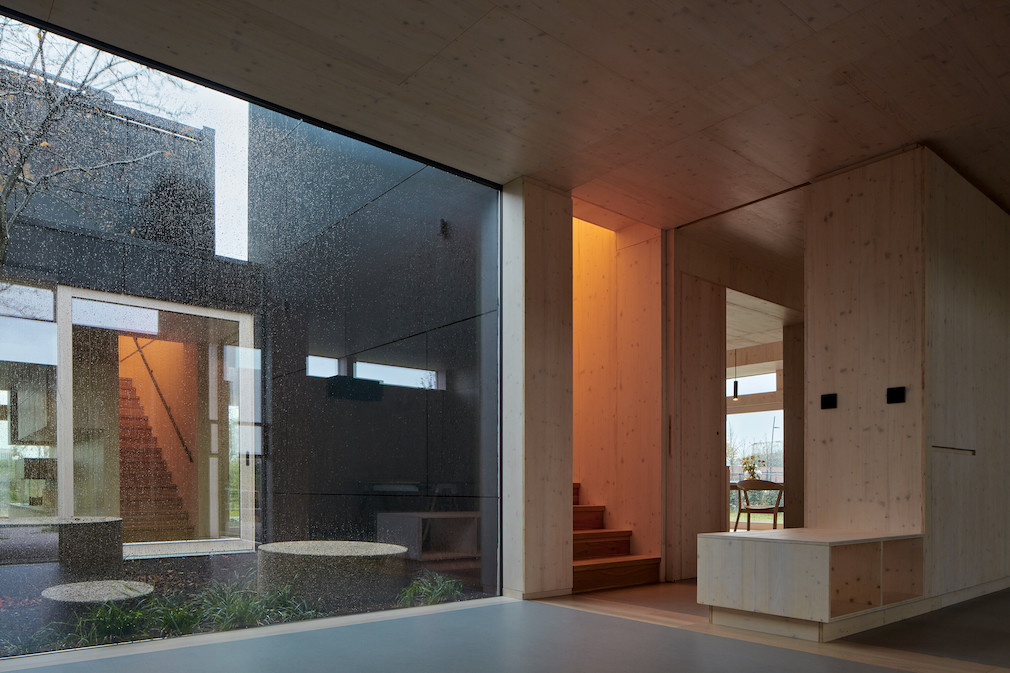
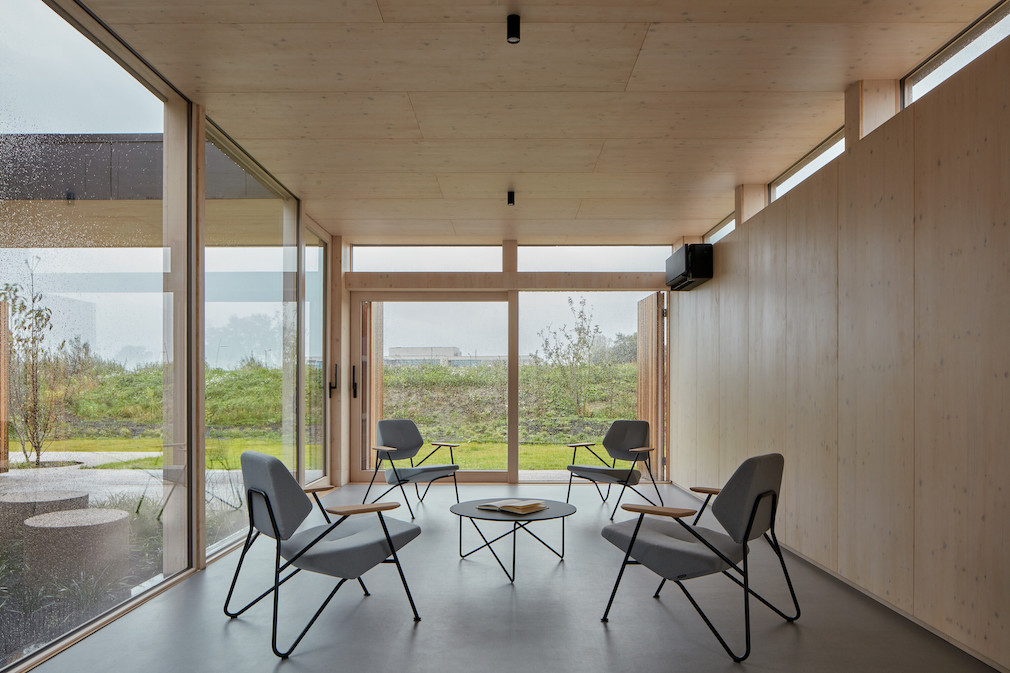
A soft ramp will guide you into the Centre, a front door is set back from the facade to protect from wind, provide a safe entrance and remove the hospital look and feel. The building throughout can breath and is penetrated by nature and views. Almost every seat has direct visual access to the outside. The windows on the top will ensure there is always gradual light throughout the building yet providing privacy.
A mixture of direct and indirect views will allow different individuals to find different comfortable nooks where they can be themselves. Different spaces will allow for different individuals, different stages, and different group configurations to all be comfortable.
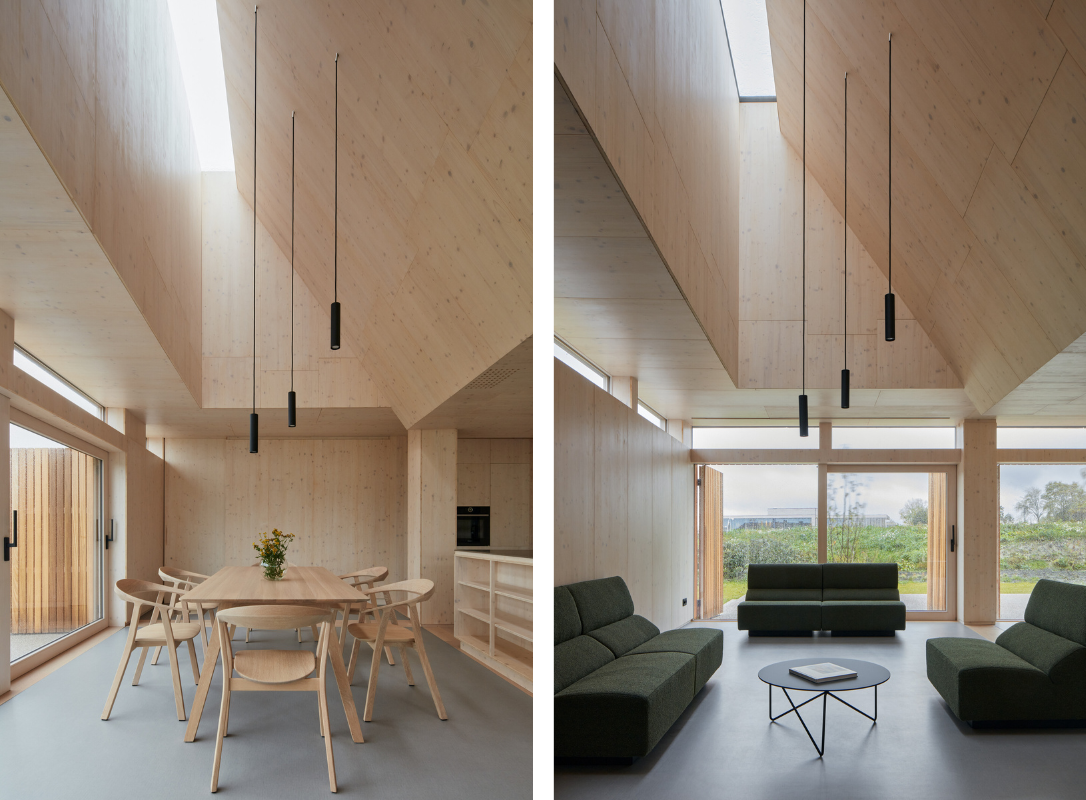
There is a warm fireplace to bring people together, to bring warmth and comfort. Flexible seating arrangements for comfortable gatherings from single to groups of 8 can easily fit in this space. The dining room is the heart of the house. The place with the most light, allowing for a space to gather for introverts as well as extroverts, sun and shade, view outside, or into the comfortable courtyard. Protected yet not enclosed.
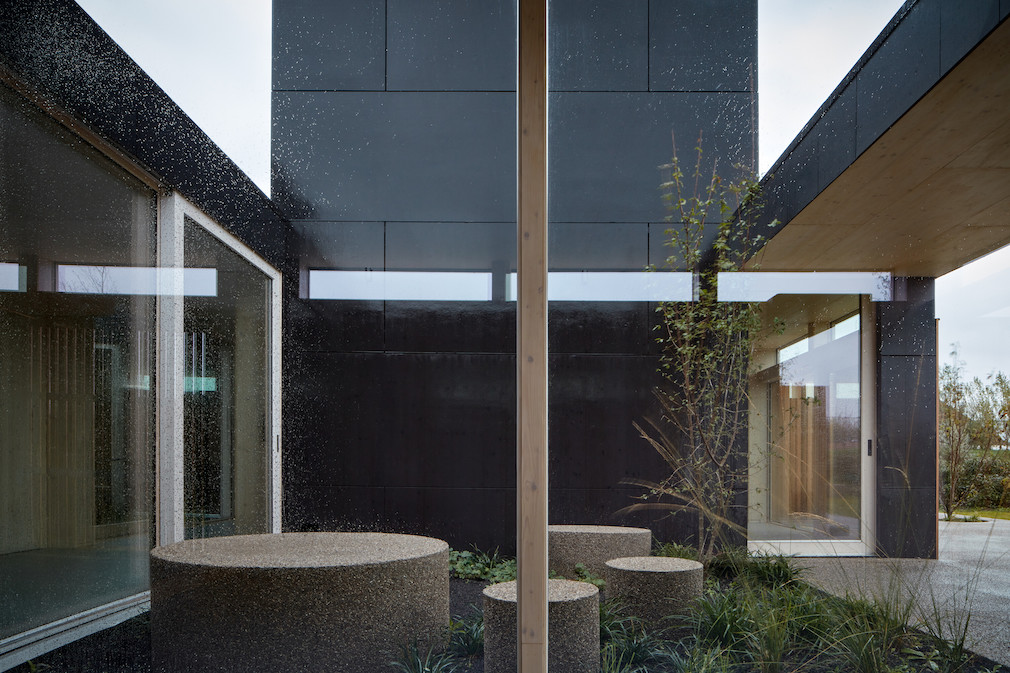
The courtyard, a serene and calm slice of nature, lavish green, protection from wind. The play of light that this skylight will provide will transform the space throughout the day and throughout the seasons, from warming colours to bright patches the wood will reflect the light and warm up the space. Therapy under the sky all on a journey under the same sun, to be comforted and hugged by a ray of light. After all, a place to come, to relax, to be safe, a warm nest.
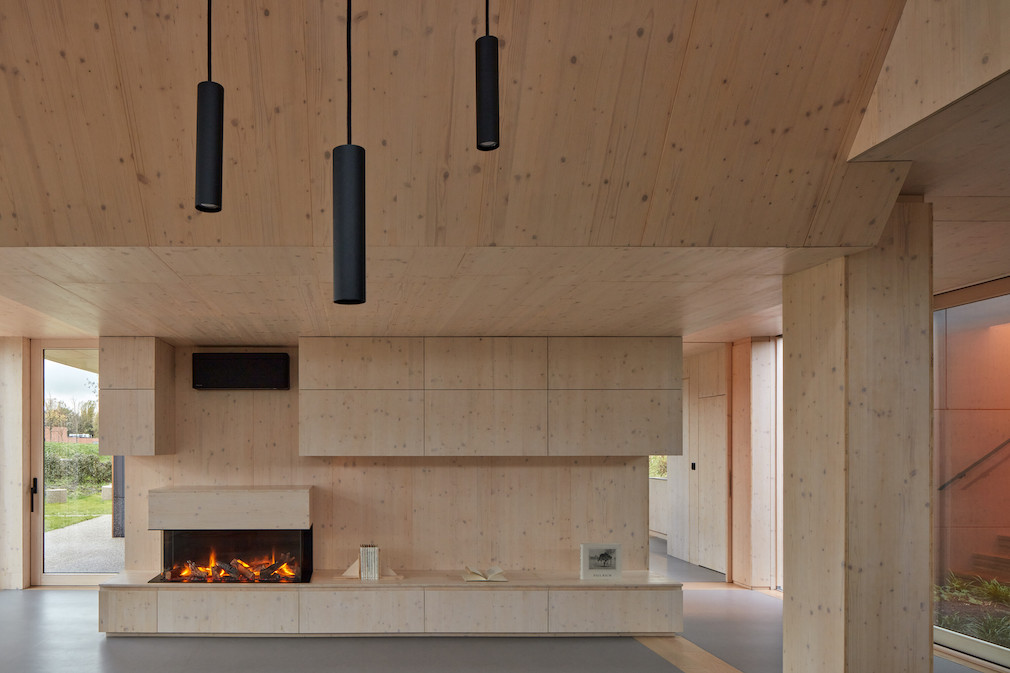
Lastly, on a more personal review, the topic of sustainability is important to highlight. I want to address a different angle on sustainability in this concept. I am not going to point out the obvious emphasis on wood and other construction materials or the fact that a lot can be prefabricated and increase the onsite operational efficiency. What I want to focus on is real sustainability. Sustainability is about conscious decisions that don’t impact future generations negatively. We all know that buildings impact us, for better and for worse. In certain spaces we will have a slightly higher heart rate, an elevated level of cortisol or dopamine. The reverberation time of the sound can make me feel comfortable to share in a social setting, feel comforted, like a warm blanket around my shoulders. The key to this building is the understanding of true sustainability. Building a building that doesn’t have a negative impact, and even can be restorative, to give better health to future users and generations. That is a truly sustainable building for life.
Photography by BoysPlayNice.
Like what you see? Get it first with a subscription to aspire design and home magazine.