
Project Details
Architect: Ravi Raj
Location: Croton-on-Hudson, New York
Client Review: This is actually a repeat client of mine. When I started my office back in 2018, my first project was [a secondary home] for her and her husband in Somers. Then, when the pandemic hit, she moved up to Westchester County full-time and had a baby. Eventually, she and her husband decided they needed a different home and wanted to live a bit closer to the main train line. They really fell in love with Croton-on-Hudson, specifically Mount Airy. Historically, the area had an enclave of interesting thinkers as well as beautiful natural surroundings.
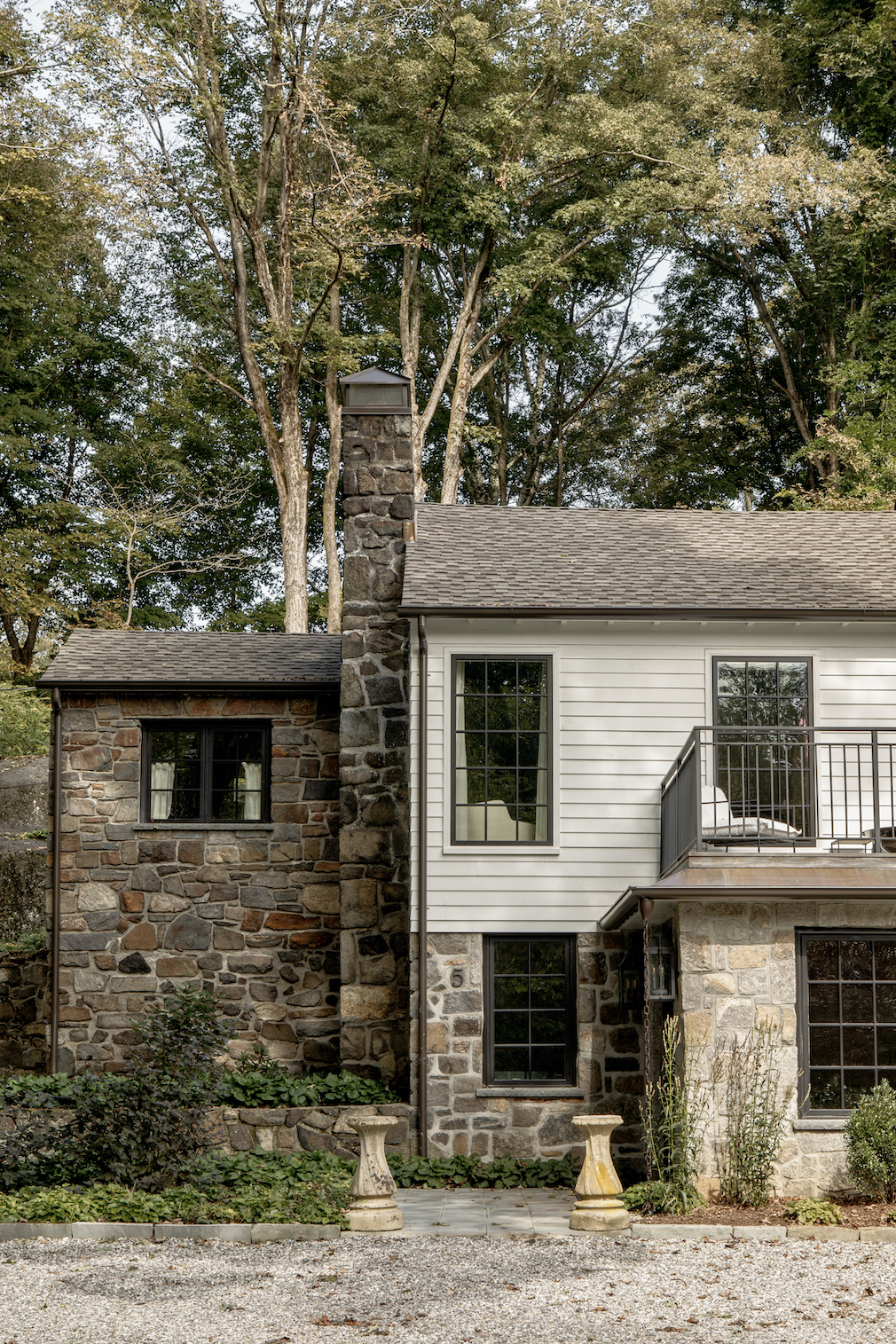
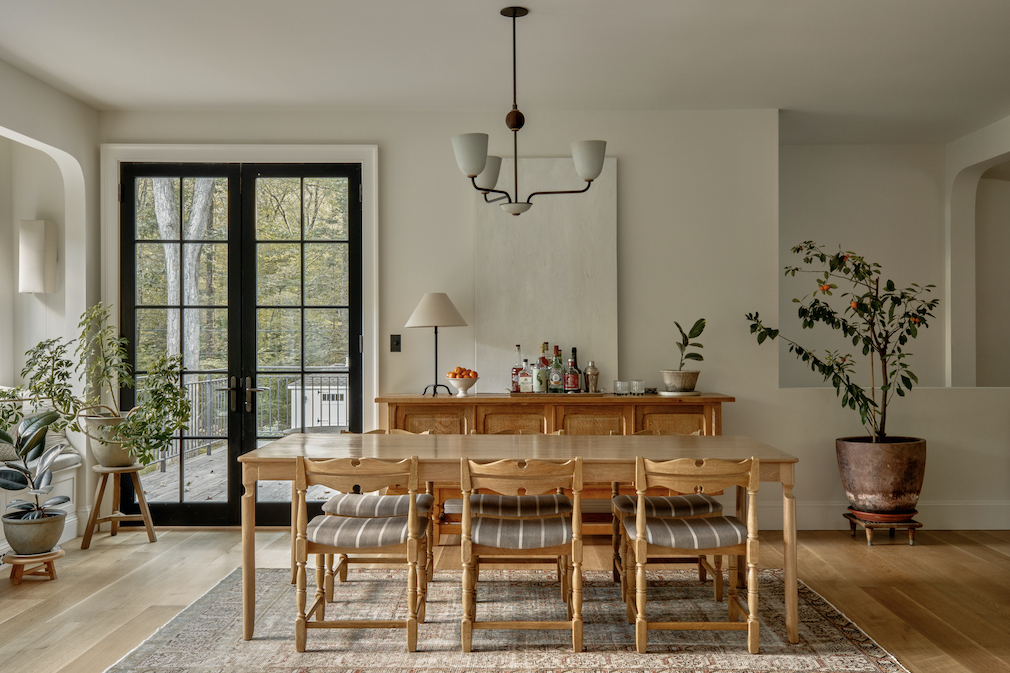
The original house was built in the early 20th century and has been added onto twice. I think there was one addition a few years after it was built and an even larger addition in the 1980s. We tried to blend what already existed and update it to make a cohesive architectural language. All the furnishings were done by the homeowners themselves: They have a beautiful eye for styling.
Architectural Aims
We wanted to take that existing footprint and then add onto it vertically. I proposed adding a full floor on top of the existing 1980s addition, which would include a new pitch roof. The home previously had a flat roof, but the pitch roof would tie the architecture to the existing 20th-century house.
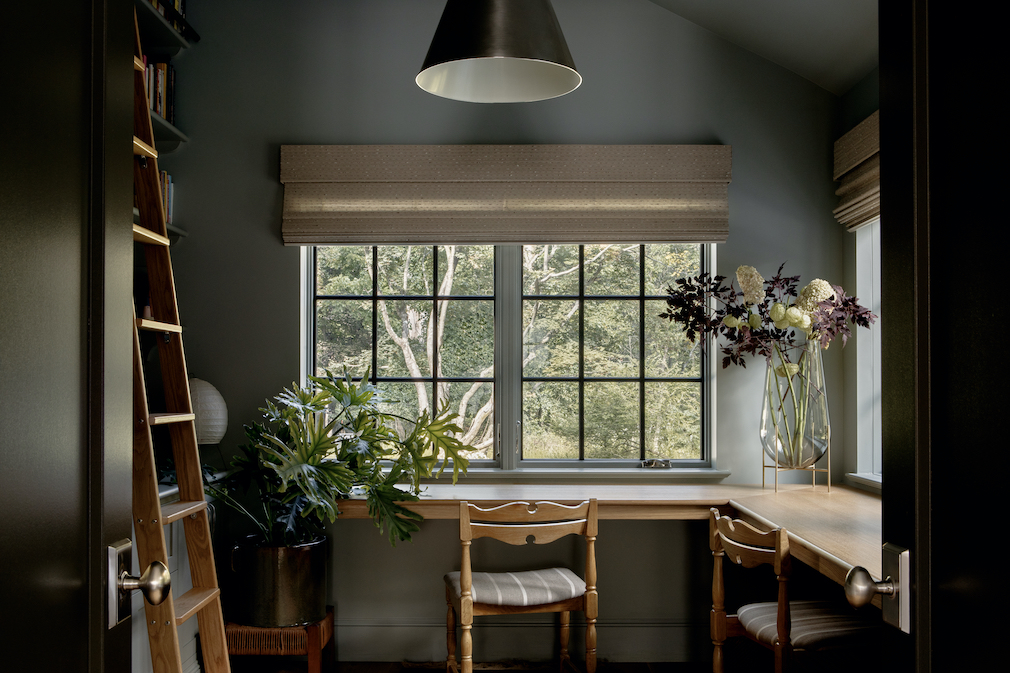
I also proposed to transform the screened porch into an enclosed space with a den and office, which was important to the clients. That way, we were able to use the existing footprint and not expand, which is very important in Westchester County. [The area] is very particular about the expansion of existing homes, so this plan made things easier from a permit standpoint.
From the Architect
This project started with the interior: It was how we designed the project, and the exterior came as a result of that. We really wanted to create a narrative from how you entered the house at the bottom level, go up to the second, more public level, and then up to the third level.
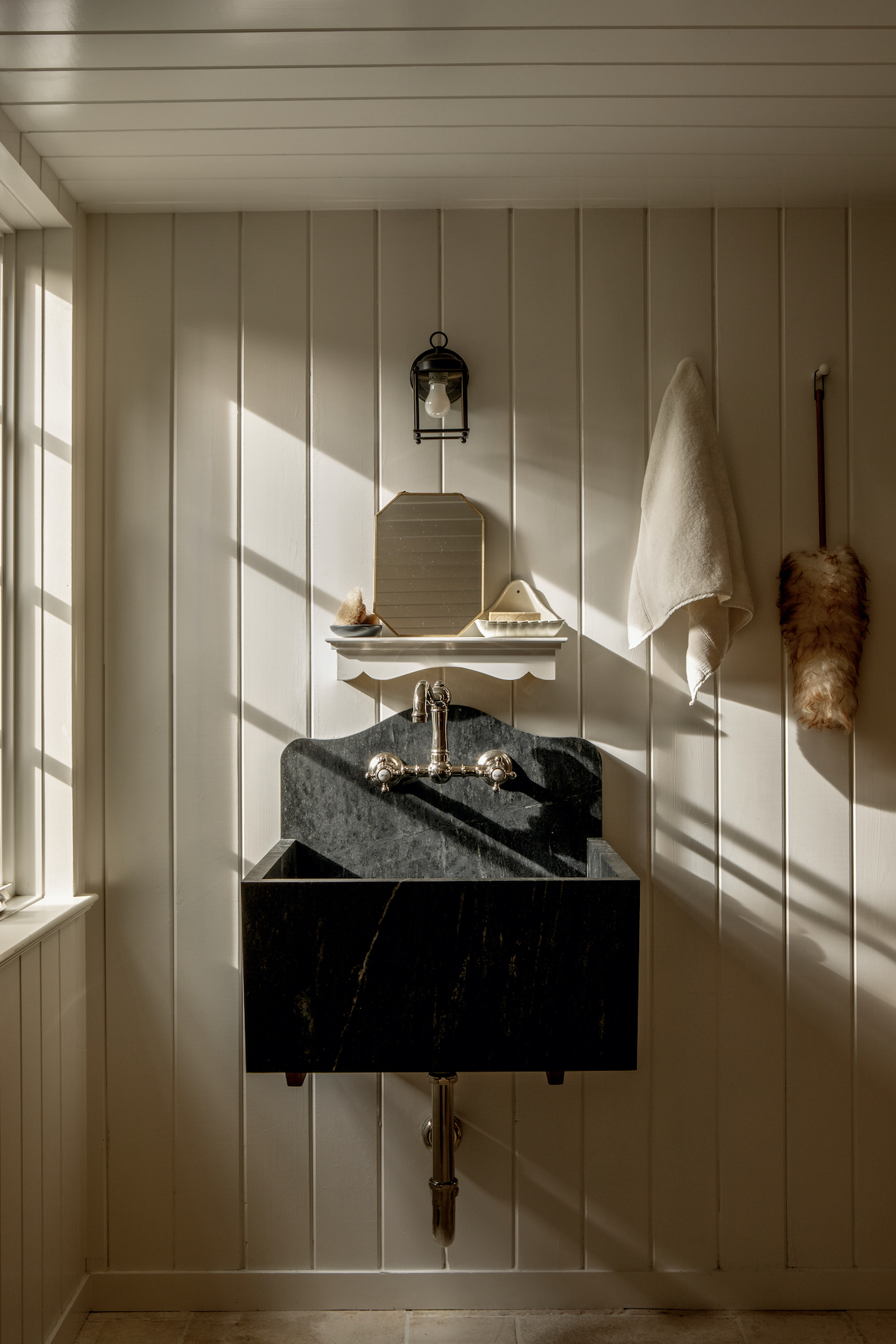
We wanted the entry sequence to have space to breathe: The limestone floor is different from the rest of the house’s oak floors and is a continuation of the exterior. It feels like an entry that leads to something else that’s totally different. The entry also has lower ceilings, so we wanted to bring the texture up. We used clapboard siding with a slight gloss on the walls and ceiling to make it feel different from the rest of the house.
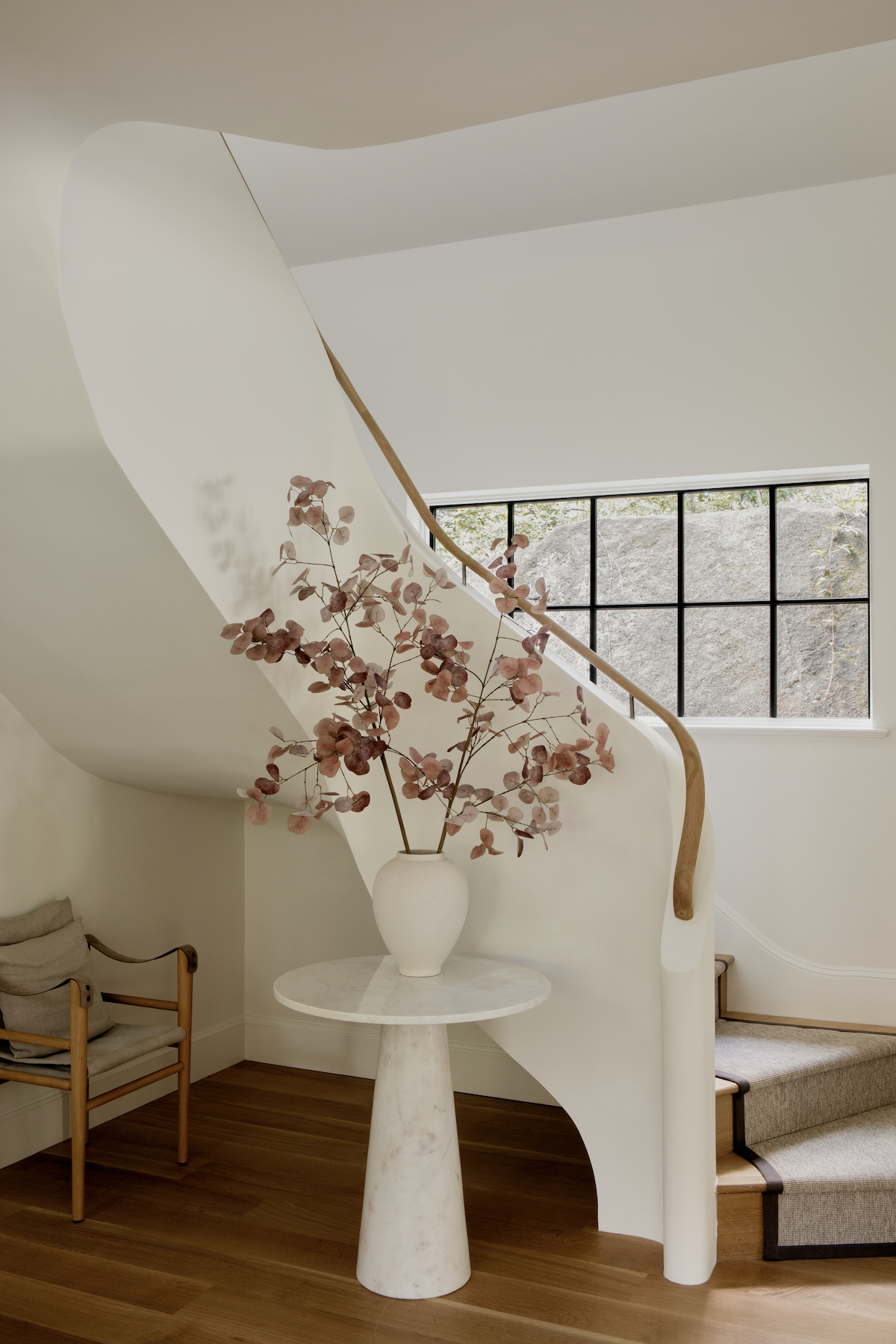
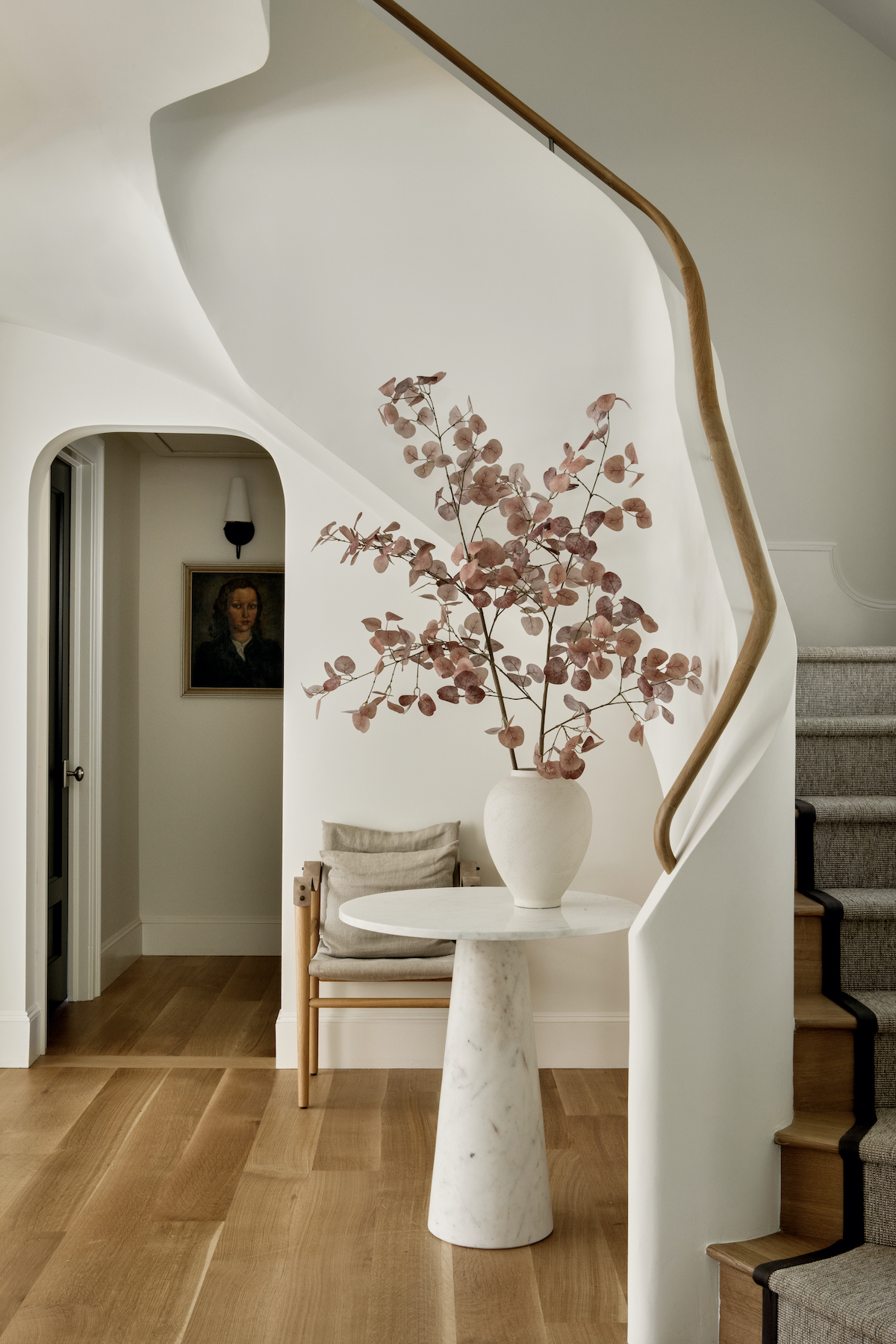
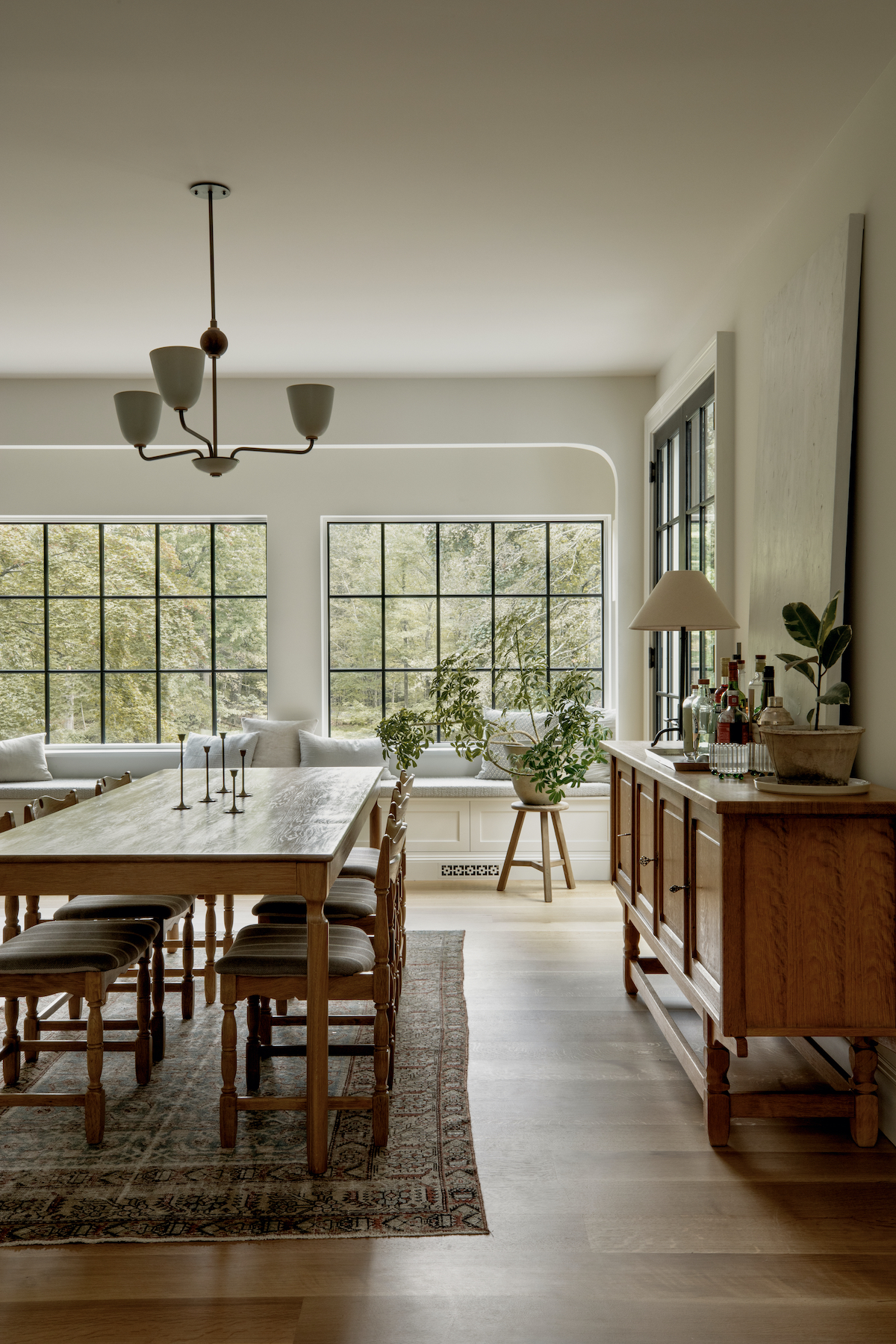
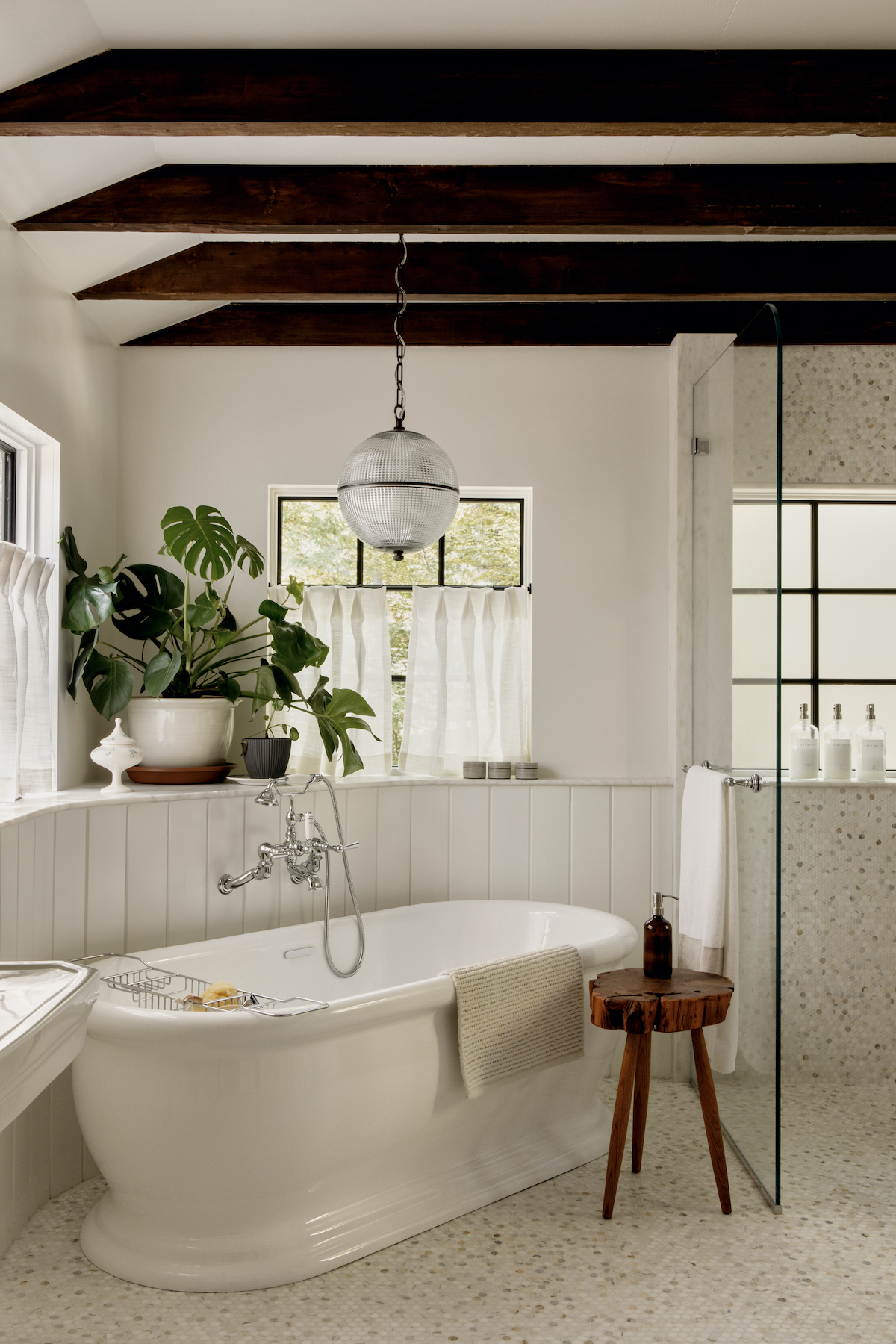
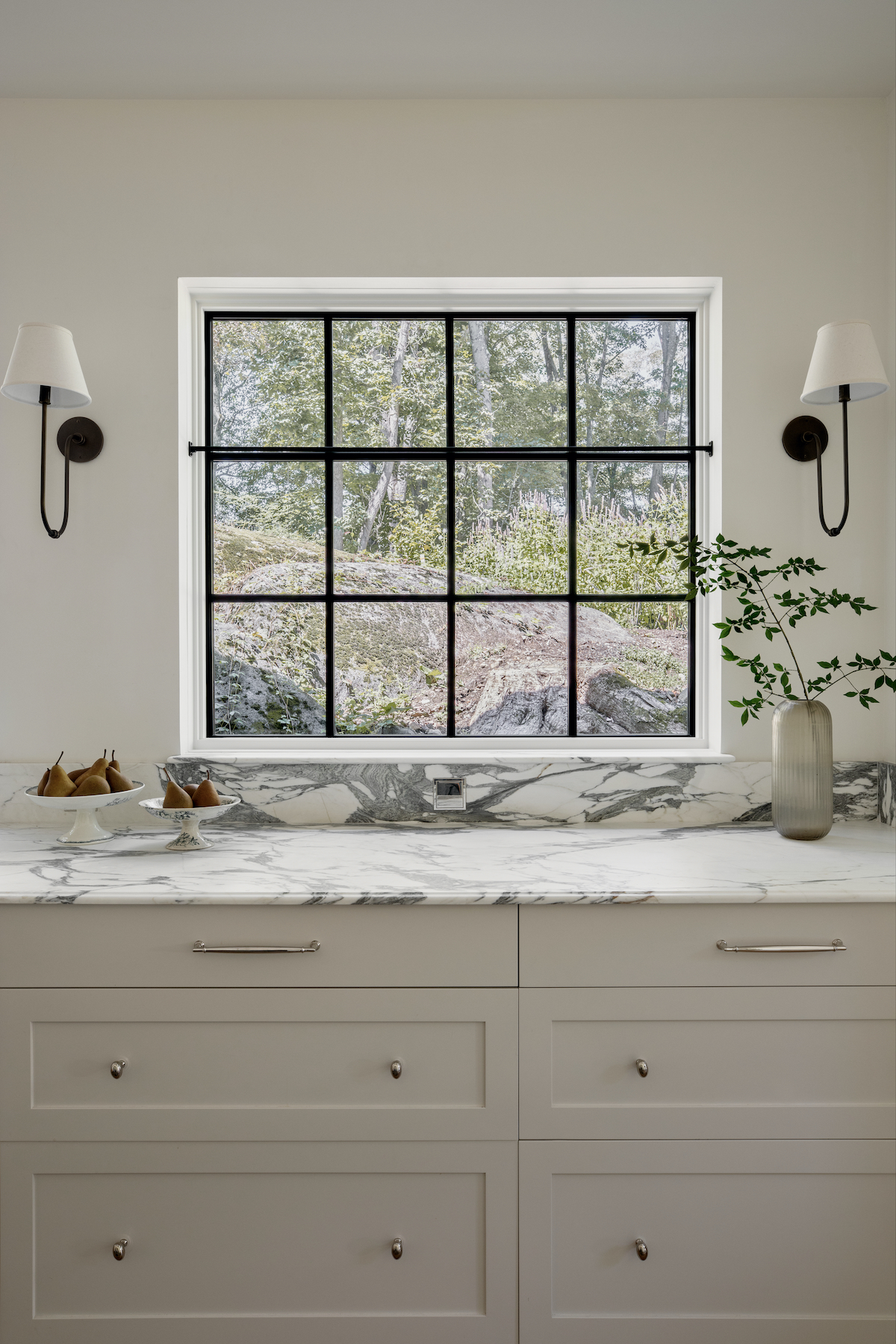
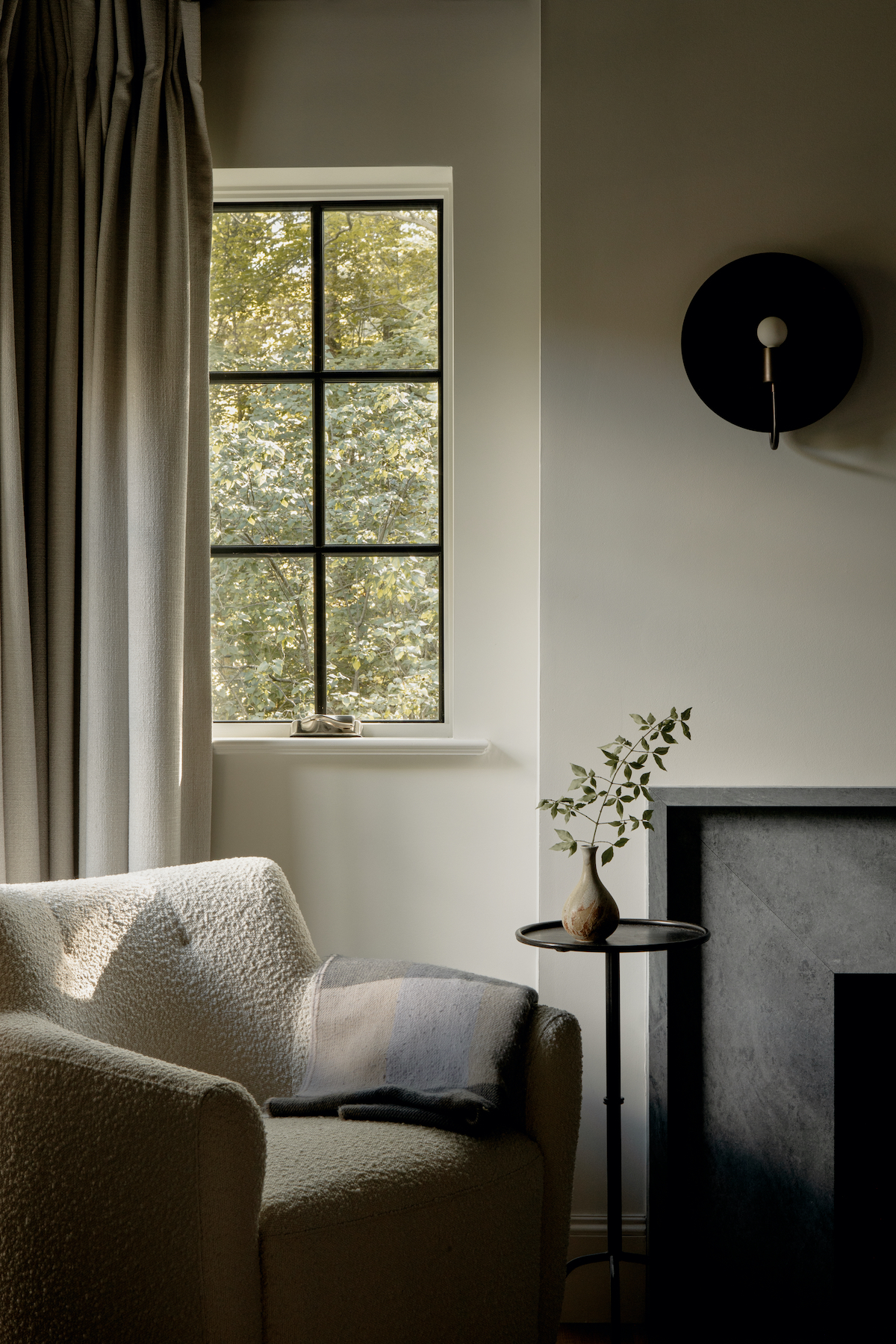
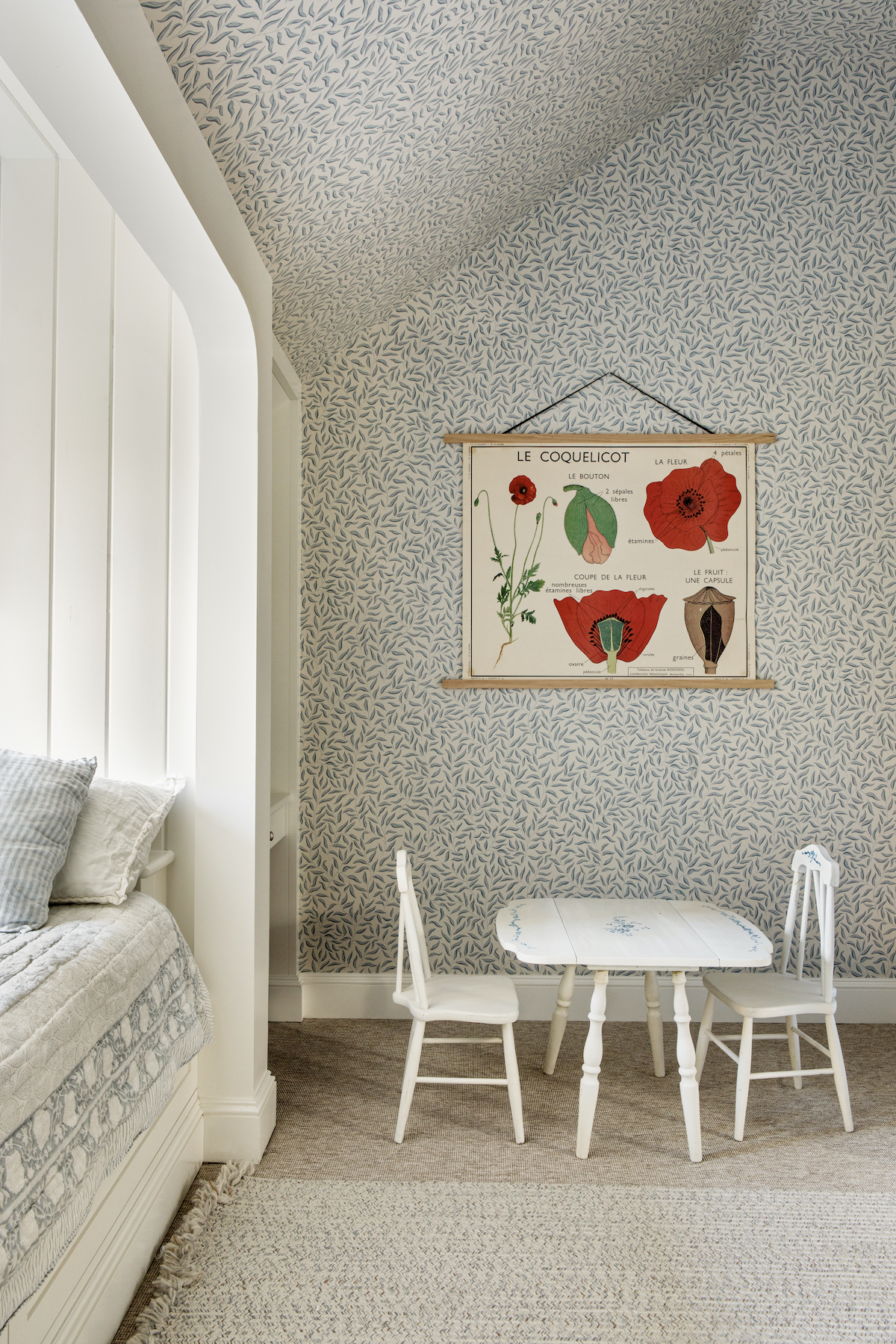
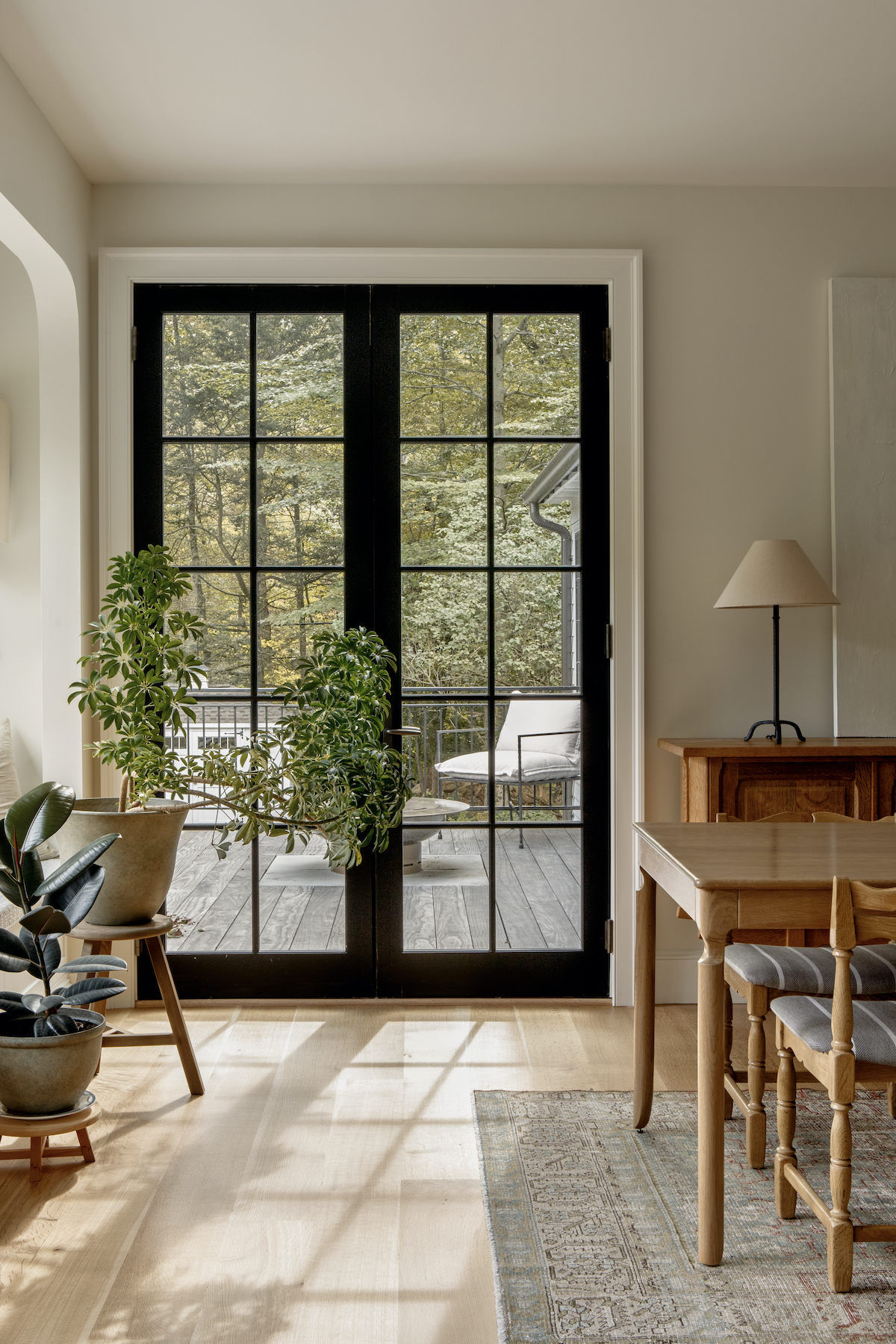
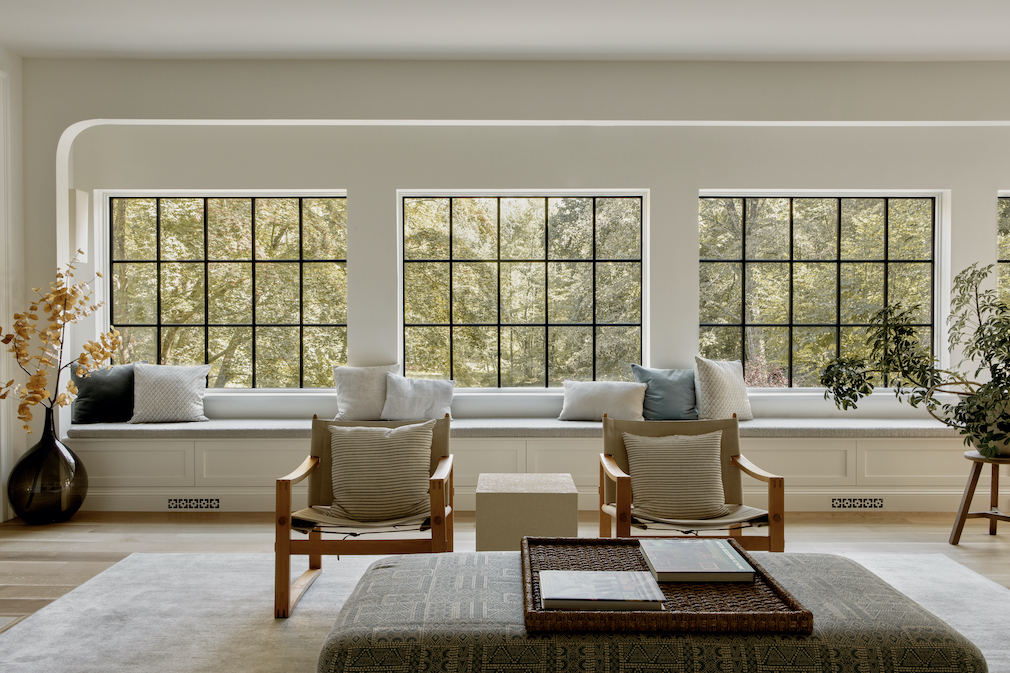
The whole house kind of pinwheels off the staircase. There was an existing metal spiral stair there and a window that framed the back of the house, so we wanted to make it even more special. (Also, a metal staircase is not a great thing for a space with children.) We removed the metal staircase and increased the kind of space that the stair took up, but kept the sculptural quality. Now, it has a sculptural wood handrail, which relates to the oak wood floors. It really became the moment in the house. We added curved portals throughout the space to soften the staircase, which is inherently very sculptural.
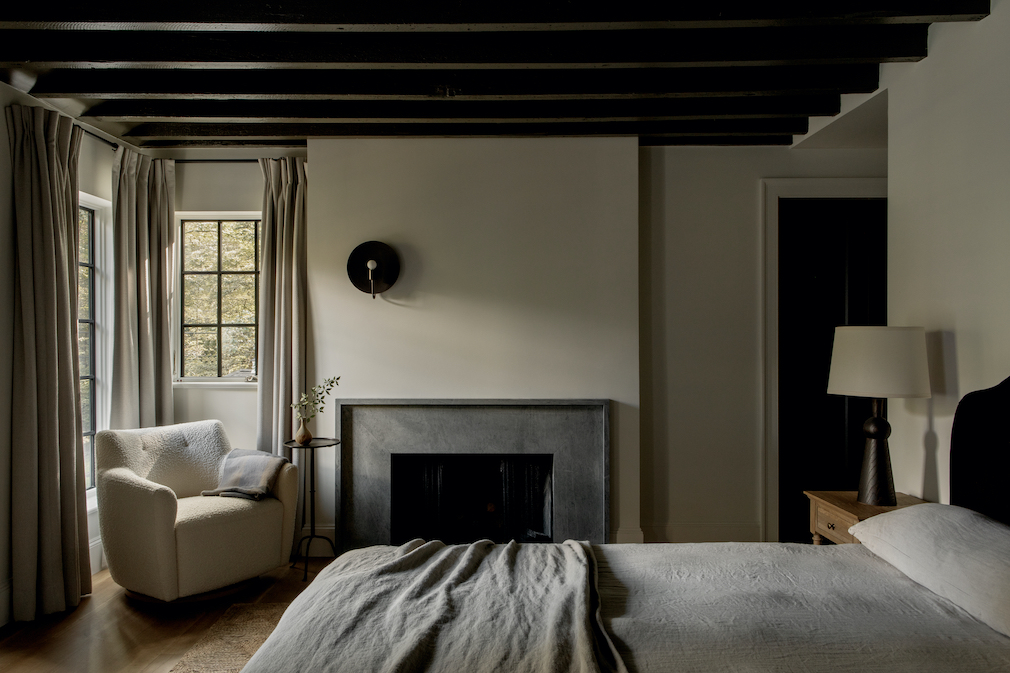
Overall, this project offers modern sensibility within a historical framework. I’m a primarily contemporary architect, so it was important to figure out when to add a touch of detail that might relate to its historic past.
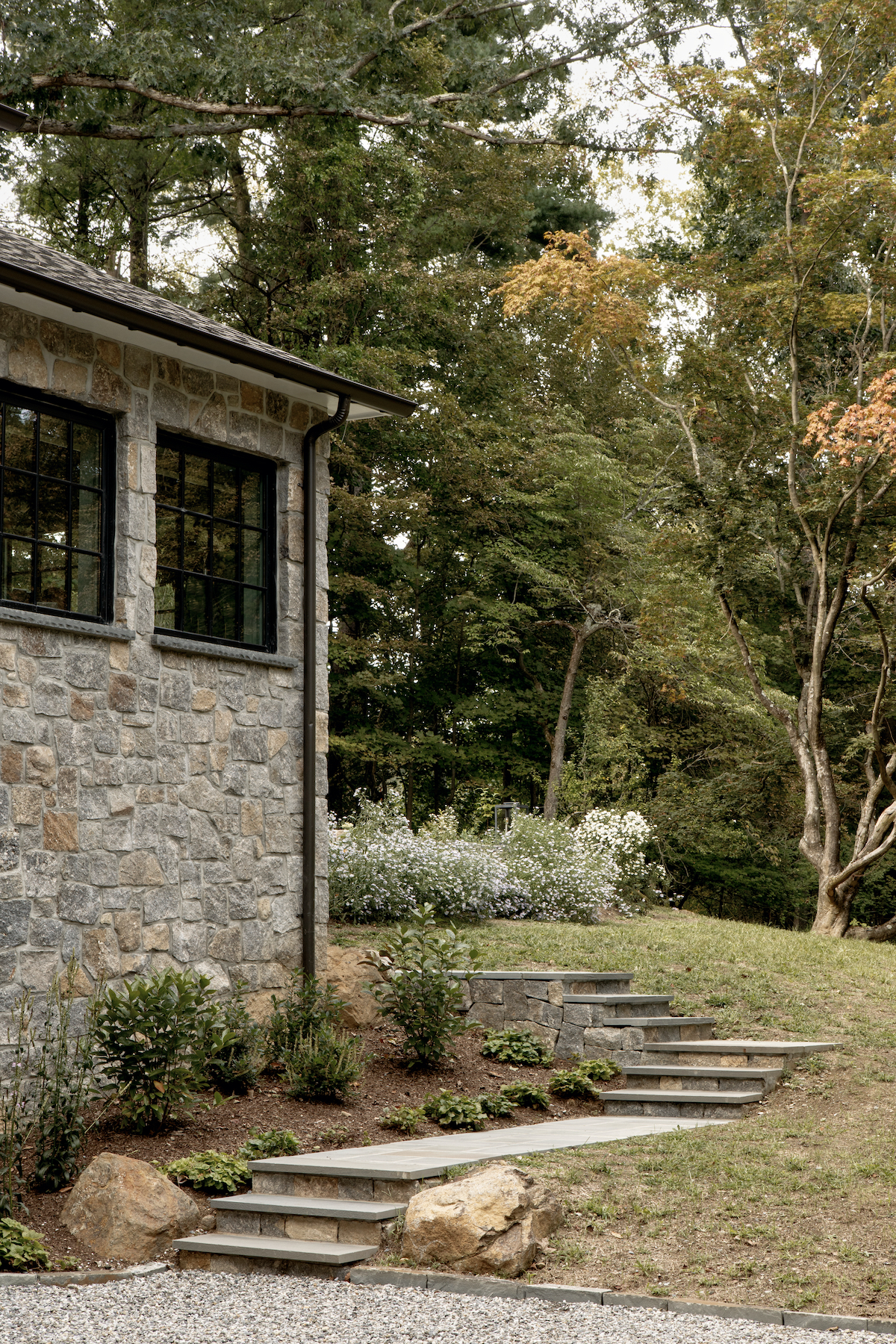
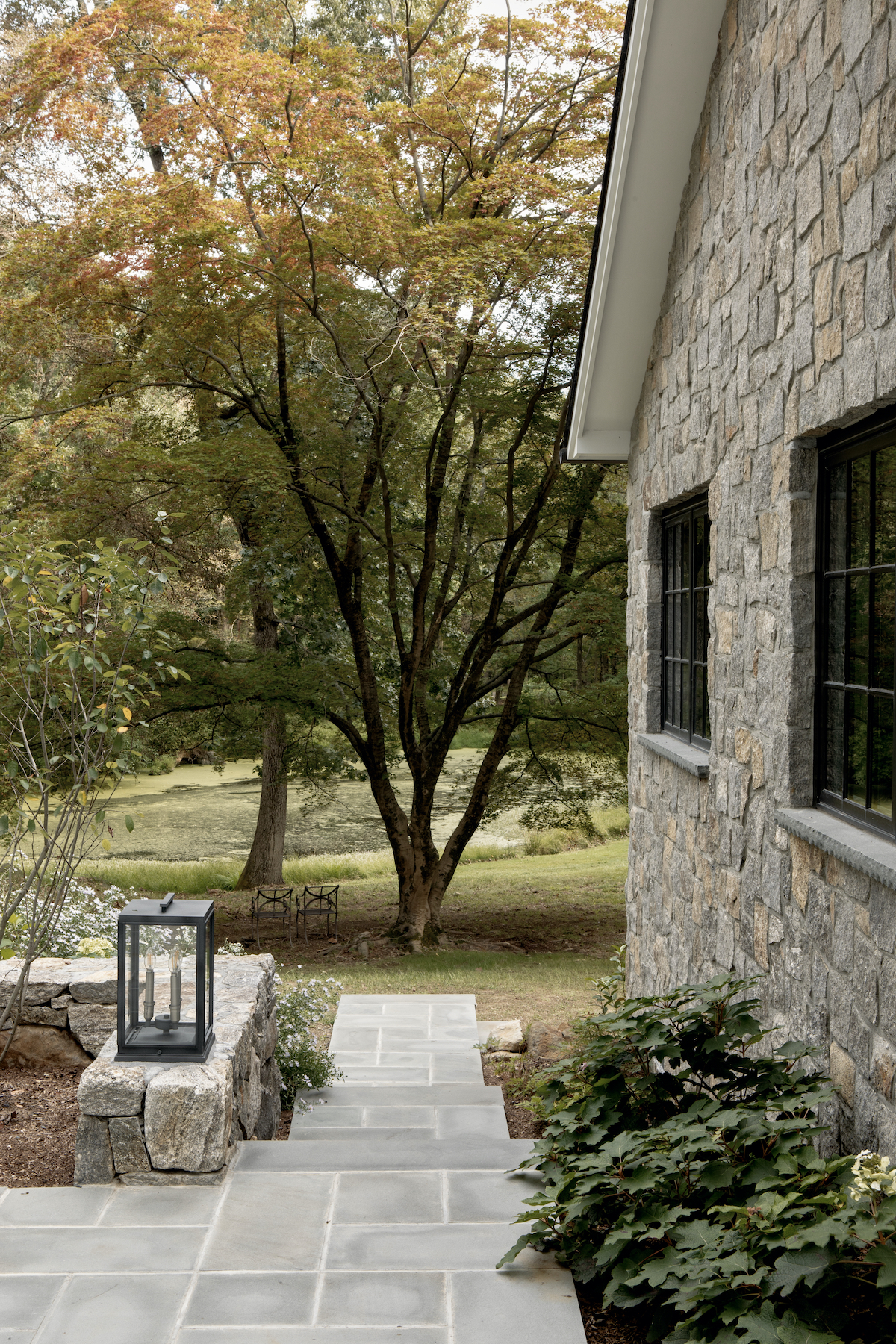
As for the exterior? The existing stone was from the early 20th century, and we knew we weren’t going to find an exact match. We did find a supplier, Bedford Stone, who supplied a fieldstone that was a close match. Above that is all new James Hardie horizontal siding, which will last for a while. We wanted the fieldstone to be a strong material, and the rest of the house to just be a backdrop for the beautiful surrounding nature.
Photography by Sarah Elliott.
Like what you see? Get it first with a subscription to aspire design and home magazine.