
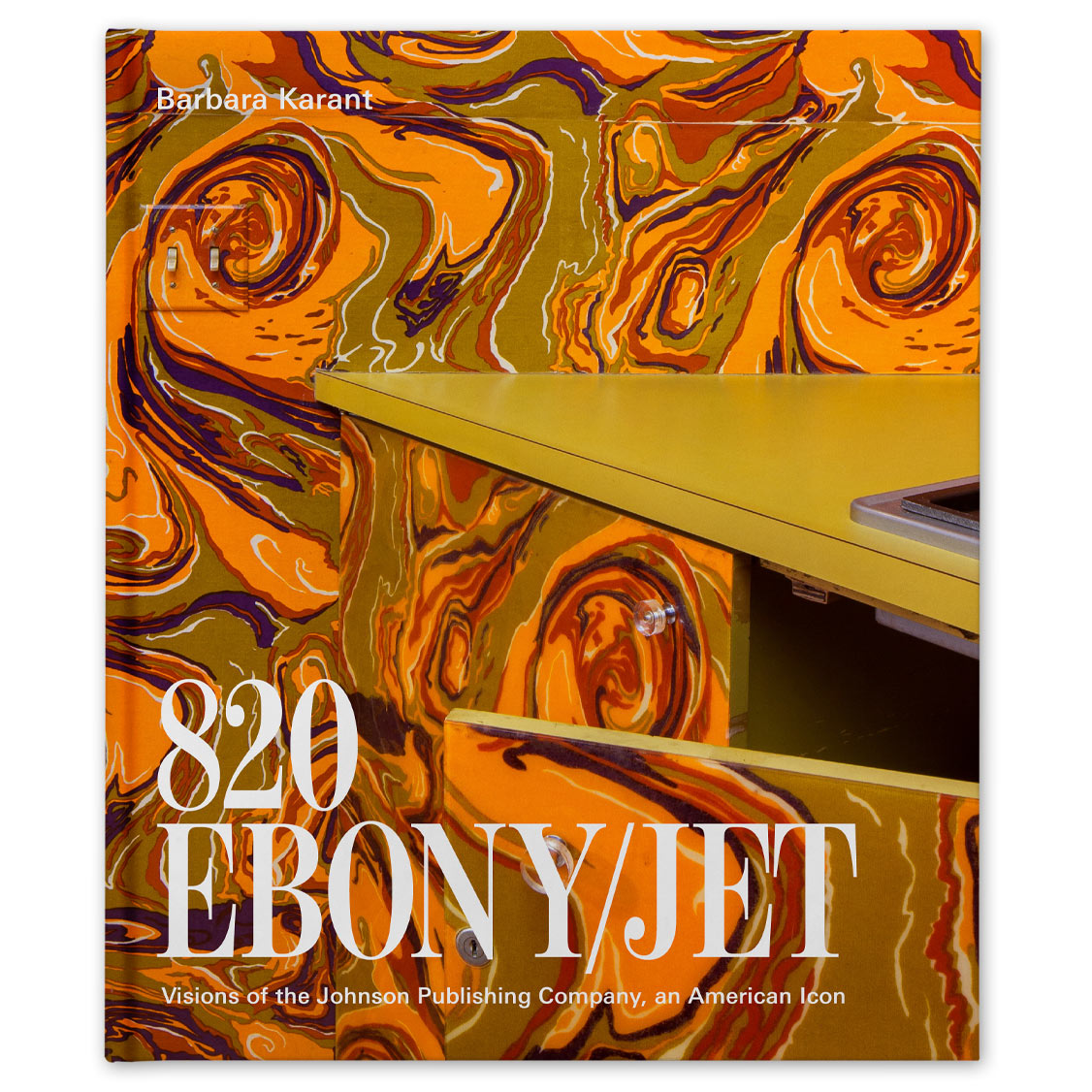
820 Ebony/Jet: Visions of the Johnson Publishing Company, an American Icon by Barbara Karant | MW Editions
Johnson Publishing Company, home to the iconic Ebony and Jet magazines, was the most influential Black-owned media corporation of its day. Within the company’s headquarters in Chicago, kaleidoscopic patterns, marbled swirls, and jewel tones defined the Afrocentric interiors.
In her recently released monograph, 820 Ebony/Jet, prominent photographer Barbara Karant explores those interiors — since abandoned — offering a closer look at spaces that retain the vibrant spirit of a Black publishing empire, even as the empty rooms mark the sense of its loss.
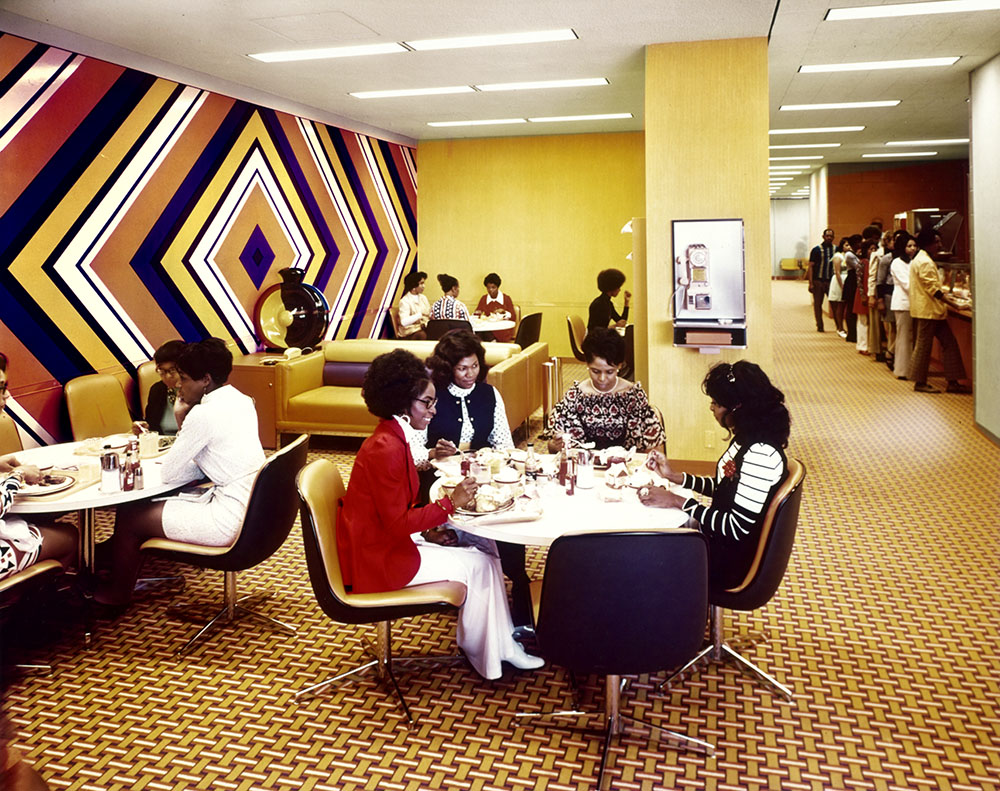
The JPC cafeteria, on the tenth floor, 1972. Employees could buy lunch for just $1.00 per day. Johnson Publishing Company Archive, courtesy J. Paul Getty Trust and Smithsonian National Museum of African American History and Culture.
The exuberant interiors captured by Karant remained largely unchanged from 1972 to 2012, and each of the eleven floors of the building at 820 South Michigan Avenue featured distinct color and pattern combinations. From the cafeteria’s orange, purple, and gold chevrons to Eunice Johnson’s cream-and-honey office, appointed with an Igbo mask and carved ivory tusks from the couple’s art collection, its bold, contemporary design asserted JPC’s position at the forefront of Black American business and culture.
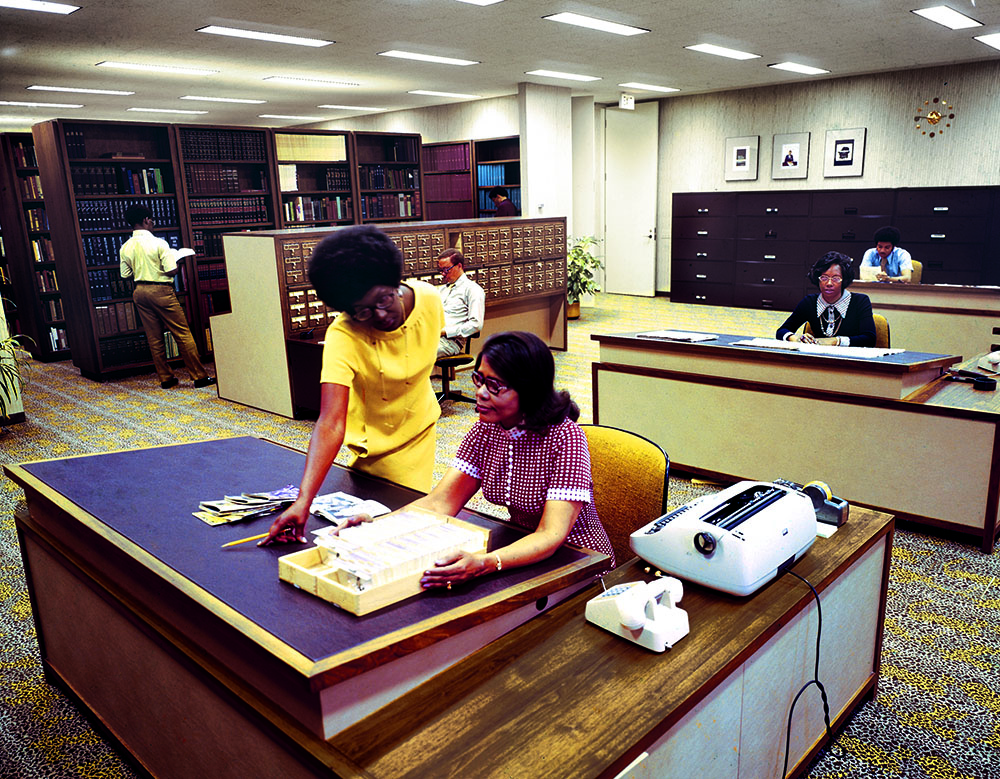
The seventh-floor library contained over 6,000 books on Black and African history and culture. Johnson Publishing Company Archive, courtesy J. Paul Getty Trust and Smithsonian National Museum of African American History and Culture.
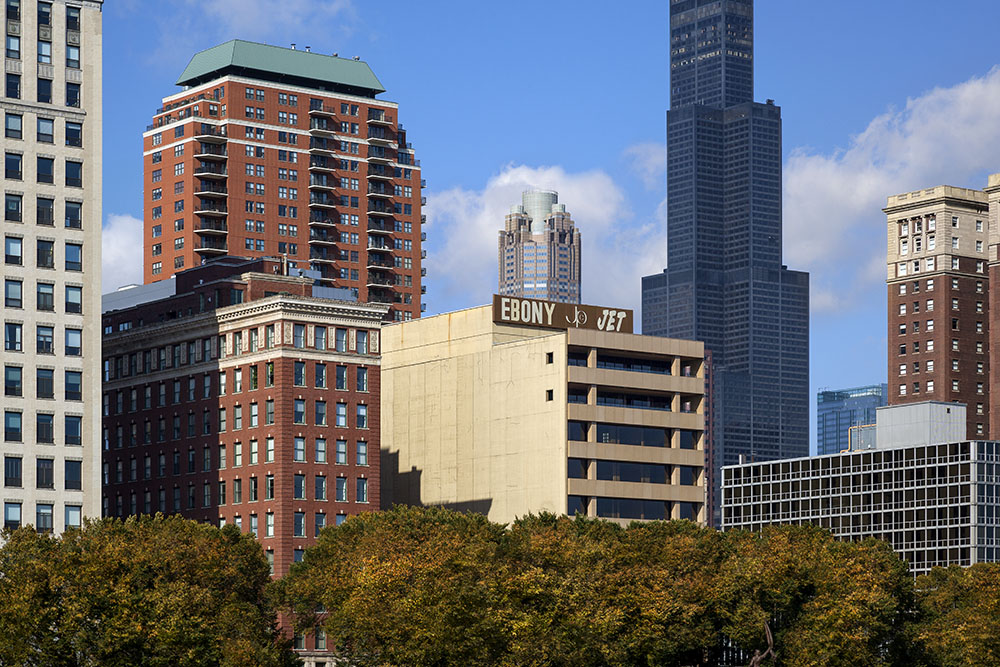
The building itself was an act of defiance as much as its design was. Johnson faced resistance from real estate agents and bankers wary of financing a Black-owned company. Architect John Moutoussamy’s restrained, travertine-marble exterior contrasted with the maximalist interiors by Palm Springs designers Arthur Elrod and William Raiser, but Johnson considered these seemingly disparate aesthetic visions crucial to JPC’s mission of both projecting Black power and influence and creating a unique space by and for Black people.
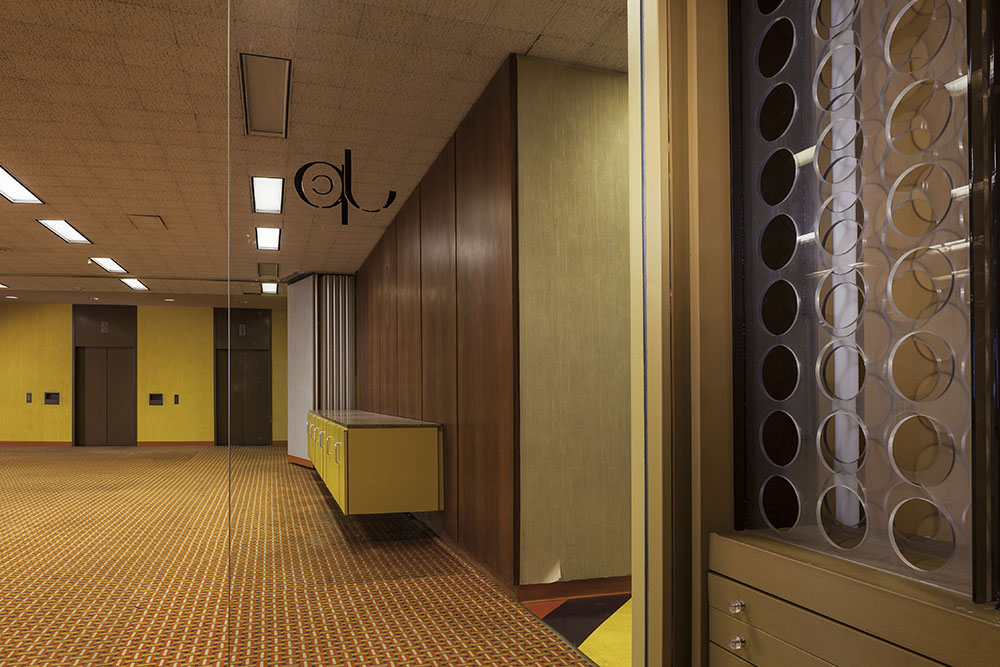
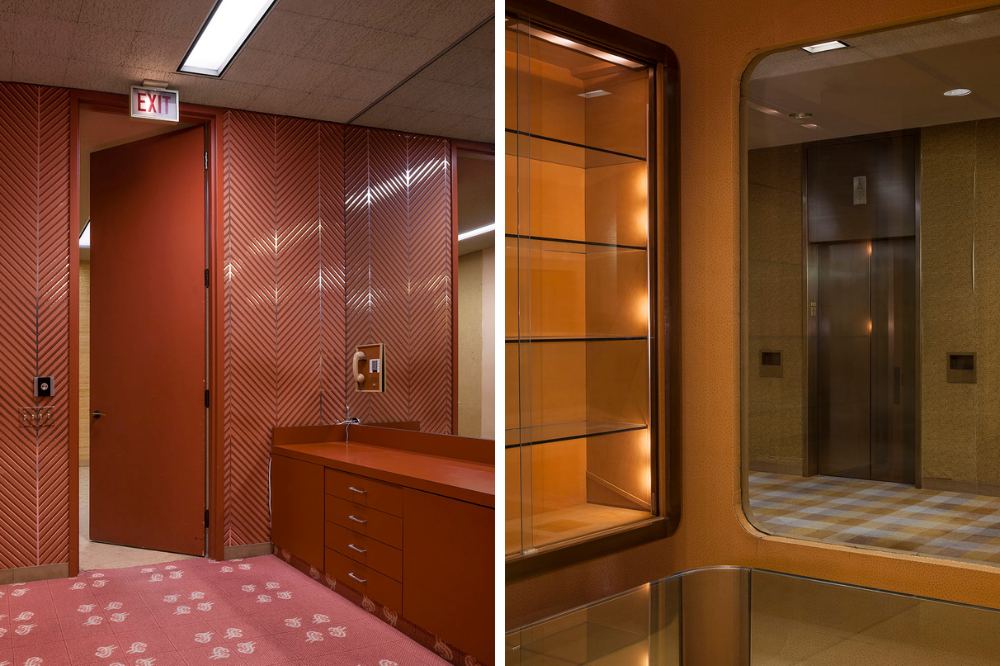
Stripped of its furnishings, the interiors recorded by Karant in 820 Ebony/Jet stand as a record of this seminal moment in Black American history. Taken between 2013 and 2018, Karant’s close, detail-level compositions focus attention on individual surfaces: geometric wallpapers, mirrored dressing rooms, and the laminate cabinetry of the iconic Test Kitchen, whose psychedelic patterning recalls Italian marbled paper. She employs the building’s mirrors and reflective surfaces to double and multiply its patterns, and her images of the executive floor’s picture windows incorporate views of Lake Michigan and Grant Park.
Accompanying these photographs are documentary images of the original interiors, the Ebony in-house photo studio, and renowned artist Richard Hunt’s site-specific lobby sculpture Expansive Construction (1972), commissioned the same year Hunt became the subject of MoMA’s first retrospective of an African American sculptor.
The book also traces the building’s afterlife in contemporary art, influencing artists including Theaster Gates (who was entrusted with preserving the interiors, library, and art collection after the sale), Hank Willis Thomas, Kwame Brathwaite, Lorna Simpson, Martine Syms, and David Hartt, several of whom were featured in the 2014 Studio Museum in Harlem exhibition Speaking of People: Ebony, Jet and Contemporary Art.
Short texts from former employees who worked in the building, including their recollections, provide important documentation of JPC’s history. The result is an affecting tribute to the achievements of this remarkable American company.
Like what you see? Get it first with a subscription to aspire design and home magazine.