
As the Interconnected Changeable Environments Experience by Jennifer Farrell continues to unfold, one of the most powerful storytelling elements lies not in furniture or décor, but in the very surfaces that shape each space. Throughout the historic limestone structures and newly imagined interiors, tile and stone become the connective language between past and future — materials that carry centuries of history while embracing modern innovation. In this chapter of the project, aspire follows Farrell’s exploration of texture, craftsmanship, and permanence, where sculptural tile installations and timeless stone surfaces create an environment that feels both ancient and forward-looking.
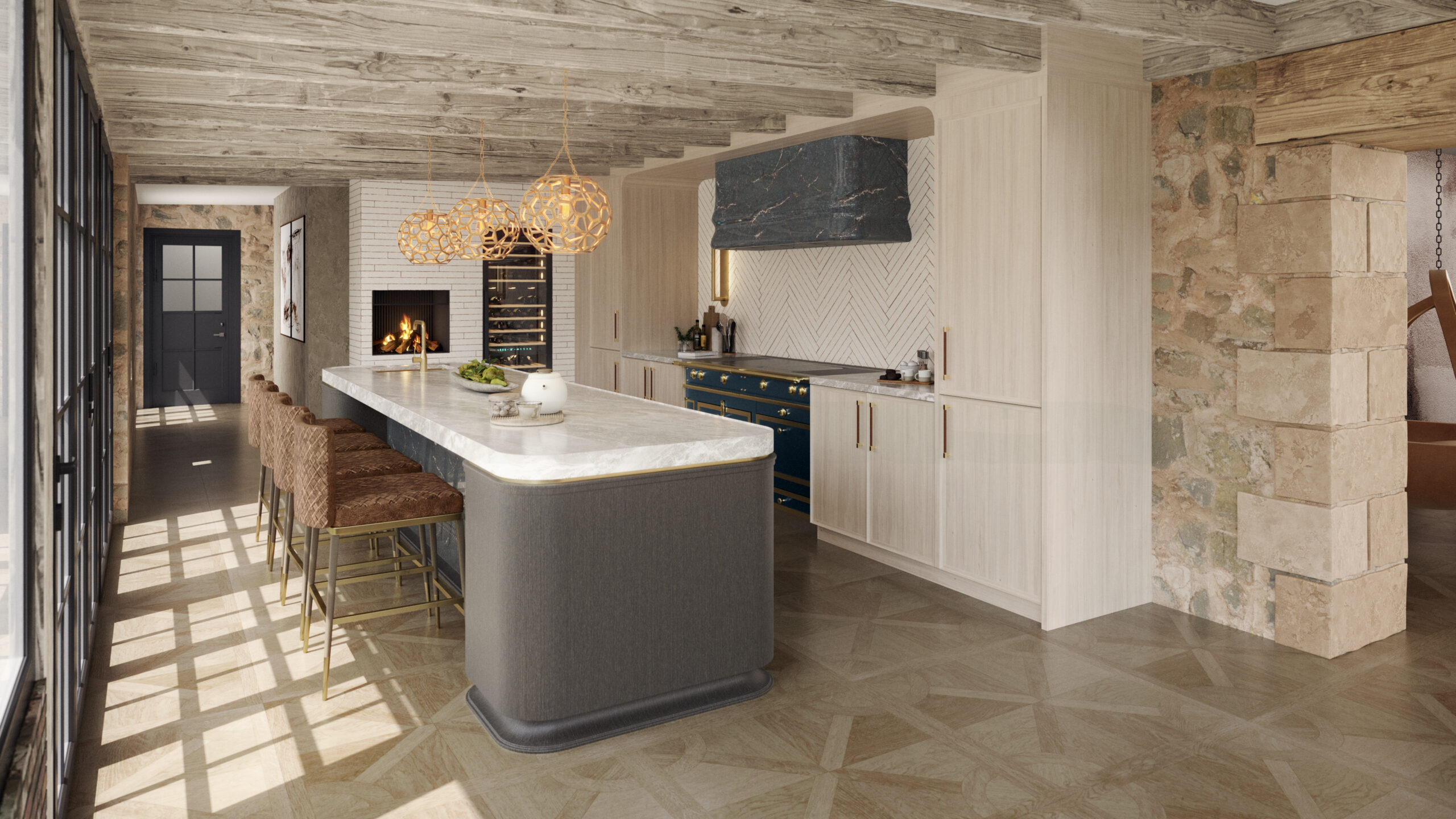
Throughout the Showhome Experience, tile and stone feel foundational. Why were surfaces such a powerful starting point for this project?
Jennifer Farrell: Surfaces are the first storytellers of a home — they’re the skin, the texture, the grounding presence that sets the emotional tone long before furniture or art enters the space. In the Interconnected Changeable Environments Showhome Experience, or “I.C.E. House,” tile and stone became the architectural language that allowed us to root each home in something timeless.
And because this project explores how environments shift and evolve, starting with surfaces gave us a way to anchor that changeability in something enduring. Tile and stone are both ancient and infinitely adaptable — the perfect foundation for a narrative that spans centuries.
The phrase “ancient meets modern” is central to the design story. How do surfaces help bridge centuries-old architecture with a future-forward vision?
Jennifer: Tile and stone are the connective tissue between eras. They’ve been used in human dwellings for thousands of years, yet they remain some of the most innovative materials available today. When you place a hand-finished stone next to a hypermodern surface like Dekton by Cosentino, you’re literally watching time collapse into a single moment. That juxtaposition is where the magic happens — the past grounding the future, the future illuminating the past.
What is it about tile and stone specifically that makes them timeless materials, both emotionally and architecturally?
Jennifer: Emotionally, these materials speak to our neuroaesthetic wiring. Humans are deeply soothed by natural textures — the coolness of stone, the tactile rhythm of tile, the subtle irregularities that remind us of the natural world. Architecturally, they’re simply unmatched in longevity. Tile and stone age with dignity; they don’t deteriorate, they evolve. They’re the rare materials that grow more beautiful with time.
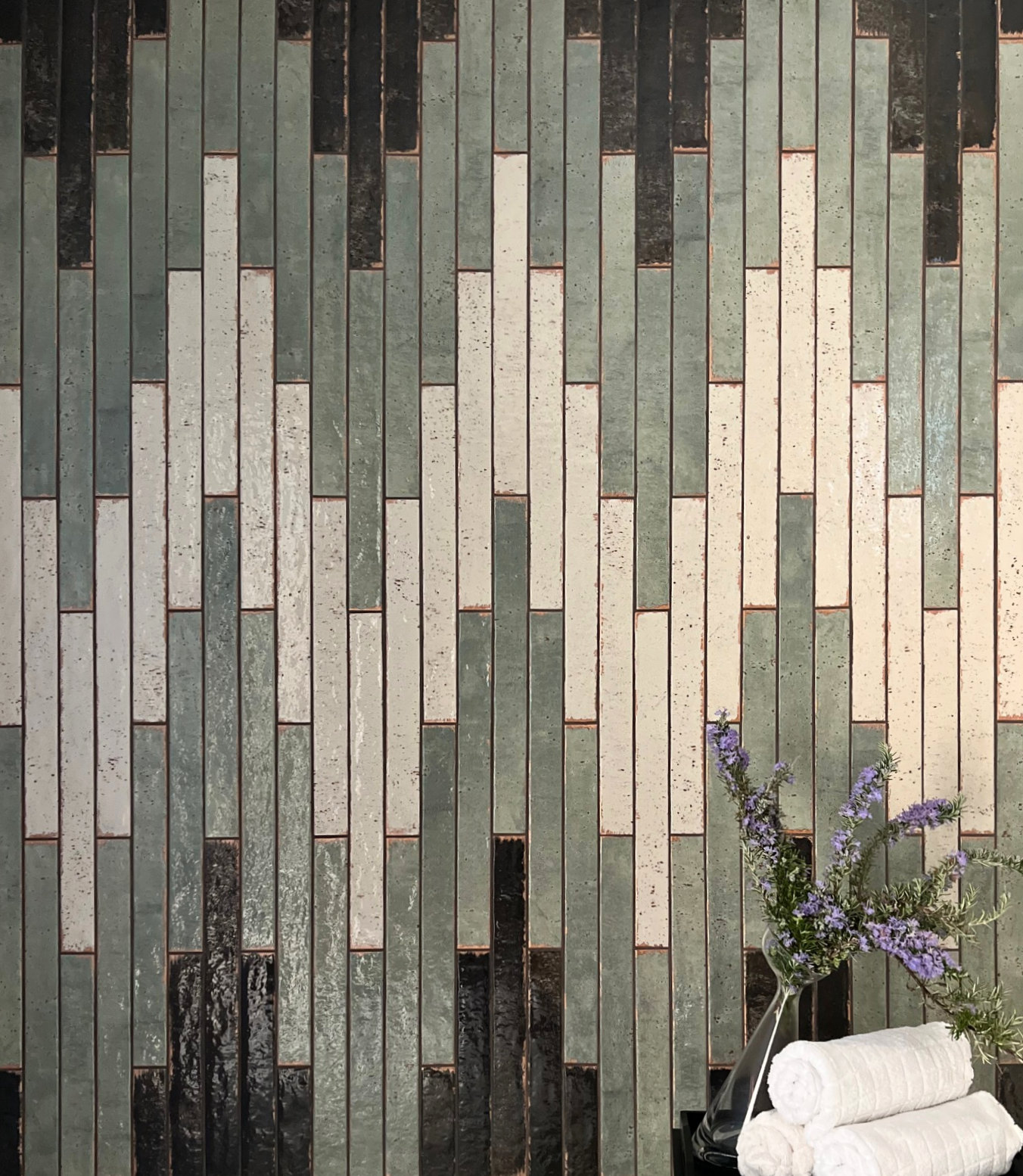
How did you think about surfaces not just as finishes, but as storytellers that shape mood, rhythm, and atmosphere?
Jennifer: Every surface in these homes was chosen to evoke a feeling before a function. Tile can create cadence — a visual rhythm that guides you through a space. Stone can quiet a room or give it gravitas. I approached each surface as a narrative device: What does this texture say? What emotion does this pattern unlock? What story does this material want to tell?
Were there moments where the surface material alone defined the identity of a room before furniture or décor entered the picture?
Jennifer: Absolutely. In several spaces, the tile or stone was the identity. Before a single piece of furniture arrived, the room already had a pulse. The original structures are old limestone farmhouses, so the existing stone instantly defines character throughout. To juxtapose that ancient heritage with a bold tile installation can establish the entire emotional architecture of a space. It’s like casting the lead actor before writing the script — once the surface is chosen, the rest of the room knows exactly who it needs to become. There’s a wall in Extension House that has a bold, multi-colored ikat pattern of Metamor tile from Emser, and it establishes the joyous, playful energy of the space before a single item arrives within it.
How do you balance restraint and impact when working with bold materials?
Jennifer: It’s a dance between confidence and humility. Bold materials want to be seen, but they don’t want to shout. I let each surface breathe, giving it enough negative space to feel intentional. When you allow a dramatic stone or tile to stand in quiet conversation with its surroundings, the result is powerful without ever feeling overwhelming.
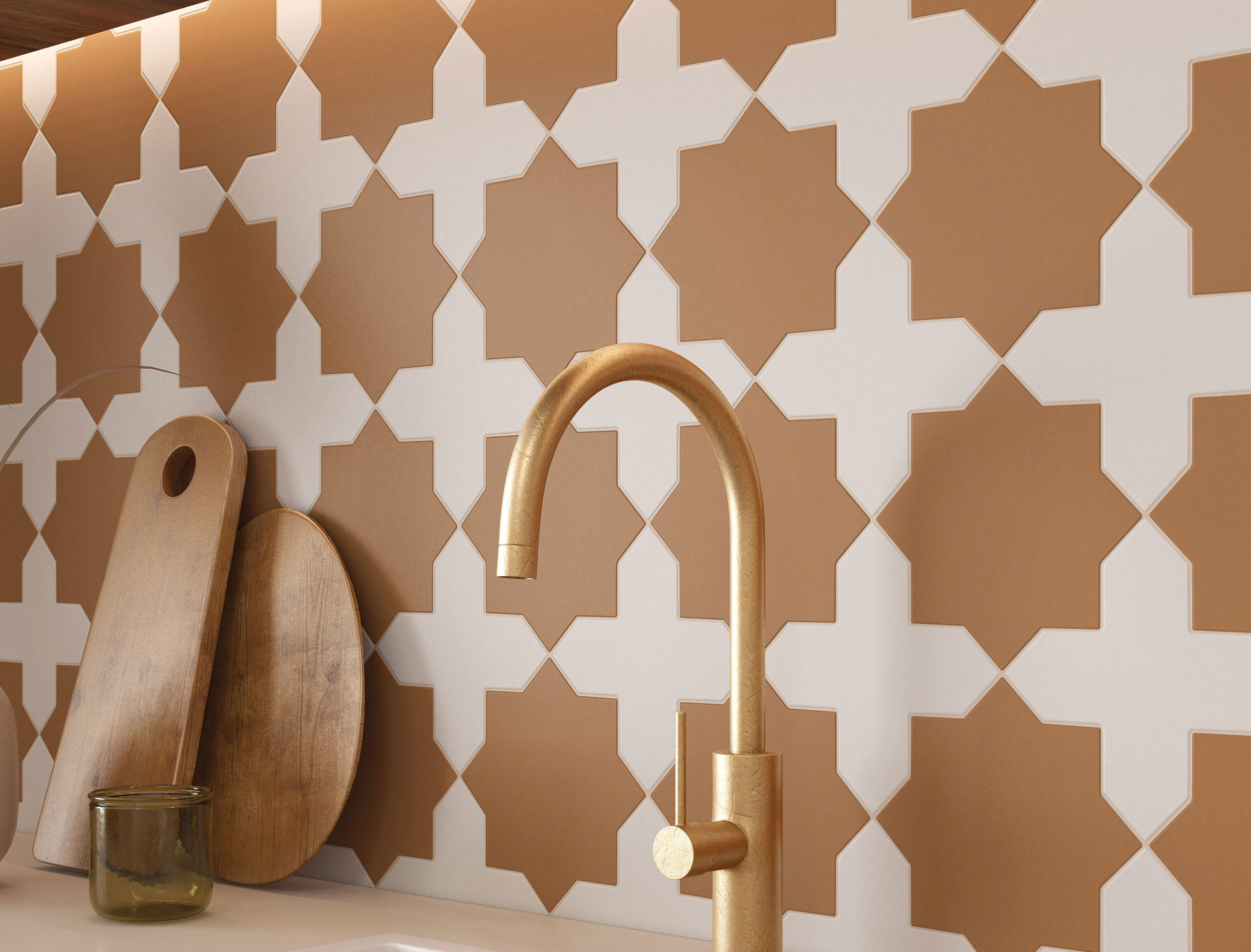
Your Metamor and Eclissi collections with Emser Tile appear throughout the homes. How did you envision these collections supporting the overall narrative?
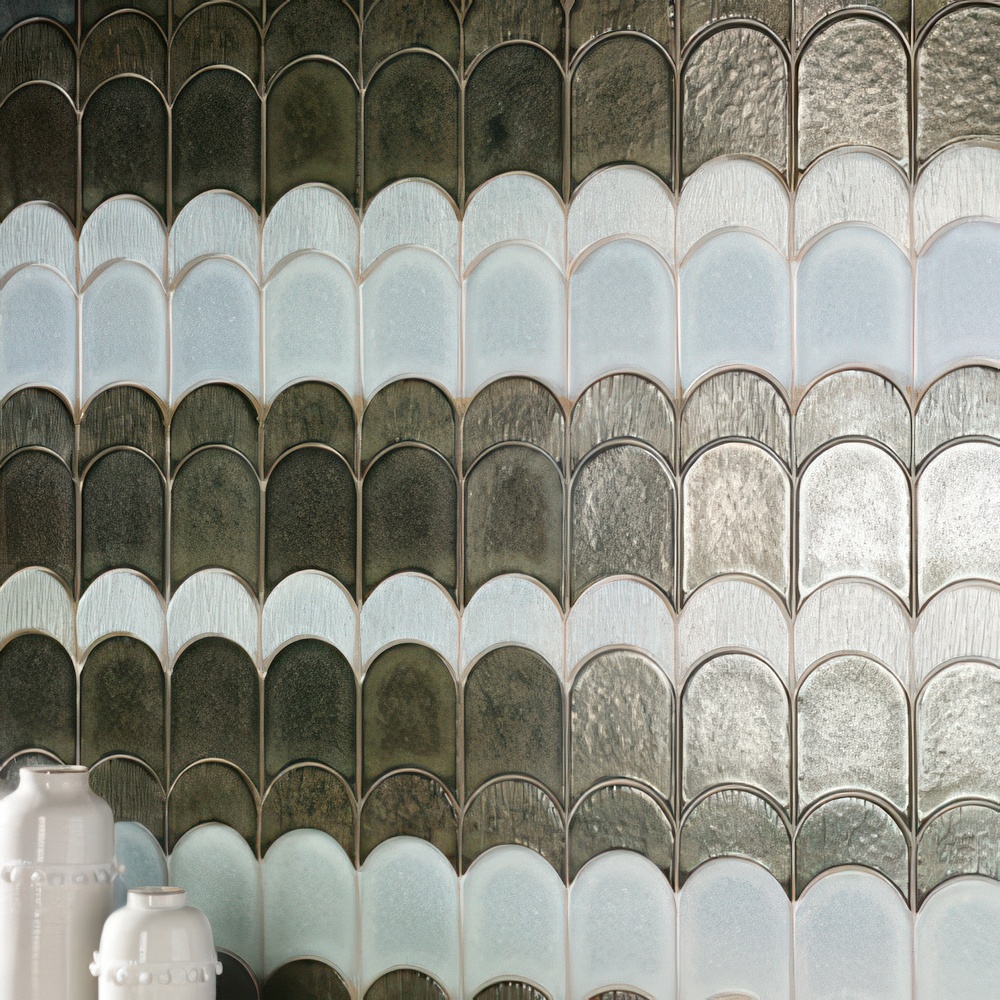
Jennifer: Metamor and Eclissi were designed to embody transformation — the shifting of light, the evolution of texture, the interplay of shadow and form. They became the perfect visual metaphor for the Interconnected Changeable Environments House story. These collections allowed me to weave subtle continuity across the three homes while still giving each space its own personality. Their sculptural surfaces feel both ancient and futuristic, which is exactly the tension I wanted.
What role does craftsmanship play in tile — the grout lines, the texture, the way light hits the surface?
Jennifer: Craftsmanship is everything. Tile is a material of millimeters — the smallest detail can elevate or diminish the entire installation. The way a grout line aligns, the way a tile catches morning light, the way texture shifts as you move through a room… these are the quiet moments that define luxury. Tile is not just installed; it’s composed.
How do installation details (like grout selection and precision work) elevate the finished space?
Jennifer: Grout is the unsung hero of tile design. The right grout can make a tile sing; the wrong one can mute its voice entirely. And in an era when health and wellness are as important as aesthetics, I lean in to nontoxic, high-performance materials like grout and installation products from Litokol, provided by The Tile Doctor. This is how we, as designers, ensure both beauty and longevity in a space. And I always emphasize responsible installation practices; though we’re creating this project in France, we’re following the craftsmanship standards and practices of the National Tile Contractors Association and the International Surface Fabricators Association. When tile, stone, and surface materials are installed with that level of precision and care, the result is nothing short of architectural poetry.
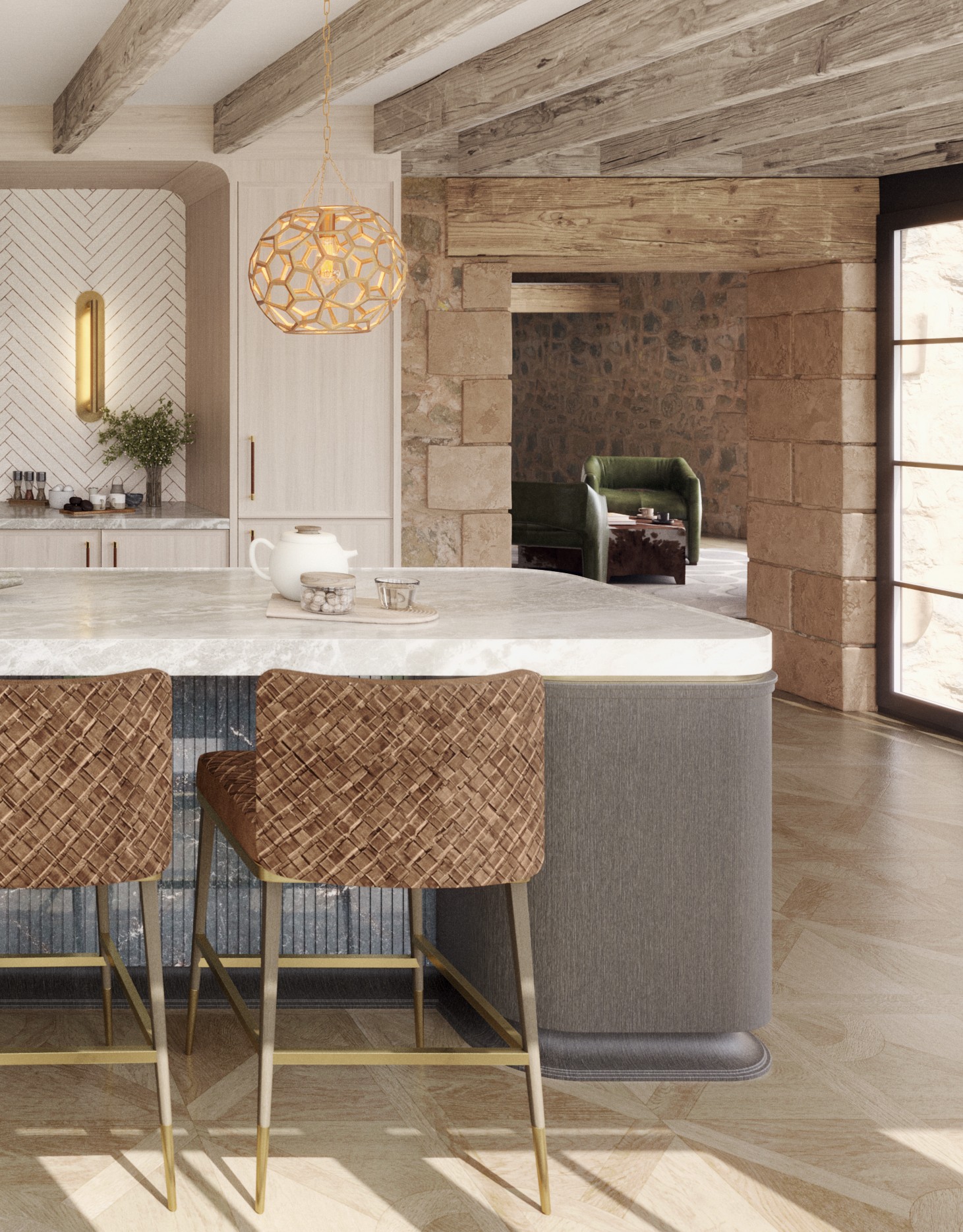
Stone carries a sense of permanence. How did you approach stone selections as part of the “forever home of the future” philosophy?
Jennifer: Stone is the ultimate long-term thinker. It doesn’t just exist in the present; it anticipates the future. When selecting stone, I considered how each piece would age, how it would interact with changing light, how it would evolve with the family who lives with it. For the Entertainer’s Kitchen at Center House, I’m using a Taj Mahal from Cosentino’s Sensa Collection, very particularly because they integrate a stain-resistant protection into the stone at a molecular level. It’s an embodiment of the “forever home” concept: timeless, resilient, and deeply connected to the earth.
How important was patina — the idea that these materials will evolve and grow richer over time?
Jennifer: Patina is the soul of a home. It’s the record of life lived. I wanted materials that would welcome that evolution, not resist it. Stone that softens, tile that deepens, surfaces that tell the story of touch and time — that’s where true beauty lies.
Were there specific stone moments that feel especially symbolic of the project’s ancient-meets-modern tension?
Jennifer: There’s a moment in the Entertainer’s Kitchen of the homes where this stunning Parisien Blue Silestone with modern vertical grooves is set in the center of a room with original limestone walls. That intersection — rough meeting refined, ancient meeting engineered — captures the entire ethos of the project. It’s a visual dialogue between eras.
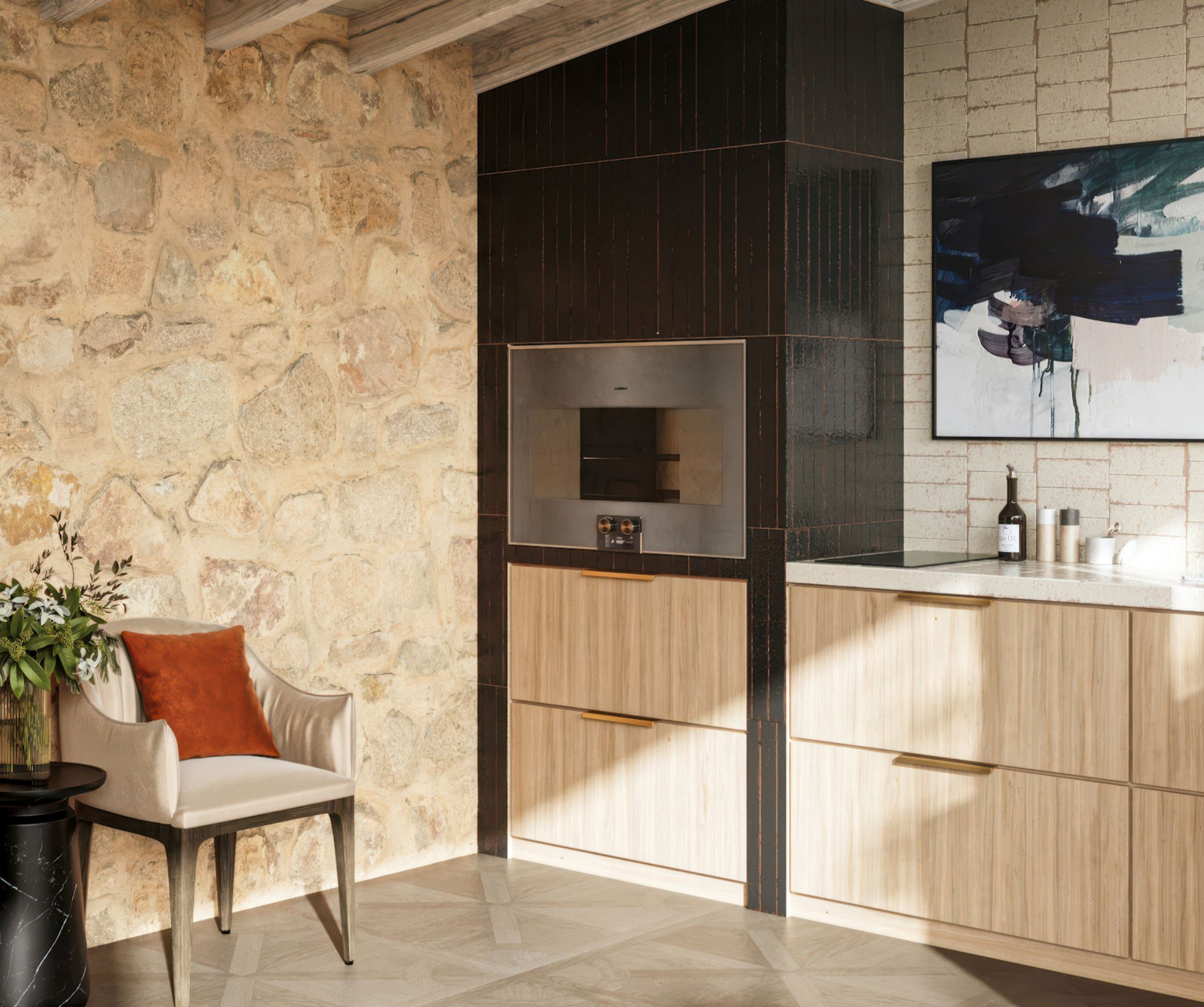
Texture is such a defining theme in the Showhome Experience. How do tile and stone surfaces change as light moves across them throughout the day?
Jennifer: Texture is alive. As light shifts, textured surfaces reveal new personalities — morning softness, midday clarity, evening drama. A matte tile might glow at sunrise and deepen into shadow at dusk. A polished stone might sparkle in daylight and become moody at night. These materials create a living, breathing environment.
What role did matte vs. polished finishes play in shaping calm, drama, or warmth?
Jennifer: Matte finishes ground a space; polished finishes energize it. I used matte surfaces to create serenity and polished ones to introduce a sense of movement or glamour. The interplay between the two creates an emotional dimension — a room that feels both calm and alive.
How do you layer tactile surfaces so they feel rich, but never overwhelming?
Jennifer: It’s about harmony, not competition. I layer textures the way a composer layers instruments — each one has its moment, its tone, its purpose. When textures support each other rather than fight for attention, the result is richness without chaos.
With three distinct homes, how did you create continuity through surfaces while still allowing each house its own personality?
Jennifer: Continuity came from a shared design language — a commitment to natural materials, sculptural forms, and tactile richness. Personality came from how those materials were expressed. One home might use stone as a grounding force; another might use tile as a sculptural statement. The vocabulary stayed the same, but the sentences changed.
Were there recurring surface materials that became signature touchpoints throughout the property?
Jennifer: Yes — certain stones, certain tiles, certain textures became the connective threads. Metamor, Eclissi, and Martel – all by Emser Tile – appear in multiple spaces, creating a sense of familiarity. Cosentino surfaces — Dekton, Silestone, and natural stone — also became signature elements, each used in a way that felt both consistent and uniquely suited to its environment.
Looking back, what surface choice most clearly captures the spirit of Interconnected Changeable Environments?
Jennifer: It’s the interplay of sculptural tile and timeless stone — that moment where texture meets permanence, where ancient meets modern. That dialogue is the heartbeat of the entire project.
What do you hope designers and homeowners take away about using tile and stone with intention in their own spaces?
Jennifer: I hope they see surfaces not as background, but as protagonists. Tile and stone can shape emotion, define architecture, and create a sense of belonging. When chosen with intention, they become the soul of a home.
If these surfaces could speak, what story would they tell about the future of home?
Jennifer: They would tell us that the future is rooted in the past — that innovation and tradition are not opposites, but partners. They would remind us that beauty is tactile, that connection is sensory, and that the homes of tomorrow will be shaped by materials that honor both nature and imagination.
Like what you see? Get it first with a subscription to aspire design and home magazine.