
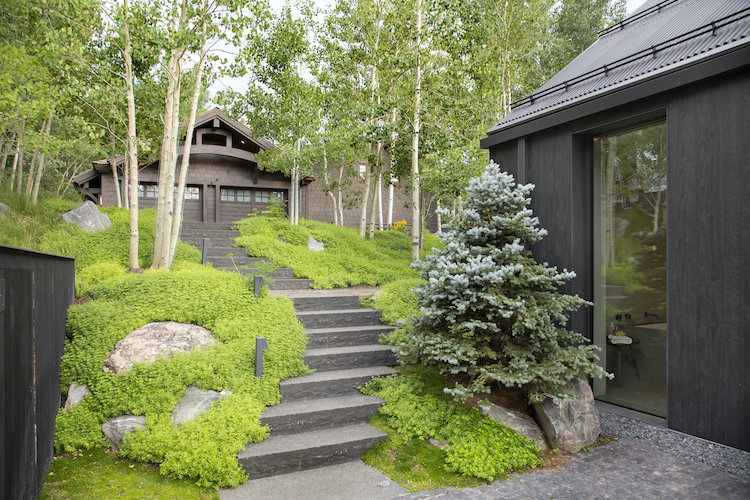
The standing seam zinc roofline and minimalist shou sugi ban siding of this Aspen home suggest a simple, pure design. Project: Rowland+Broughton Architecture. Photo: Brent Moss.
Whether you’re working on a new build or a thoughtful renovation project, it is customary to hone in on pristine, practically flawless materials. But, thanks to the resurgence of shou sugi ban, even the most beautiful design moments can be flawed. Or, in the case of this trend, charred.
With traces back to Japan’s Edo period — between 1603 and 1868 — the storied phenomenon started as a response to the popularity of Edo, which has since been renamed Tokyo. As it became the epicenter of Japan’s political and cultural scene, Edo became one of the country’s most populous areas. As a result, Edo was filled with wooden townhouses — many of which would be destroyed in the nearly 1,800 fires that terrorized the area. The merchant class needed weather-proof, flame-resistant siding, but couldn’t exactly afford stone or stucco. The solution? Shou sugi ban, a Japanese phrase that translates to “burnt cedar board.”
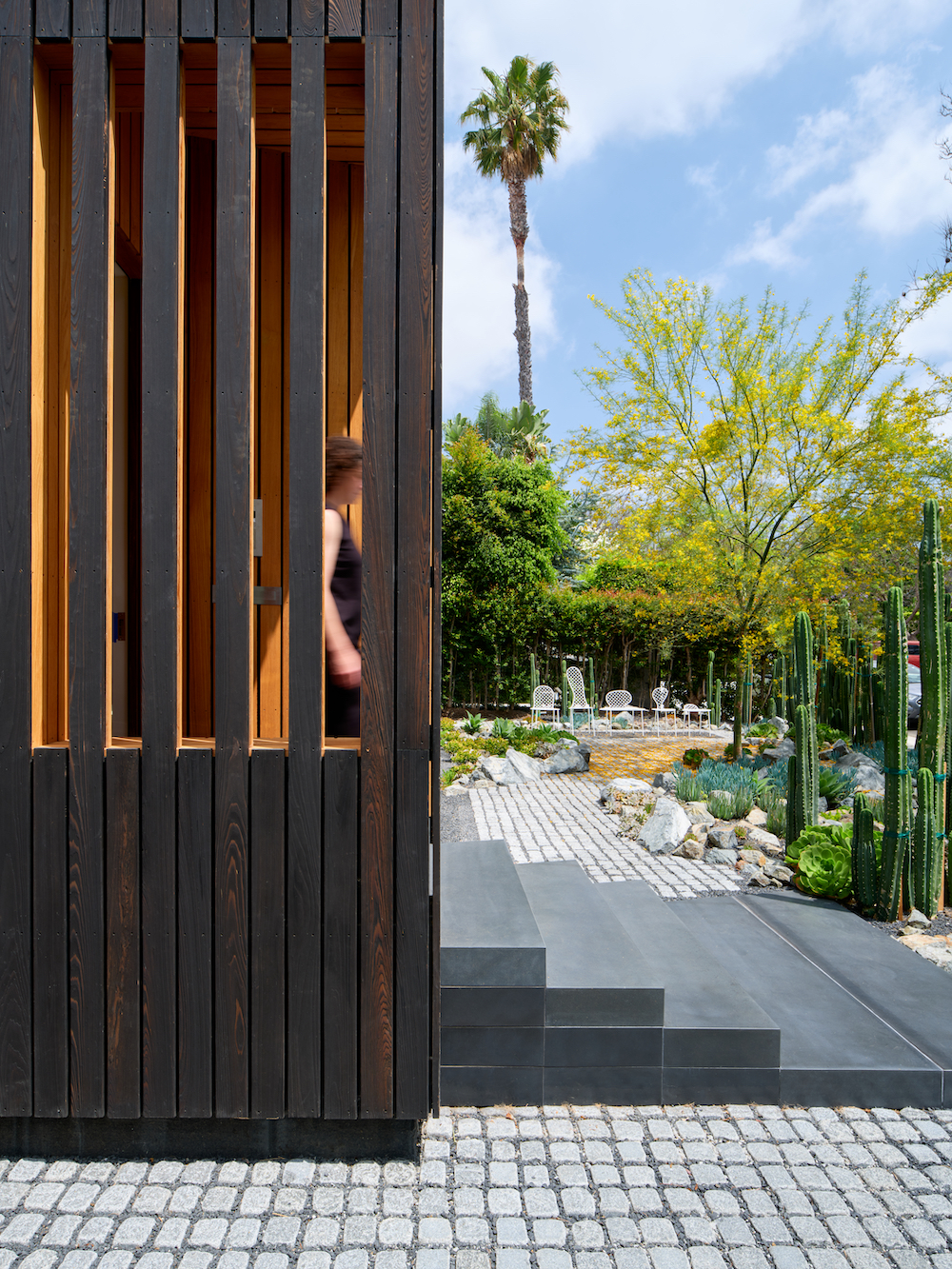
Project: Annie Barrett and Hye-Young Chung. Photo: Brandon Shigeta.
Admittedly, burning wood can seem like a risky endeavor, but when following a controlled and methodical procedure—it can yield visually intoxicating results. Charring the outermost layer of the wood will reveal lignin, a blackened portion that’s resistant to insects, rotting, and, yes, fire. Shou sugi ban’s appearance will evolve over time, a thin layer of oil or polyurethane coating will protect your wood from the elements. During the Edo period, shou sugi ban was a practical choice for both commercial and residential spots as it could protect both inventory and families.
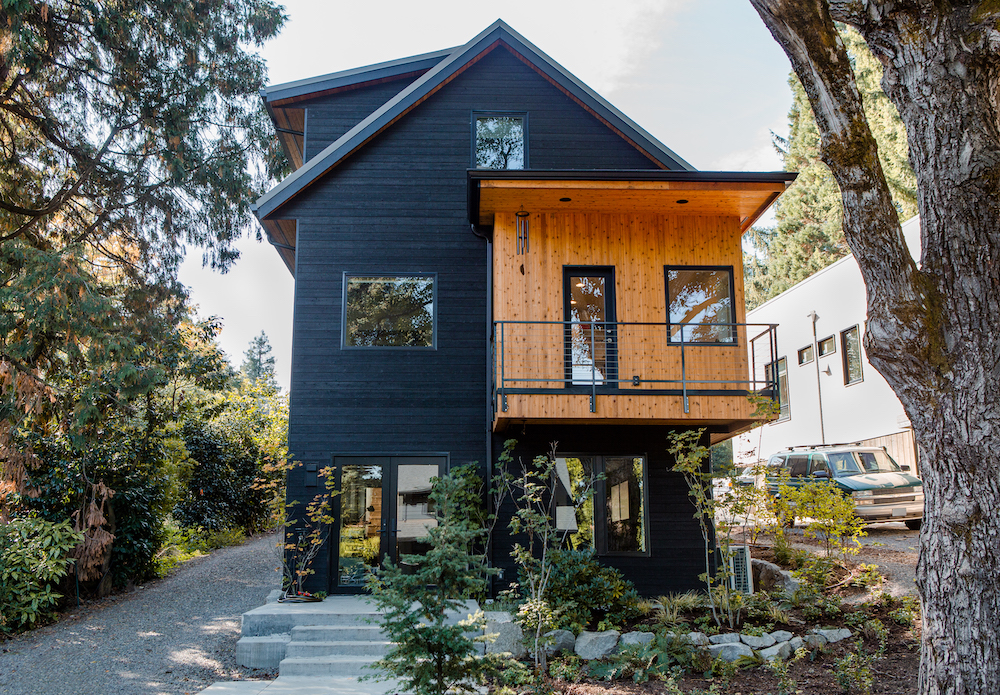
Project: Ground Up Design Works. Photo: Aaron Davis, Nakamoto Forestry.
Though shou sugi ban was once considered a lower-class necessity, it’s had a steady rise to design fame. The industry began to embrace the charred phenomenon in the 1970s with the help of architects like Yoshifumi Nakamura and Ternobu Fujimori. More recently, the innovative trend has become the secret weapon of modern design and architecture.

For Umai, a Japanese restaurant in Mexico’s Roma district (pictured above), Atra’s Alexander Díaz Andersson cleverly paired shou sugi with oxidized brass detailing — both features will gracefully age over time. Meanwhile, architects Annie Barrett and Hye-Young Chung put the budding trend front and center in this Los Angeles home with shou sugi ban rain-screen siding. Or, for those who want to take shou sugi ban inside, look to this Rocky Rochon-designed Seattle penthouse, which makes a grand entrance with charred wooden planks. But, no matter how you choose to incorporate the burgeoning shou sugi ban trend into your space, one thing’s for certain: A little bit of imperfection can be the perfect touch for a project.
Like what you see? Get it first with a subscription to aspire design and home magazine.