
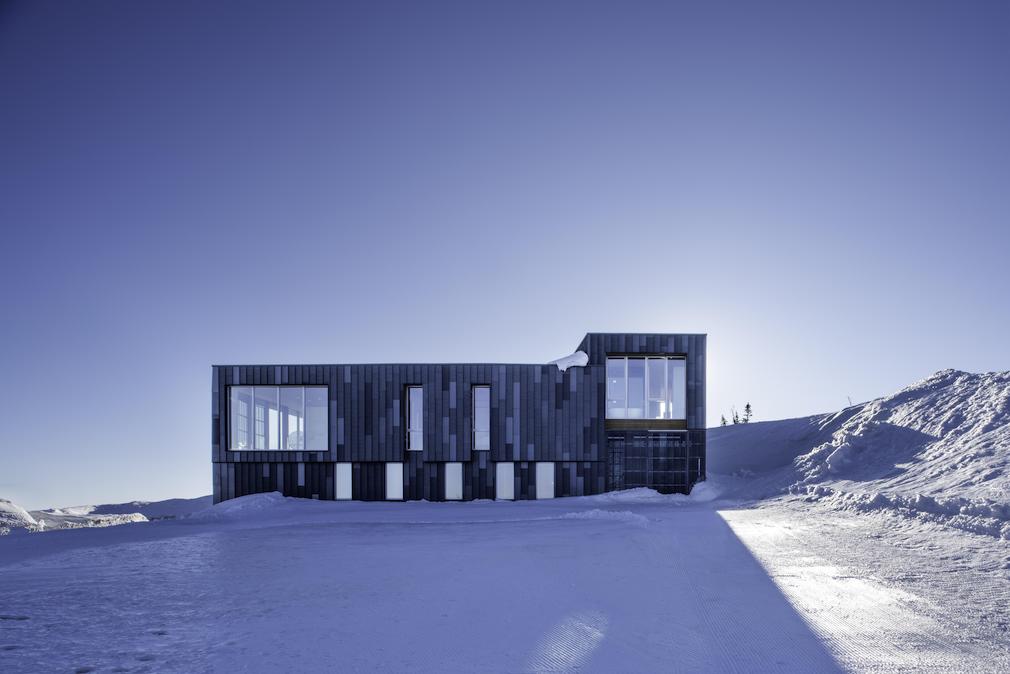
Located within the Powder Mountain Ski Resort in Utah, this ski-in/ski-out mountain sanctuary by Sparano + Mooney Architecture was designed and built for clients whose appreciation of Japanese culture and design influenced the home’s overall concept.
Specifically, the team found inspiration in Kirigami, defined as the Japanese art of cutting and folding paper in a creative manner, a concept similar to origami from the East Asian traditon.
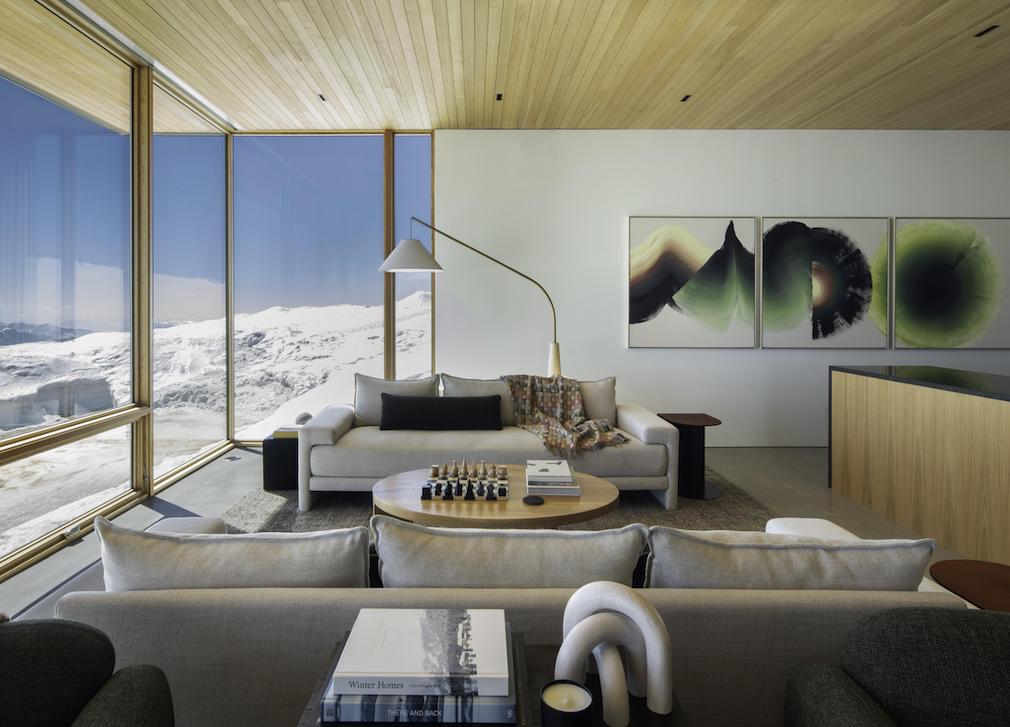
Desiring a clean, modern aesthetic, the interior design of the home and its art were chosen with this aesthetic in mind, leading to an eclectic yet curated space. This home was built to accommodate visitors of all ages and life stages; the clients considered their current and future needs, as well as those of their parents, who may also need to reside in the home. Occupants and visitors can travel from the garage into a corridor in which the elevator is situated, and from there up to the main level and out into the kitchen. The house, therefore, facilitates aging in place and multi-generational living.
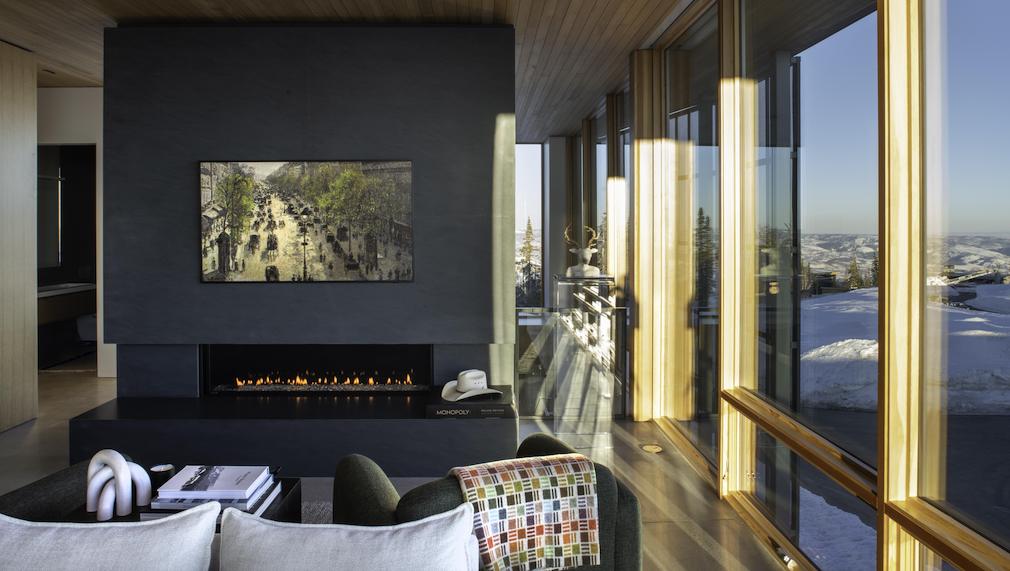
Due to its remote location, the home is run completely off of propane, and heated by highly-efficient radiant heat throughout. The southern façades feature overhangs, and temperatures are controlled with operable windows at key locations to provide any necessary cooling, ensuring a sustainable design approach.
The multi-level layout includes a primary suite with a private deck and steam shower on the upper level, which is stepped up from the main level by 5 feet and can be completely separated from the rest of the home.
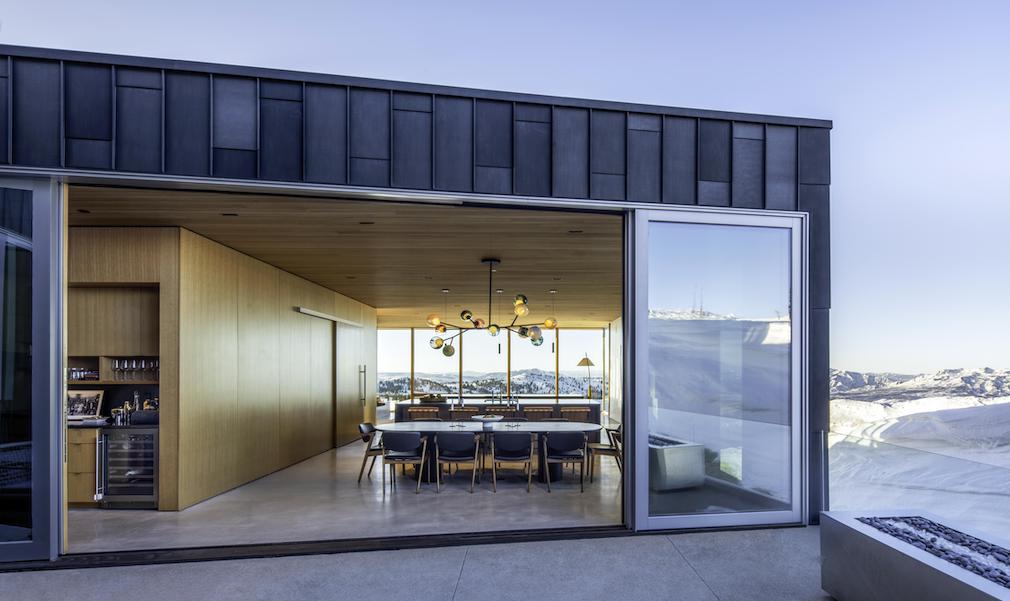
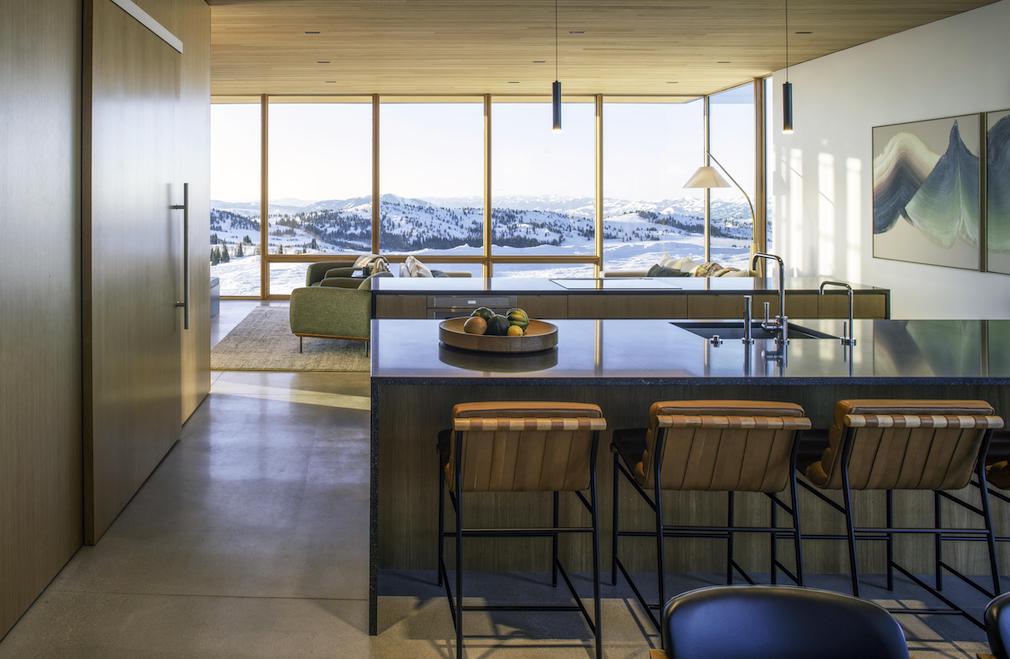
The dining room, with its multi-slide door system, opens onto the courtyard, while the main kitchen is completely open with no ceiling-based cabinetry, fixtures, or fittings to allow for an uninterrupted flow of energy and viewpoints. The scullery kitchen, with a small built-in bar, is located near the media room.
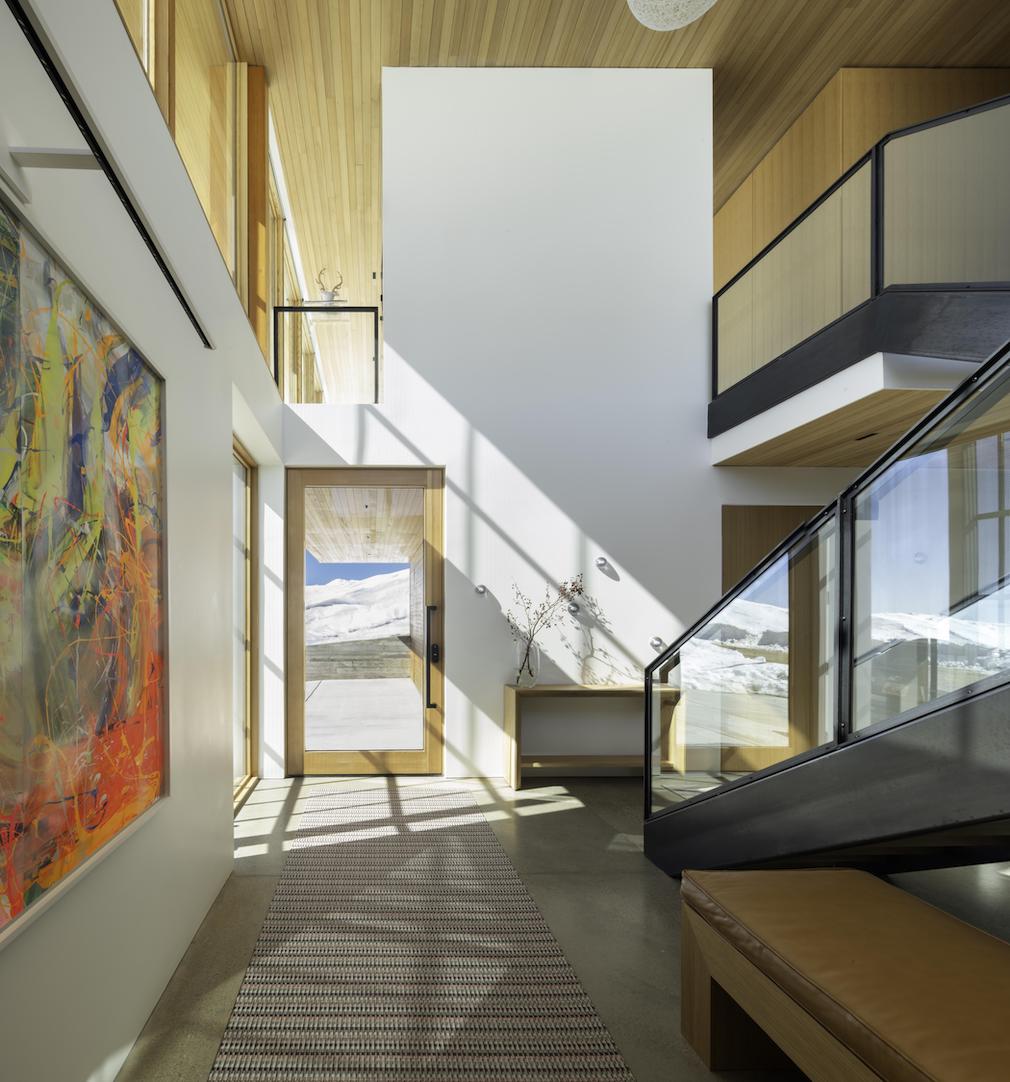
Throughout the interiors, hem fir is used as the primary finish, with cabinetry in rift white oak, countertops and accent counters in black granite, and flooring in polished concrete. The exception is the onsen-area walls and ceilings, which utilize cedar for the wood’s aroma and aesthetics, and stone tile for the floors.
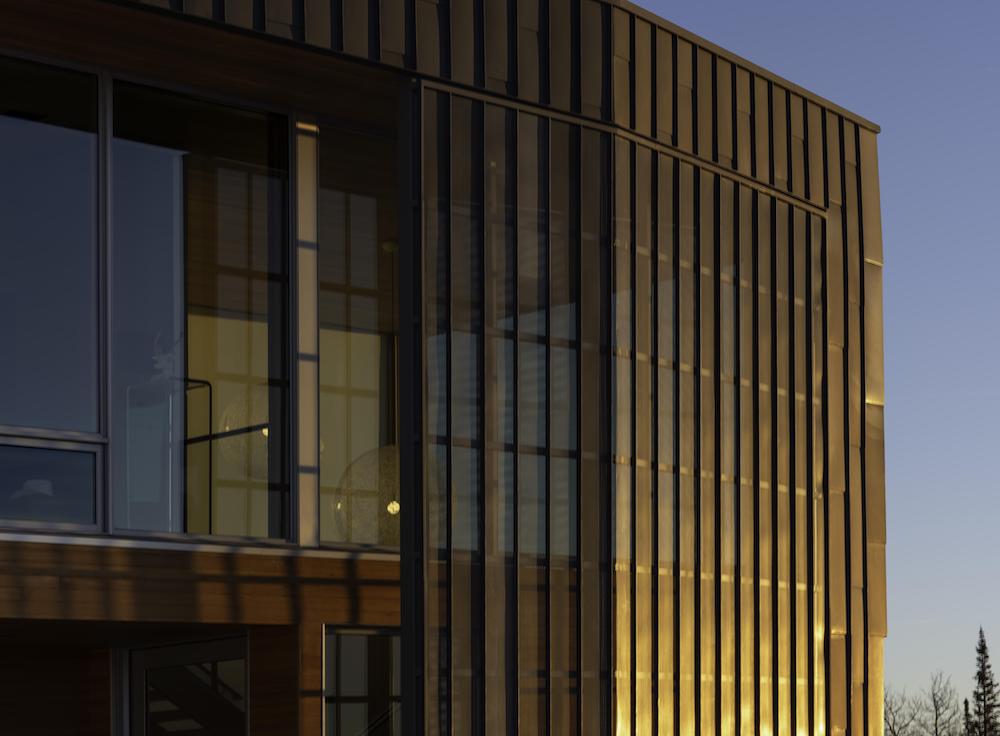
The formidable expanse of stark terrain surrounding the home inspired the design team to explore a dichotomy of undulation versus permanence within this blank canvas. The home’s custom, bent-metal TEKKō™ steel exterior wraps around the structure in a mixture of solid and perforated panels. The team selected TEKKō™ steel for the facade’s exterior cladding for its ability to bend and fold around the home’s upper level and throughout the courtyard, with standing seams that then turn into the corners. The highly corrosion-resistant steel-zinc composite is perfect for the elements. One section is perforated, with standing-seam panels, while some are opaque.
The sustainable design goals were centered around creating a form and approach that would exert minimal impact on the native landscape, while still providing opportunities for interaction with nature.
Photography by Matt Winquist.
Like what you see? Get it first with a subscription to aspire design and home magazine.