

All work and no play is no way for an Architecture firm to thrive. Shanghai-based XISUI Design managed to incorporate both in designing the Red Dunes Playtopia – a series of undulating red dunes that create an alluring landscape for children’s activities. By seamlessly integrating functional installations within the natural topography, the project evokes the charm of a mountain nest or a jungle treehouse. The project was honored as the popular choice winner at the prestigious 2023 Architizer A+Awards.
Utilizing advanced design techniques such as parameterized design, drainage optimization simulation, and structural form-finding algorithms, the Red Dunes project harmoniously blends the outdoor space with its natural surroundings. It aims to inspire both children and adults to immerse themselves in the joy of outdoor play and exploration.
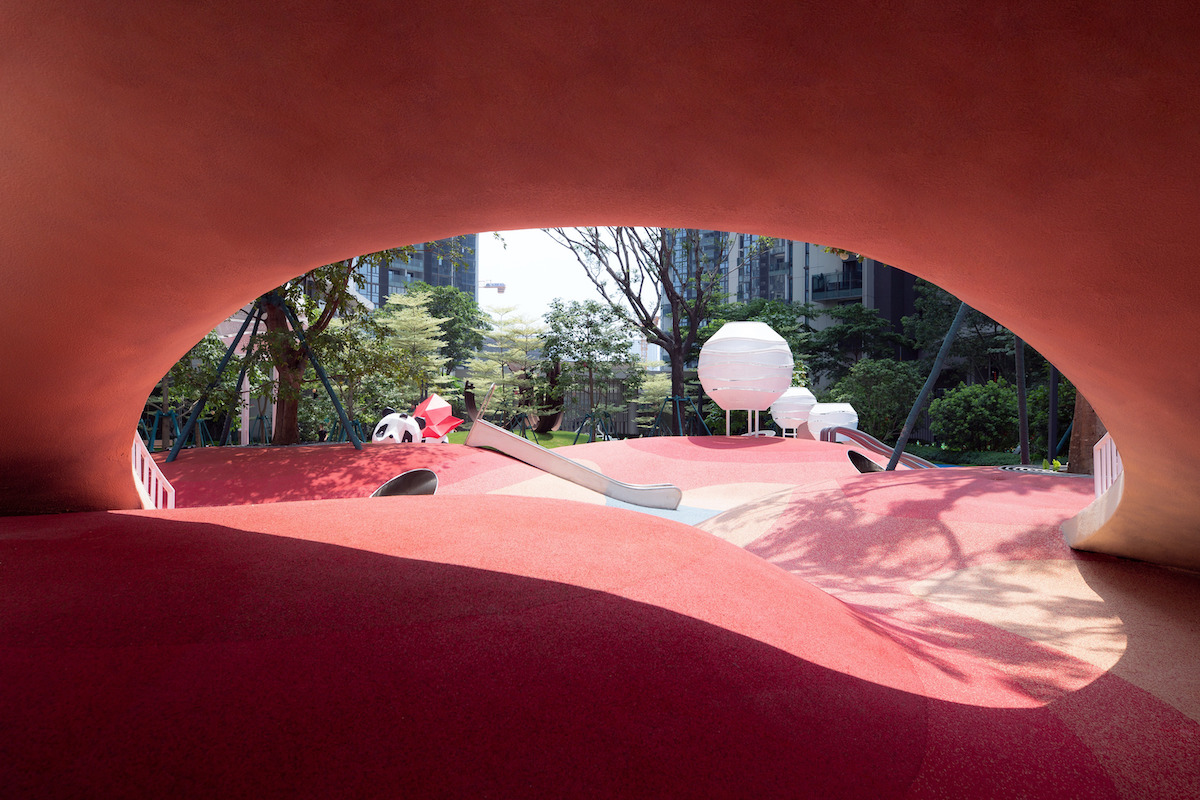
Parametric topography design
Through digital generation, the topography has been tailored to accommodate the complexity and slope of the terrain, providing distinct zones for different age groups. Children’s activity facilities seamlessly merge with the natural environment, forming a cohesive space.
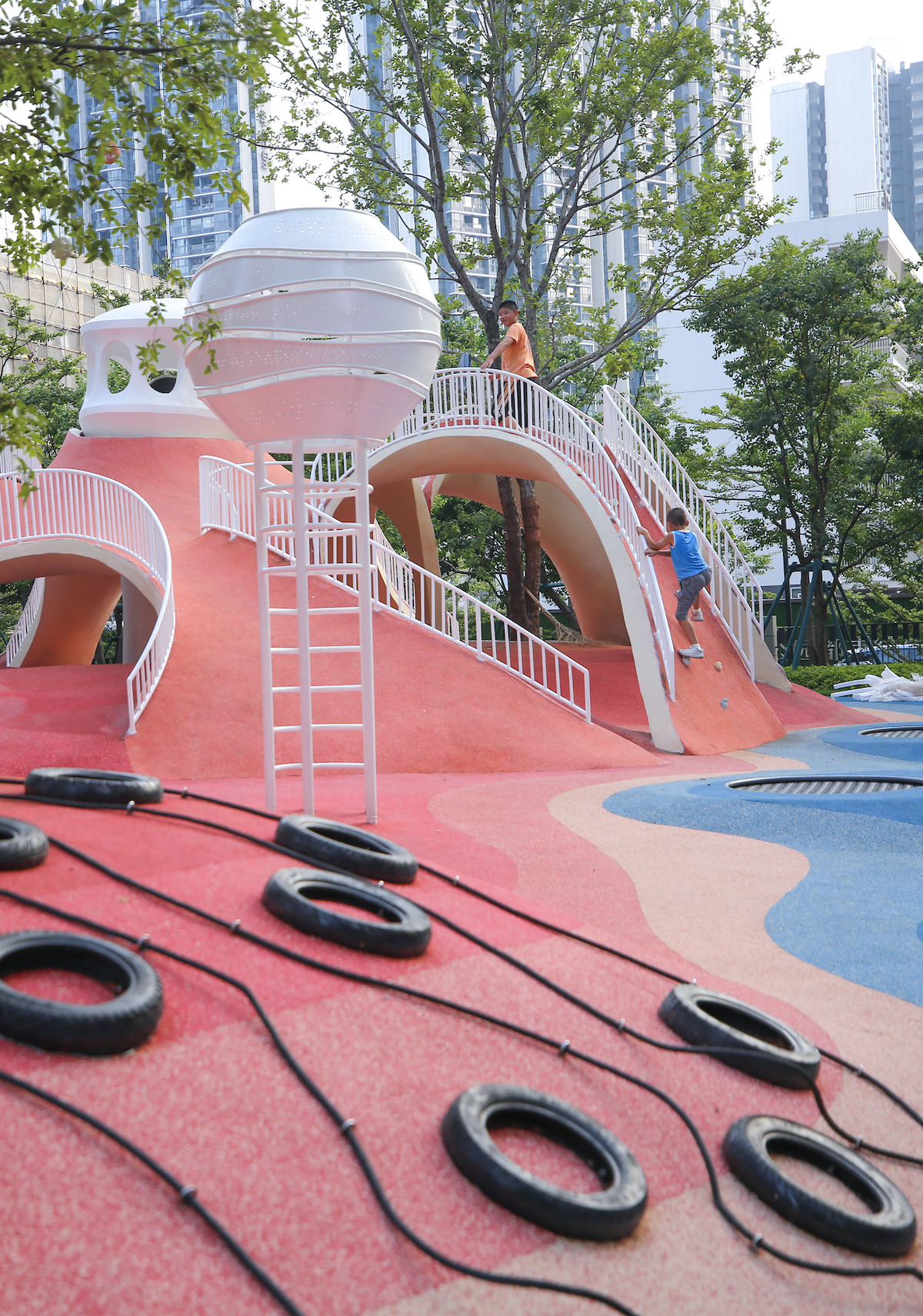
Concrete shell structure
The project presented a unique challenge in terms of form and structure with its undulated concrete shell structure. It emulates the cave-like topography of the natural landscape, providing climbing spaces above, and sheltered areas below. Inspired by the load transfer mechanism of natural arches, the design enables large spans and ultra-thin structural thicknesses. By integrating with the landscape, it enhances visual cohesion of the artificial structure, reduces column presence, and optimizes spatial efficiency.
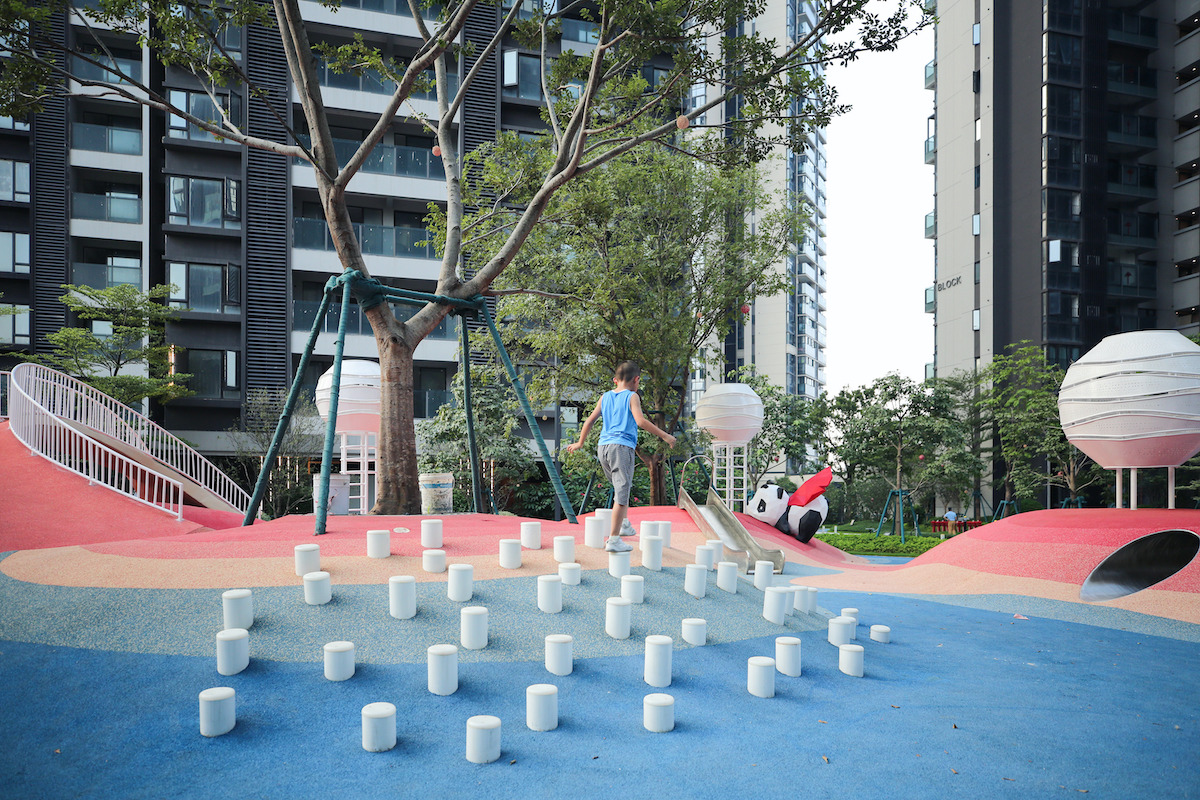
Practicing material efficiency and sustainable ideals
Concrete, with its advantages in terms of formability, cost-effectiveness, and practicality, has become a key direction in green architecture and the development of future organic structures. The concrete shell structure in this project combines large spans and ultra-thin structural thicknesses. Through mechanical calculations and modeling analysis, material savings have been achieved in comparison to conventional beam-column structures, with approximately two-thirds reduction in raw material usage for the same span.
Like what you see? Get it first with a subscription to aspire design and home magazine.