

Last week, the Pacific Design Center’s annual Fall Market welcomed design industry professionals with thought-provoking conversations by visionaries who define what it means to live an artful life. One such panel, hosted in the Mimi London Showroom, saw Brian Pinkett, principal at Landry Design Group, and Gillian Rose, renowned color scientist and founder of Gillian Rose Colour, engage in a stimulating conversation on how color affects our psyche.
Read part of the conversation below, as Brian and Gillian explored why certain colors make us joyful, confident or energized — while others have the opposite effect — and how that influences design.
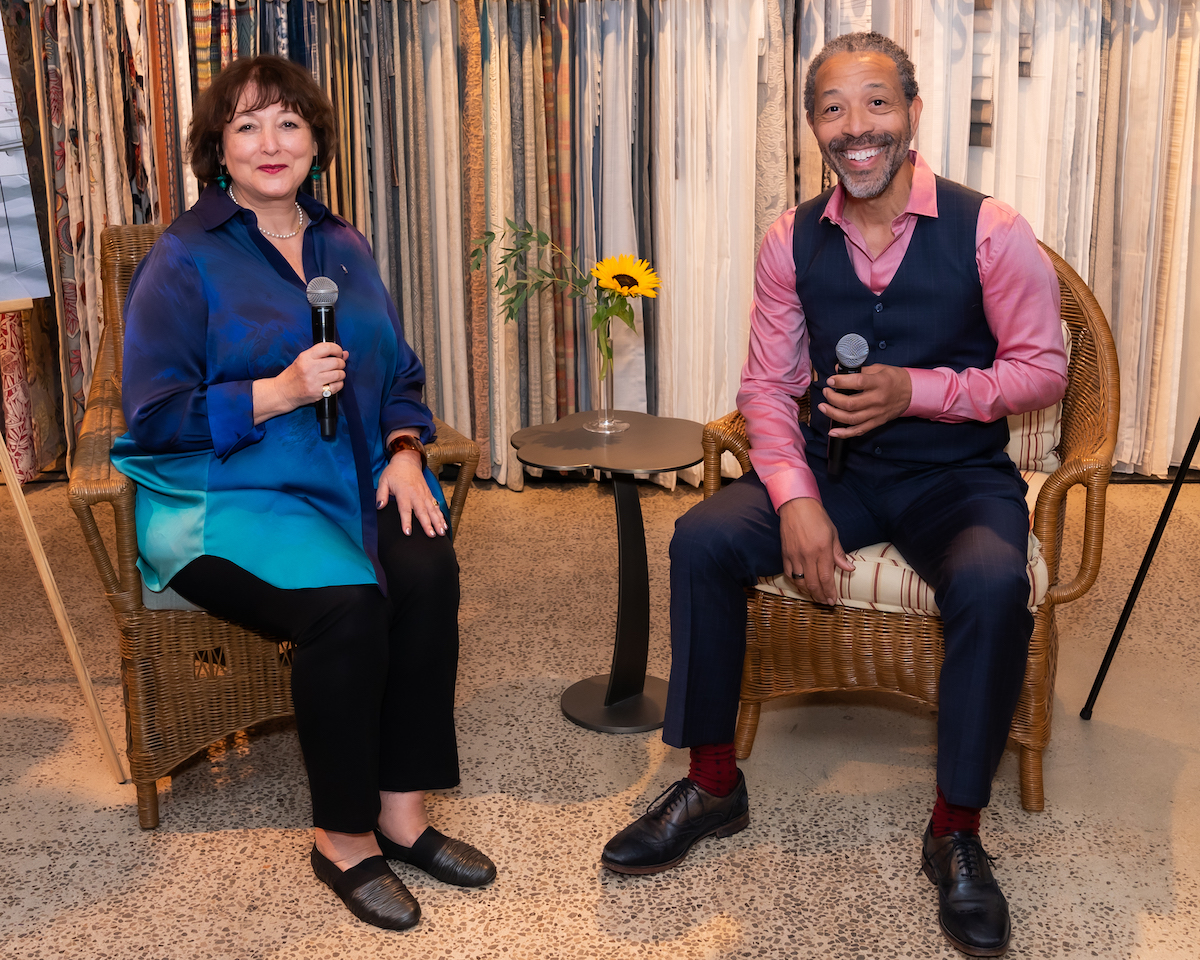
Brian Pinkett: Tell us about color; what is it?
Gillian Rose: Color like all matter in our world is energy – Energy = vibration. Think of this: we all have our own individual energy, right? Every color also has its own individual energy. It is only when you match your energy with a specific color or color palette’s energy – you have Nirvana! This is where the magic happens. Who doesn’t want that!
When we experience a color – we often think of it simply as sight, yet largely what’s happening are feelings – We feel the energy of that color. Energy = vibration. It’s a biological primal reflex, not a thought.
Here’s the greatest difference between us. Some of us need more energy to feel calm and at peace and some of us need less. Which is why with each of my clients, I offer this process called Colour Play.
BP: Could you tell us more?
GR: Colour Play is a 90-minute process where I ask a series of questions about your feelings, and how you want to feel in your space. The next step is about specific colors and your responses to them. We work within a palette of 60 colors. Through this process, the client will have selected a variety of color preferences, typically between 6-12 colors – it’s very personal. A designer client pulled 40 colors and used 80% of them in the design they created, and it got published!
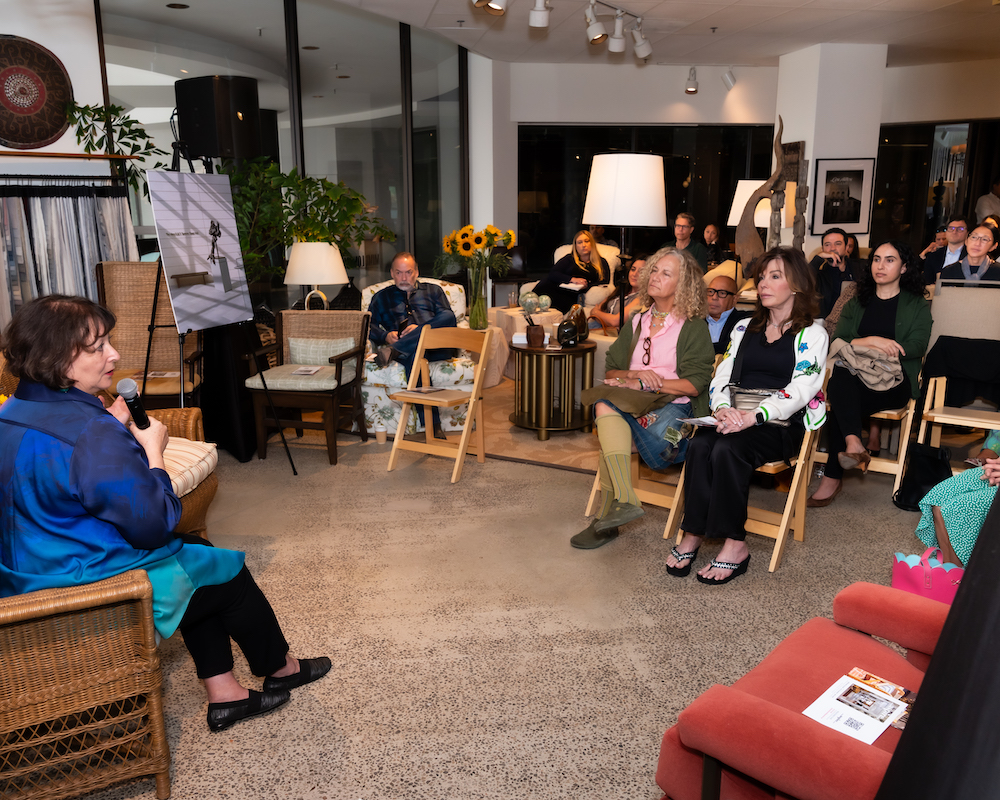
BP: How does it work?
GR: It’s very easy and fun – it’s all about play. I believe in learning through play. We begin with a color ID quiz – this is a list of adjectives about how you want to feel in your space – now, the client is thinking about how they want to feel. Color, as is design, is all about connection. We have to create a safe environment for them to tell us everything; we need to know to make their dreams come true. Client’s rarely really know. It’s in the next step of Colour Play, is where color selection happens. I only offer one single directive: Do not think! Just allow yourself to feel the energy. Clients select from 60 hand-painted color samples. The samples are all part of the three collections I created with Fine Paints of Europe. Now we have the palette that the person is drawn to, and equally important are colors they are not drawn to.
From here, these colors become the foundation as a guideline for the interior designer to use in the materials and finishes in your project. The results of Colour Play become your cheat sheet – if you will, for all the color, patterns, and material sections, throughout your project. Any color doubts are instantly eliminated.
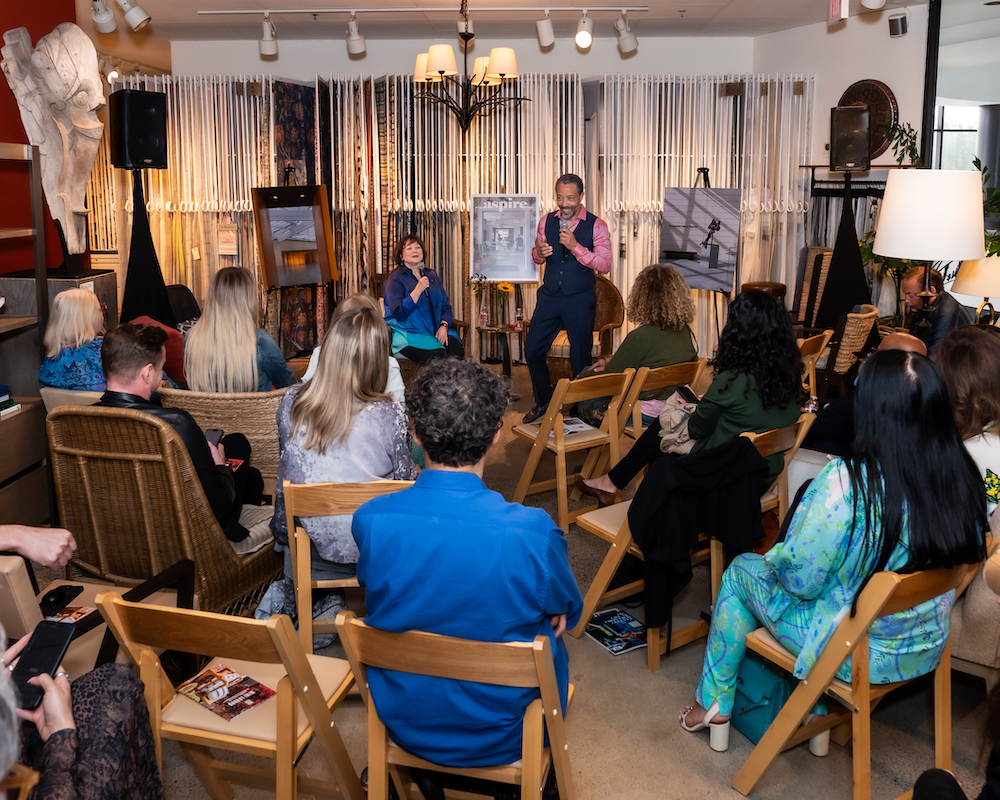
BP: What happens if one partner chooses a color that has high vibration and the other prefers low vibration colors? Think about music – one loves Jimi Hendrix and the other loves Beethoven.
GR: This is where science comes in… The colors that resonate with us are the ones we are drawn to – are based on our temperament. Our temperament determines how much stimulation we need to feel at peace for all our senses – sight, sound, smell, touch, taste – we are concentrating on color here. However, we each come into this world with a specific temperament, and it is fixed. It doesn’t change. This means some of us need energy/vibration to feel at peace, and that’s where the individuality comes in – what you need and what I need could be very different. Color is not about class or status or taste – it’s in our DNA.
Photography by Varon Panganiban.
Like what you see? Get it first with a subscription to aspire design and home magazine.