
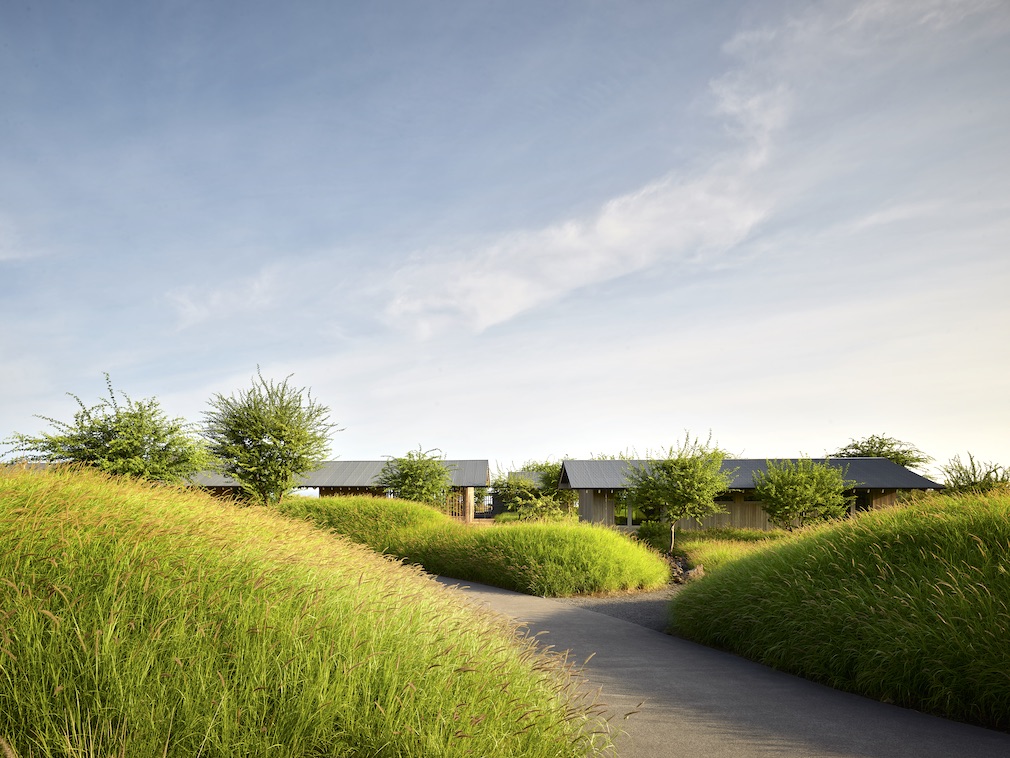
As shelter, architecture seeks dominion over nature. As art, it challenges nature’s perfection. And while some may assert that they have designed structures that seem to spring straight from the landscape, or disappear into it, these facts invariably lead one to think – cribbing from Hemingway – “Isn’t it pretty to think so?” But from time to time, a building does achieve a notable propinquity with its place, not because it has been sent underground or camouflaged with wood and stone, but because it stands as an abstracted yet comprehendible analog of the immediate physical environment.
Situated on Hawaii’s Kona Coast amid acres dotted with kiawe trees, this home comprises three buildings that echo the type of agrarian structures that were once common here. Designed by the San Francisco-based architectural firm Walker Warner, the property is informed, at the clients’ request, by the tenets of Vastu Shastra, a traditional Hindu philosophy of architecture that stresses spatial harmony and a dialogue with nature.
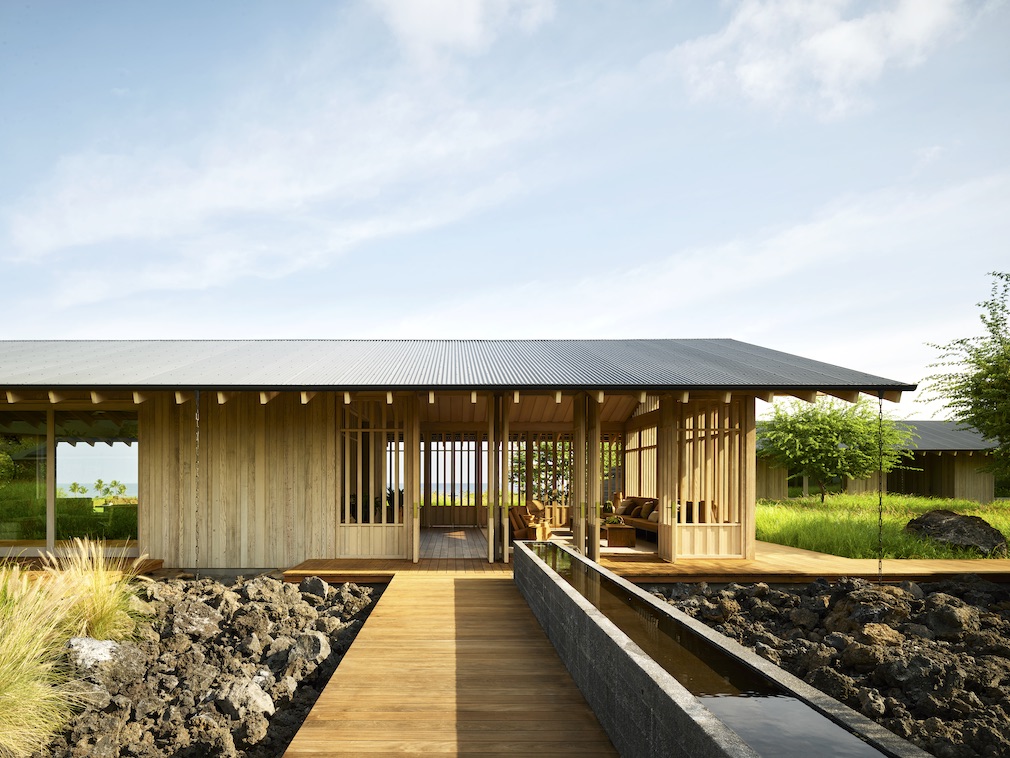
“The home is oriented to the east, rather than the west, the latter being our initial inclination given the position of the site,” shares founder and principal, Greg Warner. “But the clients encouraged us to approach the concepts of Vastu Shastra with an open mind, which prioritize an east-facing door with rooms pointing toward a central courtyard. While the principles initially felt counterintuitive to what we do as architects, the final result feels natural.”
“THE MATERIALS PALETTE USED THROUGHOUT REFLECTS THE MUTED TONES FOUND IN THE NATURAL ENVIRONMENT, ALLOWING THE STRUCTURES TO RECEDE AMONG THE GRASSES AND KIAWE TREES.”
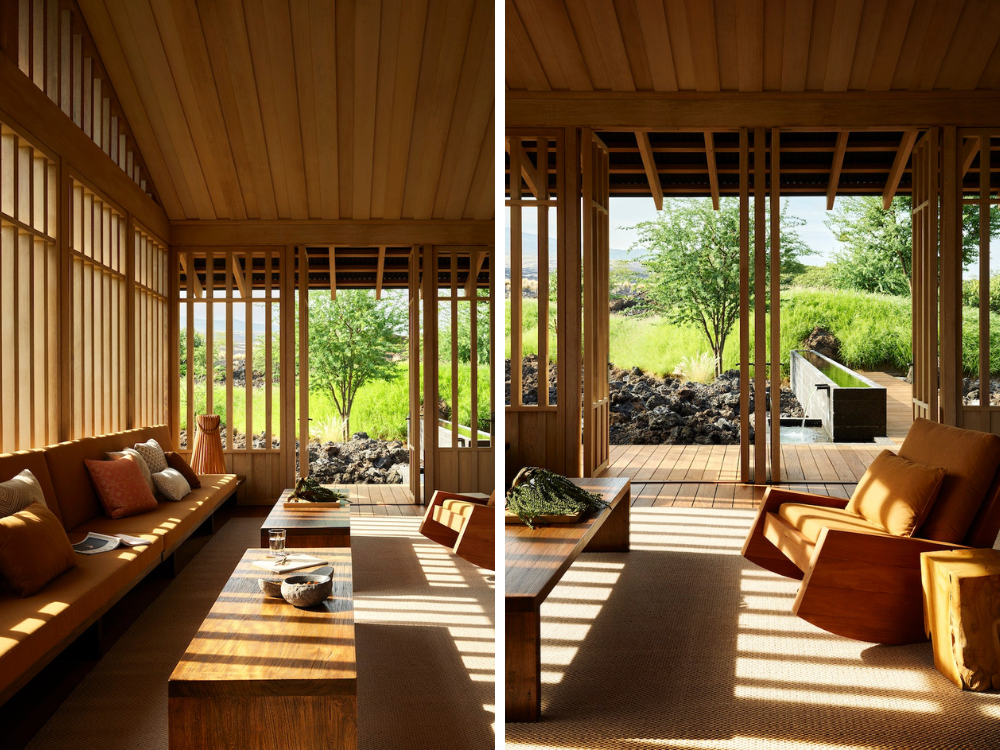
Rectilinear with pitched roofs clad in corrugated metal, the buildings reference the form of a traditional Hawaiian hale, or house. Spare but not austere, with ample openings to the outdoors, they sit amid an orchestrated landscape of tall grasses and lava rock. This constellation is approached via a winding path that leads to an elevated walkway bordered by a water feature fashioned as a long, narrow basin. “Thanks to the arid climate, the hale remain open to the outdoors almost year-round, with each space featuring large windows or full-height doors that provide breathtaking views,” describes Warner. “The materials palette used throughout reflects the muted tones found in the natural environment, allowing the structures to recede among the grasses and kiawe trees.”
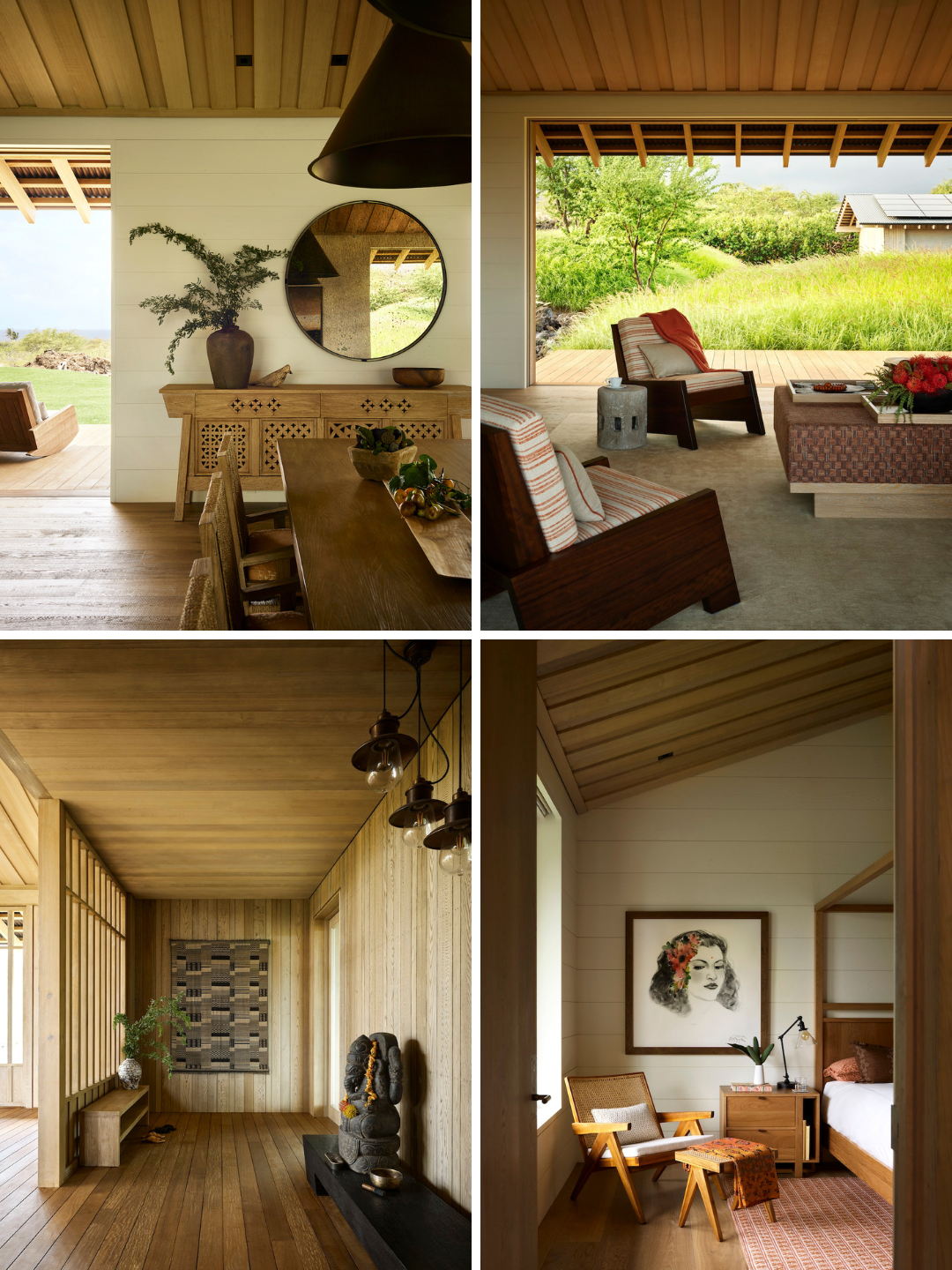
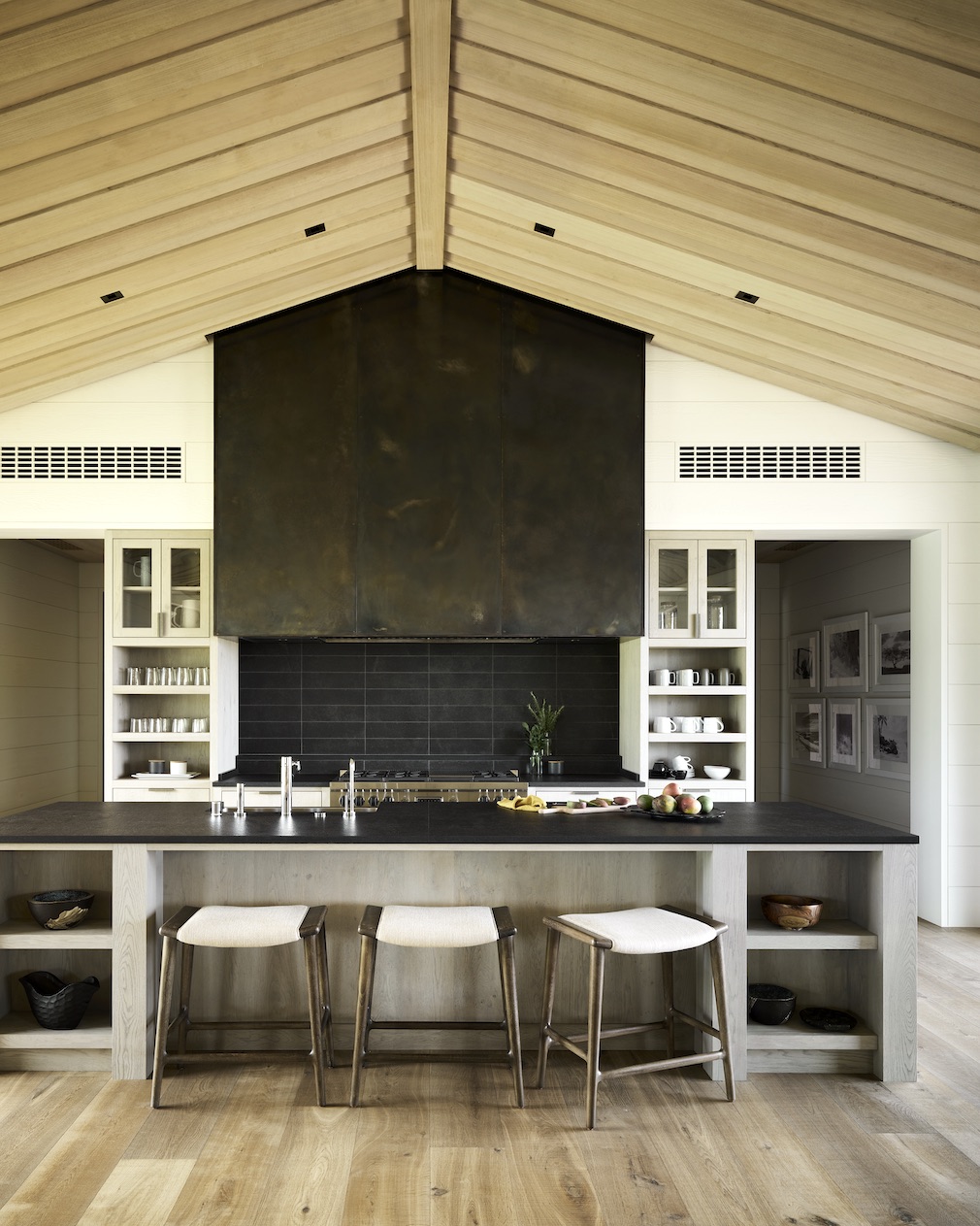
Describing the home as an “exercise in restraint,” Warner notes that “the rooms are open and large in scale, offering a depth of tranquility and renewal while still maintaining a sense of minimalism.” The spaces were fleshed out by Marion Philpotts-Miller and Anne Tanaka of Honolulu’s Philpotts Interiors. “Guided by the principle of purposeful restraint, we distilled each space down to its most essential components while ensuring visual harmony and functional integrity,” explains Philpotts-Miller. Tanaka relates, “First, we prioritized basic needs and functional requirements, creating spaces that serve their purpose elegantly, without unnecessary embellishment. Then we carefully considered scale and volume, using proportions that create a sense of balance and tranquility. Finally, we selected materials and colors that speak to purity and refinement, allowing the architectural details themselves to become the focal points. The beauty emerges from this essence and the spaces feel complete and harmonious precisely because they contain only what is truly needed, nothing more, nothing less.”
Photography by Matthew Millman.
Like what you see? Get it first with a subscription to aspire design and home magazine.