
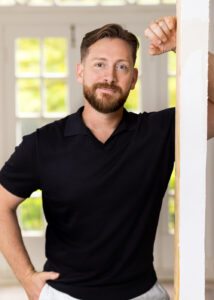
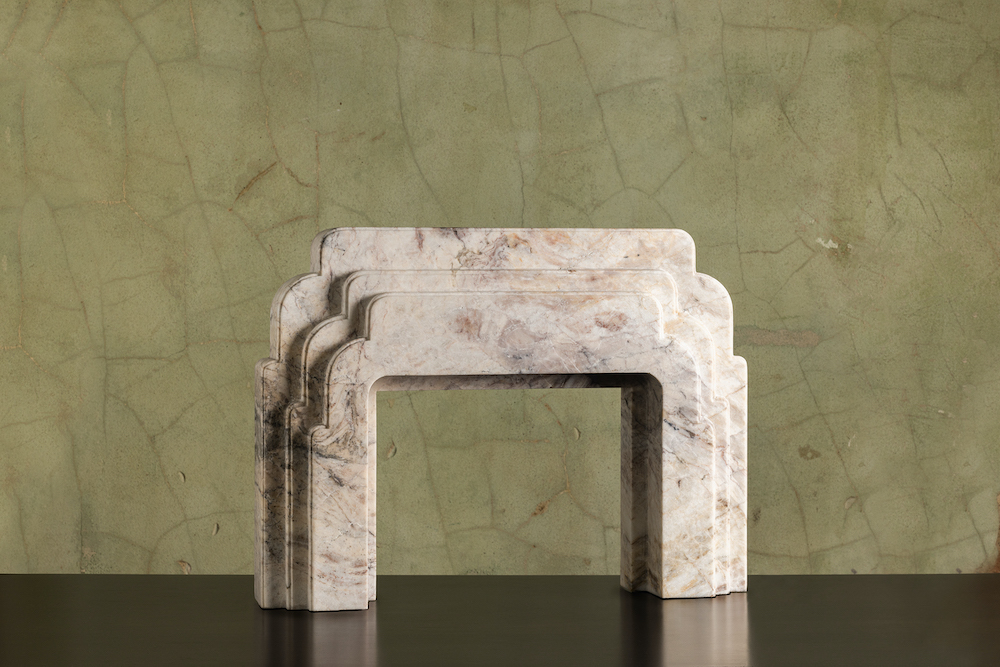
 Eddie Maestri founded Dallas-based Maestri Studio in 2008 — but what started as an architecture and interior design studio has become so much more with the establishment of Maestri Gallery. Here, Eddie channels his love of design, art and all things modern and unique, curating a selection of retail goods, as well as the brand’s own bespoke furniture collection. We caught up with Eddie to discuss Arcana, his architecturally-inspired mantel collection.
Raymond Paul Schneider: When did you first start to develop this new collection?
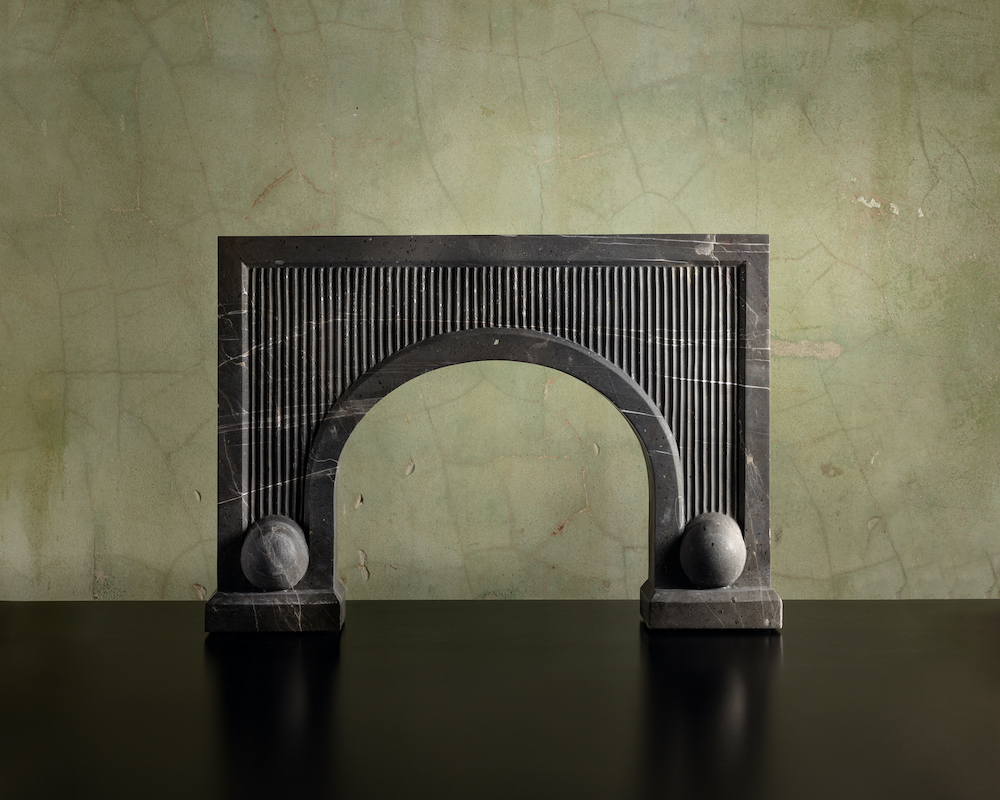
Eddie Maestri: Arcana as a collection really started to come to life in 2022. Before that, we had a long history of designing custom mantles for our clients, so we had a “book” of sketches and ideas. Some of these had come to life, some of them had not. We had gone on a trip to France and stayed in an amazing Chateau. While sketching a marble mantel in the Salon de Musique, I had an ah-ha moment. I realized that we had a collection of products that read well together and decided to put together a collection when we returned to Dallas.
RPS: What was the overall timeline from conception to achieving the final design?
EM: Once we decided to move on bringing Aracana to life, the whole process took about a year and a half — between sourcing materials, waiting for mock-ups, and all the other things that go into making products real.
RPS: What was your initial inspiration, and where did the idea(s) come from?
EM: I wish I could say there was a single point of inspiration for the collection. For as long as I can remember, I’ve been paying attention to design details everywhere: doorway surrounds, brick details, the way that shapes come together! As an architect, I tend to look at structures and spaces. Meanwhile, my design eye is looking at color and textures. In the course of working with clients in their homes, we pay attention to their spaces and the energy created. Over time, and after more than a hundred homes, some common elements and themes developed. These elements became the thread that links the individual pieces of the collection together.
RPS: Please describe your overall creative and design process.
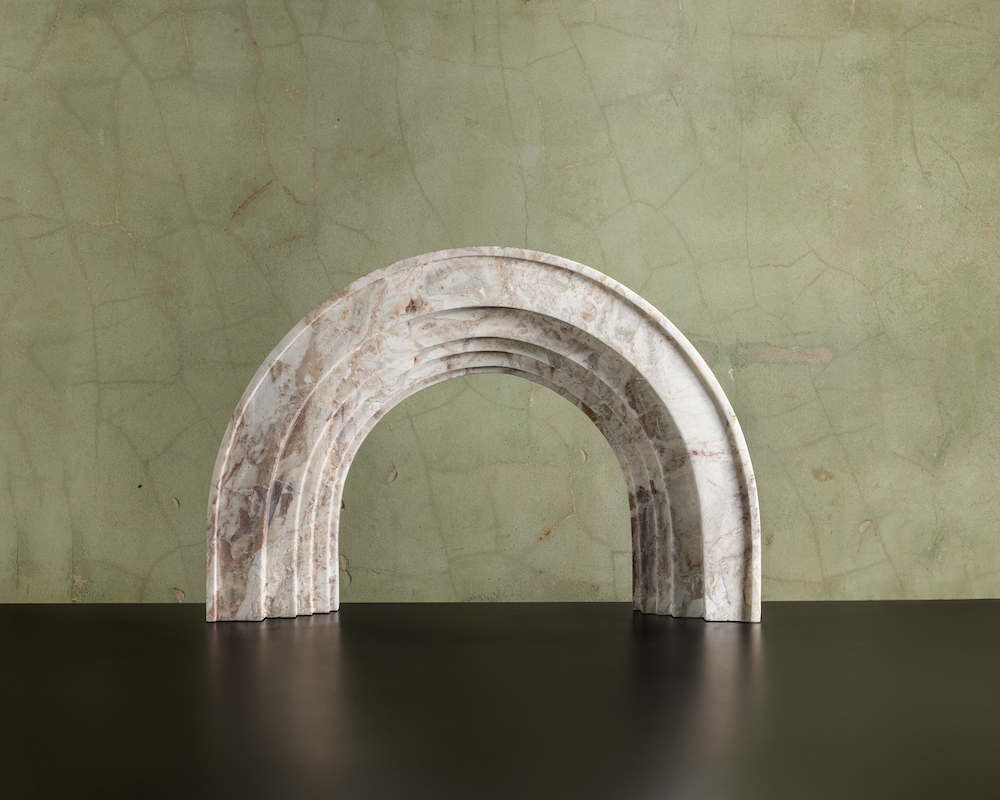
EM: For Arcana, our designs evolved rather organically. I tend to carry a sketch pad everywhere and find myself sitting and drawing in it a lot. One thing leads to another; the next thing you know, all of these elements come together as a piece. That being said, there are a lot of architectural touch points across the collection, which speaks to our design studio’s point of view.
RPS: Did you have a specific audience or theme in mind?
EM: Honestly, we do not! Which isn’t to say there isn’t one. One of the things Maestri Studio is known for is our passion for history in design and, by association, our renovation work on historic homes. It’s something we care about and something that touches every project we work on. On one level, the pieces are going to appeal to people who appreciate a sense of history and architecture. We designed individual pieces with a strong sense of style, so they are made for homes and clients looking for that and who are perhaps a bit bold in their own choices.
RPS: Please describe the methods, tools, and materials you used to develop and prototype this design.
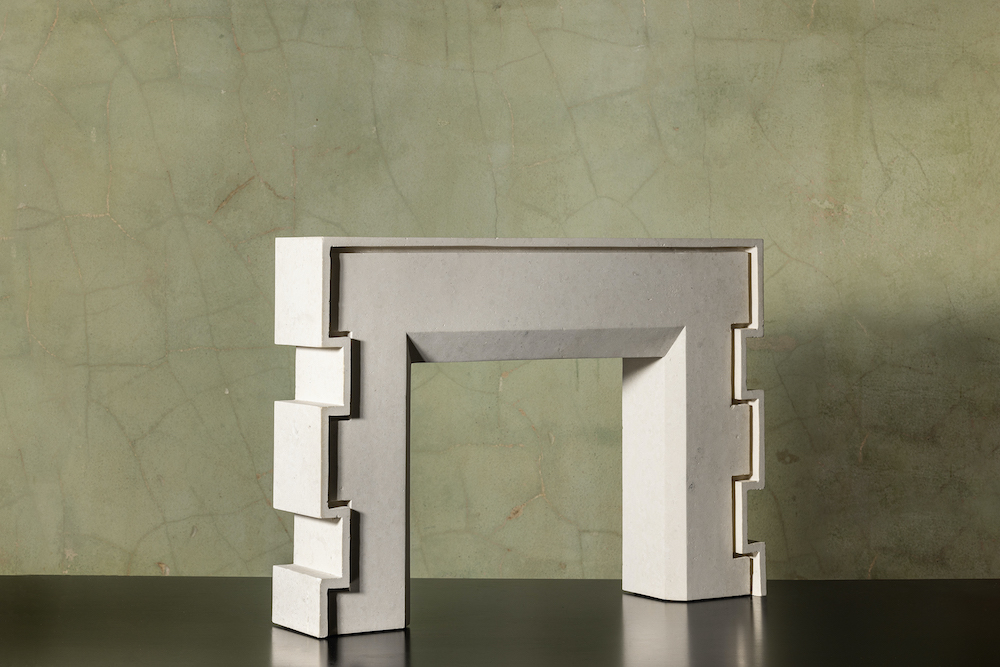
EM: Every product begins with a sketch – usually from the book I was talking about earlier! These sketches are then put into Autocad and sent to our manufacturing partner. From there, it’s a back-and-forth to decide what materials to use, as we have marble, limestone, and plaster pieces. After an inevitable series of tweaks and adjustments, we receive scale mock-ups of each model. Sometimes, there is another set of revisions to be done, with the end result being the final scale models that you can see in our studio.
RPS: Did you utilize a new technique or technology to conceptualize or create this product? If yes, please share the details.
EM: Technology-wise, we use modeling software to bring pieces to life. In such a tech-driven world, I’d like to think our use of more traditional hand drawings and intuition is a bit “everything old is new again!”
RPS: Please describe any challenges that affected the design and perhaps steered you to an entirely new final design?
EM: One of the most interesting “learning points” we had when working on the collection was managing the intersection of materials, pricing, and shipping. We were committed to making the collection accessible price-wise, so combining the design details of individual pieces with materials and a workable price point was a bit of a puzzle at times. Add in the way in which mantles are made and shipped, and we ended up learning quite a bit!
RPS: Describe your overall brand DNA and Ethos
EM: Everything that comes out of Maestri Studio is rooted in architecture and design. Whether it’s building a home from the ground up, remodeling a historic home, or designing a mantle, we pay attention to the details that make up the spaces we work in and adapt these details to the needs and lives of our clients. The result we strive for speaks to the uniqueness and personality of the spaces themselves, but also the people who inhabit them.
Like what you see? Get it first with a subscription to aspire design and home magazine.