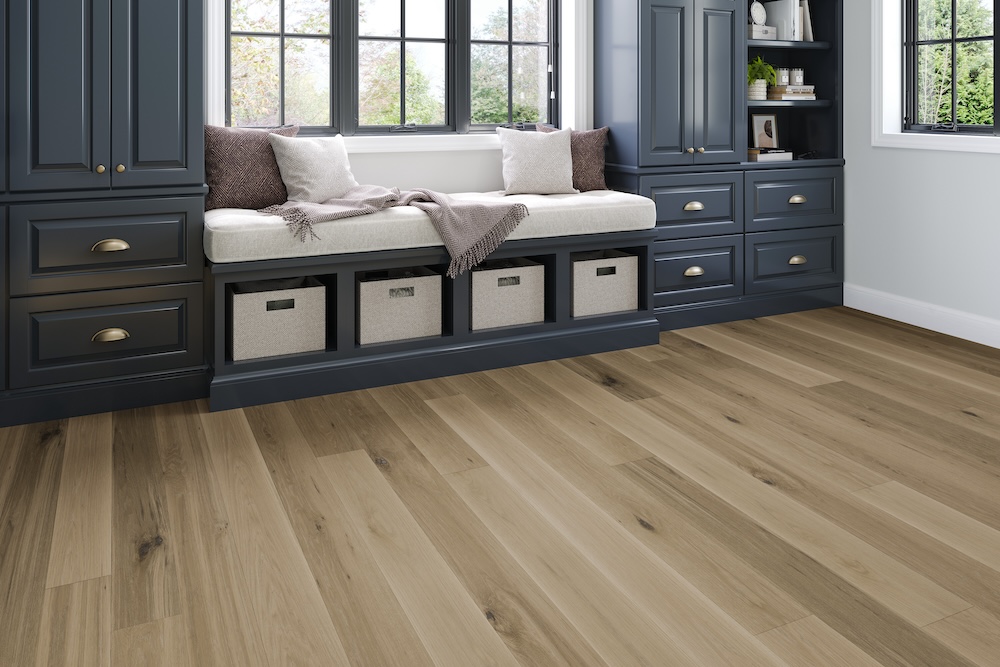
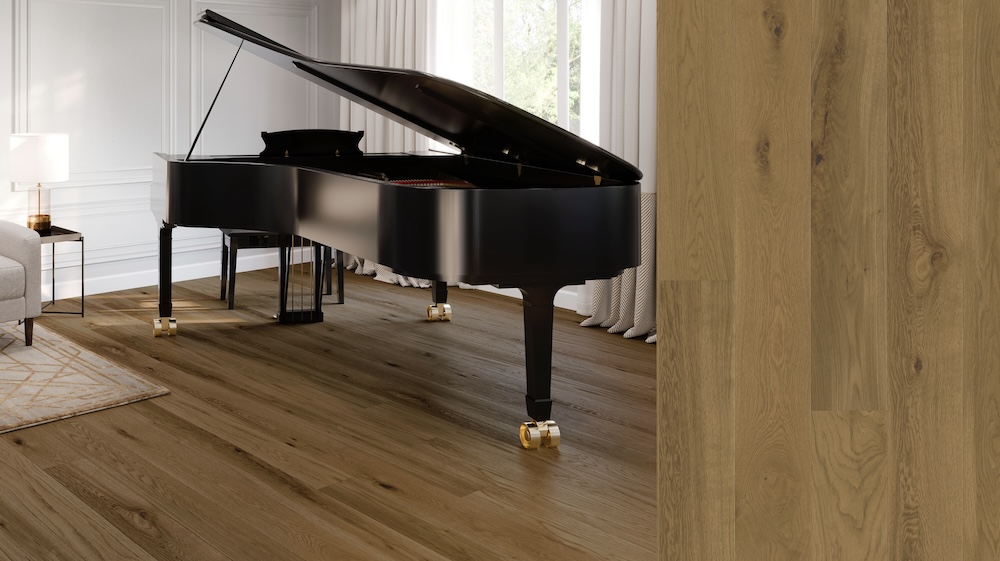
Chris Sy, President of Carlisle Wide Plank Floors, joins us this week to discuss the Preservation Collection. Inspired by the historic use of wide planks, this collection pays homage to a bygone era when the entire timber was used and each board was cut by hand.
Raymond Paul Schneider: What was the overall timeline from conception to achieving the final design?
Chris Sy: We started developing this collection in the Summer of 2023.
We worked on the costing of the base platform, species and grade throughout the Summer and then through the Fall we refined the color pallet. Q1 of 2024 was spent developing the marketing collateral and training the sales and client services team
RPS: What was your initial inspiration, and where did the idea(s) come from?
CS: We were in the midst of building our builder trade program “Vision Builder” and we were interacting with many of our top builder customers face to face and having deeper discussions around what we could do to enhance our relationships. What we heard loud and clear was that they loved the brand, the product and the service and wanted more of their clients to have access to the brand. They essentially gave us a price point target at which they thought they could bring in a new group of customers. We worked with them to define the specifications. Where could we reduce dimensions or alter appearances. The key was really that their customer liked to have some natural characteristics in the planks. We looked at how we could maximize some of the material that we were not able to use in our other offerings, while at the same time not sacrificing our Carlisle standards.
RPS: Please describe your overall creative and design process.
CS: Mike Hebert has been with the company for over 20 years and is head of Product Development. He will pull together all the stakeholders’ input from clients to salespeople and then take the rough concepts and targets to the purchasing team. Purchasing begins with looking at all our raw material and what is available from our sawyers that we may not be using. Once they hone in on a raw material specification they will bring in a batch of rough material and hand it over to the craftsmen on the floor. They will run it through our process to determine hurdles, waste factors, machining limitations etc. Once we know we have a workable foundation we move into color and texture.
RPS: Did you have a specific audience or theme in mind?
CS: We were really trying to max out the specification while establishing a new entry-level price point for our collections so that we could address a wider budget range with new customers.
RPS: Please describe the methods, tools, and materials you used to develop and prototype this design.
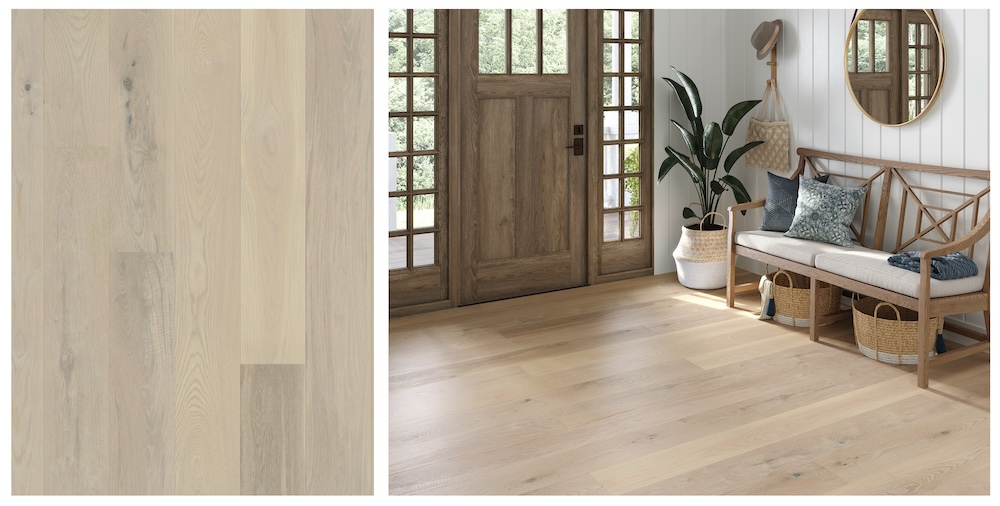
CS: We talk with our clients; we look at our own internal trends, especially when it comes to the custom side of our business. We work with our sawyers to see what may have changed on the raw material side and then we small batch manufacture different configurations of materials. When it moves to color everything is by hand to start. Literally, mix stains in a Dixie cup until we get the tone or layering we want, then it moves to actual production on the line where we will run 100sf of all of our color options. From there we narrow it down to 6 and run a full 1000sf of product to see if it changes in larger runs. At this point, if it all holds together, we move to the marketing assets.
RPS: Did you utilize a new technique or technology to conceptualize or create this product?
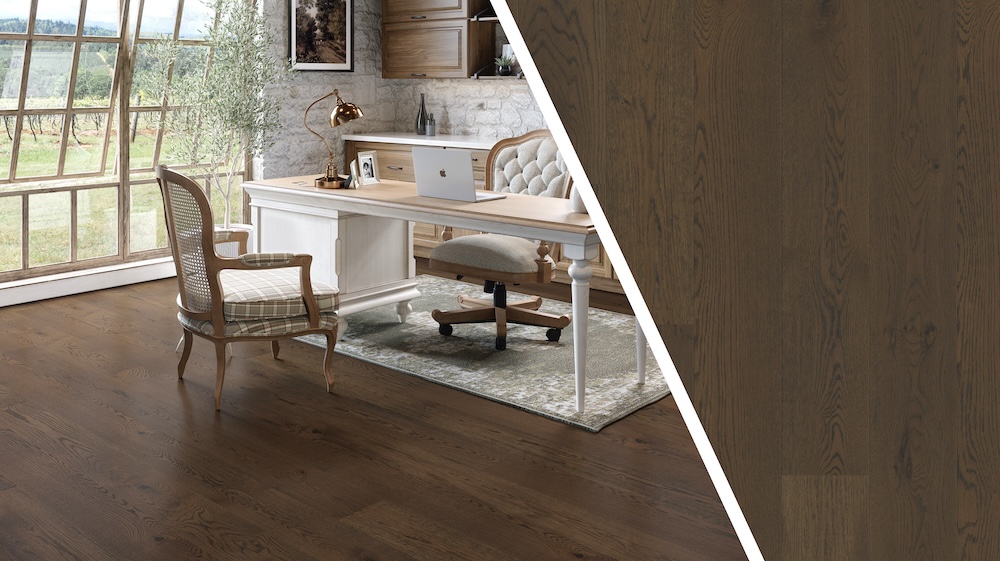
CS: Yes, we took some of our color options and created inspirational room scenes with smaller batches of scanned material. This let us get ahead of the marketing material a bit so when we were totally done with all products, and we had digitally scanned them we already had our storyboards built for photography.
RPS: Please describe any challenges that affected the design and perhaps steered you to an entirely new final design.
CS: Defining the size and frequency of character in the board. We want it to be a light rustic flooring that maintained some of the characteristics of the original timber without becoming too “country.” We wanted the tree to tell the story which means some clear boards need to be mixed in with boards that contain character. It was a bit of a challenge to find that right balance. How big is too big when it comes to a knot? How frequent is too frequent when it comes to mineral streaking? I think we arrived at a nice balance and created a look that is at home in a variety of design schemes.
RPS: Describe your overall brand DNA and Ethos
CS: As a client-direct business, we want to spend whatever time it takes developing the right vision with our customers and then we want to carry that through to our craftsmen and allow them the time to craft floors one at a time based on our clients’ input. Ultimately, we want to marry our clients’ very personal vision with the finest of raw materials our forests have to provide, creating something that is more than just a floor, it is a reflection of the client and what they believe in.
The new Preservation Collection is on display in Carlisle’s New Los Angeles Flagship Showroom located at 912 N La Cienega BLVD.
Like what you see? Get it first with a subscription to aspire design and home magazine.