
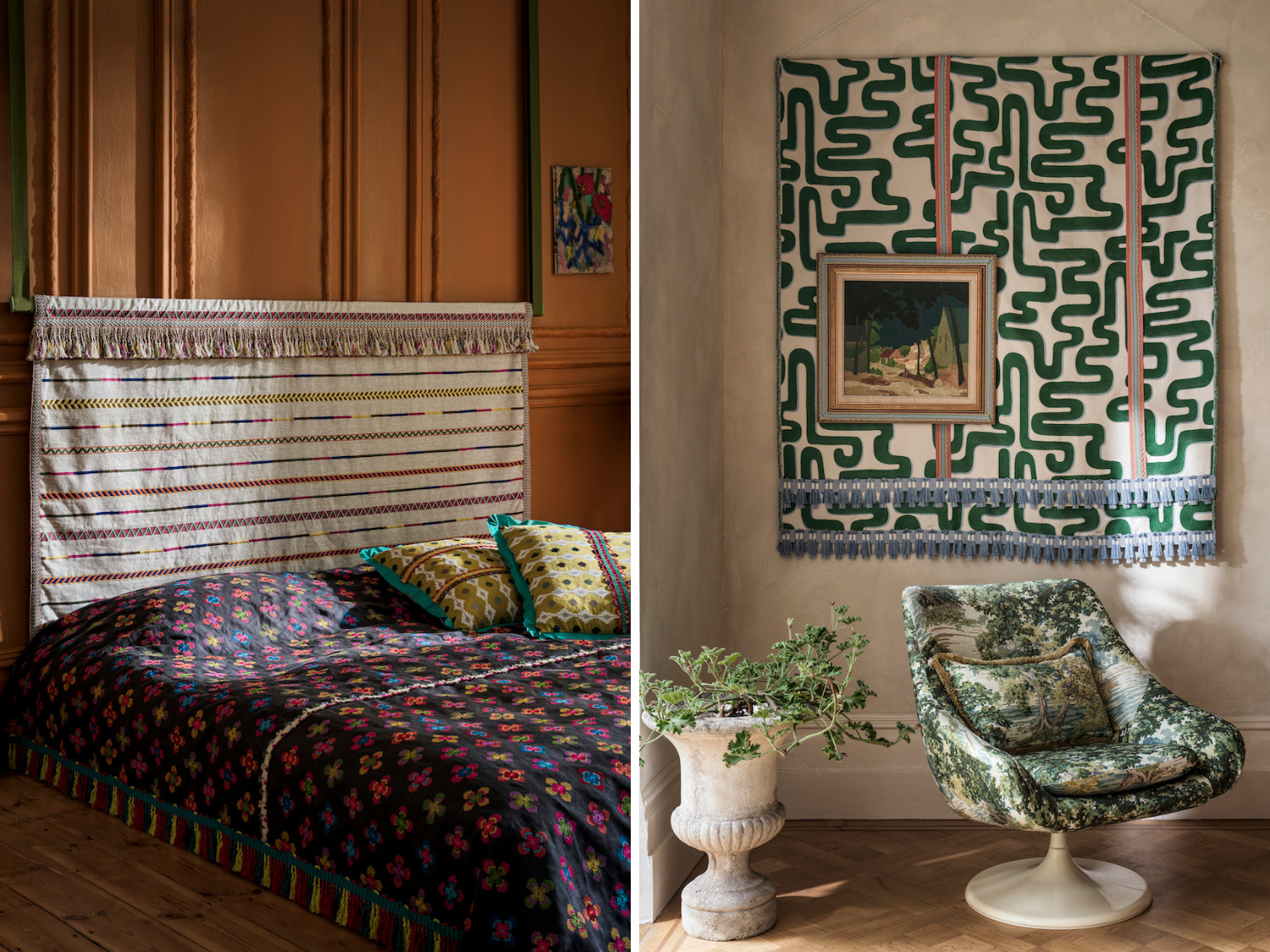
Samuel & Sons teamed up with professional passementerie artist Elizabeth Ashdown for Kaleidoscope: a contemporary collection of cords, borders and fringes in a vibrant spectrum of colors. Inspired by the artisanal heritage of passementerie, this collection is a celebration of craftsmanship that’s as energetic as it is elegant.
This week, we’re joined by Marisa Gutmacher, VP of Design at Samuel & Sons, to learn all about the collection.
Raymond Paul Schneider: When did you first start developing this new collection?
Marisa Gutmacher: Development began in early 2022, following a series of inspiring conversations between myself and Elizabeth about color, craftsmanship and the evolving language of passementerie.
The entire process took just over two years. From the initial exchange of concepts, diagrams and color palettes to final sampling and production, it was a collaborative and highly detailed journey that required both technical precision and creative freedom.
RPS: What was your initial inspiration, and where did the idea(s) come from?
MG: The inspiration stemmed from a shared passion for reinvigorating the traditional art of passementerie with modern energy. Elizabeth’s background in contemporary woven art, combined with Samuel & Sons’ heritage and technical excellence, sparked the idea of creating a collection rooted in craft but visually bold and joyfully expressive like looking through a kaleidoscope. Elizabeth drew inspiration from quilts, especially Amish quilts, which use color in striking, geometric ways, large blocks of bold hues and unexpected, compelling combinations. From that foundation, the creative vision expanded to include references to 1960s color field painting, color-in-space sculpture, collage and the optical vibrancy of Op Art, all of which informed the collection’s dynamic movement and visual rhythm.

RPS: Describe your overall creative and design process.
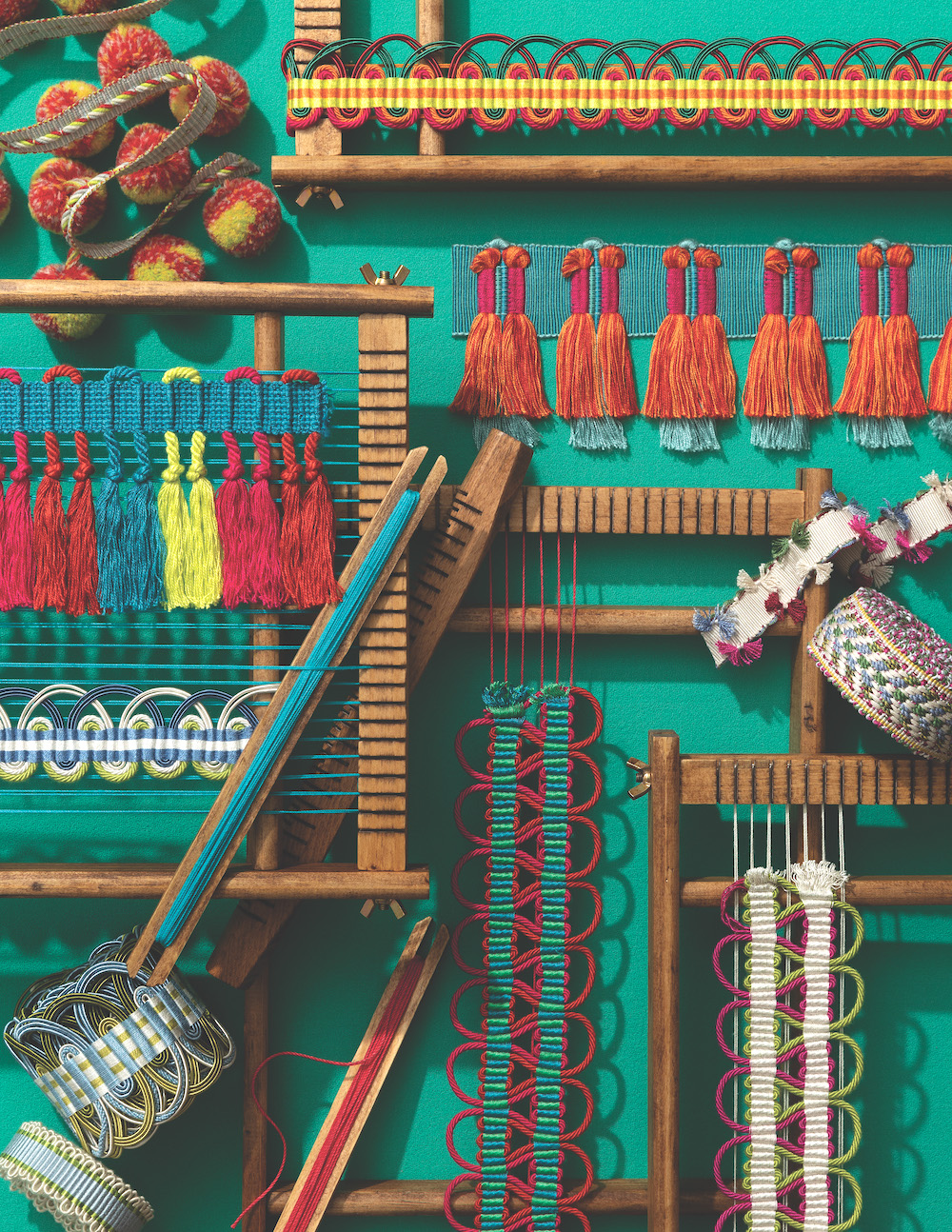
MG: It began with dialogue discussing color theory, historical references and the emotional resonance of texture. Elizabeth sketched and wove hand-loomed prototypes in her London studio, while I guided the transition from studio prototypes to production-ready trims. The process was deeply tactile, involving back-and-forth sampling and particular attention to color balance and proportion.
RPS: Did you have a specific audience or theme in mind?
MG: Yes, we envisioned Kaleidoscope for designers who seek to blend tradition with innovation, those who embrace color, movement and a more expressive decorative language. It’s for interiors that tell a story, whether rooted in maximalism or more restrained elegance with a pop of surprise.
RPS: What methods, tools, and materials did you use to develop and prototype this design?
MG: Elizabeth used traditional hand-weaving techniques on her loom to explore initial concepts, working with vibrant yarns in varying textures. These artisan prototypes were then translated into manufacturable designs with Samuel & Sons’ global mills, ensuring that the integrity of the handmade feel was preserved in the final product.
RPS: Did you use any new techniques or technologies to conceptualize or create this product?
MG: The collection pushed the boundaries of what our mills could achieve in both color blending and weave structures. At its core, Kaleidoscope remains firmly rooted in analog traditions of manual weaving, hand-finishing, and the discerning eye of the artisan. Striking that balance between innovation and tradition was essential to the collection’s success.

RPS: Were there any challenges that influenced or changed the final design?
MG: Absolutely. Translating Elizabeth’s woven artwork into scalable, repeatable trims required constant iteration. Some original ideas had to be adjusted for durability or production constraints, but those limitations often led to creative breakthroughs, new materials, novel constructions and unexpected colorways.
RPS: Describe your brand’s overall DNA and ethos.
MG: Samuel & Sons is rooted in excellence, heritage and innovation. Our mission is to preserve the art of passementerie while continually reimagining its role in modern interiors. This collection with Elizabeth is a perfect embodiment of that ethos elevating the artisan voice while crafting something entirely fresh and relevant for today.
Like what you see? Get it first with a subscription to aspire design and home magazine.