

Self-taught sculptor Andy Firth uses human skulls as his muse, reproducing them in quirky, dramatic, and completely unexpected ways. Originally from New Zealand and raised in Australia, Firth’s early start at his Jack Of The Dust garage studio has exploded with global admirers including A-Listers like Slash and Jason Momoa. Over the past decade, his studio has grown in size and scope to meet the tremendous demand for his innovative resin cast works.
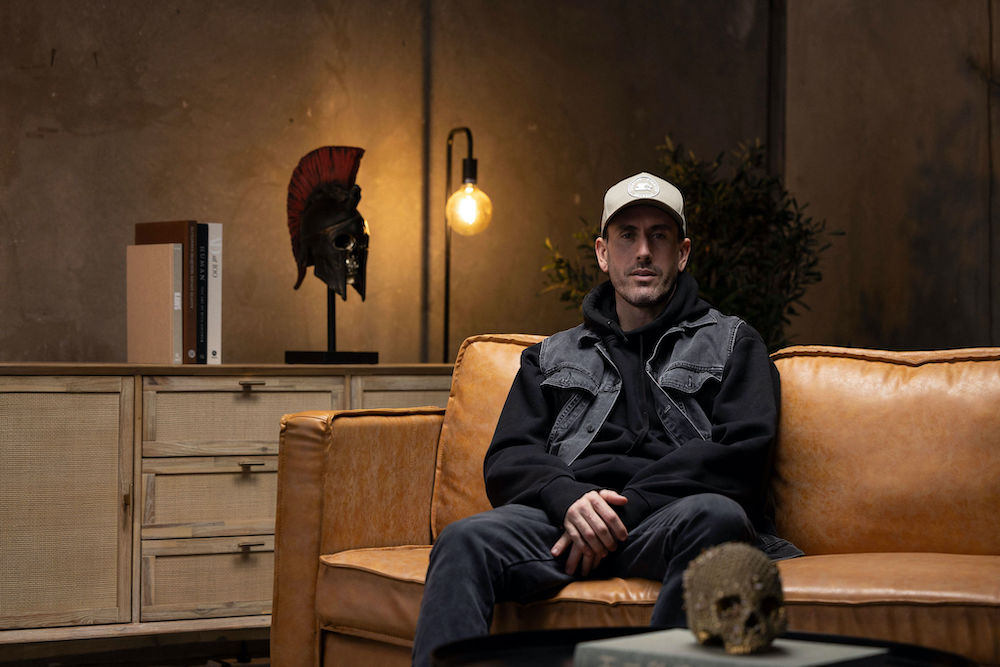

Gwen Donovan: Your designs of the human skull are so inventive. What made you decide to use this image as one of your main inspirations?
Andy Firth: I see skulls as one of the most iconic symbols of the human race. It’s the only one true object that shows that, beneath everything, we’re all very much the same.
GD: If you had to categorize your works, what genre would you use to describe them?
AF: I’d describe the genre of my work as low-brow pop culture, with cheeky accents of surprise and delight.
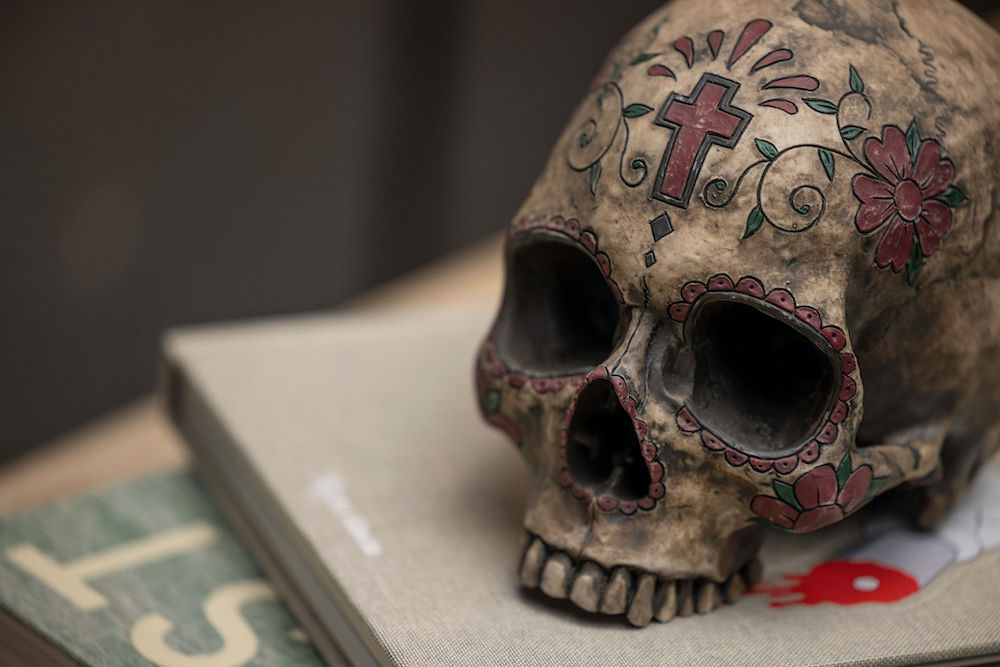
GD: From 2013 until 2022, your works were anonymously ascribed to Jack Of The Dust, what made you decide to reveal yourself as the artist?
AF: Growing on a global scale got me thinking about the connection my works have on people all over the world. I guess I want to follow in the footsteps of my skulls and leave some type of legacy, too. That, and people kept asking me, ‘Who the hell are you, dude?!’
GD: Jack of the Dust is a Royal Navy term from the early 1800s used to describe flour-covered cooks’ assistants on those seafaring ships; how does that term relate to your work?
AF: Before becoming an artist, I was a boat builder for about 12 years and this background had me searching for names within the maritime field. Through my search, Jack of the Dust popped up! To me, the word Jack performed a similar function as John Doe, meant to describe any man. And “of the Dust” was a description of where we all end up (the ground). Essentially, the words Jack of the Dust perfectly describe skulls from the ground. To me, it sounded like breathing life back into the characters and people who are otherwise deemed dead and gone. It was a match made in heaven.


GD: Your 2.5 million social media followers have given you a worldwide platform. Did you ever envision its major impact on your artistry?
AF: Like so many others, I’m an artist of the social generation. I use this term to describe the collective pool of artists who’ve emerged from platforms like Facebook, Instagram, and TikTok. I didn’t expect my social media following to grow like it has, nor did it happen overnight, but I love interacting with people online and am humbled by the community aspect. When I receive recurring requests for a particular skull design, it’s great to bring it to life in collaboration with those who’ve asked for it.
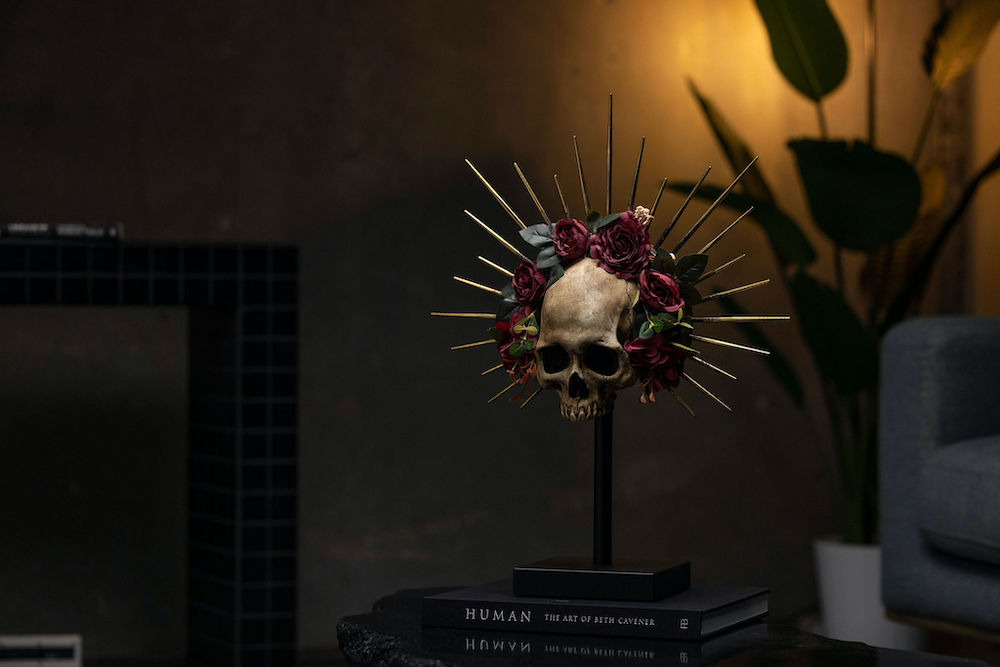
GD: It is said that your work ‘finds life in death by turning dark into an art that exudes light.’ Would you agree with that statement?
AF: For sure, a common misconception about me is that I’m drawn to death, in reality I’m drawn to life. Each piece of artwork I create is a celebration of the subject’s life!
Photography by Mathew McFerren.
Read more from aspire design and home editor Gwen Donovan, here.
Like what you see? Get it first with a subscription to aspire design and home magazine.