
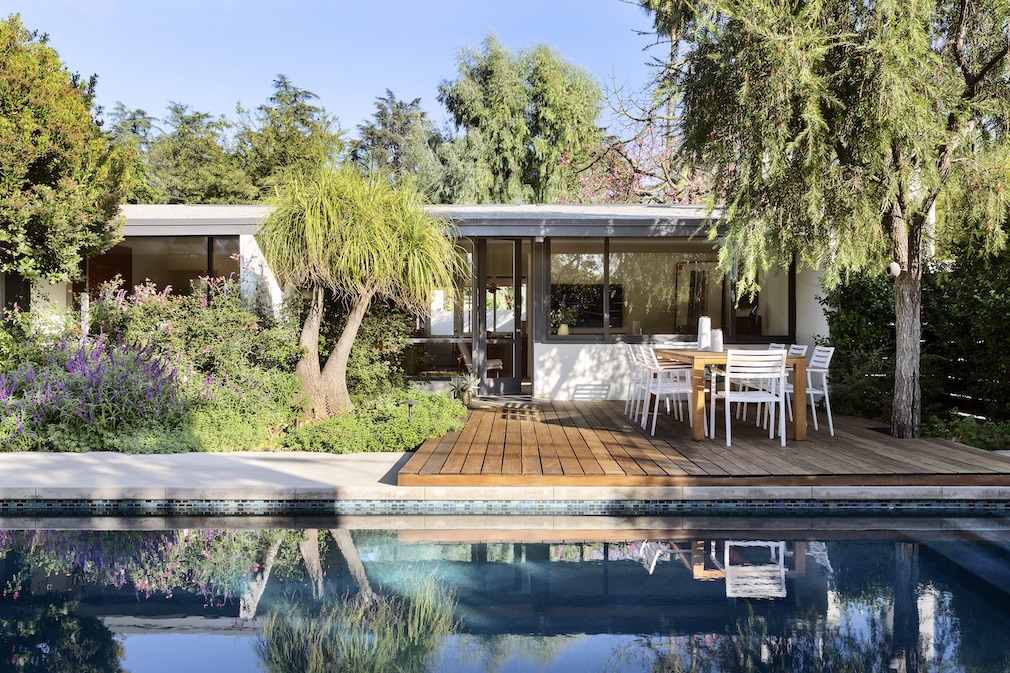
When it comes to midcentury homes, we often admire how they look without knowing why they look as they do. Style rules; ideology, not so much. Of course, not every architect of the day was driven by deep thinking. But Gregory Ain was no run-of-the-mill modernist. A socially committed practitioner whose leftist leanings led FBI Director J. Edgar Hoover to deem him “the most dangerous architect in America,” the Los Angeles-based Ain was passionate about designing affordable, efficiently functional houses that, when gathered in small groups with a unifying green space, generated a renewed sense of community.
Ain, who had worked for Richard Neutra and Charles and Ray Eames, was an idealist whose high hopes were never fully realized. Park Planned Homes in Altadena, fifteen miles from downtown LA, at the foot of the San Gabriel Mountains, was one of several projects that expressed his determination to establish an alternative to prevailing business-driven housing developments.
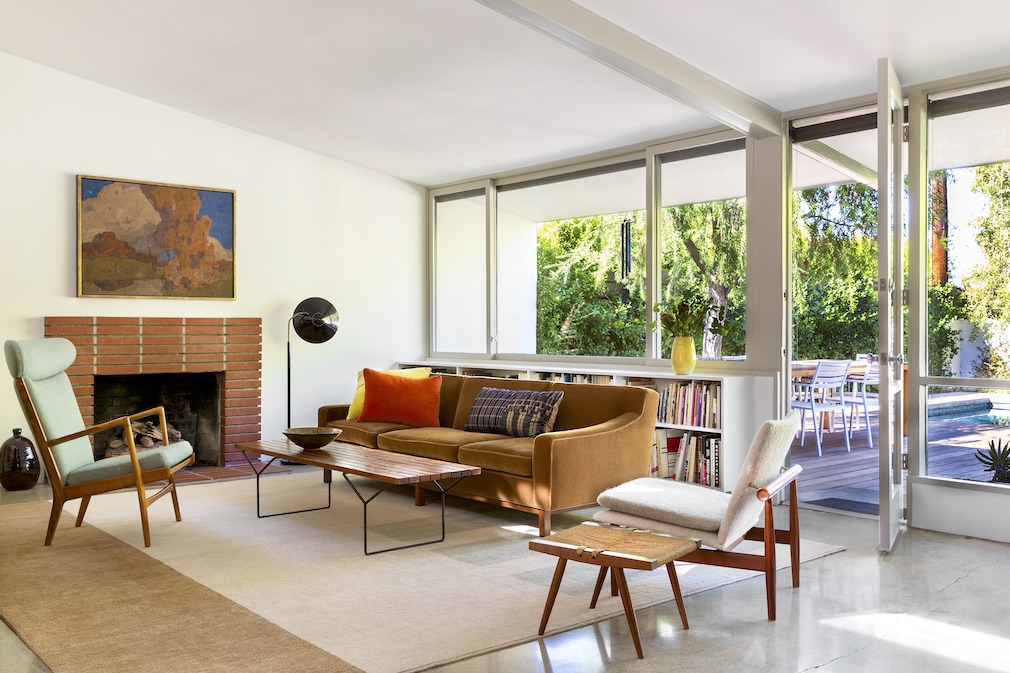
Built in 1947 at under 1500 square feet, this three-bedroom house is compact yet not constrictive, thanks to its many windows and primary orientation to a rear garden. The current owners had made some tweaks here and there over the years but were ready for a more cohesive strategy when they turned to interior designers Mark Cutler and Nichole Schulze of LA’s CutlerSchulze. “Overall, the house was in excellent shape,” relates Cutler. “Our clients are meticulous and respected the history of the home, so it was well taken care of. However, the bathrooms and kitchen needed a significant overhaul and upgrades to better suit modern living and function for the family.”

In addition to updating the kitchen and bathrooms, Cutler and Schulze transformed the garage into a music room and office. Scrupulous in demonstrating a respect for Ain’s original intentions, the designers mediated this clear intervention by incorporating teak cabinetry, a gesture in sympathy with the original flavor of the house. “Obviously, this was not how the space was intended to be used originally, but the additional livable area, not to mention the extra storage, really fulfilled a need for our clients,” explains Schulze.
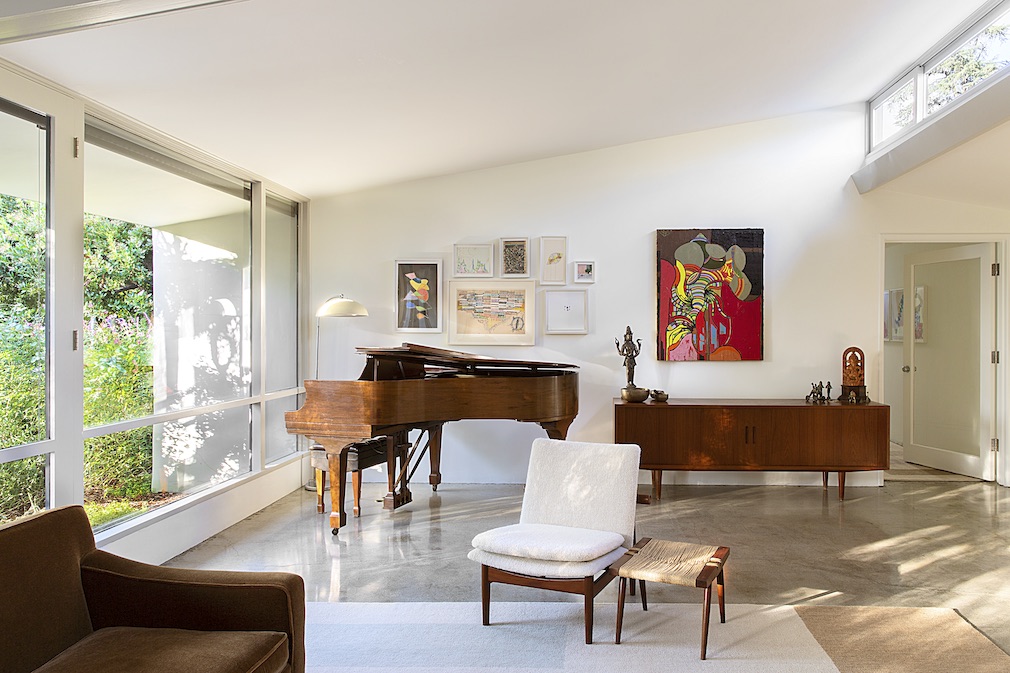
An Ain house often has a hunkered-down look, especially from the street. But as it progresses through its lot, pitched roofs replace flats, creating a sense of spaciousness that belies the relatively tight proportions of the interiors. “One of the most striking aspects of the house is the use and exploration of light,” notes Cutler. “The home maintains a distinct but not overwhelming brightness throughout most of the day, partially through the incorporation of clerestory windows. Another notable highlight of the architecture is the blurring of lines between the indoors and outdoors. With one side looking into an interior courtyard and the other side looking back to the pool, it is as though nature has been integrated into the house. The outdoor spaces almost work as a series of rooms that feel very connected to the interiors.”
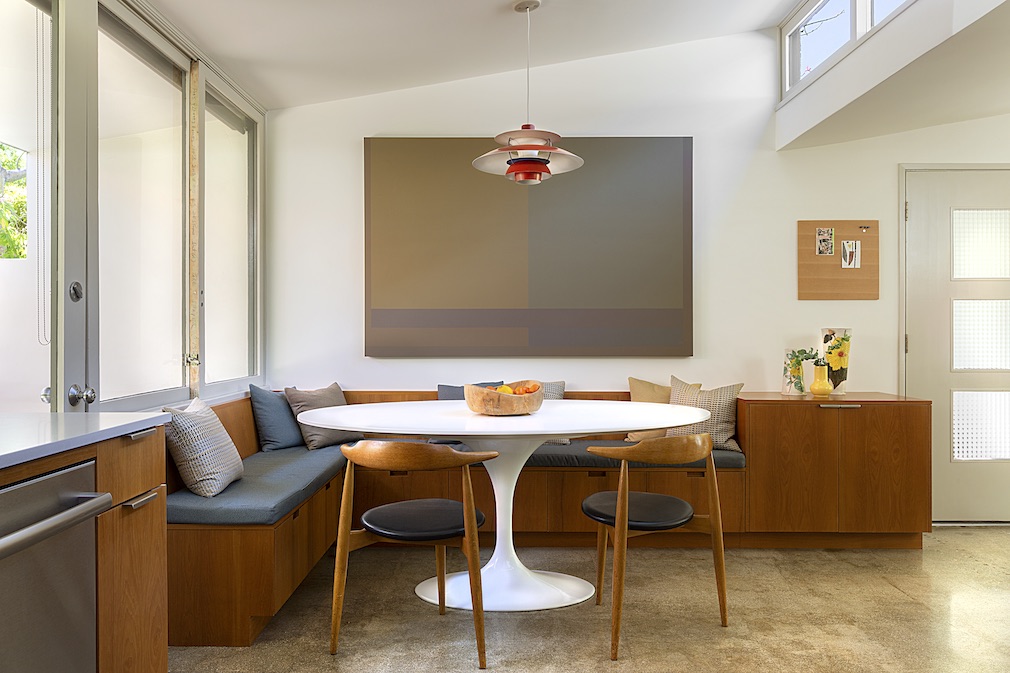
White, sun-washed walls, modern furnishings and original polished-concrete floors exude a composed and comforting aspect, a satisfying simplicity. Wood plays a key role here, from the custom teak built-ins to classic pieces by George Nakashima, Harry Bertoia and Alvar Aalto. The pared-back aspect of these rooms is softened by such touches as a sheepskin draped over a Hans Wegner CH22 chair, a Persian rug in the new music room and artwork by Danish-American Olaf Olesen and Californians Steve Roden and Alfredo Mercado, among others.
The CutlerSchulze touch — light but informed — preserves the directness, the intentionality of Ain’s design. “Gregory Ain homes tend to skew toward a humbleness and a humility that transcends the personality of the architect; each home is more about the humanity of a living space than the ‘vision of the creator,’ ” shares the homeowner. “This is what has always attracted us to his work, and Mark and Nicole paid great respect to this undefinable characteristic of our home. We are indebted to them for helping us see and feel even more of what we already knew was here.”
Photography by Laura Hull.
Like what you see? Get it first with a subscription to aspire design and home magazine.