
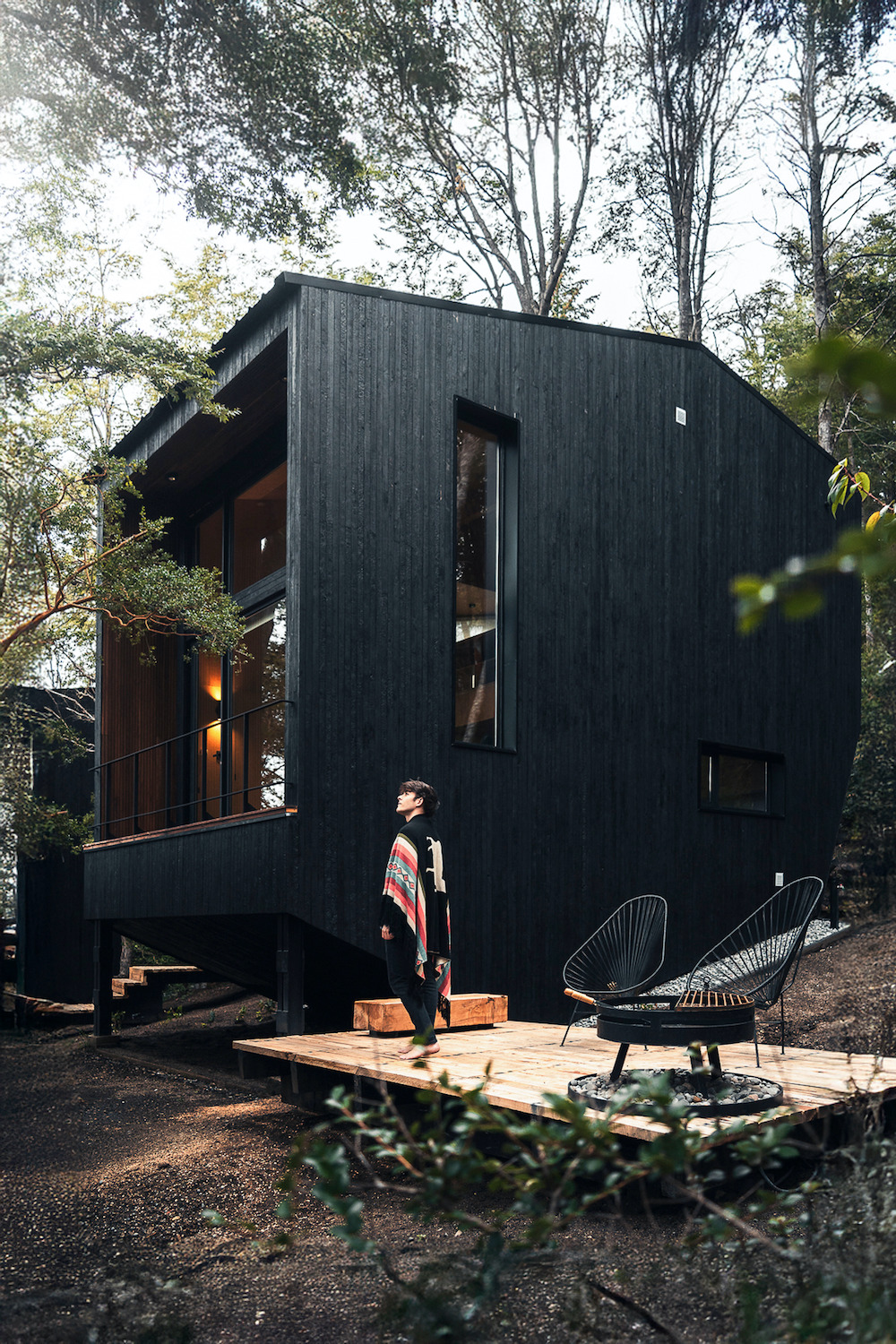
Juan Segundo Díaz Dopazo’s roots in Patagonia run deep, having grown up there before moving to Buenos Aires to study architecture. He had always known he would eventually return to the untouched landscapes of the south. What he never imagined was the opportunity to design a series of cabins for his own parents, right in the heart of the Arrayanes forest.
Led by Dopazo’s architecture firm OJA, the project involved the creation of a boutique-scale tourist complex within a native forest of Coihues and Arrayanes, on steep terrain with stunning views and direct access to the shores of Lake Correntoso — an incredibly peaceful and natural setting.
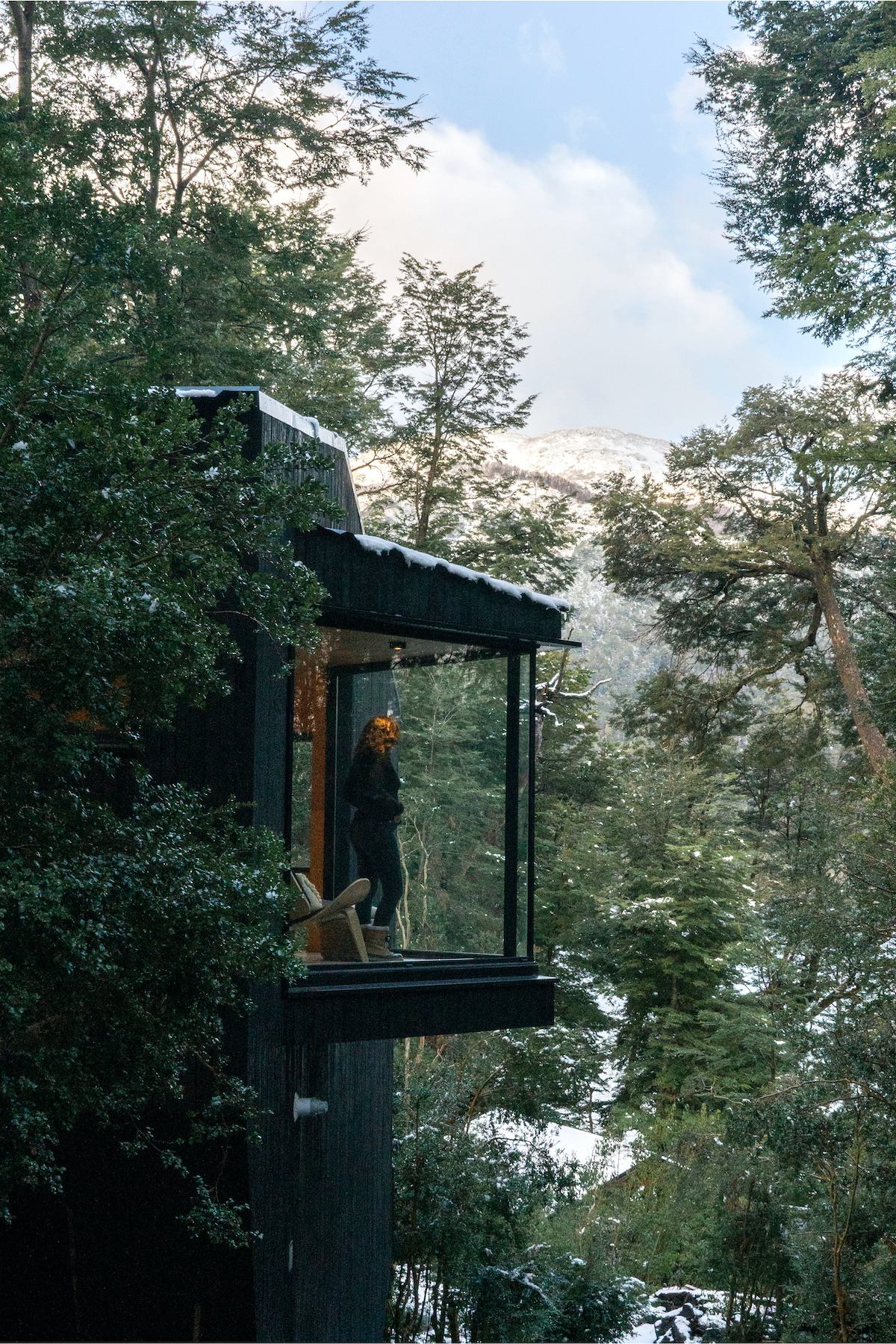
OJA’s proposal consisted of modular “landscape cabins” for two to three guests, conceived as just another element of the forest. Each cabin blends into its surroundings with a sense of controlled randomness — sharing a common architectural language, yet featuring subtle variations that give each one a unique identity.
The cabins were carefully placed in natural clearings where no trees needed to be cut down, staying true to their core objective: to create an architecture that coexists harmoniously with the forest.
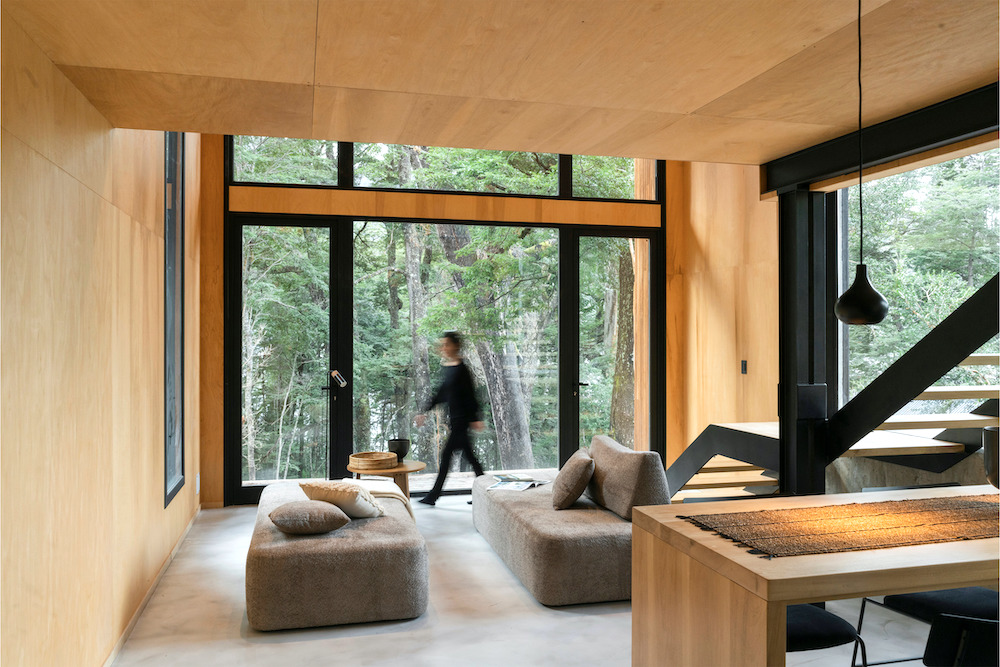
Each unit is designed as a single open space, split across half-levels and punctuated by large, strategically positioned windows. These openings extend the sense of space outward and allow the dense Myrtle canopy to provide both privacy and immersion in nature. This approach also fosters intimacy between each volume and the communal areas of the complex.
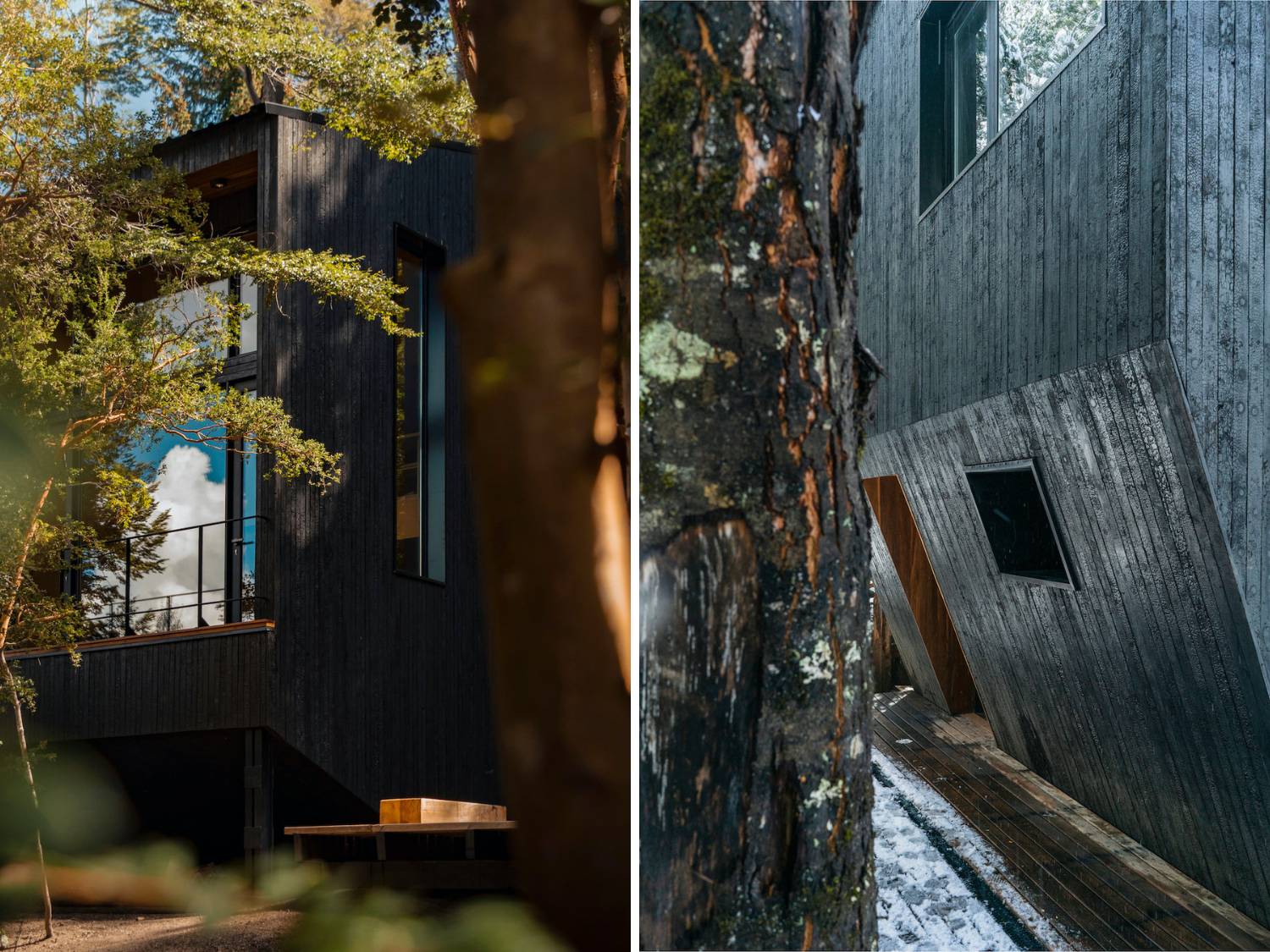
Externally, the cabins feature a rugged, rocky morphology clad in eucalyptus wood, treated with the ancient Japanese technique Shou Sugi Ban. This method — charring the wood’s surface — creates a unique texture and improves water resistance, fire retardancy, sustainability, and durability. The blackened wood serves as a backdrop that highlights the green of the trees and the white of the snow. Lapacho wood (a cinnamon-colored hardwood reminiscent of the Arrayanes), glass, black metalwork, and exposed concrete were used as complementary materials.
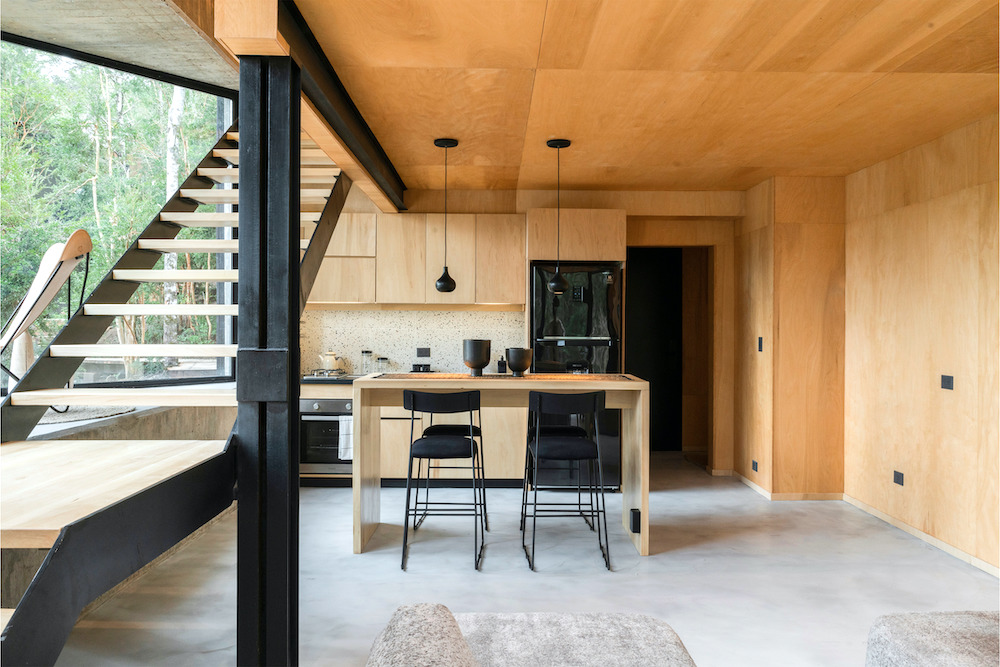
Inside, a single material dominates: Guatambú wood. Light in color and knot-free, it contrasts sharply with the dark exterior and enhances the sense of spaciousness. Used in large panels, it provided both aesthetic value and construction efficiency.
All interior furniture is crafted from the same wood, resulting in a clean, monolithic design that visually blends furniture and wall, reinforcing a minimalist and cohesive aesthetic.
Today, the architects proudly reflect on a project that has touched the hearts of all who have visited the Landscape Cabins.
Photography by Juan Segundo Diaz Dopazo
Rocio Sossa / Abril Roffo
Nacho Ballester
Like what you see? Get it first with a subscription to aspire design and home magazine.