
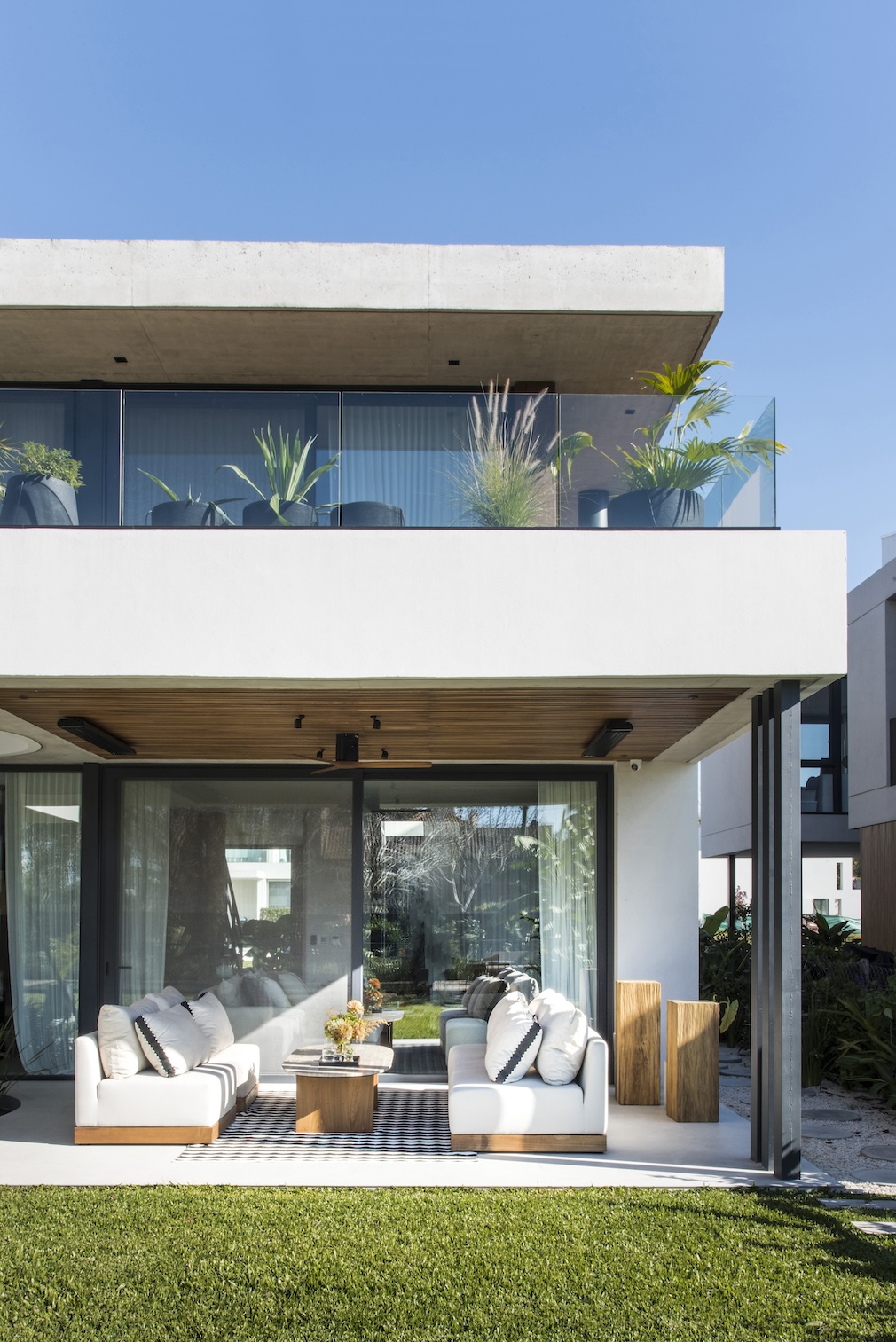
Located in the El Bajo neighborhood of Buenos Aires near the San Isidro ravines, Melazza Mobili designed Casa Los Cardos for a young couple with two small children. The home organizes daily life around integrated spaces and prioritizes warmth, comfort, and usability — leaving behind the notion of “untouchable rooms.”
With over 3,000 square feet in total, the architectural base by Matías Goyenechea — marked by a restrained language and an honest use of concrete — finds in the interior design a tactile and luminous counterpoint that softens the geometry without losing precision or clarity.
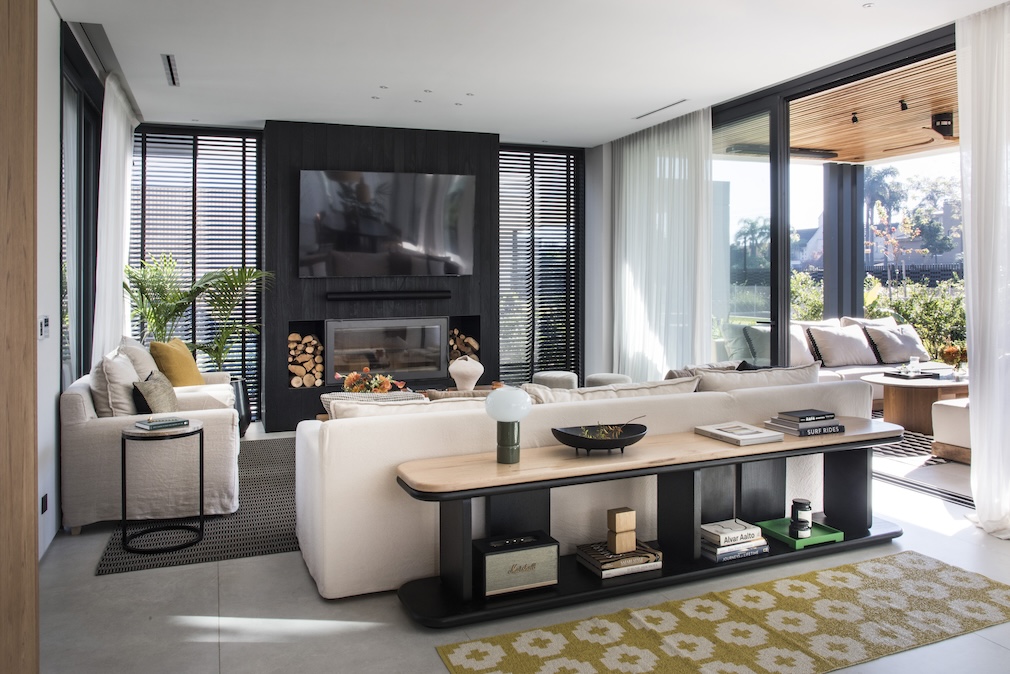
The interior strategy begins with a simple premise: continuity over fragmentation. Large-format Italian porcelain tiles run through the social areas as a seamless plane that evokes polished cement. This choice simplifies maintenance, maximizes brightness, and reinforces the perception of the space as a unified whole. The material narrative relies on a deliberately reduced palette — few colors, more textures — so that views from different areas do not compete, allowing the house to be read as a coherent whole. The calm solidity of the flooring and the chromatic discipline guide movement, emphasize spatial axes, and create a dialogue between architecture and furniture in the same syntax.
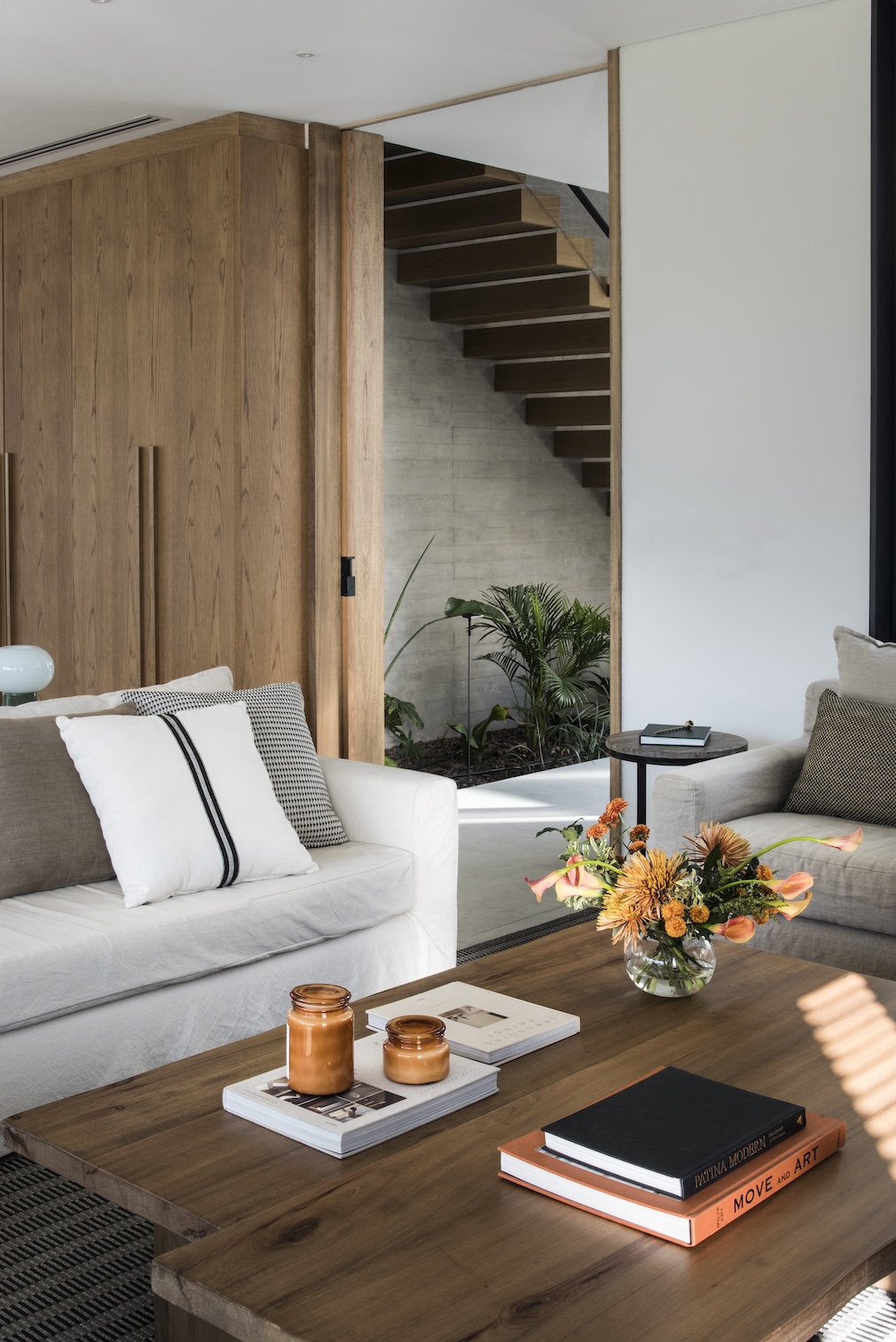
Wood sets the tactile tone of the project. Indoors, and on the gallery ceiling, white oak ensures visual and sensory continuity; where density and control are required — such as in the Derto console behind the sofa or the Breta dining table — charred wood conceals the integrated television above the fireplace, avoids adding color, and introduces depth without artifice. This family of materials is complemented by Forma rattan lamps, also designed by Melazza Mobili, suspended at varying heights to introduce an organic gesture that lightens the geometry. The coherence between materials, finishes, and functions allows the house to gain character with time.
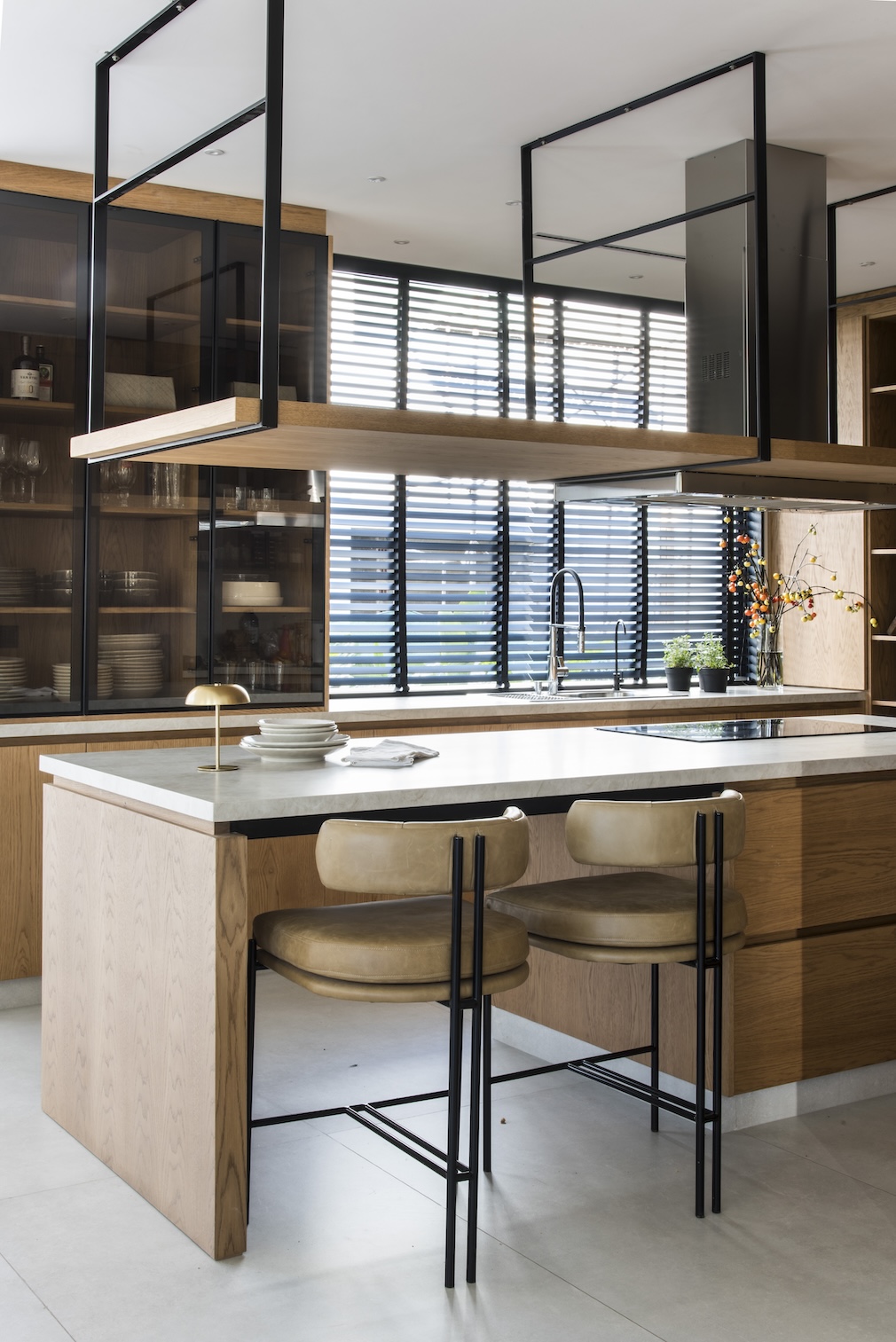
In the kitchen, Taj Mahal-style porcelain embodies the principle of “practical beauty”: it resists stains, withstands intensive use, and frees the user from unnecessary worries. Glass shelves display carefully selected dishes and objects, while concealed storage ensures order without the need for constant staging. The continuous flooring enhances the sense of spaciousness and simplifies cleaning amid family dynamics; in the living area, nautical polypropylene rugs add warmth and texture without compromising durability as a result of children’s play. Altogether, these decisions create a livable, luminous, and serene kitchen where technique serves daily routine.
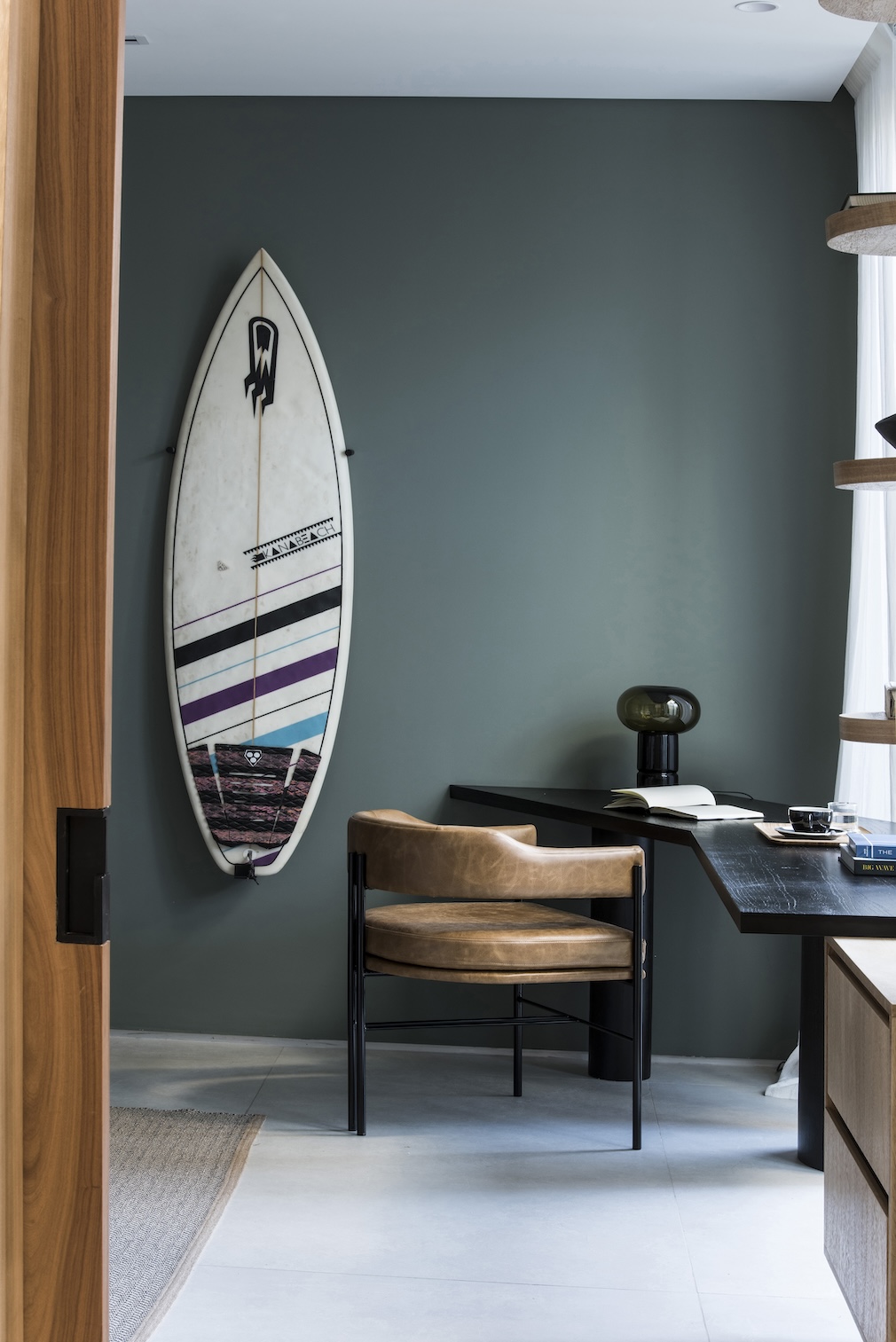
The principle of continuity extends to custom-made furniture and precise calibrations of proportions and flows. In the study, a curved wooden volume offsets the symmetry of the window, optimizes usable surface, and — thanks to its formal affinity — echoes the dining table. The piece functions as a bridge between social and work areas. The clients requested an integrated approach — few furniture types, like the Carpano stools used both indoors and out — to maintain visual calm. Curves and lines, textures and smooth surfaces balance without literal references, resonating with the owners’ interests — such as surf culture — through proportion and material rather than overt symbolism.
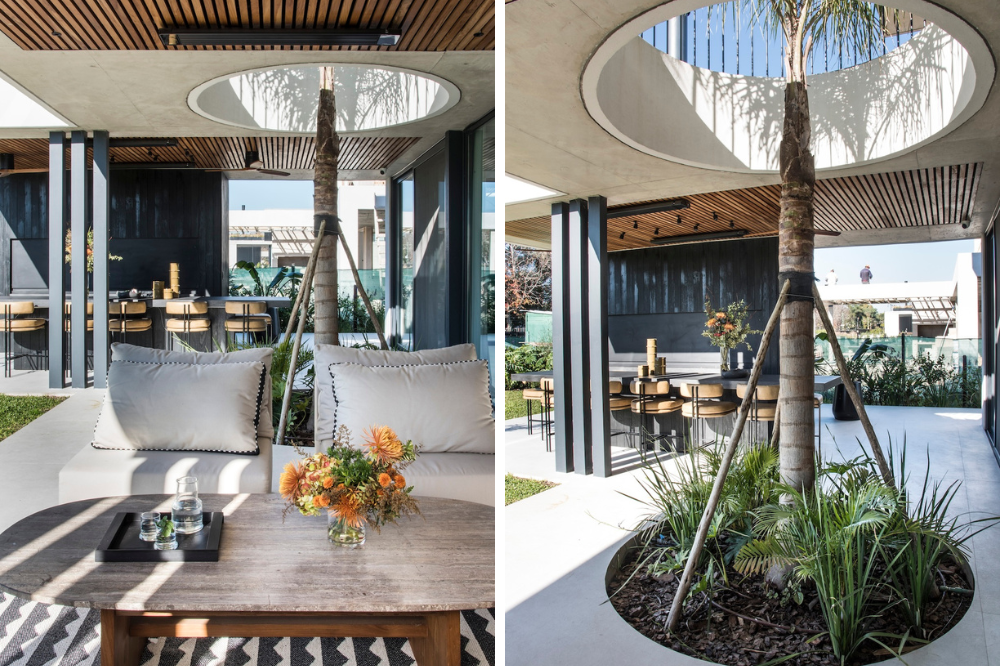
The gallery continues the project’s code: a circular void embraces the tree, making legible the interplay between the ceiling’s linear rhythm and the furniture’s curved geometry. The semi-covered outdoor bar replicates interior materials and proportions — charred wood with a semi-matte finish and a leather-finished Brazilian black granite countertop — preserving the overall grammar. The “humid” patina of the outdoor pieces responds to the local climate, reinforcing durability as a core value. This interior-exterior continuity supports expansive social life, with recurring furniture typologies and a subtle coastal touch that remains refined rather than thematic.
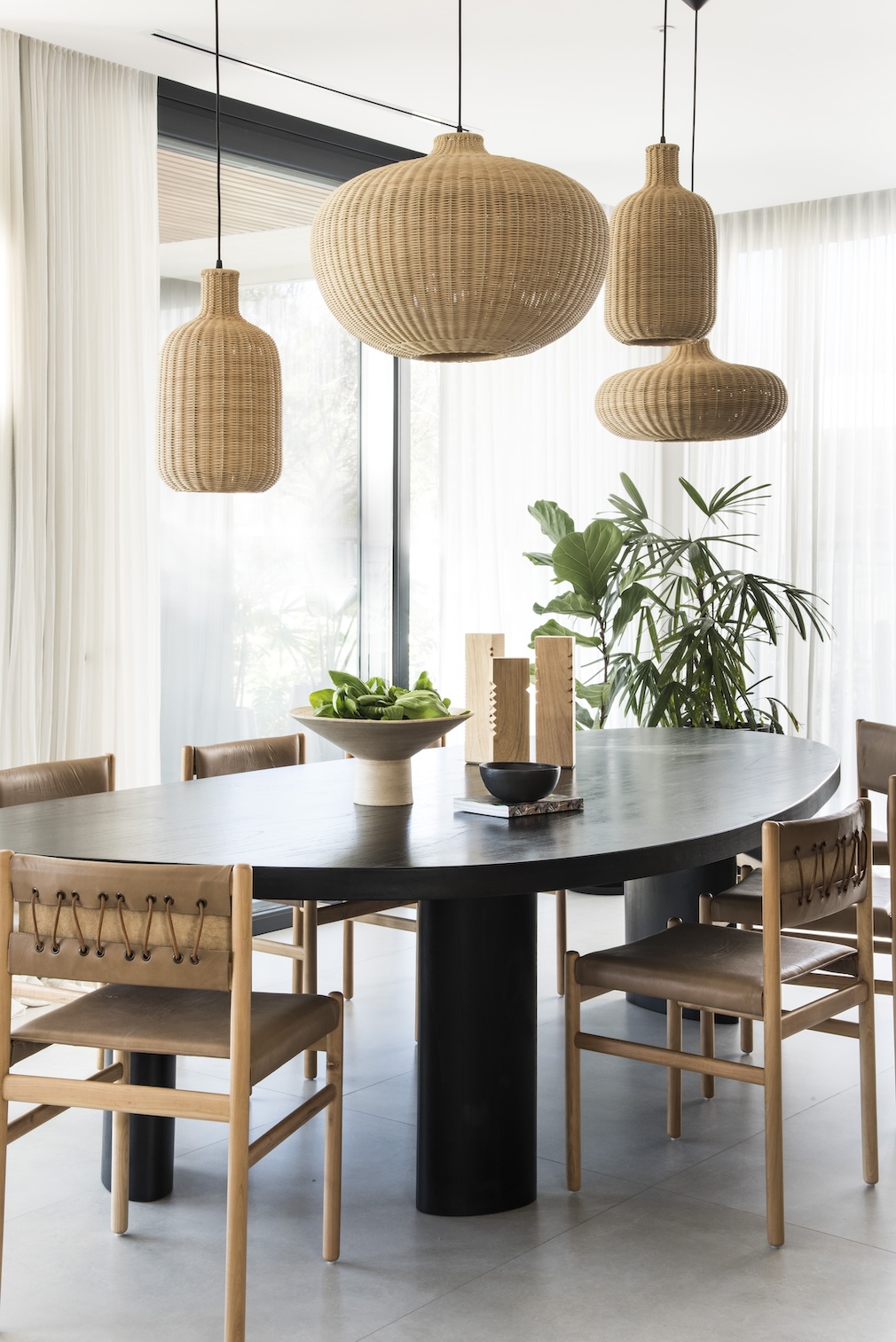
Natural light is modulated through blinds in the living and kitchen areas, fine-tuning reflections and privacy throughout the day. By dusk, the generous panes frame the garden and soften the transition between indoors and outdoors. The same language extends to the bedrooms, where material continuity, a restrained palette, and noble textiles sustain a tranquil and functional atmosphere for family life. Bathrooms follow the same logic with clean planes and a sober composition, prioritizing order and clarity over object-centered display. Every detail — from countertop height to the tactile precision of a handle — contributes to a quiet, efficient, and gentle experience, reinforcing the dialogue between architecture and interior design.
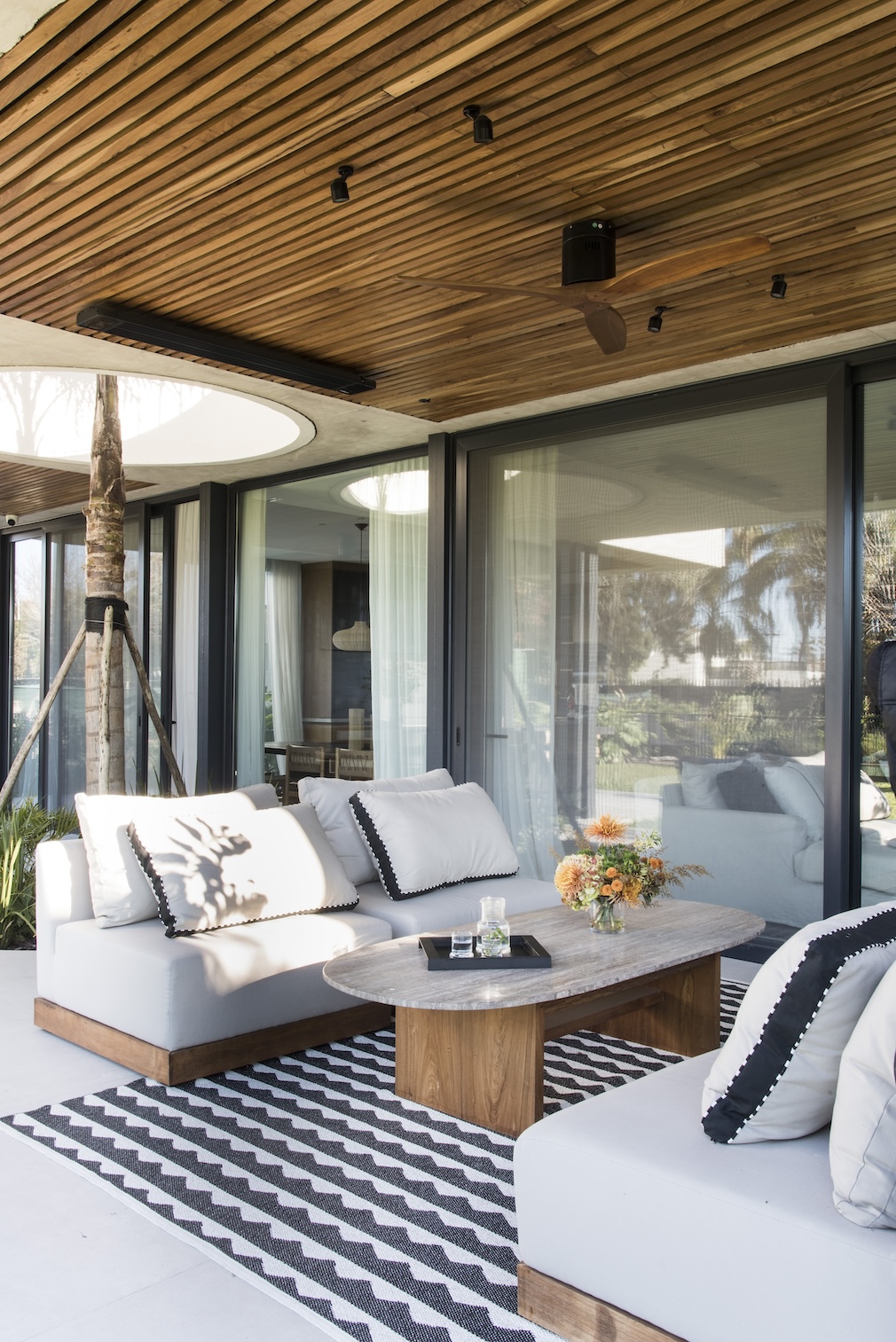
Casa Los Cardos encapsulates Melazza Mobili’s refined methodology: fewer colors, more textures; continuity over isolated gestures; and a material ethic that champions local craftsmanship, enduring pieces, and finishes that age gracefully. Consistency is evident in both major and minor decisions — from the proportion of solids and voids to the alignment of surfaces and fittings — reducing maintenance needs and allowing the home to mature with dignity. Here, beauty emerges as the natural outcome of a system where living is the ultimate measure.
Photography courtesy of Melazza Mobili.
Like what you see? Get it first with a subscription to aspire design and home magazine.