
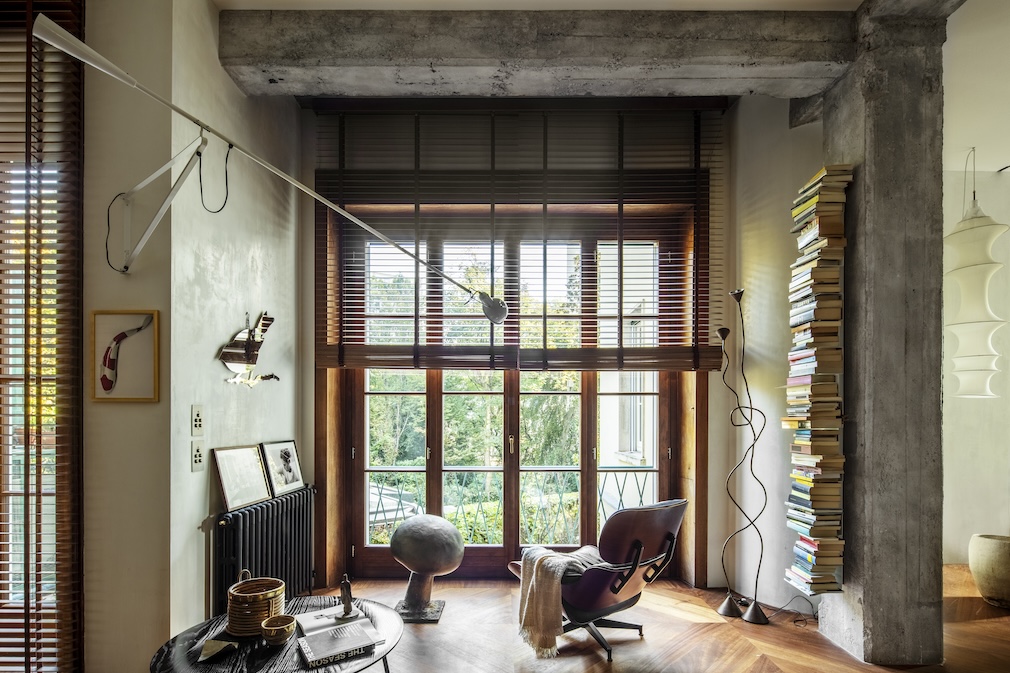
Changes in small doses can be tonic. Alterations on a bigger scale can be unsettling. But utter stasis isn’t good for anyone. Yet when it comes to where we live, there’s something to be said for immutability – or at least the appearance of permanence. After all, the comfort and security that spell “home” stem in great measure from the familiar, from “the way things always were.”
This Milan apartment, located in a 1930s villa not far from the historic Basilica of Sant’Ambrogio, hasn’t always looked like this. In fact, it required some serious attention before the current owner took up residence. But sensitively refashioned by De Amicis Architetti, it exudes an appealing not-quite-new air, an aspect spun not of nostalgia or historicist homage, but a kind of clear-eyed, forthright embrace of the space.

“The choice and enhancement of authentic materials were key elements in defining the character and identity of the spaces,” relates De Amicis partner, Rossella Destefani. “Wood, marble and exposed concrete are not used merely as coverings or finishes but become protagonists capable of giving strength and authenticity to the environment. The quality and history of these materials guided the entire project, influencing not only the aesthetics but also the atmosphere of the home.”
Key features that contribute to the home’s thereness are the handsome, wood-framed, floor-to-ceiling windows, a slightly curved wall in the sunlit transition space between the living room and bedroom, the newly installed iroko wood parquet laid in a custom-designed herringbone pattern and substantial vertical and horizontal concrete elements. The latter emerged during the removal of the suspended ceilings. “Rather than add new elements,” explains Destefani, “it was decided to enhance the existing ones by preserving and highlighting them, as they give the spaces a sculptural quality and a strong identity inspired by the brutalist aesthetic defined by Le Corbusier as béton brut.”
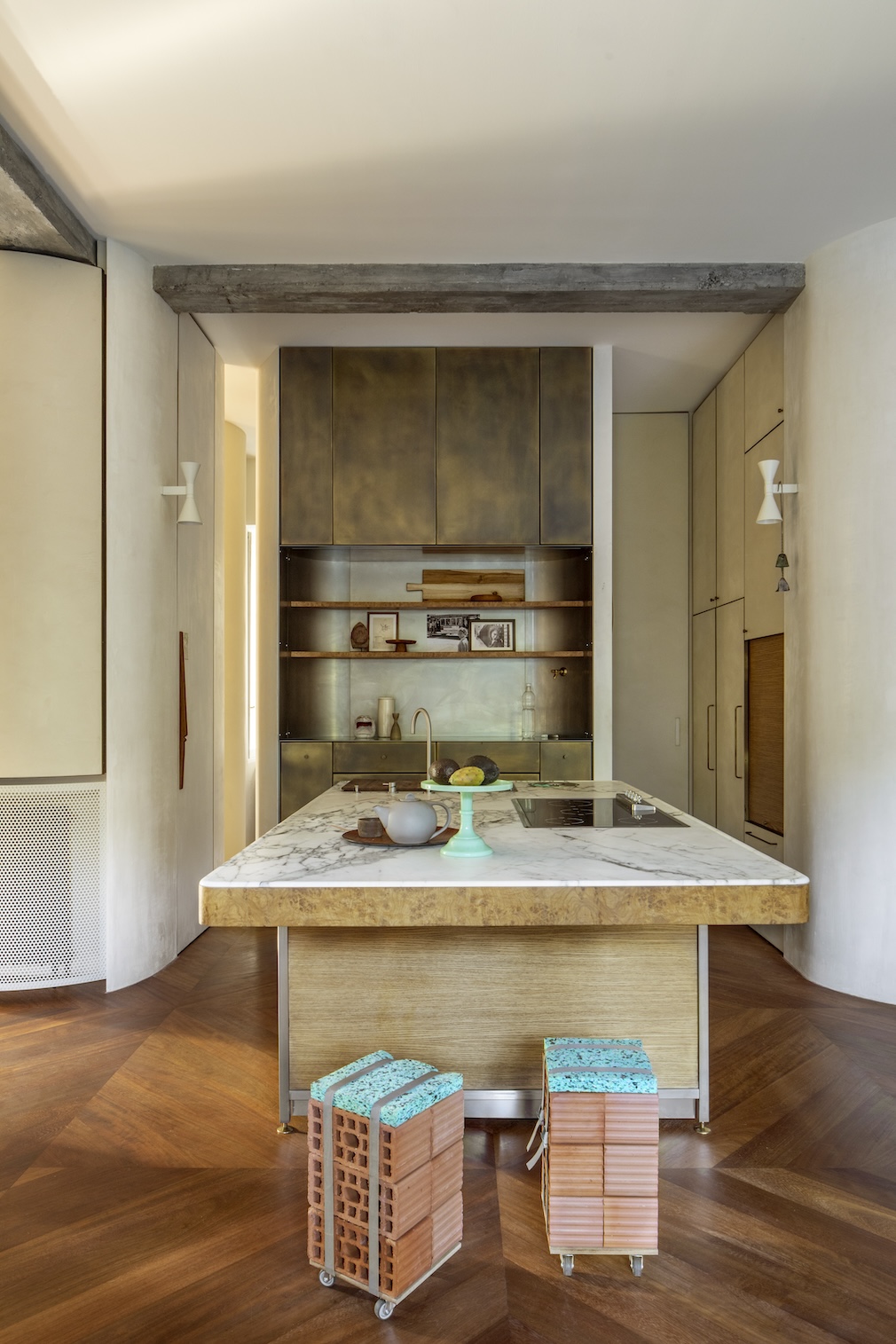
Arguably, the most recognizably “designed” space in the apartment is the kitchen, which features custom-made storage units in steel, burl oak and burnished brass, complemented by a central island with a white Carrara marble countertop, developed by De Amicis Architetti. Although distinctively articulated, the space registers as functional first, stylish second.
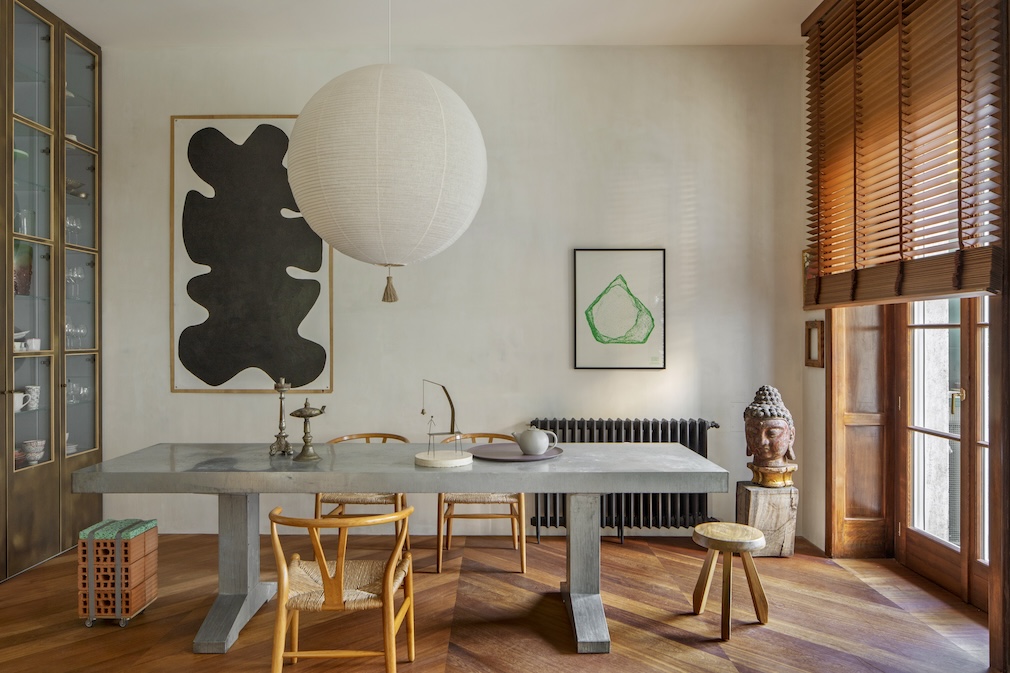
The homeowner, a cosmopolitan who lived in Shanghai and Los Angeles before returning to Italy, assembled a highly individual collection of possessions over the years, which now reinforces the pleasing artlessness that pervades the apartment. The zinc dining table by Dutch designer Piet Hein Eek (originally designed for outdoor use) has been with her for over twenty years. A gold mirror in the bathroom came from her mother’s home, and the tree trunks disposed here traveled from her California garden. The art in the home ranges from a 19th-century Buddha from Cambodia and a bronze sculpture by the innovative polymath Fausto Melotti to works by American photographer Mary des Jardins.
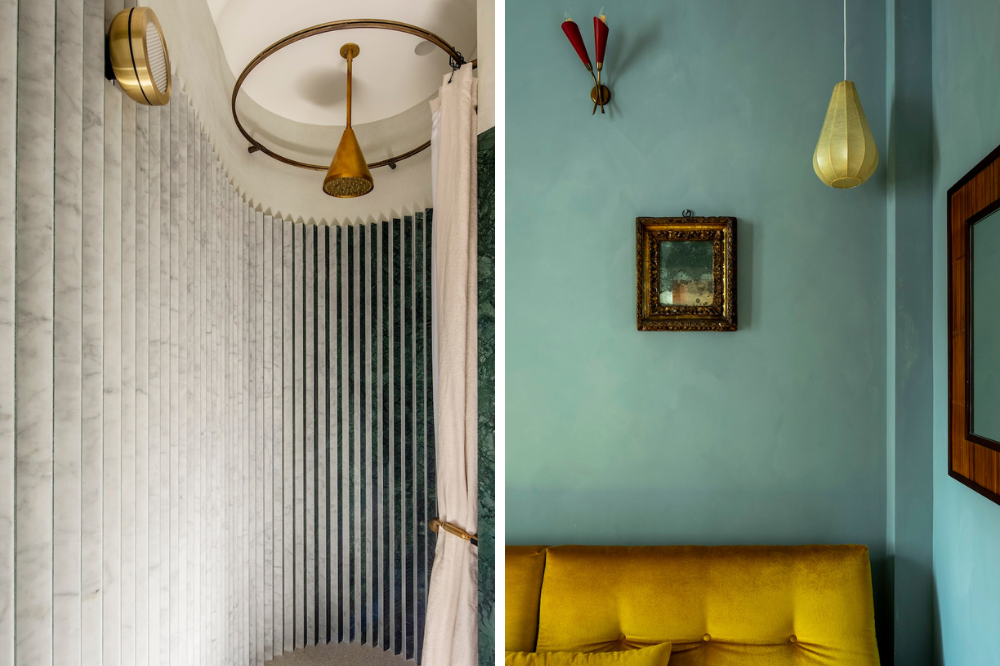
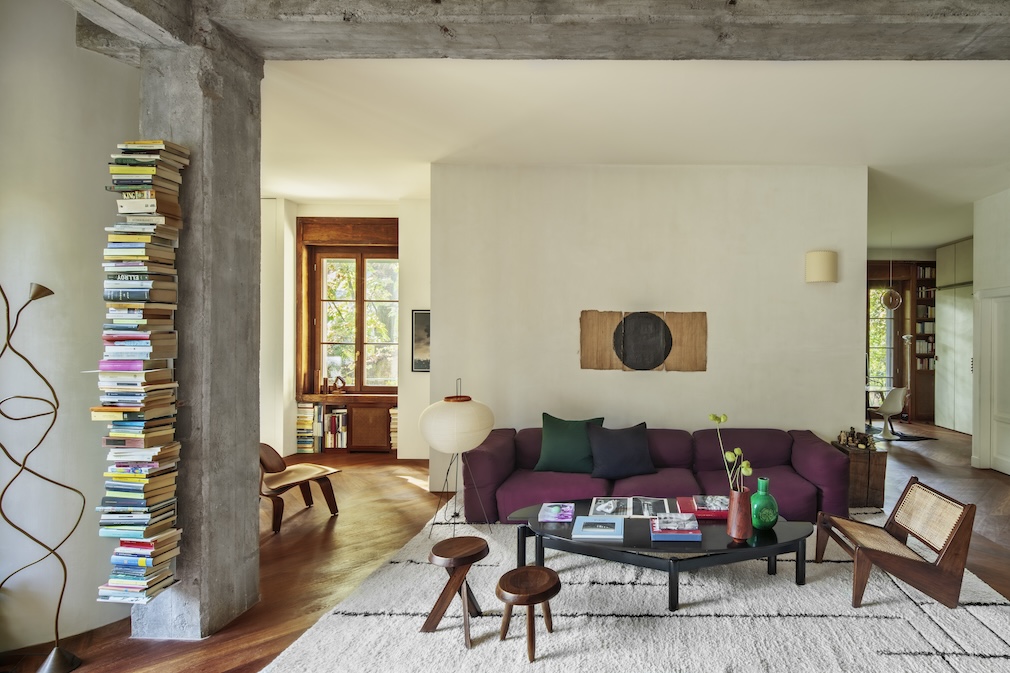
While the apartment is amply appointed with signature pieces of 20th-century design – Eero Saarinen’s Tulip Chair, the LCW armchair created by Charles and Ray Eames, the Toio lamp designed by Achille and Pier Giacomo Castiglioni for Flos in 1962 – the unit does not read at all gallery-like. This is especially true in the welcoming living room, with its Oblong sofa by Jasper Morrison in purple upholstery, wooden stools by Pierre Chapo and Charlotte Perriand, and Kangaroo armchairs by Cassina sitting atop a Moroccan wool rug. Andiamo!
Photography by Helenio Barbetta.
Styling by Laura Mauceri.
Like what you see? Get it first with a subscription to aspire design and home magazine.