
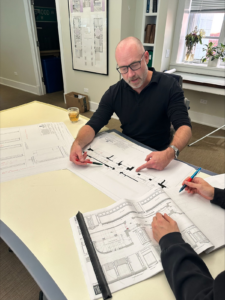
 Morgante Wilson Architects Principal Bob Zuber has been fascinated with beautiful spaces since he first laid eyes upon a self-guided tour booklet of the Biltmore House in Ashville, N.C. — a souvenir his parents brought back from a vacation in the Appalachian Mountains. Living in the tiny farming community of Assumption, Illinois — and not yet 10 years old at the time — he could barely imagine such grandeur. After earning a Master of Architecture degree from the University of Illinois at Urbana-Champaign, Zuber embarked on a short stint with the architectural firm Solomon Cordwell Buenz before joining Morgante Wilson Architects in 1998, and has since contributed to a variety of projects spanning from New York City to Colorado to the U.S. Virgin Islands to of course Chicago and the Midwest, where the majority of Morgante Wilson’s portfolio is located. Promoted to firm principal in 2017, Zuber believes architecture is one of the noblest professions and says design is serious business. See some of his architectural feats in today’s Designer Friday.
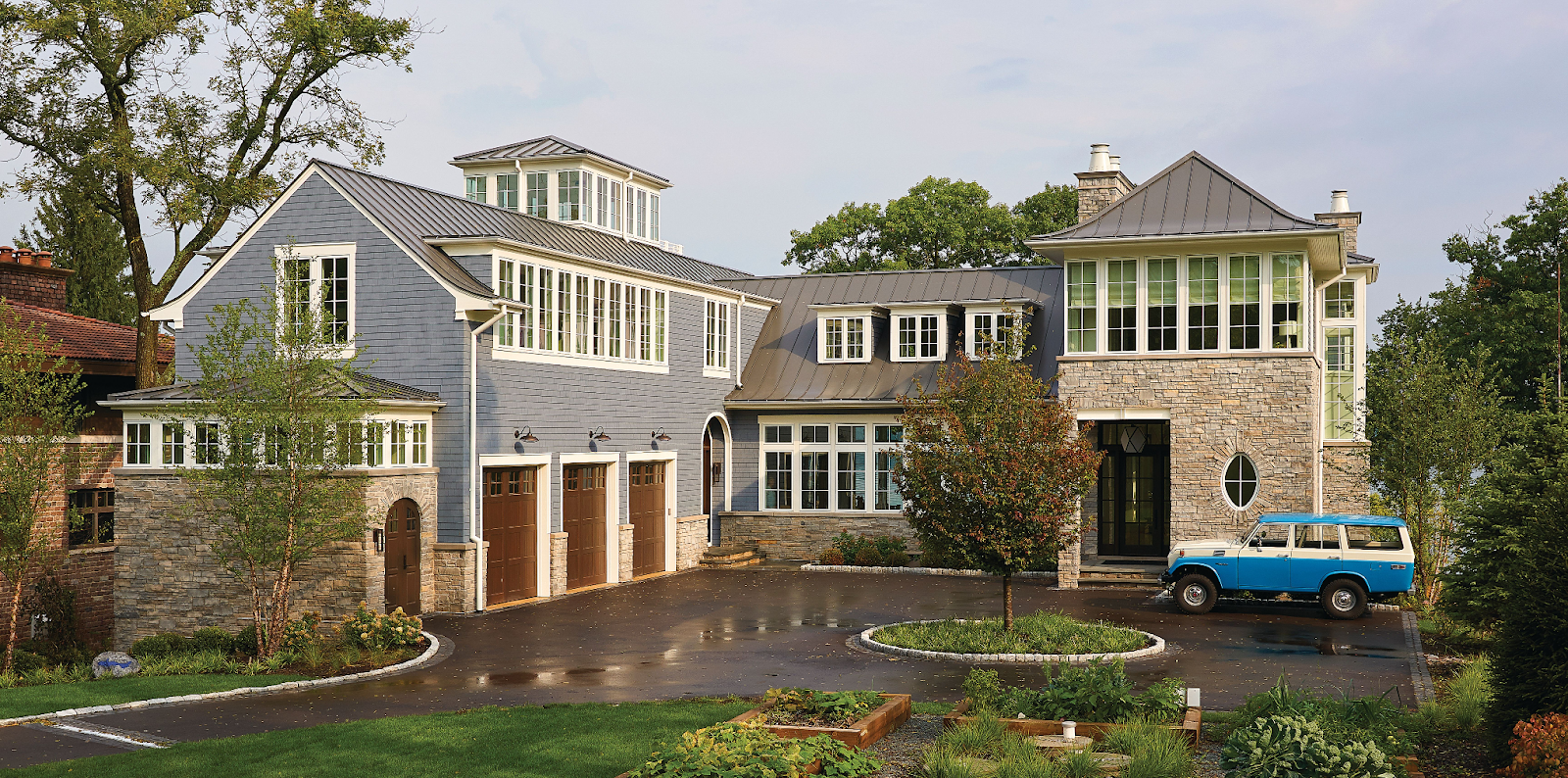
This lakefront home seamlessly blends coastal and contemporary design with its blue shingle siding, stone accents, and expansive windows that maximize natural light and scenic views.
Andrew Joseph: Can you describe your design philosophy in three words?
Bob Zuber: At the risk of sounding stuffy and pretentious, my design philosophy is an old one, but a good one… “Firmitas, Utilitas, Venustas” which is Latin for “strength, function and beauty”. These were principles laid out by an ancient Roman architect named Vitruvius in a treatise which claimed that these three tenets were what was required in Architecture. People can often fall into the trap of stylistic debates, where they claim that one style is better than another, but they all come and go like clothing fashions. Style is just the personal preference of a client. In my mind, it doesn’t matter what style the house is; if it is falling apart, hard to maintain, doesn’t function well or is ugly, what’s the point? I think the reason our firm is so successful is that we are accomplished in all sorts of design “styles” (which does keep it interesting) and therefore we let our clients take the lead on what they want the house to look like. What really elevates our homes to “Architecture” with a capital “A” are these three basic principles, which are timeless and universal.
AJ: What’s the best piece of advice you’ve received as a designer?
BZ: A professor told me in college, that if you are struggling to make a design work, you’ve made a fundamental flaw in the original concept, and you may need to re-think your basic approach to the problem and start over with a fresh idea. However, I also learned from my father, who was also my math teacher in high school, that if you struggle with a problem, sometimes all it takes to solve it is to let it sit to the side for the time being and come back to it in the morning after a good night’s sleep. So, before I throw away an entire design idea that I’m struggling with, I will often move on to something else I’m working on and come back to solve the problem the next morning with fresh eyes. When the fundamental concept works, and you are feeling fresh and inspired, it can feel like the house designs itself.
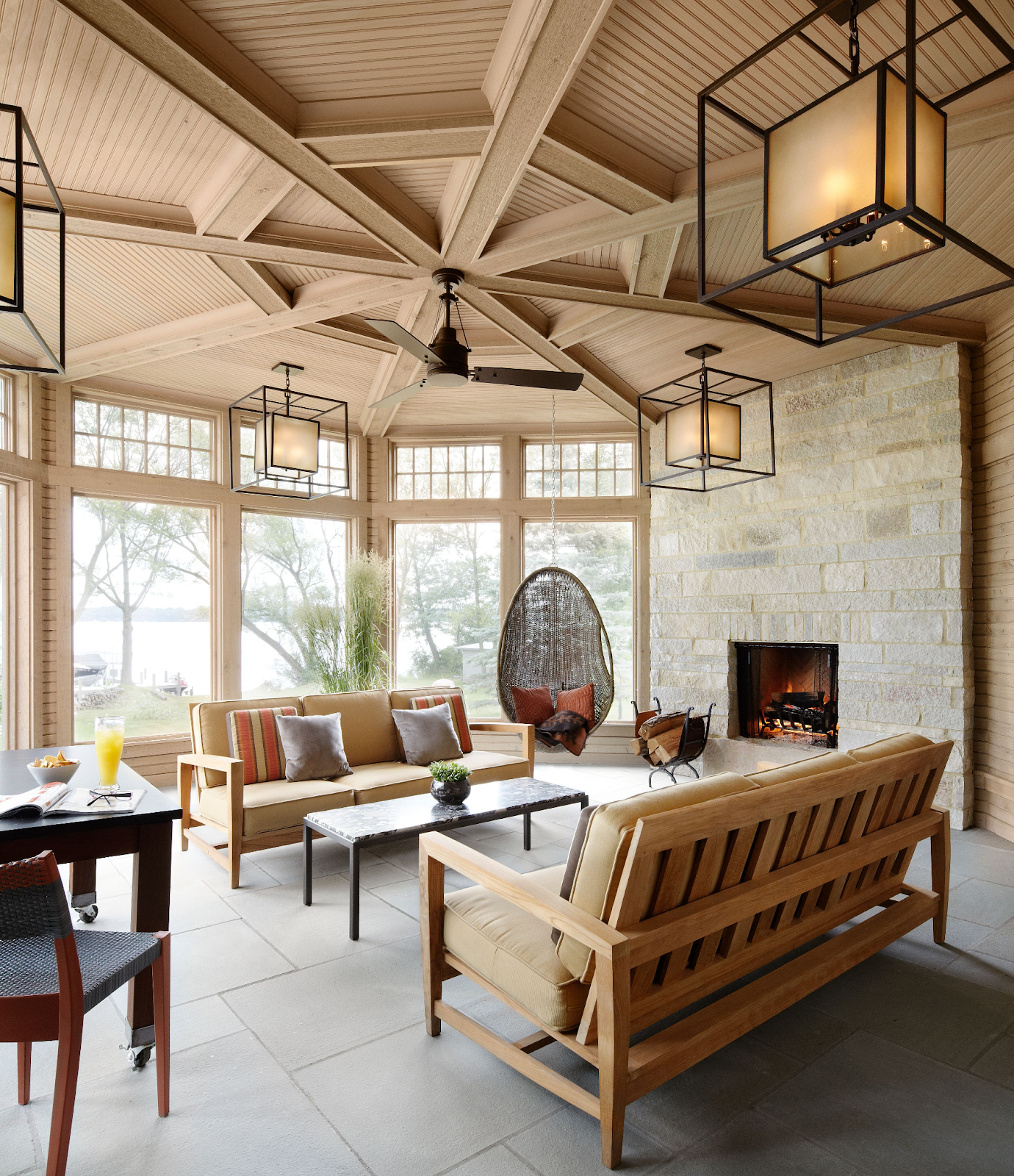
This inviting getaway porch features a beautifully crafted wood-beamed ceiling, expansive lake views, and a cozy fireplace creating a seamless indoor-outdoor retreat.
AJ: Can you tell us about a specific moment in your career that made you feel accomplished?
BZ: I was a junior member of the staff at MWA many years ago, and still figuring out whether I wanted to practice residential or commercial architecture. One day, after I returned to my desk after a particularly rough day in the field, I listened to a voicemail from one of my clients. She had returned from home after being gone for some time and called me from her cell phone as she was still sitting in her car in the driveway. The addition that she was building onto her house was going to be used as a Montessori school for young autistic children, so it was very personal to her. Construction had finally turned the corner, and she could now see in a very tangible way, how her vision for the new design had come to fruition. She called me to tell me “Thank you”, and she was overwhelmed with emotion. I will never forget that moment, because that was also when I realized how much good design can impact people’s lives and what I was doing could be meaningful.
AJ: What is your favorite design element to incorporate into your projects?
BZ: I LOVE an octagonal-shaped space! I’ve used them as libraries, anterooms, screen porches and as general organizing elements when a home’s massing may sprawl off in several different directions. There is something visually satisfying to me in the shape.
AJ: How do you approach designing for a client with a specific style in mind?
BZ: Educating yourself on that style’s rules and knowing when to break those rules to stay edgy… or sassy, as I like to call it. I’ve worked on about every kind of style home imaginable: Victorian, Georgian, Farmhouse, Mountain Modern, Prairie-style, Midcentury modern, French country, and everything in between. It’s important to have a good visual library to reference as a teaching tool for a Style that you may not be as familiar with, but as I’ve said before, my personal design philosophy is that good architecture transcends style. I can design in any “style” a client desires without impressing my own personal tastes on their home. What is most important is that each project is visually appealing, functional, and in harmony and scale with its surroundings.

This Shingle-style home combines classic craftsmanship with elegant curves, rich wood siding, and detailed millwork.
AJ: What is your Style (or design) icon and why?
BZ: I have two: One of my favorite designers is Sir Ken Adam. He designed the sets for 7 James Bond movies, and for the classic movie “Dr. Strangelove.” His mixture of forward-thinking modernism, with a dash of historic embellishments creates a timeless and comfortable vibe. I could move into Dr. No’s underwater lair happily today and it was designed over 60 years ago! My favorite architect is a mid-century modern designer named John Lautner. He studied under Frank Lloyd Wright, but rather than churn out more of the same Prairie-school designs that so many other of his students were doing at the time, he really understood the basic principles that Wright taught him and has a body of work that is hard to believe is all designed by the same architect. Most people have never heard of him, but many are probably familiar with his wide range of work. From the uber-contemporary “Chemosphere” house parodied in the Simpson’s and featured in the 2000 movie “Charlie’s Angels,” to the car café set from “Pulp Fiction” all the way to the warm, cozy house he designed that Tom Ford used in the movie “A Single Man”, your mind will be blown at Lautner’s range of design skills. Look up the Goldstein House or Bob Hope’s Palm Spring house. How someone can make concrete look like its floating is awe-inspiring! Obviously, I am also deeply influenced by Cinema Production Design!
AJ: What’s a new hobby/skill that you have learned recently?
BZ: I’m currently learning Italian. I certainly haven’t mastered it yet, but I’m really enjoying classes! My partner has dual citizenship in America and Italy, and I want to be able to converse when we travel to Italy to visit his family.
Like what you see? Get it first with a subscription to aspire design and home magazine.