
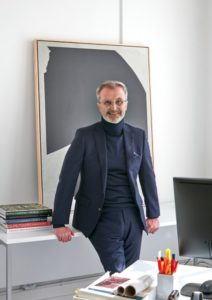
 Over a 30-year career at the highest level of architecture and interior design, Enda Donagher has created a portfolio of work that is wide-ranging in character, and modern in sensibility. His architecture and design firm, Enda Donagher Architect PC, has established a reputation for understanding and fulfilling its clients’ visions in a resourceful and innovative way, with an emphasis on close principal involvement and outstanding customer service. Regardless of scale or budget, Donagher’s work is always clear, sophisticated and highly tailored to each client’s lifestyle. Take a look at some of Donagher’s designs in today’s Designer Friday.
Andrew Joseph: How do you approach a new design project?.
Enda Donagher: For me, the floor plan is the main driver initially. Sometimes even before the design program is finalized, I’m sketching plans looking for ways to maximize the potential of the space or site. Imagery is important too, obviously, and plays an early role in setting the design direction. With every client, I like to have what I call project “touchstones” — which are usually images but could be anything; a material, an artifact, an existing building, a piece of literature — that speak to the desired look/feel/spirit of a project. We go back to these touchstones periodically during the process to help us reaffirm and evolve our design goals and evaluate new concepts within the overall big picture.
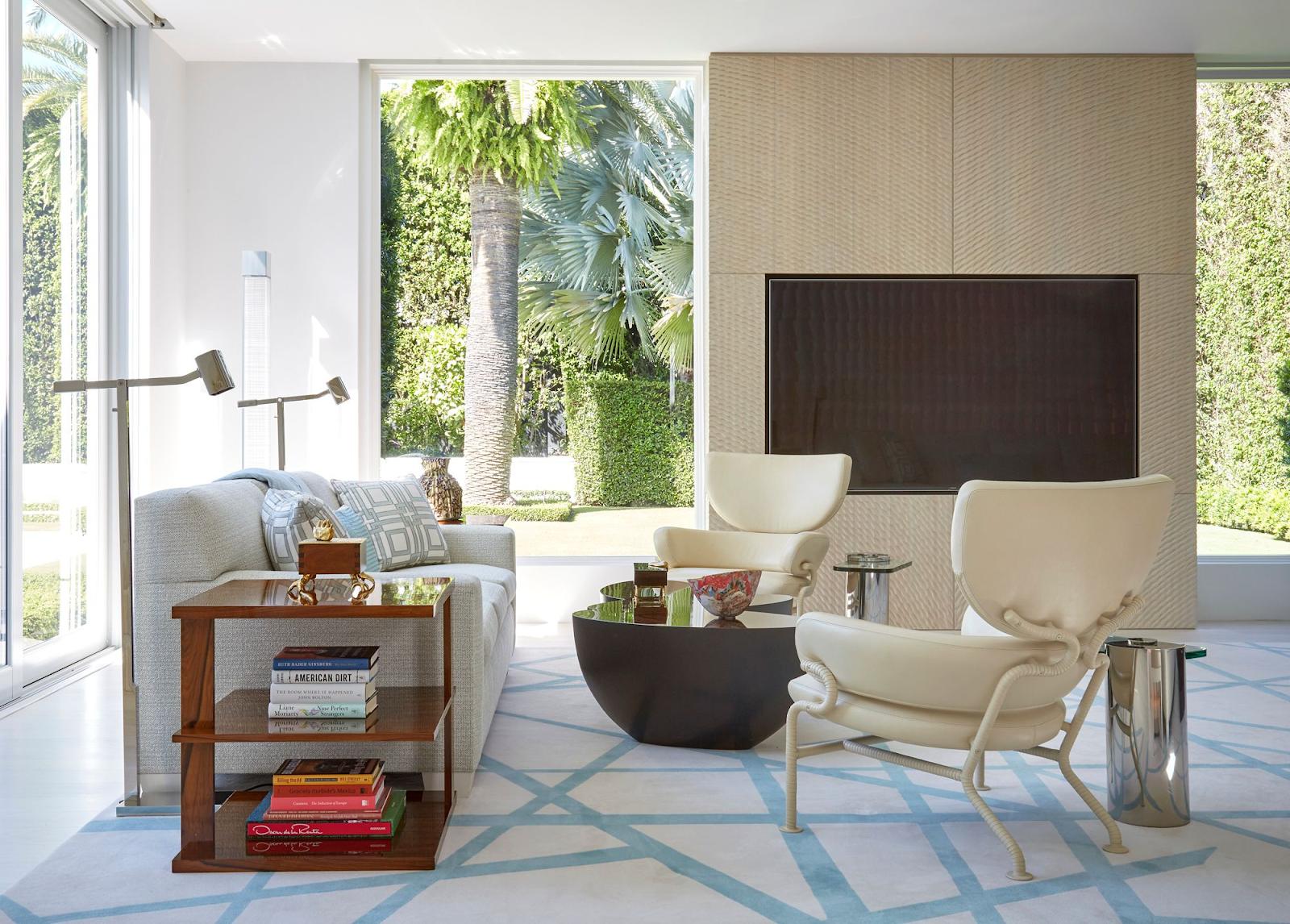
This space seamlessly merges indoor and outdoor living with expansive glazing, a textured fireplace wall, and sculptural furniture that enhances its modern yet inviting architectural flow.
AJ: What’s the best piece of advice you’ve received as an architect?
ED: I was lucky to be mentored in my early career by some of the best architects and designers in the business, but one piece of advice from back then is particularly memorable. On leaving Thierry Despont’s office after 7 great years, Thierry’s parting advice was “If you ever want to start your own design firm, don’t wait until you know too much”. That statement was emblematic of this wonderful man, encapsulating his playfulness and determination to never let self-doubt get in the way of anything. Did I follow his advice? Well, as a young architect not really – it’s your job to worry about stuff so your client doesn’t have to. But with time and experience came the realization that sometimes it’s good to “un-know” for a little while, free the mind and let design lead. When the time is right, and when you have good people, you can fall back on your expertise to bring the details together and make it all work.
AJ: What was the last book you read and how did it inspire you?
ED: “The Dawn of Everything: A New History of Humanity” by David Graeber and David Wengrow. Kind of explodes everything you’ve ever believed about the history of humanity. I found it inspirational because of the sheer scale and ambition of the endeavor. It also has an upbeat message about human values, and the nature of a good and just existence.
AJ: What is your favorite design element to incorporate into your projects?
ED: Height. You need to take those lines to the ceiling! An 8ft high entry hall can be made to feel grand by emphasizing verticality, but regardless of ceiling height, rooms always benefit when the eye is drawn upward. People sometimes ask me what they can change to enhance their homes or apartments. If you could only do one thing, probably the best bang for the buck you can get spatially is to raise your door openings.
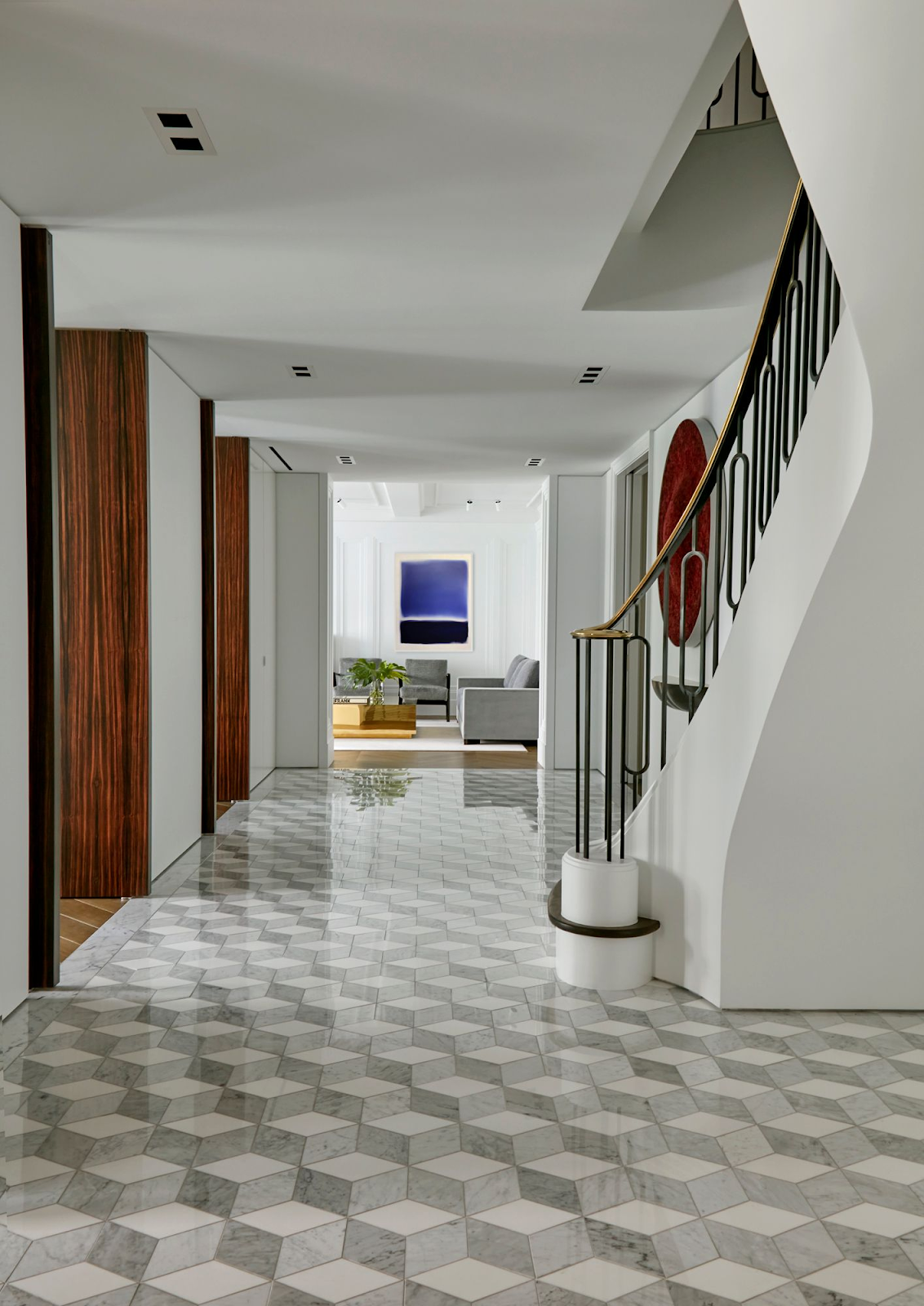
This hallway masterfully balances geometry and flow, with its sculptural staircase, bold marble flooring, and strategic sightlines leading to a framed focal point beyond.
AJ: What is your favorite design tool to use?
ED: Computer visualizations and 3D rendering have been game changers for design and presentation but, believe it or not, my go-to for early-stage/concept design is still the rendered 2-D elevation. It could be drawn by hand or from the computer, rendered in pencil, charcoal, ink or watercolor, sketchy or formal. When I’m developing a concept for a room, I will often work over a blank background elevation projected from the plan. I might collage in an image of an element that suggests the direction I want to explore, say a great pair of historical doors, a mantel, or an amazing pair of cabinets. Throw in some shade & shadow, suggest some furniture for scale, and maybe add some of the Owner’s art… It’s not literal; it’s more of an inspiration to spark the creative juices, leading to other thoughts and ideas.
AJ: What is your favorite type of lighting to use in your designs?
ED: Concealed lighting is a hugely important component of successful lighting design, particularly in residential and hospitality work. This is because of how our eyes physically react to light. With visible light sources (think of a bare lightbulb) your iris contracts as you experience glare and as a result, you actually see your environment less. This is particularly noticeable in landscape lighting. On the other hand, concealed light gently washing a surface such as a wall, a ceiling or a hedge, allows the iris to relax and open. As a result, spaces with concealed light sources, such as cove, soffit or bookshelf lighting, feel calm and relaxed. Think of it as the backdrop, or base layer, for other light fixtures and sources.
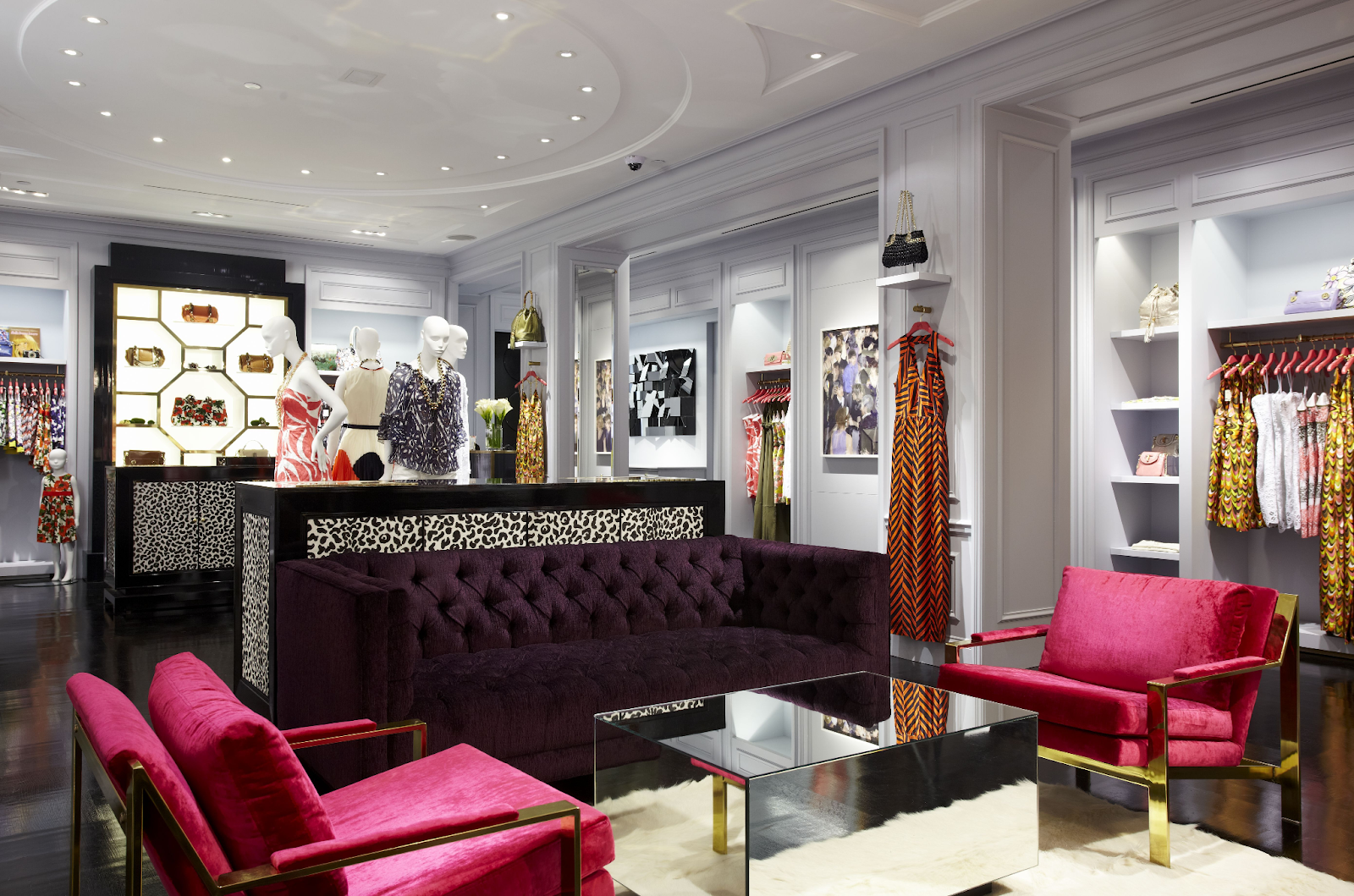
Elegant millwork, recessed displays, and a coffered ceiling elevate the shopping experience by guiding the eye and framing merchandise in a luxurious setting.
AJ: How do you incorporate art into your designs?
ED: I think about art placement and sight lines from the beginning of the planning process (though we generally don’t design “around” art). I request the art inventory early so we can start discussing specific pieces and locations. Often, a client will add new pieces to their collection during a renovation project. Locations of all pieces are identified on the furniture plans and rendered to scale on the interior elevations for coordination with architecture, lighting etc. Working with art is one of my favorite aspects of the job, and we are always grateful to our clients for the opportunity to work with incredible art.
AJ: Can you tell us about a project where you had to incorporate a client’s personal collection into the design?
ED: Working with a collection is always exhilarating. I enjoy when architects and designers are tasked with tackling unusual and less-expected collections such as marine specimens, or sports cars, because they always lead to creative solutions. A few years ago, we were commissioned to undertake a renovation of a prewar Manhattan apartment for a family with an extensive collection of African art (Featured in Aspire Design & Home, Fall 2022). Their museum-quality collection, assembled over two decades, consisted of several hundred pieces ranging in size from a couple of inches to about 7 feet tall.
Understandably, they eventually found themselves at a loss as to how to incorporate the collection into their home environment. A renovation offered an opportunity at a fresh attempt. For me, here was an opportunity to create a contemporary, formal setting for a cohesive and important collection, with the added challenge of making it a comfortable home. Using sightlines and areas, economy of architectural detail, and careful curation of the collection, we were able to create restrained, classically articulated interiors that are both a fitting frame for the homeowners’ collection and a relaxed environment for daily life.
Like what you see? Get it first with a subscription to aspire design and home magazine.