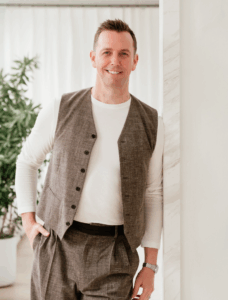
 Matt Donahoe is the founder and principal of bureau interior architecture | design, a Nashville-based studio celebrated for its architectural approach to interior design. Central to Matt’s approach is the creation of spaces that balance elegance and comfort while reflecting the individuality and purpose of each client. His work focuses on crafting environments that evoke a lasting sense of home and connection, making each project feel uniquely personal. With a keen eye for detail and a passion for creating enduring designs, Matt merges his midwestern roots with a global perspective to curate interiors that are both distinctive and welcoming. His design style is defined by neutral palettes, organic materials and rich textures, which together create a sense of warmth and sophistication. Take a look into the design mind of Matt Donahoe in today’s Designer Friday.
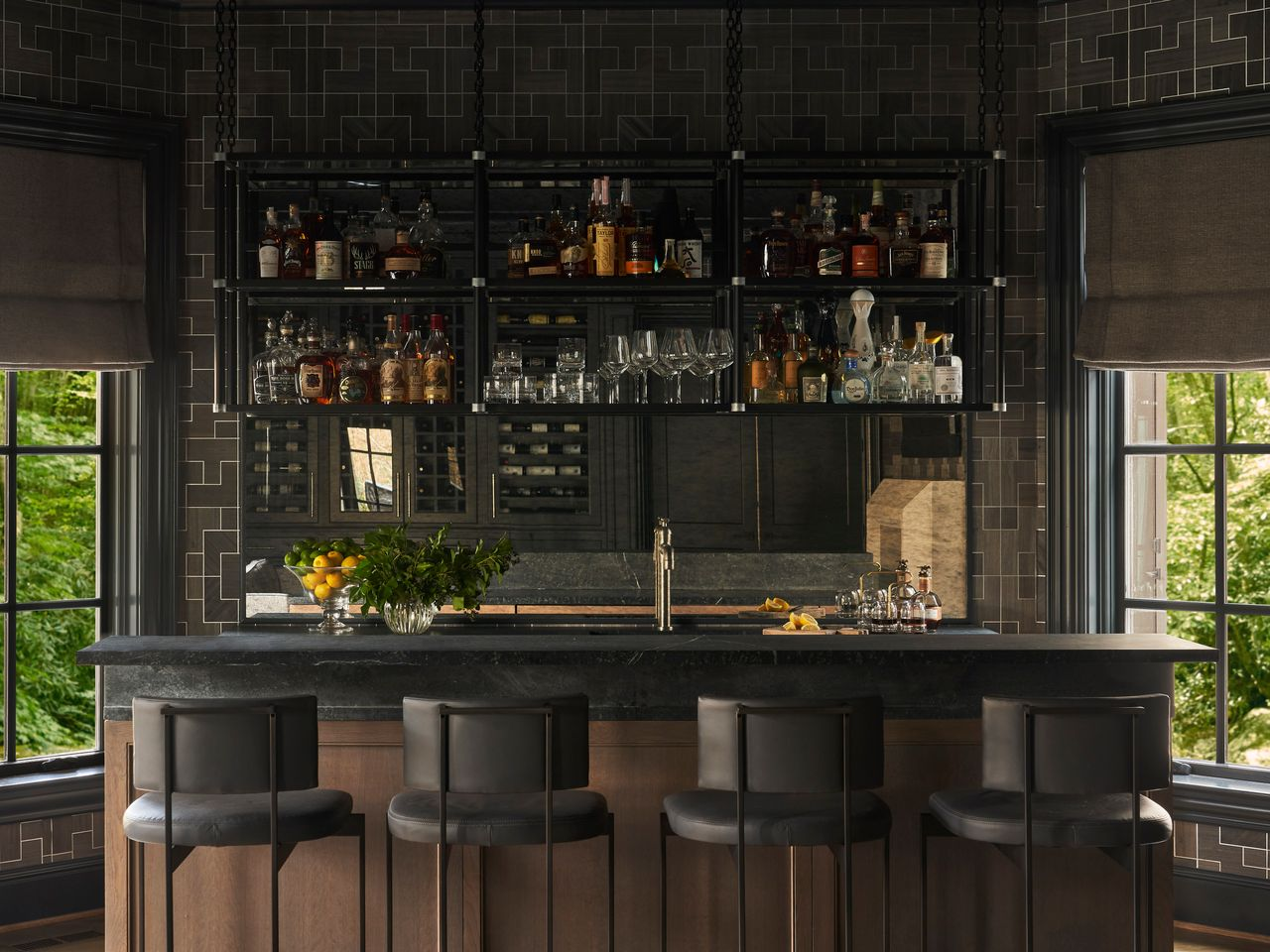
Suspended chain shelving adds an industrial edge to this sleek bar, perfectly offset by the honed stone countertop, tailored stools, and the mesmerizing texture of the geometric tile backsplash.
Andrew Joseph: Can you describe your design philosophy in three words?
Matt Donahoe: Curated. Sartorial. Tactile.
AJ: How do you approach a new design project?
MD: It’s a bit like courtship — as if we are beginning to date and hope to form a long-lasting relationship. Our process is centered on listening and engaging clients with curiosity and honesty. We need to understand them beyond pleasantries — we are creating their home and honing their lifestyle. We approach the start of a project with anticipation and our focus on building rapport.
AJ: Can you tell us about a design trend you are excited about?
MD: “Slow decoration” is an approach gaining traction. I enjoy the process of layering a project at a curatorial pace. It does not necessarily imply that we cannot complete a project from top to bottom in shorter spans. I do think it begs the design community and its clientele to take the foot off the gas, as social media implies well-designed and styled homes are the norm. That simply is not the case — it takes time and trust to achieve these ends.
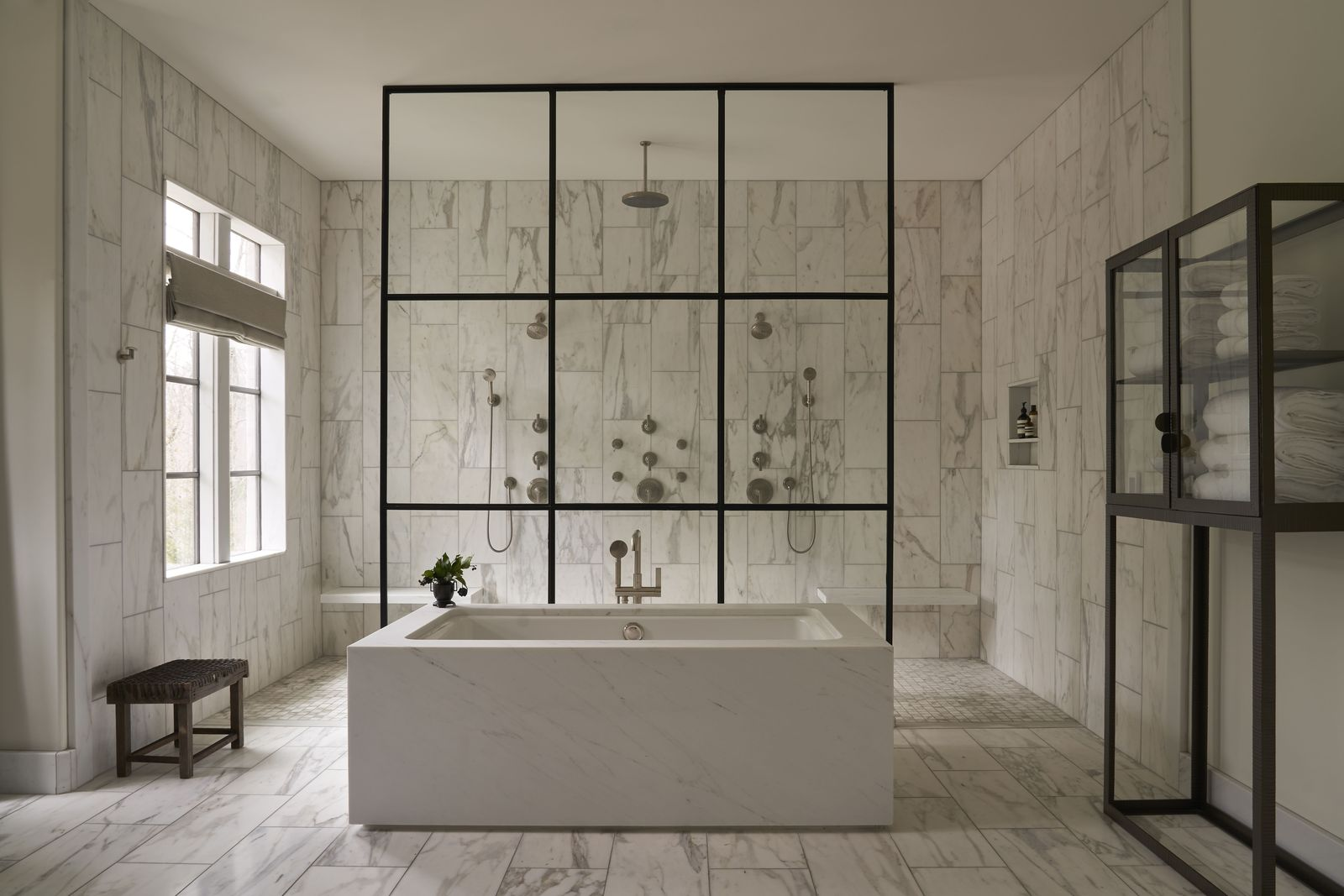
In this spa-like space, a steel-framed glass partition defines the shower zone while keeping the marble-wrapped walls and floors visually uninterrupted.
AJ: What is the most important element in a successful interior design?
MD: Balance is critical for successful interior design. It does not mean a concept or narrative is rigid or rule-abiding — it means there is the appropriate amount of tension between the architecture and interior design, materiality and textiles, etc. Being measured does not rob a project of quirk or personality, but rather it implies calculated risk and an application of invaluable experience.
AJ: How do you stay creative and inspired?
MD: Travel, as trite as that answer may be, is my own fountain of youth. It opens my eyes to experiences and ideas I would likely miss during the daily grind. Removing myself from my typical environment and routines paves a path forward to dynamic design — it reminds me of the limitlessness of the creative world.
AJ: What is your favorite aspect of your job?
MD: It is hands down a toss-up between mentoring my studio team and connecting with clients. I enjoy how both of those relationships create a bond — a connection — both fulfilling and generous. I feel immense gratitude to do what I do day in, day out.
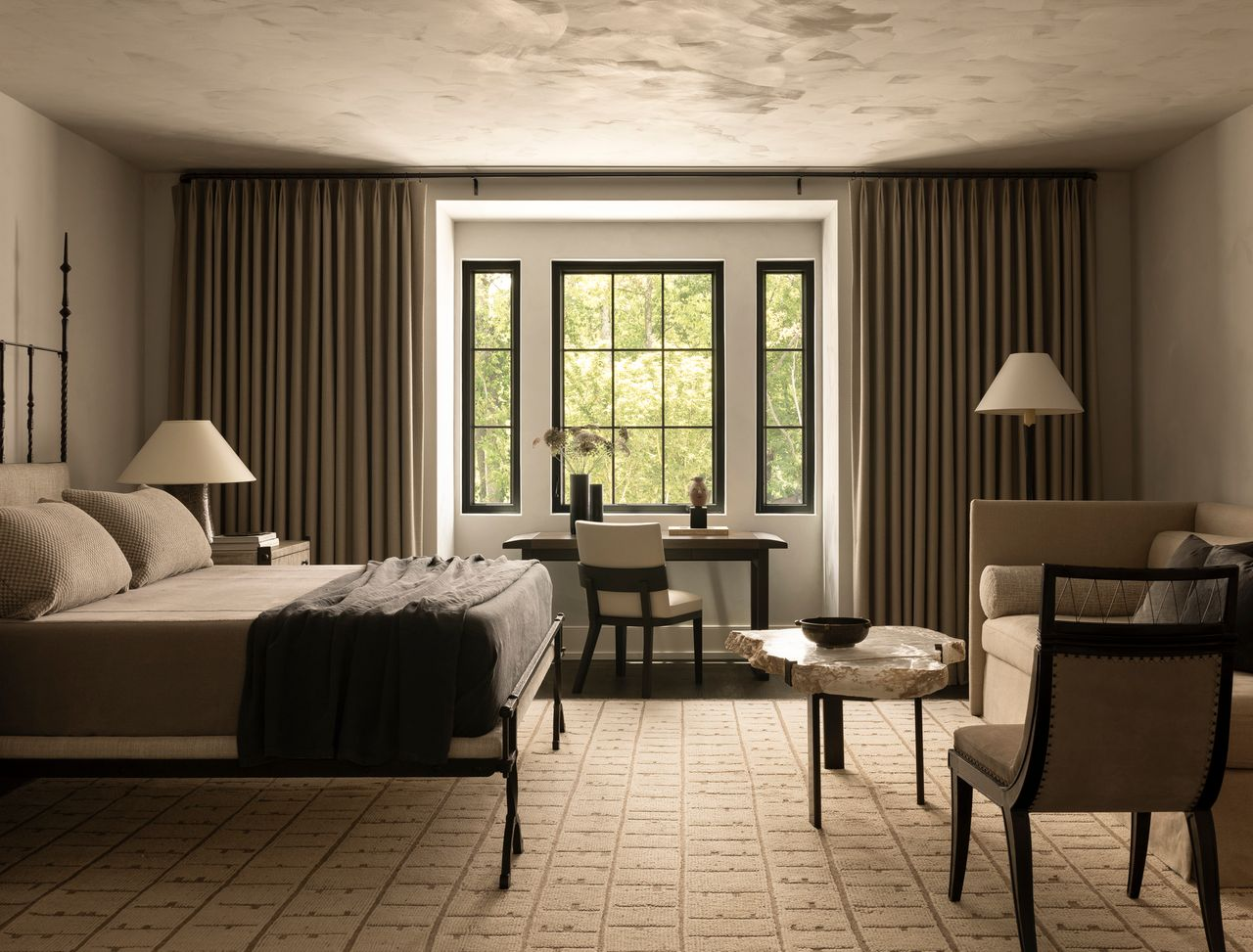
This bedroom mixes earthy tones and earthy textures to create a palette that relies on depth, grain, and surface rather than color.
AJ: How do you balance functionality and aesthetics in your designs?
MD: I am a believer that good design does not sacrifice aesthetics or functionality. Utility is not a four-letter word — I find beauty in the puzzle of creating captivating spaces with purpose. When something is too precious, it strips away the elements of comfort and joy. Function should resonate beyond aesthetic appeal — they should be folded into one another as a unit.
AJ: What is the most important skill for a successful designer?
MD: Resilience is a critical skill in our industry. We do not operate our businesses in a vacuum, so design cannot be considered static. It is ever-changing and our clients are ever-evolving. Digging in your heels and pushing away the thrust of change we encounter daily would be exhausting and overwhelming. I believe learning to overcome obstacles, embracing change, and learning how to adapt creatively are paramount soft skills.
AJ: What would your dream project or dream client be right now?
MD: I have been daydreaming about a chalet project — perhaps a retreat in the Swiss Alps or a cabin nestled into the Grand Tetons. I am drawn to mountains and the vast valleys in those regions — something about crisp air, endless sky and lush treetop views.
Like what you see? Get it first with a subscription to aspire design and home magazine.