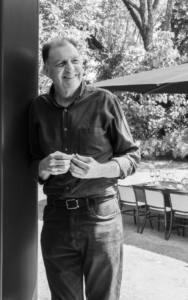
 Mexico City-native Simon Hamui is the founder and designer of Simon Hamui Design Studio. After graduating from Pratt Institute with a degree in industrial design, Hamui founded the company alongside his brother, Leon, back in 1991 in Mexico. What began as a design/build furniture business has evolved into a full-service interior architecture firm with a 50,000-square-foot factory dedicated to manufacturing their designs and which includes carpenter, finishing, metal, stone, upholstery and lighting departments, allowing for a seamless integration of trades that make impeccable quality possible in complex pieces. During his expansive career, Hamui has been commissioned to design spaces ranging from cultural centers and government buildings, to luxury hotels, private residences and yachts, manufacturing a majority of its intricate custom pieces at his workshop in Mexico City. Take a deep dive into the mind of Simon Hamui in today’s Designer Friday.
Andrew Joseph: Can you describe your design philosophy in three words?
Simon Hamui: Creativity, Functionality and Materiality.
AJ: How do you approach a new design project?
SH: We begin by getting to know our clients, ideally through a meeting in their home, which allows us to get a sense of their daily dynamics and aesthetic preferences; how they live, what they like and what they think their spaces are missing.
We seek to establish a personal connection with them, which we find enriches any project we take on. Because you are creating an object or space that the client will usually interact with daily, it becomes very personal to them. So the better we can understand our clients, the more accurate we can be in our proposal.
AJ: Can you describe a project where you had to work with a limited space?
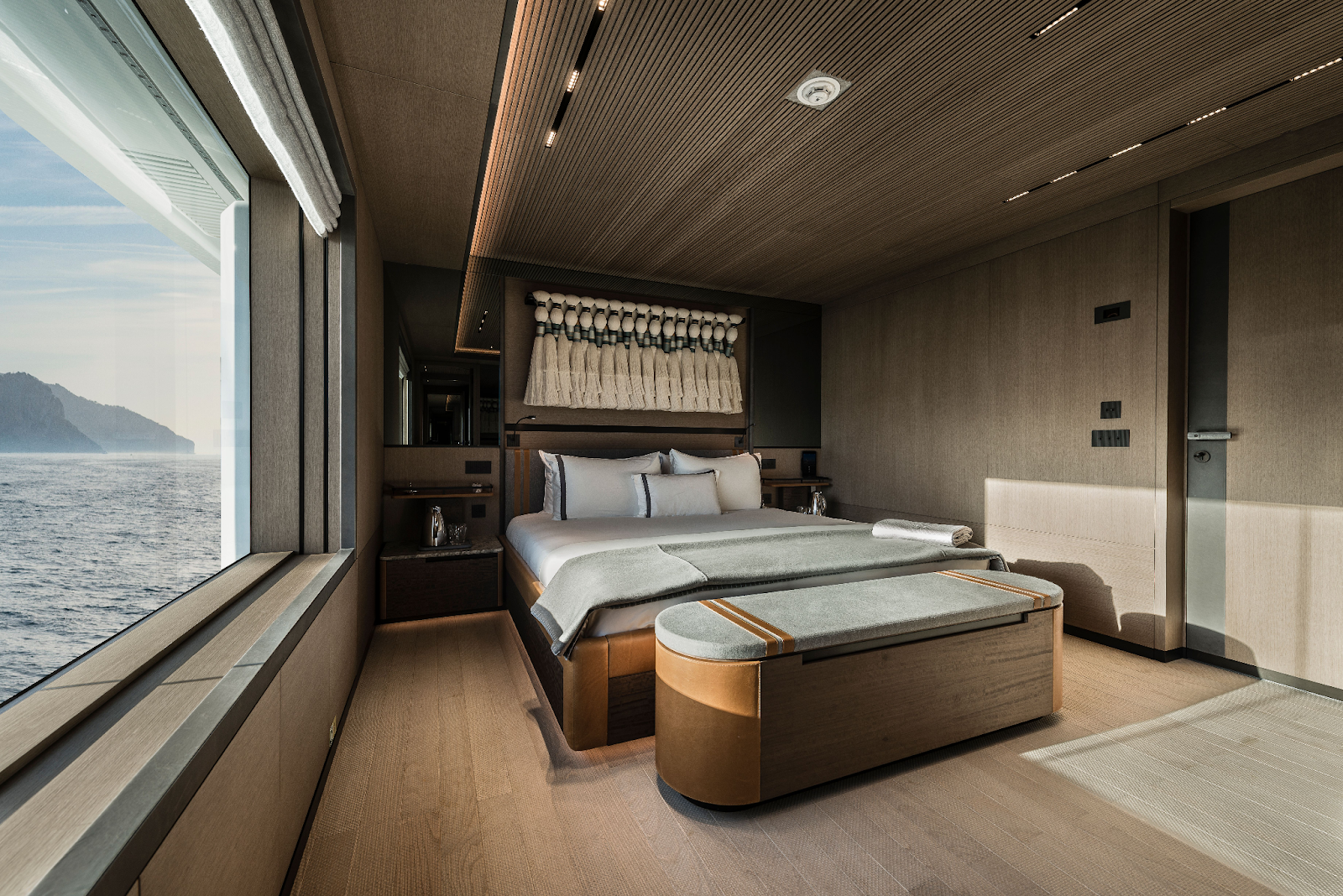
SH: The most complex exercise in maximizing space is probably found in yacht designs. We’ve designed the interiors for several yachts over the years, the most recent one being the ACALA II delivered last year. To make sure the spaces and furniture felt comfortable and worked properly, we ended up building mockup rooms in our shop to feel the spaces and mimic the use of the furniture and other elements in them. Minute adjustments to size and position were made during these exercises. Additionally, it is also common for clients to request versatile spaces that can accommodate different group sizes and scenarios comfortably. Our work often entails designing for vacation residences where the groups of people living in the spaces change often. A custom dining table that can expand to accommodate larger parties, a bed design that allows for two twin beds to come together to create a king size bed, or the use of hidden Murphy beds integrated into millwork allows for a comfortable setting in scenarios with larger or smaller groups. Having a multidisciplinary shop where we can build these custom pieces is a great facilitator in making complex solutions possible.
AJ: Can you tell us about a project where you had to incorporate a client’s personal collection into the design?
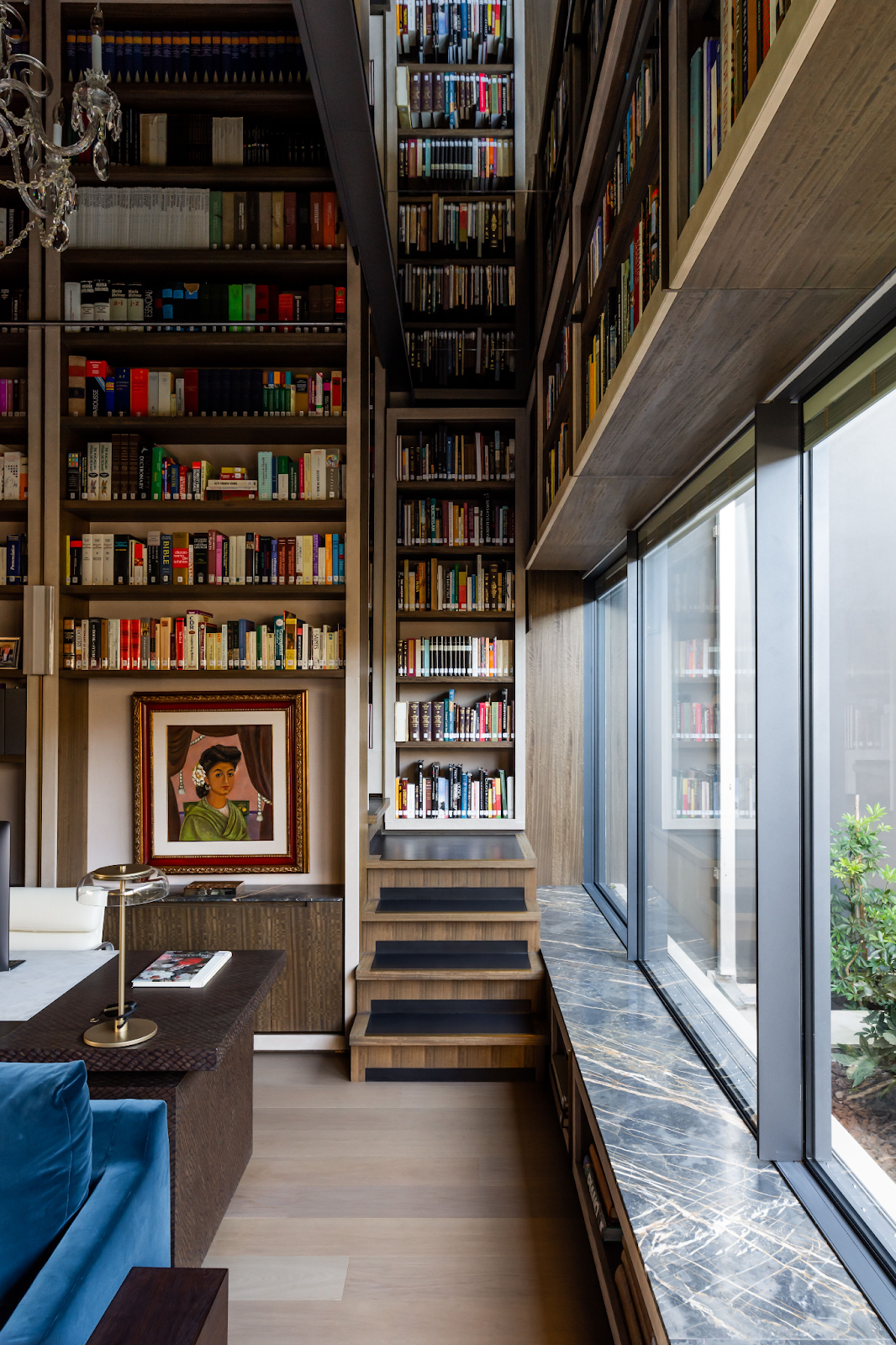
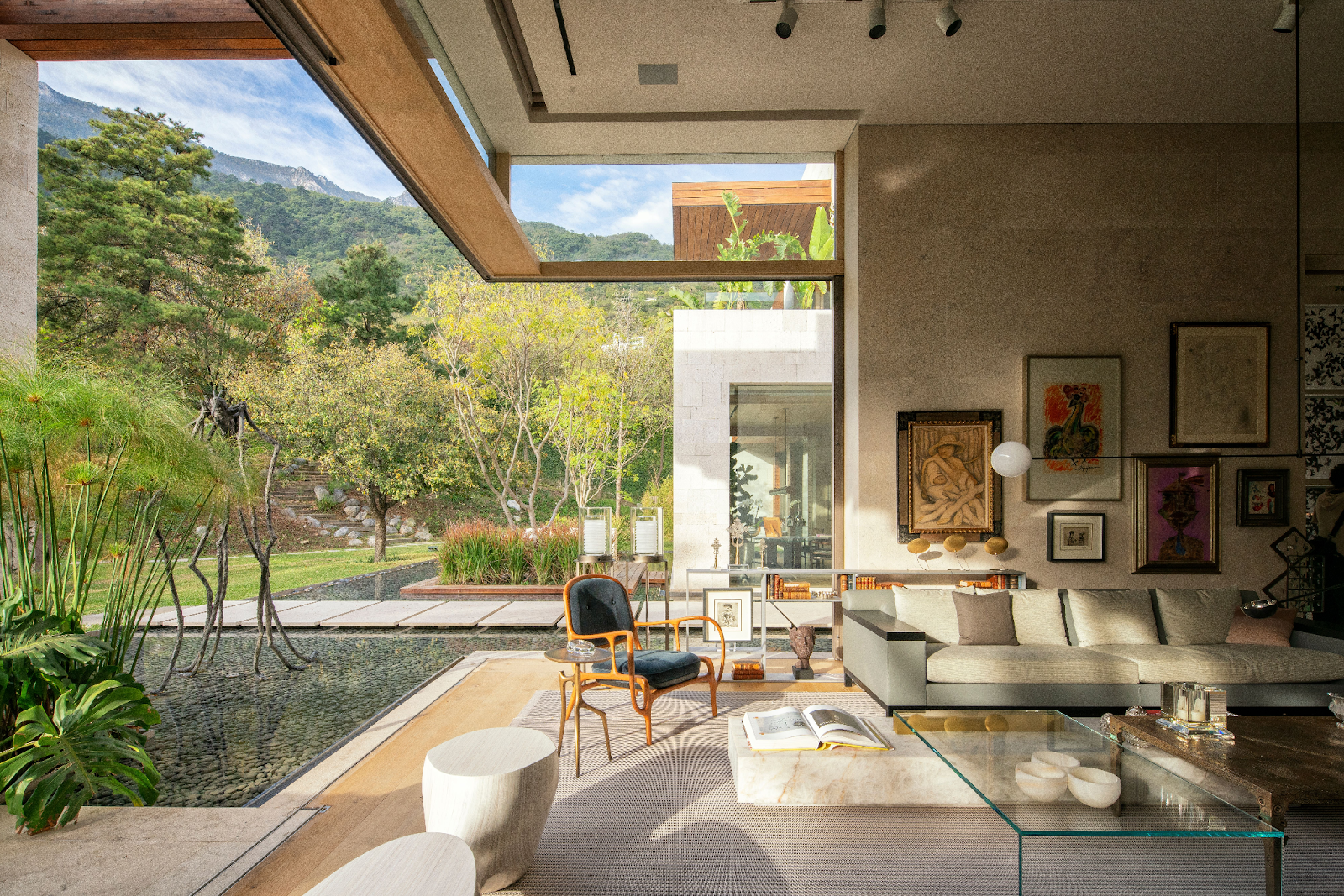
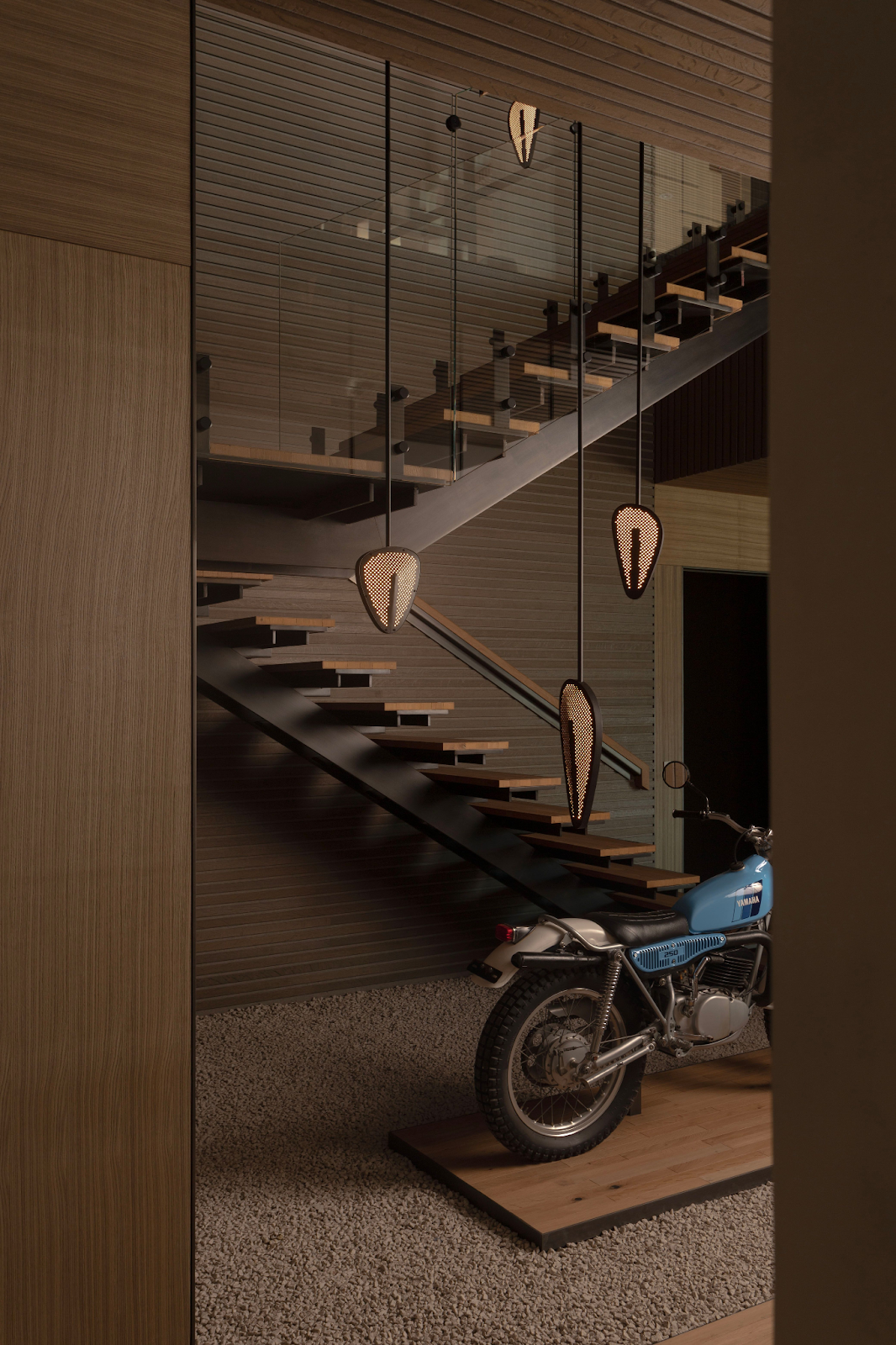
SH: Mountainside Villa — our task was to design a primary residence for a recurring client, a project that involved curating their extensive art collection with the addition of new pieces. Each new art acquisition was thoughtfully selected to complement– and at times contrast with– the existing collection, creating richer and more dynamic spaces. Our intention was to achieve a harmonious relationship with each element in the interior, where a lamp or console might respond to an adjacent painting, or the finish on a wall would accentuate a particular piece. For instance, we designed specific bookshelves with specific niches and pedestals to display certain artworks. The serene architectural finishes in the entry vestibule serve as a backdrop for an assembly of iconic chairs, custom light fixtures and multiple contemporary and modernist pieces that all interact with each other.
AJ: If you weren’t a designer, what would you be and why?
SH: A different kind of designer, probably specializing in cars. When I initially chose to pursue industrial design at Pratt Institute, I wanted to become a car designer. I’ve always been fascinated by cars, especially classic ones.
AJ: How do you balance functionality and aesthetics in your designs?
SH: As an industrial designer, I see functionality as essential to good design. Imagining the end user’s experience with the design is always the starting point for me. Your appreciation for an object starts with having a pleasing interaction with it, followed closely by it being aesthetically appealing.
Like what you see? Get it first with a subscription to aspire design and home magazine.