
 Ximena Rodriguez is principal and director of interior design for CetraRuddy. With decades of experience in the design industry, Ximena brings a wealth of knowledge and expertise in high-end luxury design. Her global perspective, based on her years of work in New York and Miami and on various international projects, transcends any one design philosophy. She has expertise in bringing high design to complex, multifaceted projects of all scales for the residential and hospitality sectors, among others. Her training as an architect informs her methodology, driven by process and innovative solutions grounded in technical excellence. The results exude architectural clarity coupled with a mastery of materials and finishes, seen in many award-winning works. Get to know Ximena and her work in today’s Designer Friday feature.
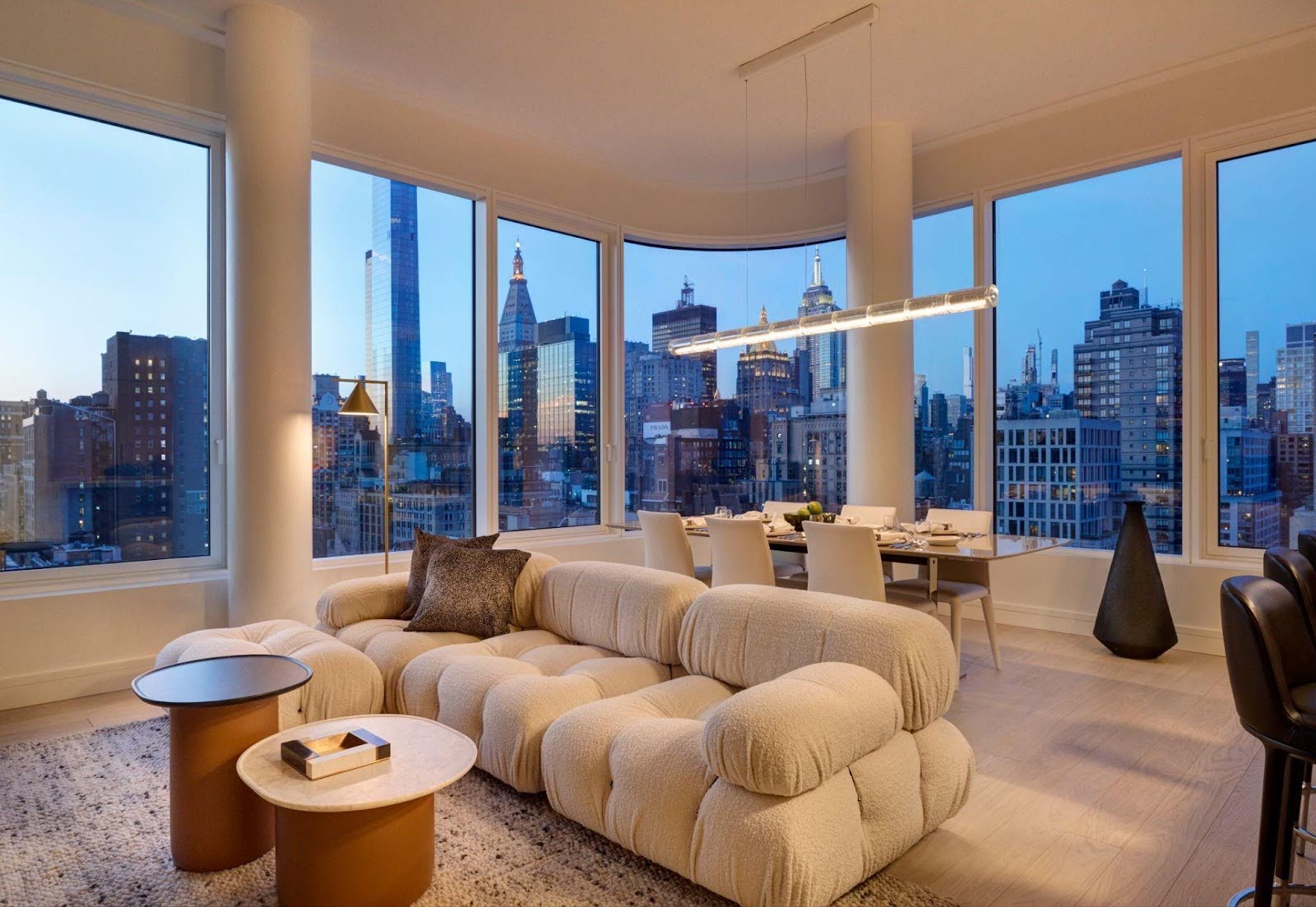
Framed by floor-to-ceiling windows, the skyline is complemented by low-profile seating that grounds this space without blocking the view.
Andrew Joseph: How do you approach a new design project?
Ximena Rodriguez: I always think of architecture and design as fundamentally about “home.” Whether we’re designing an entire building or undertaking a standalone interiors project, these are places where people will need to feel comfortable, inspired, and safe, and we want the environment to elevate their experience and to enhance their daily lives. The human aspect is key. But every setting and every site is different, so our team at CetraRuddy approaches each new commission by working to identify the project’s critical design moves that will help us create the best possible solution for our clients and for the end users.
These can be big moves: If we’re designing a new condominium or apartment tower, the overall architectural form might be dictated in part by where it sits on the block and how the sun moves across the surrounding buildings. If we’re lucky enough to have a corner site, for example, we’ll look for strategies to maximize those views. At the same time, we also have to think about our projects on a very granular scale. When you walk through your front door, where are you going to put your keys? Can you see daylight from the moment you enter? Being able to conceptualize how people will interact with our projects at all scales is the foundation of design excellence.
AJ: How do you stay creative and inspired?
XR: I love to find sources of inspiration through travel. Most recently, I was in Paris with my daughter, and I always find that city both restorative and invigorating. Sometimes my trips offer very direct opportunities to discover new design inspiration or explore new materials. Italy is a favorite for finding furniture and visiting the quarries where our suppliers source their best marbles. Making space for different forms of creative expression is very important to me as well. In addition to being a designer, I’m also a singer and perform in a choir. We held a major performance this past August, and preparing and rehearsing for that event was a wonderful way to tap into a different kind of focus and creativity.
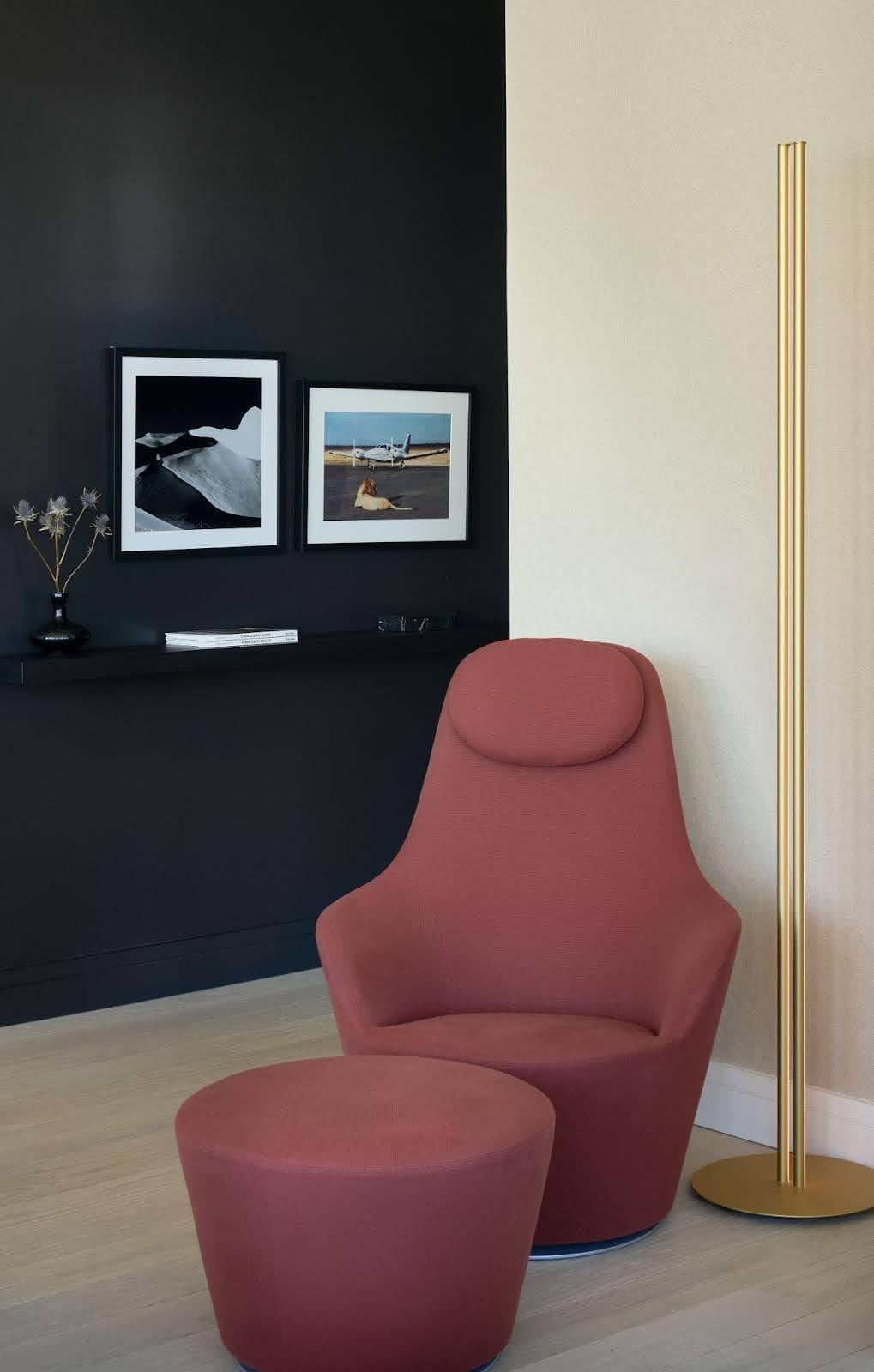
A mix of soft seating, framed photography, and minimalist lighting creates a corner that feels both relaxed and refined.
AJ: Can you describe a project that you’re particularly proud of?
XR: It’s hard to pick just one! Some of our amazing historic conversion projects will always be favorites of mine. I’m thinking about Walker Tower or 443 Greenwich, in which we were able to restore and reimagine true New York City architectural landmarks for new life as exquisite residences. Both of these works transformed the high-end market in Manhattan and are still among the city’s most desirable buildings, which is a rewarding feeling.
Most recently, we’ve completed several exciting condominium projects. One that makes me particularly proud is 200 East 20th Street, a new building just down the block from Gramercy Park. This is such an iconic New York setting, and we crafted a thoughtful architectural narrative that speaks to this historic context in a way that also feels true to contemporary lifestyles. For example, many of the landmark buildings around the Park are defined by monumental bay windows. Referencing that distinctive element and leveraging our corner location, we designed incredible curved windows at 200 East 20th Street that offer uniquely expansive views over the city and Gramercy Park itself. The theme of light is very important in this building, and we prioritized creating multiple exposures and utilizing natural materials such as white oak and stone that show beautifully in natural light and help create a warm and inviting oasis in the city.
AJ: How do you incorporate sustainability into your designs?
XR: Sustainability has always been important to our team at CetraRuddy, and we tend to think about sustainable design from a very holistic perspective. At a more macro level, we are longstanding advocates of adaptive reuse because restoring and repurposing existing buildings and materials is a proven strategy for reducing waste and limiting carbon emissions.
Of course, reuse is not always possible, and so across the board we prioritize designing projects that use resources intelligently, and just as important, truly support human health and wellbeing. In some cases, we look to approaches such as Passive House — which emphasizes very high levels of energy efficiency and indoor air quality — and we’ve even designed innovative climate-responsive school communities in India that employ natural shading and capture stormwater for evaporative cooling. In all of our work, including our residential projects, we also prioritize core elements of biophilic design, such as natural materials, access to natural light and outdoor space.
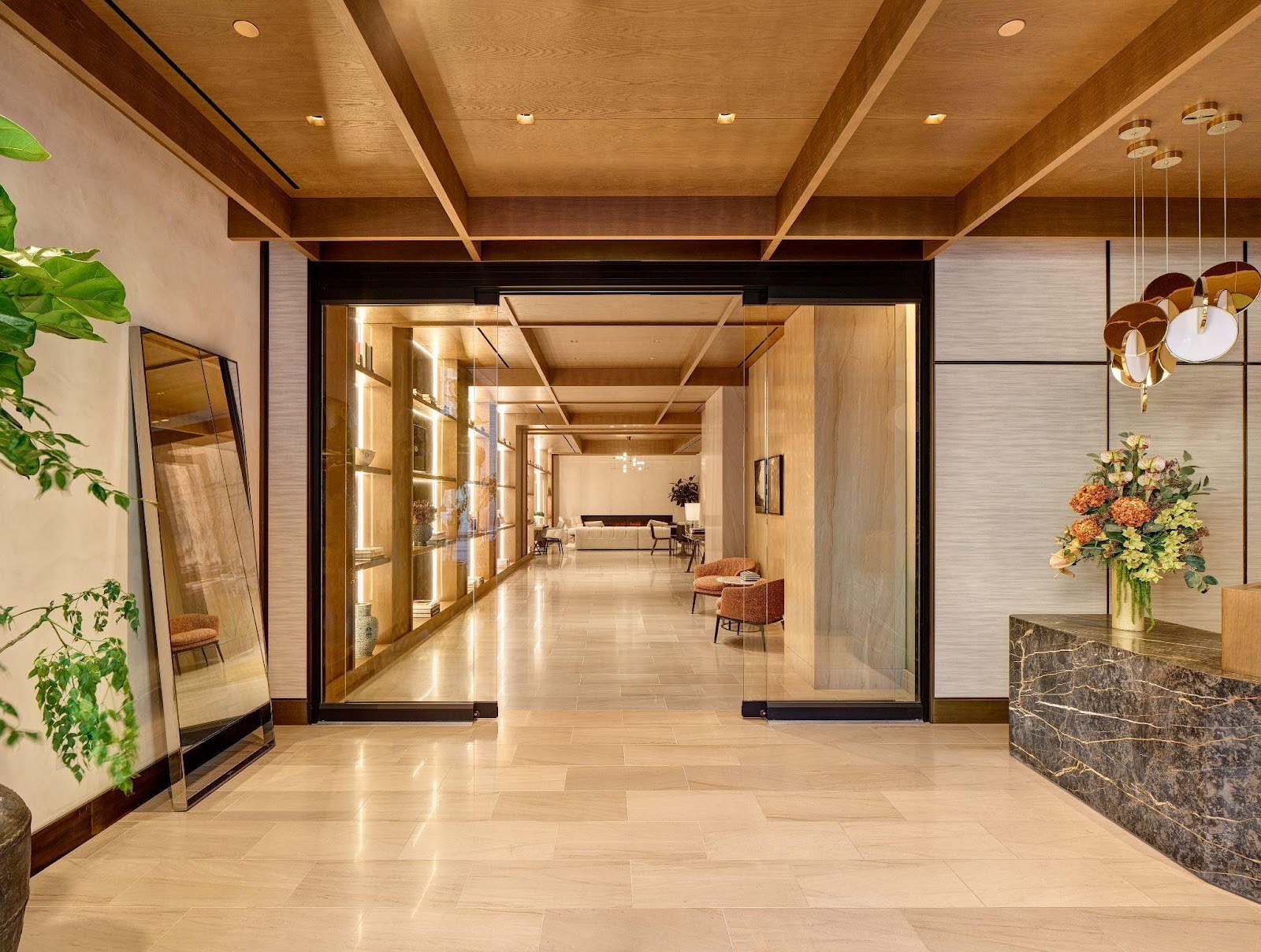
Illuminated displays and framed openings guide the length of this hallway, while seating moments add function without visual clutter.
AJ: How do you balance functionality and aesthetics in your designs?
XR: Good design always blends functionality and aesthetics, and the best design manages this balance so seamlessly that you take it for granted. No matter what kind of project we’re engaged in at CetraRuddy, we always work through the lens of the person who will be using the space, and we employ our design sensibility to find ways of making their experience better. An example that I like to reference is from several years ago, when we created hidden cabinets within a kitchen backsplash to serve as storage for cutlery and small appliances, while preserving an impressively minimalist appearance when the kitchen isn’t in use.
Sometimes the balance of functionality and aesthetics is even more subtle and is built into the layout of a room. At 200 East 20th Street, we designed the penthouse primary suites with views in mind. In organizing the floor plan and locating walls, we took into consideration where the bed would be placed to capture the most stunning skyline views, and at the same time, ensuring generous overall room proportions and clear paths through the space. Similarly, while the building’s windows are dramatic and oversized to ensure the best possible light and views, they do not extend down to the floor. Providing just a foot or so of wall space between the floor and the window sill affords some privacy, simplifies the placement of furniture near the windows, and generally improves the proportions of the room. Small touches like these can make a big difference in how a home feels, and how it works for daily life.
Photography courtesy B&B Italia.
Like what you see? Get it first with a subscription to aspire design and home magazine.