
DesignHER is a platform that celebrates the vision, craftsmanship, and innovation of women in design. By curating stories from leading female designers, artisans, and creatives, our latest series, in collaboration with Women Create, offers an intimate look at the diverse paths these women take to shape their industries and their own businesses. Through thoughtful interviews and features, the platform illuminates the artistry and technical mastery that define their work, while exploring the deeper narratives of creativity, resilience, and leadership. DesignHER honors the unique perspectives of women, fostering a community where design excellence and empowerment intersect to inspire the next generation of trailblazers.
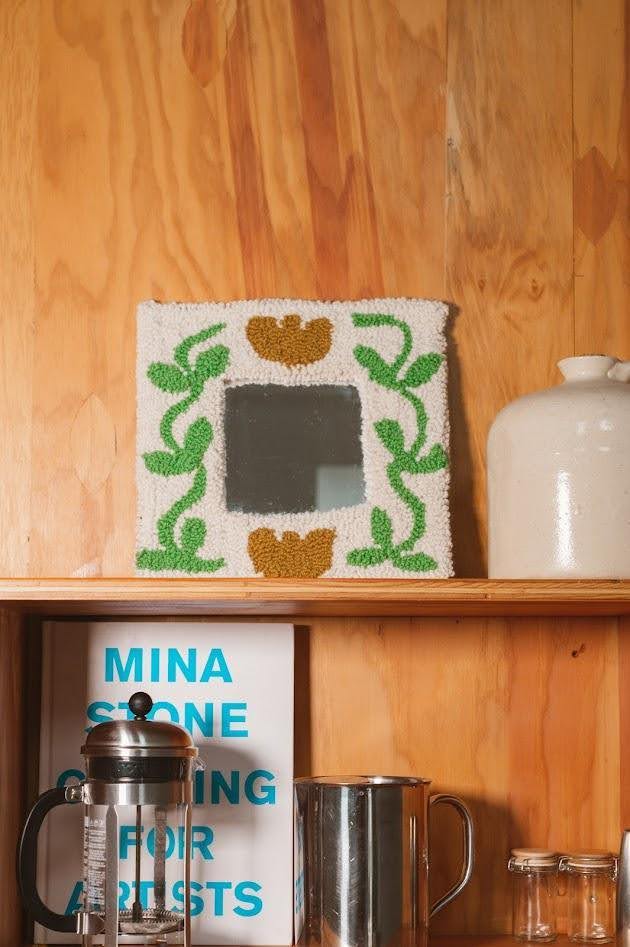
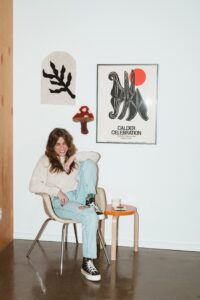 Cait Quinn is a fiber artist and the creator behind Magnolia Mercantile, a home goods brand made in her studio in Ann Arbor, Michigan. With a love for texture, color and craftsmanship, Cait creates pieces that bring a sense of warmth and intention to everyday life. What began in 2015 with a curiosity for weaving has grown into a collection of handmade goods — from woven and tufted pillows and wall art, to screen-printed goods, and even stickers. Her work blends artistry and utility, drawing inspiration from natural materials and vintage design. Cait manages this business alongside working as the events and social media manager for Leon Speakers. Learn more about Cait and her fiber work in today’s DesignHer.
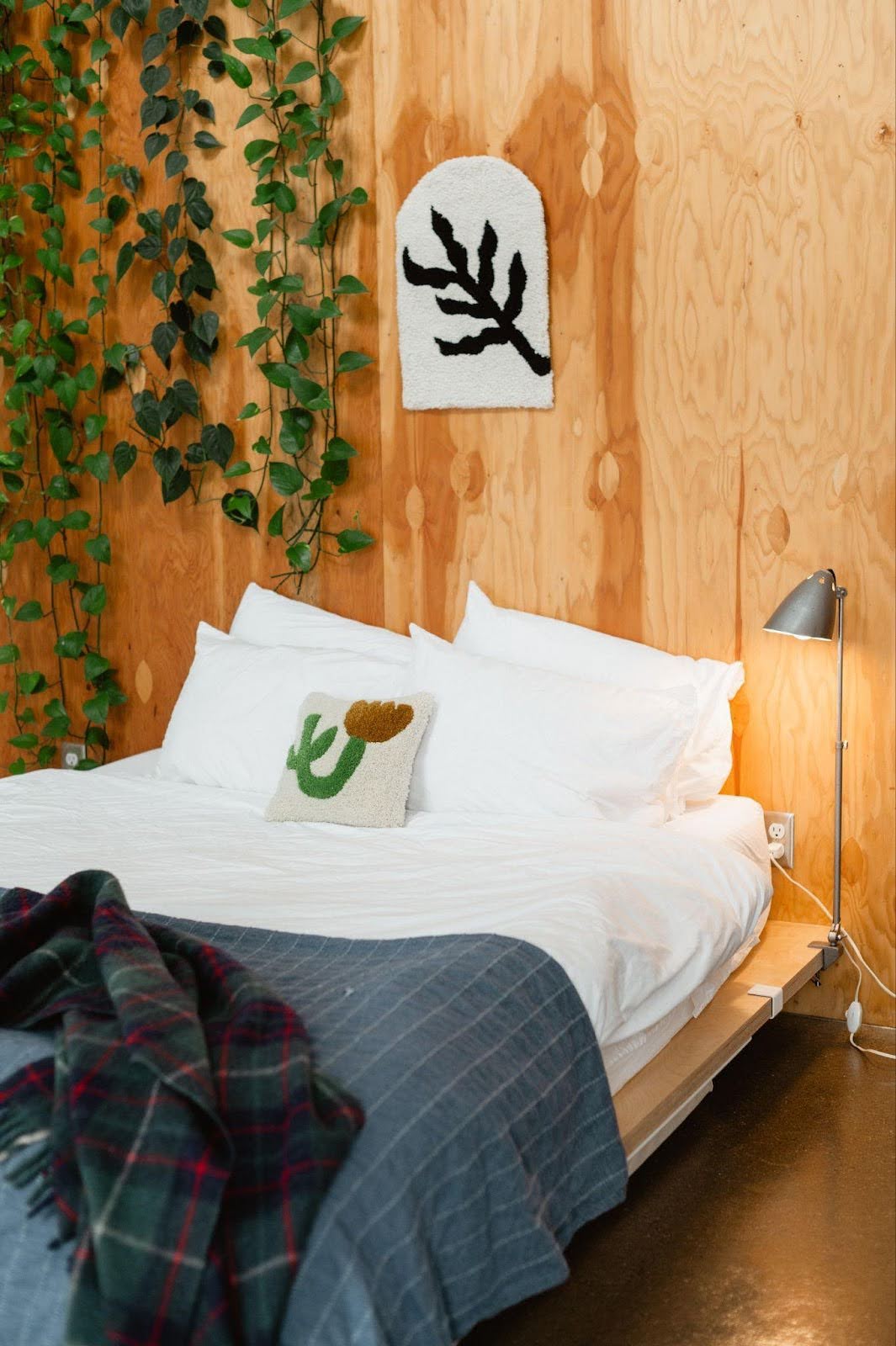
aspire design and home: Can you tell us a bit about your background and how you got started in your craft?
Cait Quinn: After graduating college in 2013, I found myself working at a local shop with free time on my hands for the first time in years. Around then, I discovered lap loom weavings on Instagram, and bought a (very rudimentary) lap loom and taught myself via YouTube University. What started as a hobby became an obsession, researching fiber arts, teaching myself macrame, weaving, rug tufting, and most recently, knitting. I never expected to sell my pieces, but to keep up with what I wanted to create, and use the natural fibers I was drawn to, I started Magnolia Mercantile in 2018, where my focus is on sustainable, long-term-use fiber home goods and art pieces.
adh: What role do you think community and collaboration play in your creative process?
CQ: Community and collaboration are absolutely essential. I did not attend art school, I didn’t really think of it as an option. Without the encouragement of my boss at my shop job, I would have never started selling my weavings. A friend of mine (Brittany Vickers, Kaivi Jewelry) started teaching herself how to silversmith around the same time I began making, and the two of us leaned on each other heavily to navigate building a business, how to take photos, and dream about what we’d someday love to make. Without that support and connection, I don’t think I would have continued to push and evolve.
adh: What’s your favorite part of the creative process, and why?
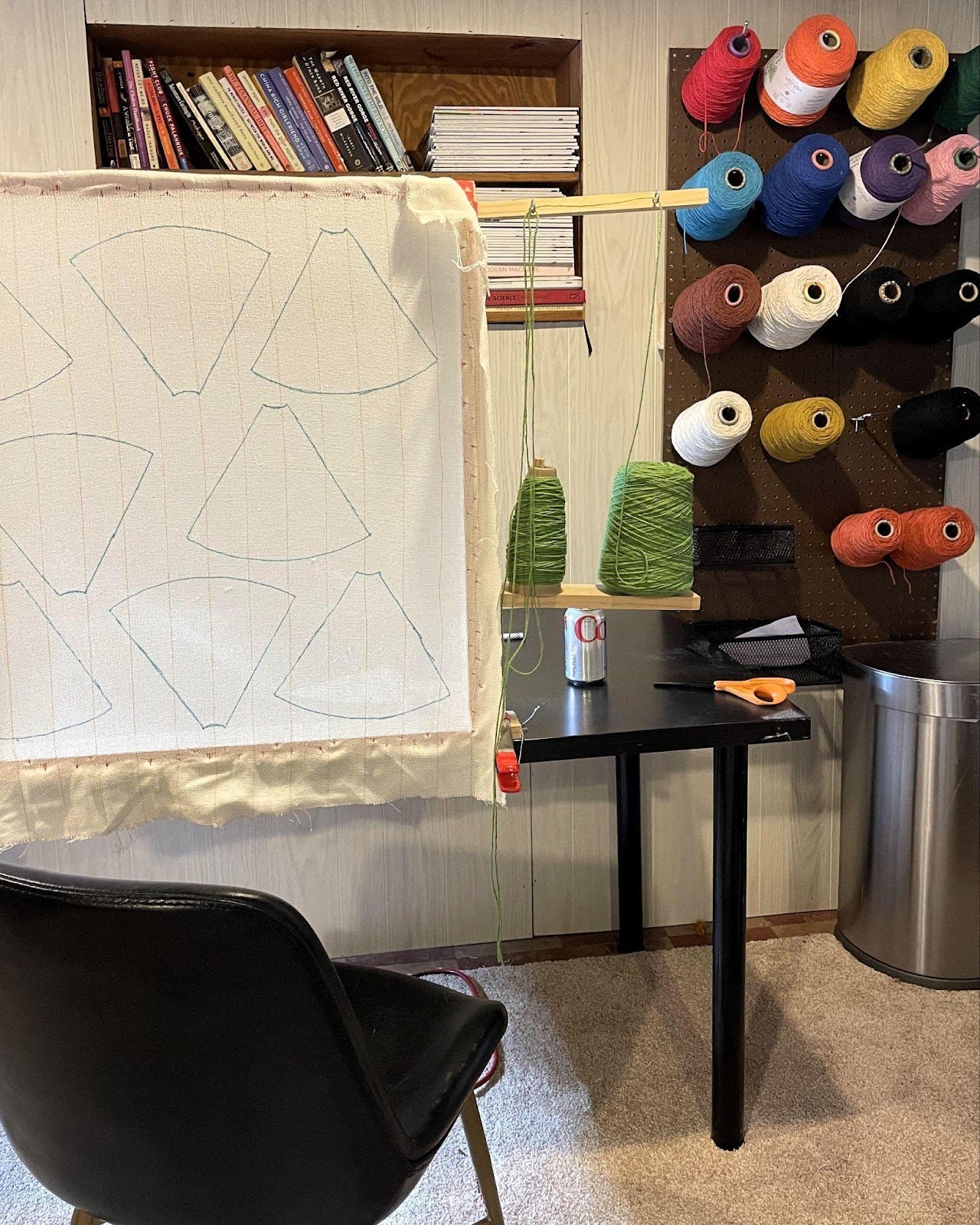
CQ: It feels like an obvious answer, but it’s the physical work. I was drawn to fiber because of the tactile nature. I love the feeling of twisting, knotting, carving a rug’s final shape. The ability to physically create the idea in my head, and see the progress throughout — it’s the best feeling.
adh: How do you stay motivated and inspired in your work?
CQ: Honestly, having a fulfilling full-time job at Leon, where I work with artists and musicians daily, and stretch other muscles, has freed up my mind to allow inspiration and creativity in my off hours. Anytime I feel stunted creatively, I usually turn to vintage design, whether that be books, walking through vintage stores or online — I’m always bound to find something that gets my wheels turning.
adh: Can you talk about a breakthrough moment in your career and how it impacted your trajectory as an artist?
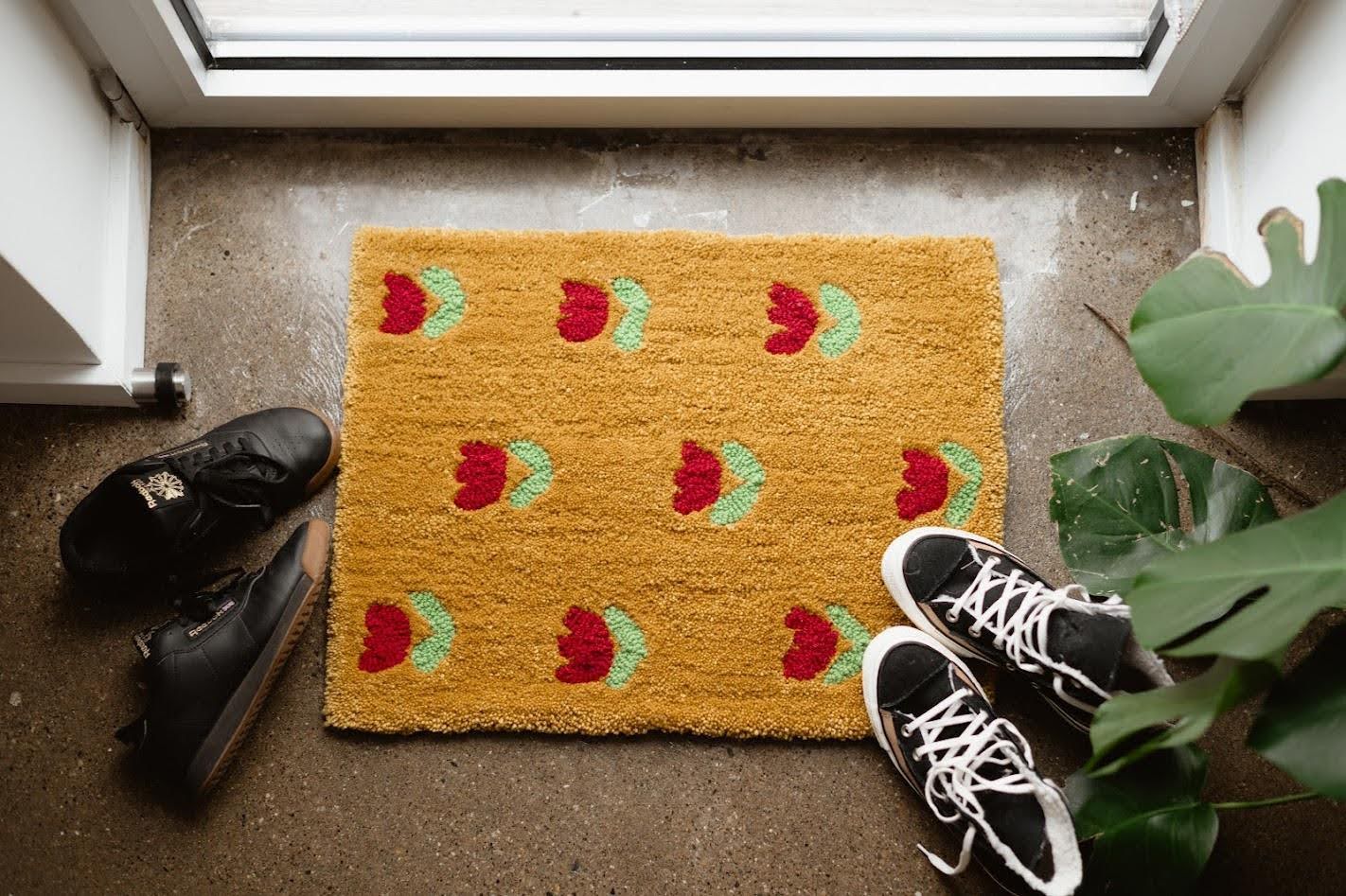
CQ: When I left my full-time event job in 2021, I realized that I had the ability to make anything I wanted. It sounds so simple, but for 5 or 6 years, I would pick one medium and feel like I needed to master or only produce using that method. Letting myself lean into new ways of expression, whether that be learning to screen print or designing digitally — the more I allow myself to play and experiment, the more people resonated with what I was putting out there. Allowing myself to let go of constraints and labels around what “type of artist” I was changed the game for me.
“Creativity is a spiritual practice. It is not something that can be perfected, finished and set aside.” – Julia Cameron, The Artist’s Way
adh: How do you think being a woman has influenced your approach to design and creativity?
CQ: I think it’s intrinsic to everything I create. From an early age, I watched my grandmother and mother create homes for their families using what they had, designing warm spaces, sewing and tailoring clothing, restoring used furniture — their day-to-day lives were filled with creative choices, and that just became how I also approached life.
Working with fiber is also a connection to the generations of women who came before me. Not only were crafts like knitting, weaving and embroidery an outlet for women to be creative in the constraints of society, but fiber arts are inherently political and tied to the feminist movement.
adh: What are some misconceptions about women in the artisanal craft industry that you’d like to address?
CQ: Oftentimes, fiber arts are downplayed in history — women used these crafts to shape culture, protest politically, and still do to this day. Ancient weaving was used to tell women’s stories, both through the aesthetics chosen, and through the images woven on these pieces. In the Revolutionary War, women used craft in forms of protest. I personally think the softness of the medium lends to this misconception, yarn is fluffy, warm, and I can see how that parallels into believing fiber art is a “women’s craft” and not an art in and of itself.
Like what you see? Get it first with a subscription to aspire design and home magazine.