DesignHER is a platform that celebrates the vision, craftsmanship, and innovation of women in design. By curating stories from leading female designers, artisans, and creatives, our latest series, in collaboration with Women Create, offers an intimate look at the diverse paths these women take to shape their industries and their own businesses. Through thoughtful interviews and features, the platform illuminates the artistry and technical mastery that define their work, while exploring the deeper narratives of creativity, resilience, and leadership. DesignHER honors the unique perspectives of women, fostering a community where design excellence and empowerment intersect to inspire the next generation of trailblazers.
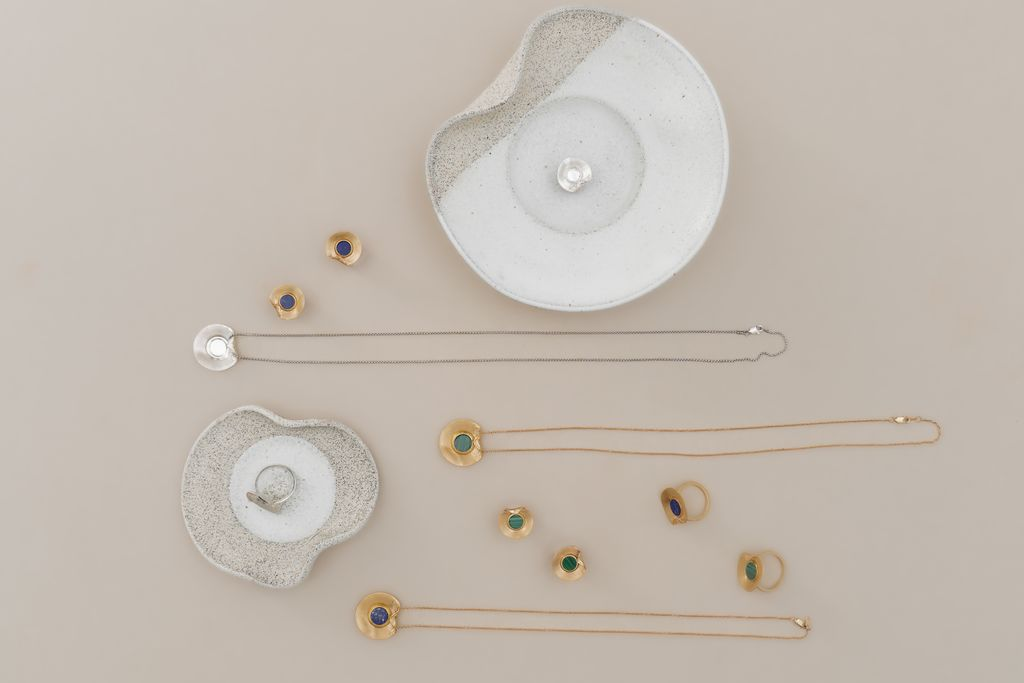
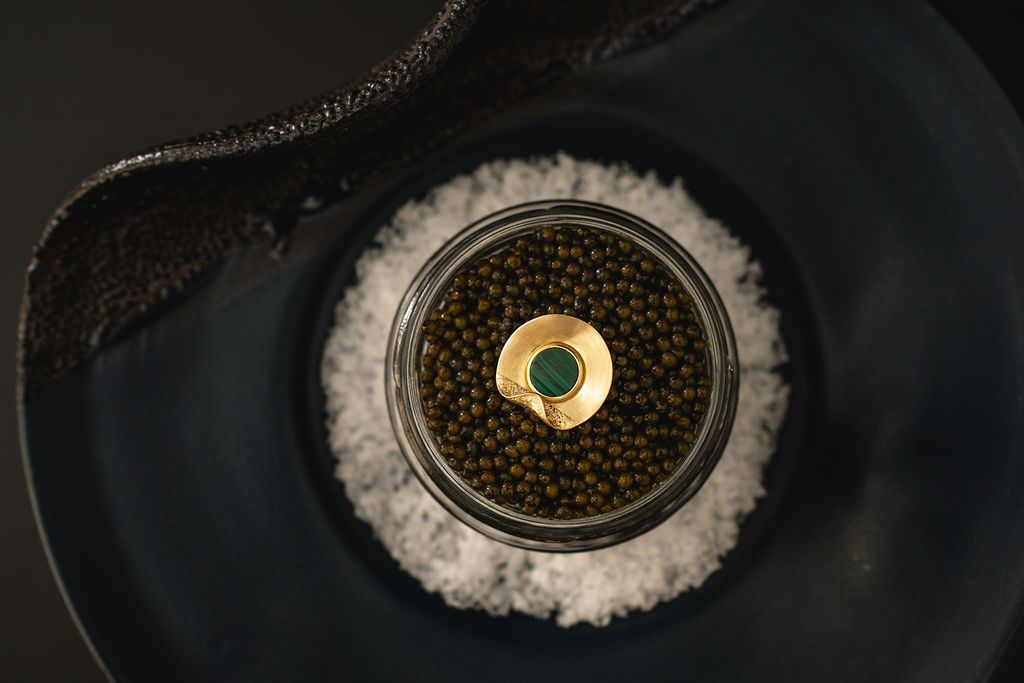
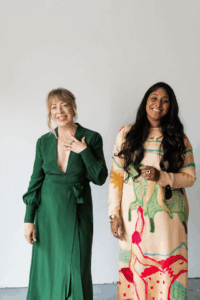 What began as a hand-thrown ceramic plate has grown into an elegant fusion of art and adornment. Oakland-based ceramicist Erin Hupp, known for her bespoke tableware crafted for Michelin-starred restaurants and design projects, first created her Fold plate as part of a two-piece caviar server. That form later evolved into a large-scale Portal Mirror installation at San Francisco’s 7×7 Gallery, where Subikksha Balaje, founder of Goldstories Jewelry, first encountered it. Raised in Southern India and now based in San Francisco, Subikksha reimagines heirlooms through a modern lens, bringing a balance of memory, precision and emotion to her fine jewelry practice. Captivated by Erin’s sculptural aesthetic, she envisioned the Fold form as a ring, sparking a collaboration that seamlessly blends ceramics and gold.
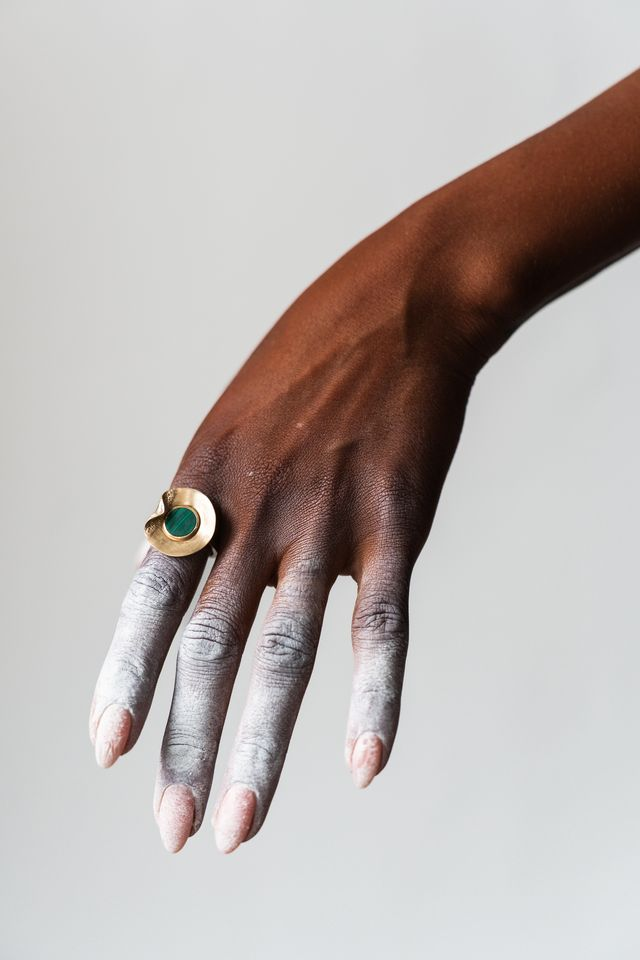
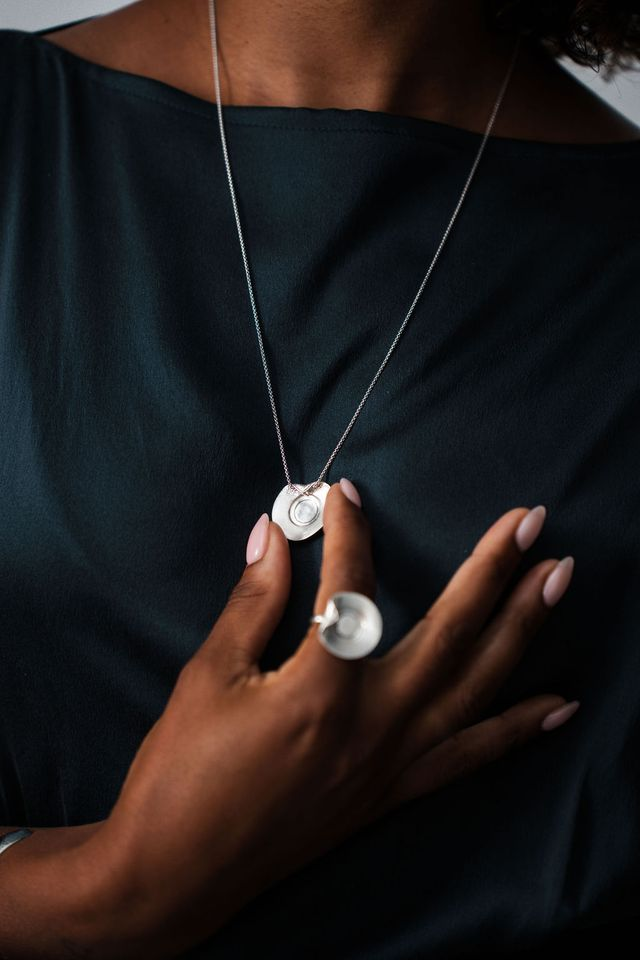
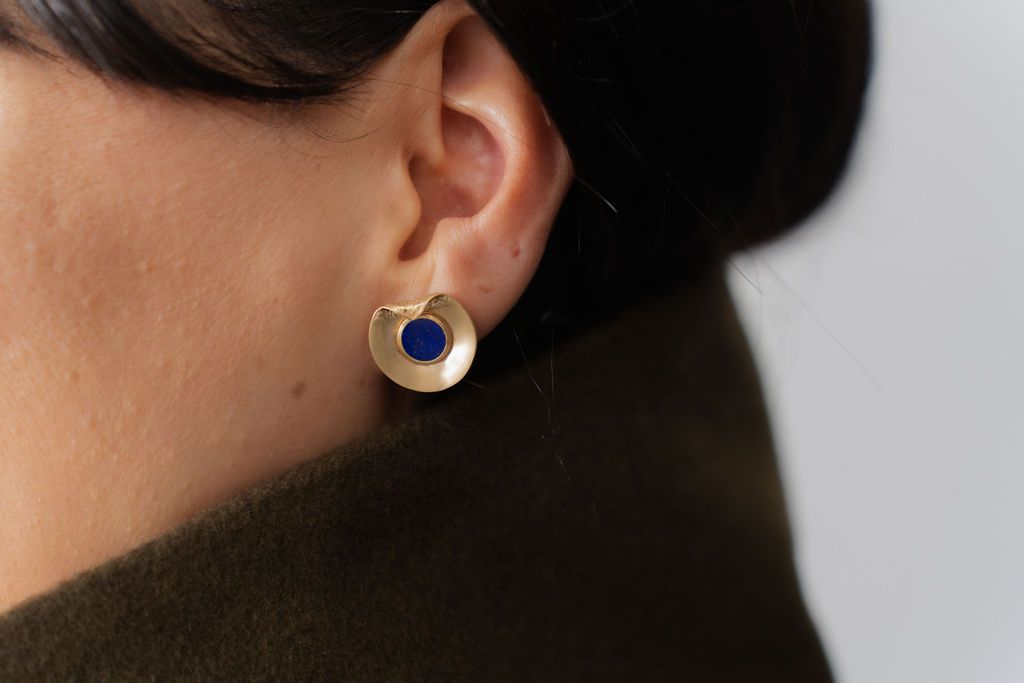
The Fold Collection is the result: necklaces, earrings and rings that honor the organic beauty of ceramics while embracing the elegance of fine jewelry. Handcrafted in California with an emphasis on timeless design, this partnership celebrates the enduring nature of form, proving that art can move effortlessly from table to wall to the body itself.
How do you think being a woman has influenced your approach to design and creativity?
Erin: Many of my forms are feminine in nature, from my vaginal-shaped feminine pourers made for restaurants to my Portal mirrors. As I design and create, I sit down on my potter’s wheel and create from the heart, and my heart is a feminine one! My fluid and organic shapes exude femininity because that is the story I have to tell. When I first learned production pottery in the early 2000s, it was a male-dominated field. That has changed over the last two decades, and today, the field is fairly gender equitable. The goal of production pottery is for each piece to be exactly the same, almost as if a machine made it. So, in opposition to my early instructions, I make art that is fluid, feminine, and organic.
Subi: I design through dualities: stillness in the midst of chaos, strength and softness, boldness and intimacy. I don’t think I’d be as attuned to those contrasts if I weren’t navigating life as a woman. That tension, that layered perspective, is what gives each piece its depth. The Boob Pendant is a good example: strength in meaning, grace in its subtle design. It’s a tribute to resilience in all its forms while still being wearable, which is something I think about often. Similar to what Erin mentioned, even jewelry manufacturing and design have long been male-dominated. That’s slowly beginning to shift, but given that it’s mostly women who wear the pieces, bringing femininity and wearability to the forefront feels not only natural, but necessary.
Can you talk about a female-focused initiative or collaboration that you’ve been a part of?
Subi and Erin: Our collaboration! One of the things that drew us together was the opportunity to work with another female-owned small creative business in San Francisco. Both of us have also embraced art as a second career – Erin’s first career was as a land use and then child welfare attorney. Subi spent over 10 years working in data analytics. We came to our practices through nonlinear paths, and that shared experience created a strong foundation for collaboration. For both of us, returning to creative work felt like coming home.
It’s rare and deeply rewarding to collaborate with another woman who understands not just the creative side, but also the emotional and logistical layers of building something from the ground up.
Can you tell us a bit about your background and how you got started in your craft?
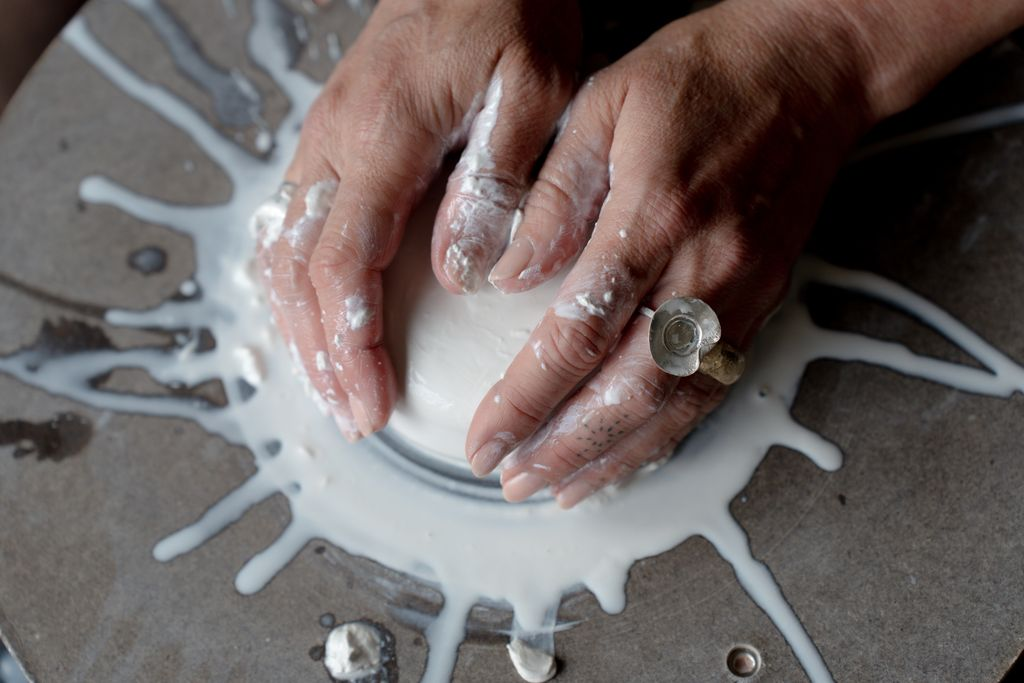
Erin: I’ve been working with clay for over 25 years. I started when I was 19 years old, but I really fell in love with ceramics in my early twenties when I worked at a pottery production studio in Madison, Wisconsin. Those years were transformative. Mastering the wheel takes a lot of time, patience, and practice. Ceramics is a beautiful teacher. I met a lovely group of local ceramicists and learned a lot about letting go and having patience with myself. It was the beginning of a lifetime passion. After graduation, I pursued a mainstream legal career, and clay became an important hobby. My time on the potter’s wheel became my meditation, my solace, my constant. As I practiced law, I often wondered about that other life, the other path in which I pursued an MFA and focused solely on my art. So I decided to find out, and five years ago, I took the thrilling yet terrifying leap to a full-time career in art. Returning to my art practice full time in a more meaningful way was a rebirth, a coming back to my true self. I felt whole again. I hope telling my story will inspire others to take this same leap, whether it be writing a book, painting, or pursuing another creative endeavor.
Subi: I danced from a very young age and was always creating — choreographing performances, putting together little plays, anything that involved storytelling and expression. But I ended up in tech. I spent over a decade working in data analytics across different teams.
Jewelry came into my life when that creative pull came back. It had been dormant for a while, sometimes showing up in hobbies or side projects, but eventually it wanted center stage. I started sketching, experimenting, and slowly, a collection began to take shape. What began as a quiet outlet became a way to express stories, transitions, and beauty that holds meaning.
Looking back, it all connects. You need creativity to work with data, and you absolutely need to be data-driven to run a business. But jewelry felt like coming home to a part of myself I had almost forgotten. So I took the leap, and I’ve been creating with Goldstories full time for the past three years.
How do you ensure sustainability and ethical practices in your craft?
Subi: At Goldstories, sustainability and ethical sourcing are central to how we create. We work exclusively with solid 14k gold, which is not only long-lasting but also recyclable and meant to be worn for a lifetime.
We produce in small batches to reduce waste and ensure quality, and every piece is made locally here in San Francisco. That closeness to our process, from design to final polish, allows us to stay intentional about how we create and who we create with.
This collaboration is a limited run, which ties directly into our small-batch approach. We wanted to make something special, thoughtful, and lasting, not mass-produced. For me, sustainability is about more than materials. It’s about creating pieces with care, intention, and meaning.
It’s not only about honoring those who came before us through the craft of hand, but also about honoring those who come after by leaving the planet as unharmed as possible.
What role does storytelling play in your art, and how do you weave your personal narrative into your pieces?
Erin: My art practice started with fine dining, which is artful storytelling. Fine dining uses storytelling to create a holistic and memorable experience beyond just the food. It involves weaving the restaurant’s values and narratives into the menu, decor, service and even the overall ambiance to connect with guests on an emotional level. I collaborate with fine dining chefs to create unique ceramic pieces that showcase our combined culinary and artistic vision. The chef and I consider every detail of my custom-made plates, from shape and size to color. Our collaboration is complete when the food is plated and presented to the guest. I see the restaurant as a live gallery in which the guests can interact with my art — touch, feel and even smell the final art piece. Our art evolves every season as the chef changes their menu. It’s exhilarating to see the iterations of our collaboration over time, and the new menu breathes life into our collaboration.
Subi: Storytelling is how I make sense of the world. It’s not just a part of my work, it’s the starting point. Every piece I design begins with a story, a memory, or a feeling I want to translate into form. My personal narrative is woven into the work, sometimes in quiet ways, sometimes boldly. The Boob Pendant is one of the most personal pieces I’ve created. I encountered complications during both of my childbirths, and one of them brought me to the brink of death. Creating this piece was a way to hold onto those memories, the strength it took to get through them, and the strength we carry as mothers. My hope is that anyone who wears the Boob Pendant will make it their own. That it becomes part of their story, whether it’s about motherhood, healing, survival, or self-love. But not all stories are heavy. Some are joyful, playful, and rooted in nostalgia. The Mini Jhumka Hoops are a subtle nod to my South Indian roots, inspired by the jewelry I saw growing up. That connection to heritage and memory, told through form, shape, and material, is just as important in my design practice.
How do you see technology influencing the future of artisanal crafts?
Erin: Technology has and will continue to influence artisanal ceramics. 3D ceramics printing has recently come onto the ceramics scene, and I welcome it. These technological advances in ceramics can co-exist with the handmade, by-commission unique ceramics that embody my art practice. The 3D printer achieves forms difficult to achieve on the potter’s wheel, just as slip-casting or Ram-press technology did in the 1970s to ceramics. In the 1970s, those technological innovations also made ceramics affordable to those who could not previously own china. Heath Ceramics in San Francisco was at the heart of this revolution. And just like the last technological advancement in ceramics, 3D printed ceramics can easily co-exist with handmade ceramics. I believe these advances increase the value and importance of purely artisanal handmade ceramics like the pieces I make. Artists who create pieces by hand can share the behind-the-scenes process and storytelling, enhancing the enjoyment and connection a person has with the art.
Subi: As someone who spent over a decade in tech, I see technology as a powerful tool for supporting — not replacing — artisanal craft. At Goldstories, we sometimes use CAD in the early stages of design, especially when playing with structure or refining small functional details. It helps speed up experimentation while still leaving room for hand-finishing and intuition in the final piece. AI also has the potential to transform how creative businesses run, from streamlining operations and inventory to offering more personalized customer experiences. I’m especially curious about virtual try-on tools and how they might help people form an emotional connection with a piece before they ever hold it. But no technology can replace the emotion behind a creation. The story, the intention, the hands that made it, that’s what gives craft its soul. The future, for me, is about using tech to support those values, not overshadow them.
How do you see your role in promoting diversity and inclusion within the artisanal craft community?
Subi: It’s true that Indians have a strong presence in the global jewelry industry, especially in manufacturing and wholesale, often through second-generation family businesses. But I’ve found that within the world of small, independent fine jewelry brands in the U.S., that representation looks very different. As an immigrant, a woman, a mother and someone who came into this industry through a second career, I bring a perspective that isn’t always visible in the small business or design-led jewelry space. Part of my role is simply showing up and building a brand that reflects who I am and what I care about. At Goldstories, I try to be intentional about who we collaborate with, how we tell stories, and the kinds of experiences and identities we celebrate. I want our customers to feel like there’s space for them here, even if they haven’t always seen themselves reflected in this world. Inclusion, to me, isn’t a campaign — it’s a way of creating and building with care.
How do you balance staying true to traditional techniques while also innovating?
Erin: I’m fortunate to have developed my craft at a ceramic production studio, through trial and error, and with the objective of making perfect carbon copies of a certain form. In order to create altered, organic pieces, you must first learn how to make the form perfectly symmetrical. I spent a lot of hours learning how to make a form just so, and then for my personal art practice, how to alter a piece to make it intentionally imperfect – a mix of traditional techniques with innovation and alteration.
Subi: I didn’t come into this industry through formal training, so my learning has been driven by curiosity, instinct, and a deep respect for the craft. I’ve had to seek out traditional techniques and learn them from those who carry that knowledge, while also giving myself the freedom to experiment and adapt. I learned to hand-make jewelry because I wanted to understand the process deeply, not just from a design perspective, but so I could better communicate with my manufacturers and appreciate the nuance of old-school methods. I often melt down old pieces and reshape them. There’s something grounding about starting with raw material and giving it new life. I like exploring proportion, texture, and symbolism in ways that may not be traditional, but are always intentional. It’s a balance that continues to evolve, honoring the craft while imagining where it can go next.
Like what you see? Get it first with a subscription to aspire design and home magazine.