DesignHER is a platform that celebrates the vision, craftsmanship, and innovation of women in design. By curating stories from leading female designers, artisans, and creatives, our latest series, in collaboration with Women Create, offers an intimate look at the diverse paths these women take to shape their industries and their own businesses. Through thoughtful interviews and features, the platform illuminates the artistry and technical mastery that define their work, while exploring the deeper narratives of creativity, resilience, and leadership. DesignHER honors the unique perspectives of women, fostering a community where design excellence and empowerment intersect to inspire the next generation of trailblazers.
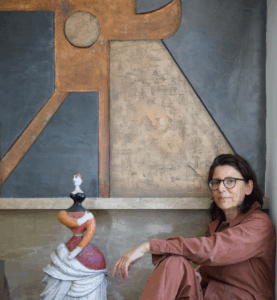 Katrien van der Schueren is a Los Angeles-based sculptural artist celebrated for her ability to transform raw, rugged materials — wood, metal, plaster and bio-resin — into poetic, feminine forms. Her multidisciplinary work spans sculpture, lighting and large-scale murals, merging geometric precision with tactile softness to create site-specific installations that are both monumental and deeply expressive. Guided by a deep reverence for the inherent beauty of raw materials, van der Schueren explores the tension between structure and vulnerability. Her practice is defined by pronounced geometric shapes, abstract expressionist lines, and richly textured surfaces. Whether cast in clay, sculpted in plaster, or forged in metal, each piece invites touch, contemplation, and a deep sensory connection.
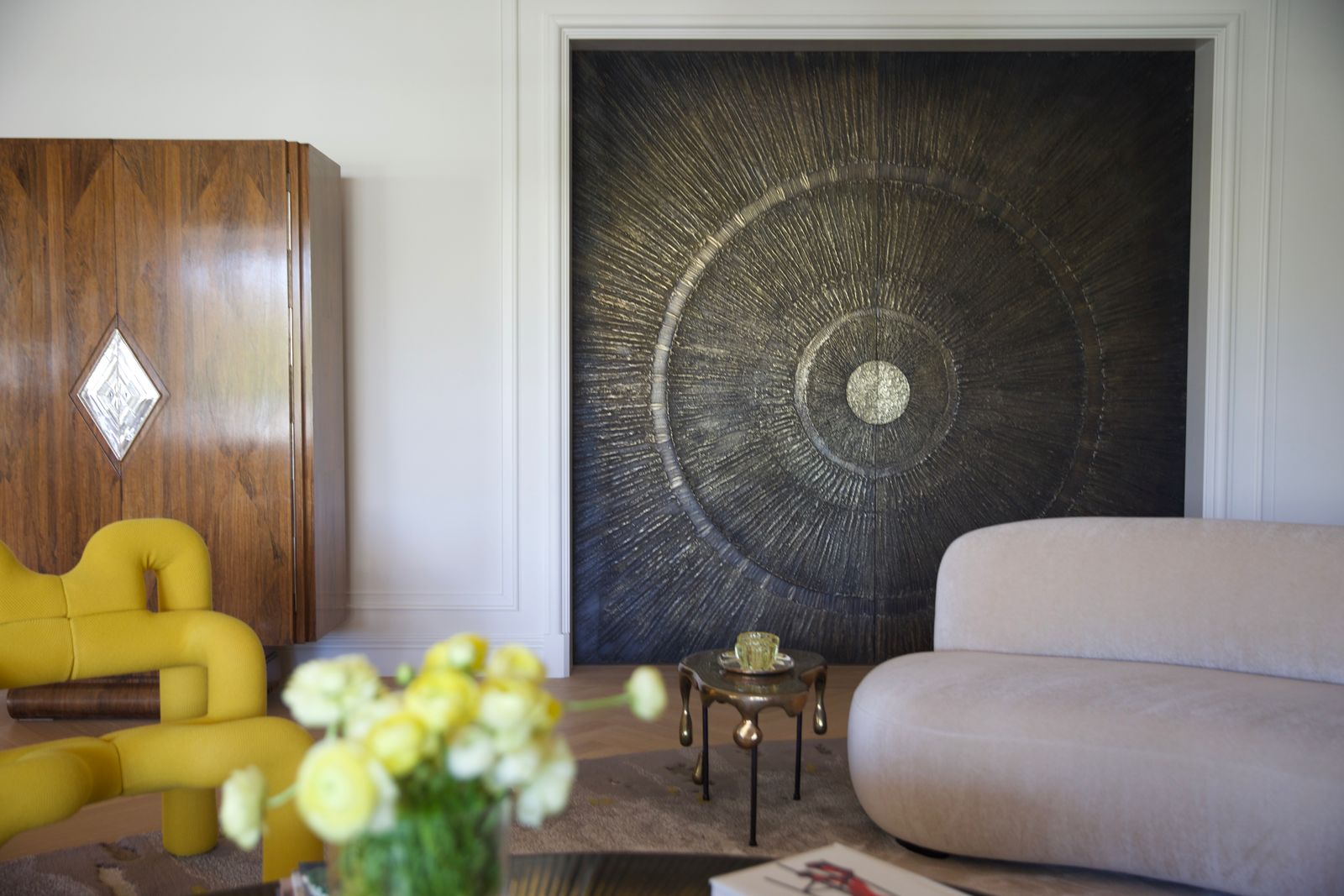
With her architectural doors, Katrien fuses hand-applied finishes and monumental scale, showing how metal can radiate warmth and presence.
aspire design and home: How do you think being a woman has influenced your approach to design and creativity?
Katrien van der Schueren: As a woman, I feel deeply connected to my environment — not just the physical space, but the emotional and energetic atmosphere that surrounds me. Women are intuitive and relational by nature; we sense subtleties, we notice what’s unspoken, the layers beneath the surface. All of that inevitably weaves itself into my work. I find myself attuned to nuance, to the tension between softness and strength, vulnerability and power — and that sensitivity informs the way I create.
There’s also something uniquely meaningful in working with traditionally masculine materials and forms to express a feminine language — shaping something raw and rigid into something graceful, fluid and alive. My creativity is one of the few areas in life that is wholly mine — apart from the many roles women so often carry: mother, partner, caregiver, nurturer. In my studio, the work becomes an act of self-expression rather than service — and that freedom fuels my voice as an artist.
I’ve also long been passionate about social issues, and I can’t ignore the fact that the art world has historically underrepresented women. Realizing how male-dominated this space remains gave me even greater resolve to create, to take up space, to be seen. My work is personal, yes — but it’s also a quiet rebellion, a way to shift the narrative and make room for more women’s voices, emotions, and experiences in the visual conversation.
adh: Have you faced any particular challenges in your industry because you are a woman? How have you overcome them?
KvdS: I create on a large scale (sometimes 40’ high and 20’ long) using heavy, industrial materials like concrete, stone and wood — mediums that demand physical strength, stamina and presence, qualities that have traditionally been associated with male sculptors. To meet this challenge, I’ve literally had to train my body to handle the demanding process of carving and shaping these materials on site.
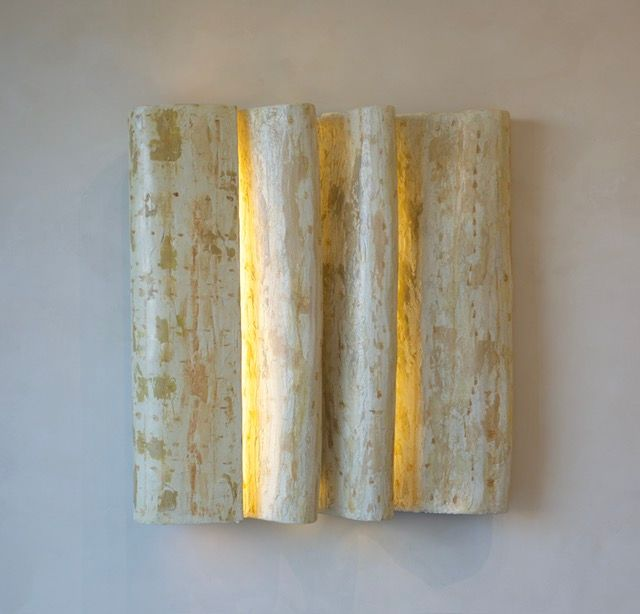
The Ombre Wave wall sculpture blurs the line between art and architecture, using soft shadow play to turn walls into living surfaces.
adh: In what ways do you feel your work contributes to the representation of women in the art and design world?
KvdS: I’d like to believe that my work is helping to expand the boundaries of what people expect from women artists, especially in the world of sculpture. People are often surprised when they learn that these substantial, architectural pieces were made by a woman — but if you look closely, there’s a refinement, sensitivity and attention to detail that I believe reveals a distinctly feminine perspective.
What excites me most is that I feel I’m creating a new form of sculptural expression — one that holds both masculine and feminine energy in balance. There’s a brutalist quality to the materials, but the forms and concepts introduce a heightened emotional perspective — an intimacy and vulnerability that’s rarely explored in this medium. Even though the materials are raw and industrial, the themes behind my collections are deeply personal and poetic. My work holds both strength and softness — and I think that duality, that tension, is what makes it meaningful, distinct, and reflective of a new direction in sculpture.
adh: How do you incorporate your experiences as a woman into your storytelling through design?
KvdS: Being a mother is a primary source of inspiration that I regularly incorporate into my designs. It provides me with a unique perspective that carries through my work. One of my first collections was called “The Cycle of Life”, and it portrayed the powerful bond between mother and child that stays with you forever.
All the pieces I create relate to what I am going through at that moment as a woman. One example is an in-situ mural I created while a dear friend — the very person who had encouraged me to pursue art in the first place — was dying. Her presence, her spirit, is in that piece. I believe whatever you are going through personally as an artist — joy, grief, transformation — is always reflected in the work, even if it’s only seen by the artist.
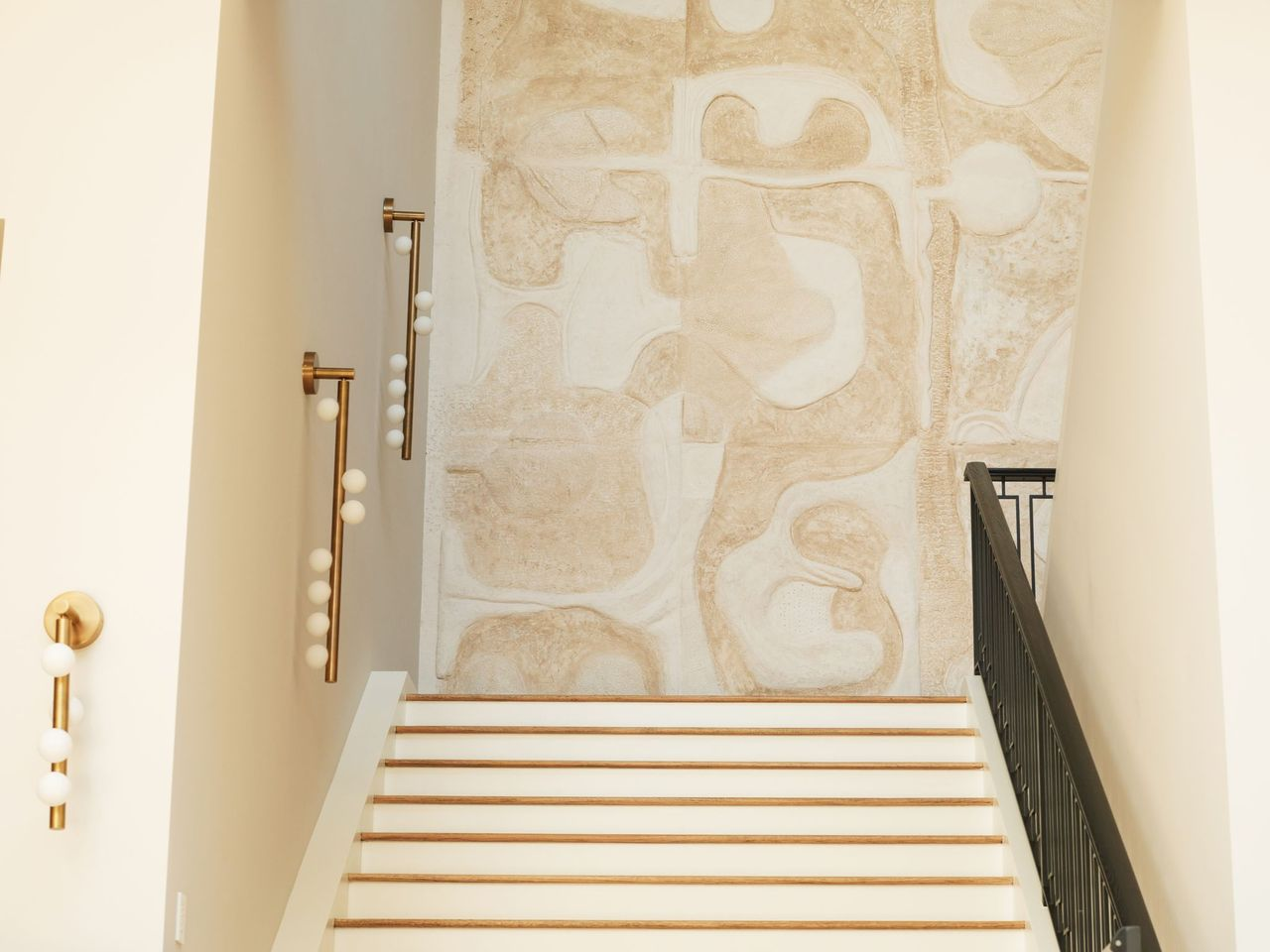
A quiet crescendo of earth tones and carved plaster, Katrien’s stairwell mural transforms this transition space into a tactile experience.
adh: What inspired you to pursue high-end artisanal crafts specifically?
KvdS: I have always been an artist, but spent many years doing my art for other people – other designers, architects, brands. Then, after a very emotional discovery about my past, my parents and my whole identity shook me to the core, I could finally be me. This experience was life-altering in every sense of the word. I no longer wanted or could just create for other people; I needed to make art for me. In my own name. To become visible. As thus, an artist was born.
adh: What role does experimentation play in your creative process?
KvdS: Experimentation plays a major role in my creative process. I strive to push boundaries, and so material experimentation is the essential catalyst that drives my art. I have spent the bulk of my career honing my knowledge of materials, understanding how to wield them to my vision, and now that expertise has proven immensely valuable in my artistic pursuits.
In my site-specific sculptural work, I will have a vision for what I want the piece to look like, and then I need to experiment with materials in order to come up with a solution to achieve the end result.
“A woman is the full circle. Within her is the power to create, nurture, and transform.” – Diane Mariechild
adh: How do you manage work-life balance, especially in an industry that demands both creativity and business acumen?
KvdS: I find that work-life balance is not trying to balance both at the same time. I tend to work in phases. If I am on a deadline for a collection or project that is time sensitive, I know I will be fully immersed in the pieces. Therefore, for me, it’s important to ensure I take time before and after where I can re-balance around my personal life and self-care, as I know it’s almost impossible to do this whilst living in the pieces.
I have learned to set limits around studio visits when I am engaged in a major project. There are times that I just exclude the ”networking/ meeting people part” of the job, if necessary.
I will also, on purpose, wear clothes that I can not stain to the studio on days I tell myself I have to work on paperwork or emails, etc. You really need to love what you do, and truthfully, your craft, art, is also your therapy and your addiction.
Like what you see? Get it first with a subscription to aspire design and home magazine.