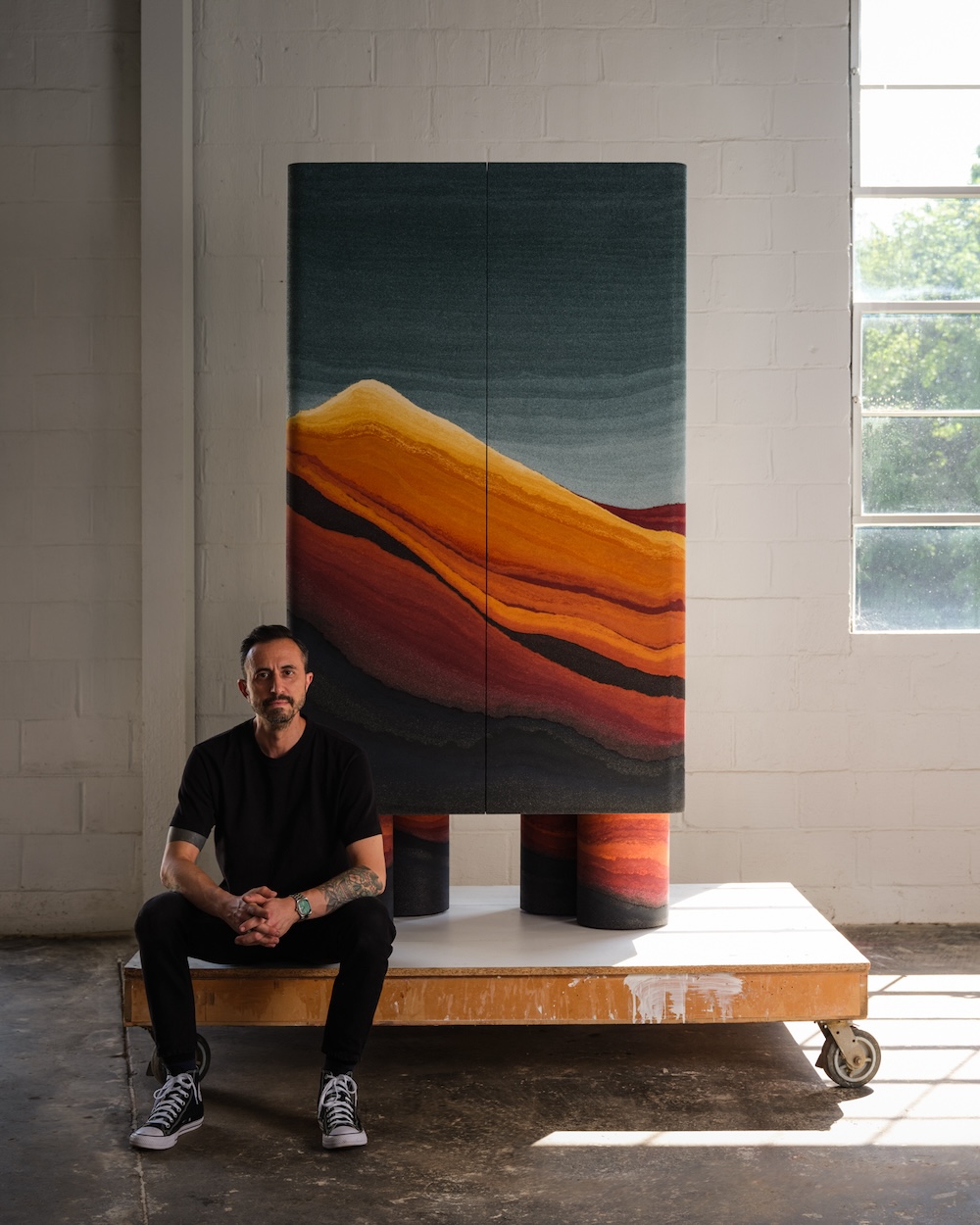
Opening today, Cristina Grajales Gallery presents Territories, a new solo exhibition by artist Fernando Mastrangelo. The show marks a significant evolution in Mastrangelo’s practice, one that fuses his signature material language with a pointed engagement with geopolitics, land, and belonging.
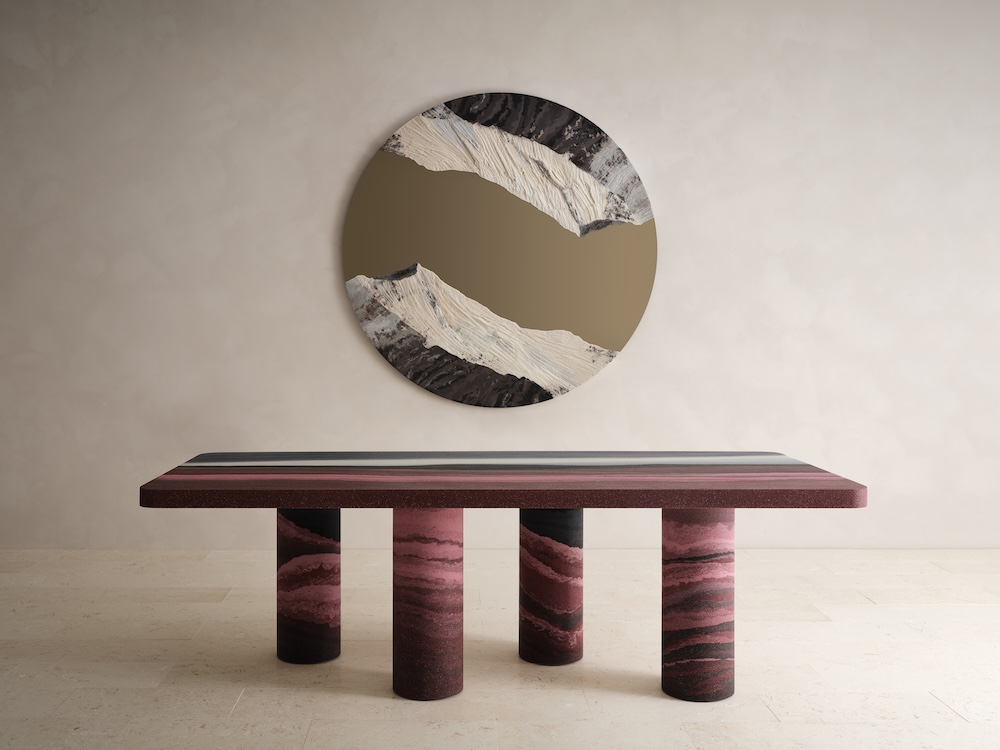
Long known for landscape-driven work exploring climate and environmental fragility, Mastrangelo turns his attention in Territories to a more urgent and immediate subject: the regions shaped by contested histories and shifting borders. Mastrangelo began an investigation into disputed land when the U.S. announced plans to acquire Greenland, in part motivated by the opportunity to control the abundant natural reserves of rare earth minerals. Drawing direct visual reference from territories around the world with abundant natural beauty, Mastrangelo constructs a series of landscape works that are at once serene and charged – quietly majestic scenes imbued with the weight of ongoing global conflict.
“How can something as familiar and serene as a landscape carry the gravity of our current moment?” Mastrangelo asks. That question became the conceptual engine of the series — an attempt to embed an everyday object, like a table, with a sense of urgency and meaning it doesn’t typically hold.
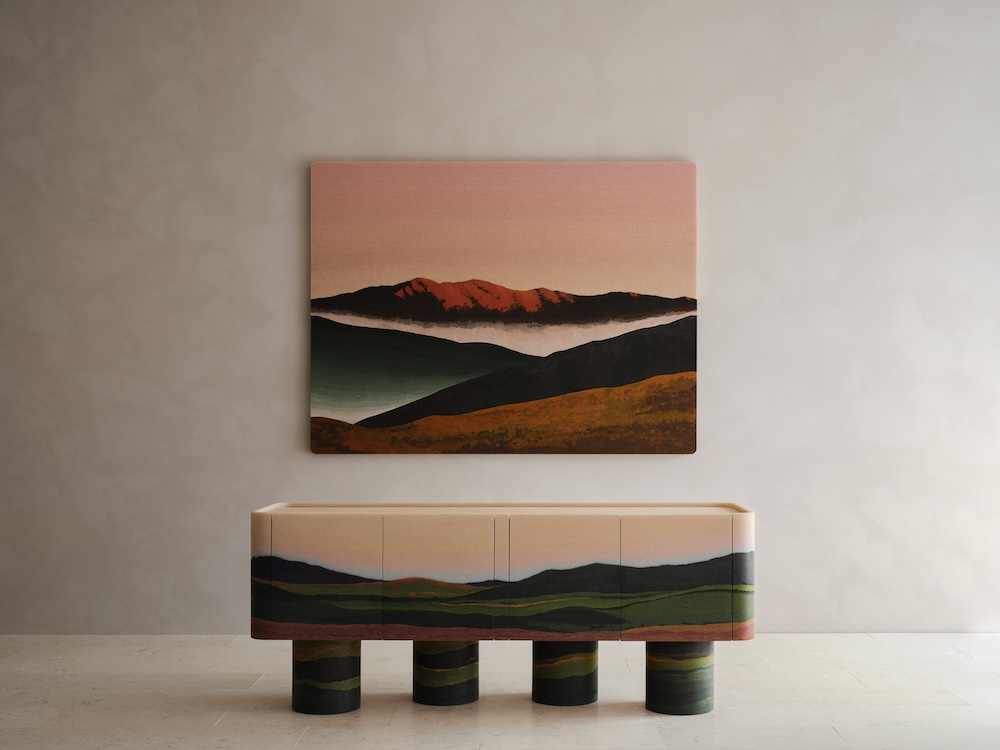
While the work references very real and ongoing conflicts, it intentionally resists pointing directly at any one place. Mastrangelo focused on the shared topography — mountainous, vast, and imposing — that unites these disparate regions. By working from landscapes of similar form, the artist creates what he describes as a visual equalizer: one terrain blurs into the next, and the viewer is left untethered from any one identifiable location, moving instead through a collective landscape shaped by dispute, memory, and projection. The land, absent of conflict, is often untouched, expansive, and quietly beautiful. The tension between indifference and imposition, serenity and conflict, offers a space for reflection on the permanence of the natural world and the instability of the lines we draw across it.
“The selection of these territories is not about documenting them in a literal or journalistic way,” Mastrangelo explains. “It’s about engaging with the idea of territory itself; how land becomes politicized, how borders are imagined and reimagined, and how identity is often imposed onto geography.”
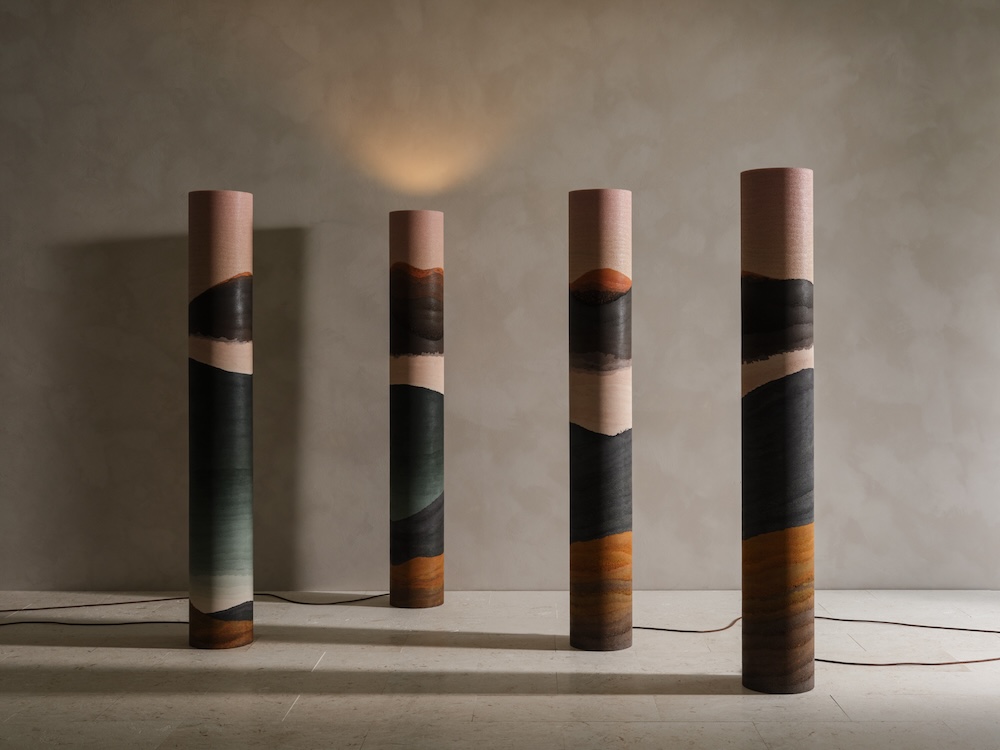
Central to Territories is Mastrangelo’s material palette: sand, crushed glass, and rare earth oxides used as pigment. These are not simply formal choices — each material carries its own history of extraction, industry, and ownership. Rare earth oxides in particular sit at the center of contemporary geopolitical and environmental tension, essential to modern technology yet frequently sourced from disputed or ecologically fragile land. In Mastrangelo’s hands, these materials allow the work to double as subject and substance: the land is not only represented in the work, but physically present within it.
Territories is on view at Cristina Grajales Gallery in New York City now through February 12, 2027.
Photography by Joe Kramm.
Like what you see? Get it first with a subscription to aspire design and home magazine.