


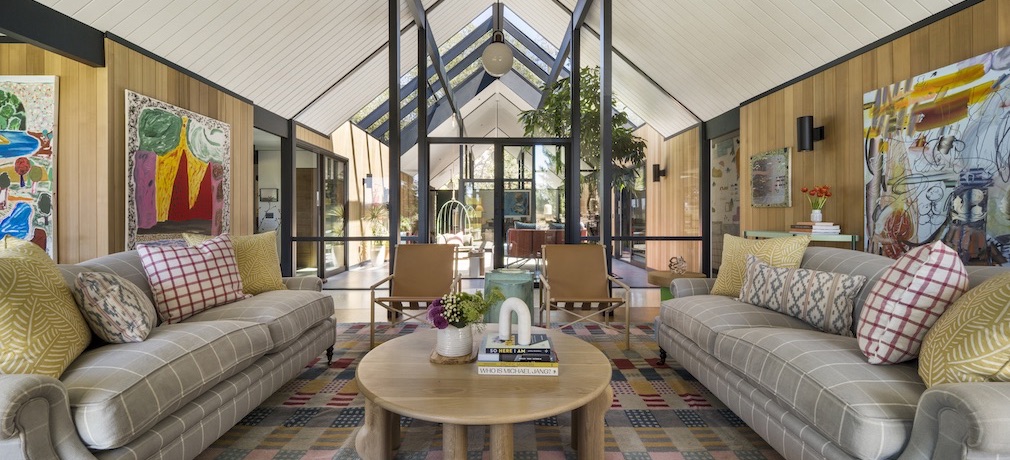
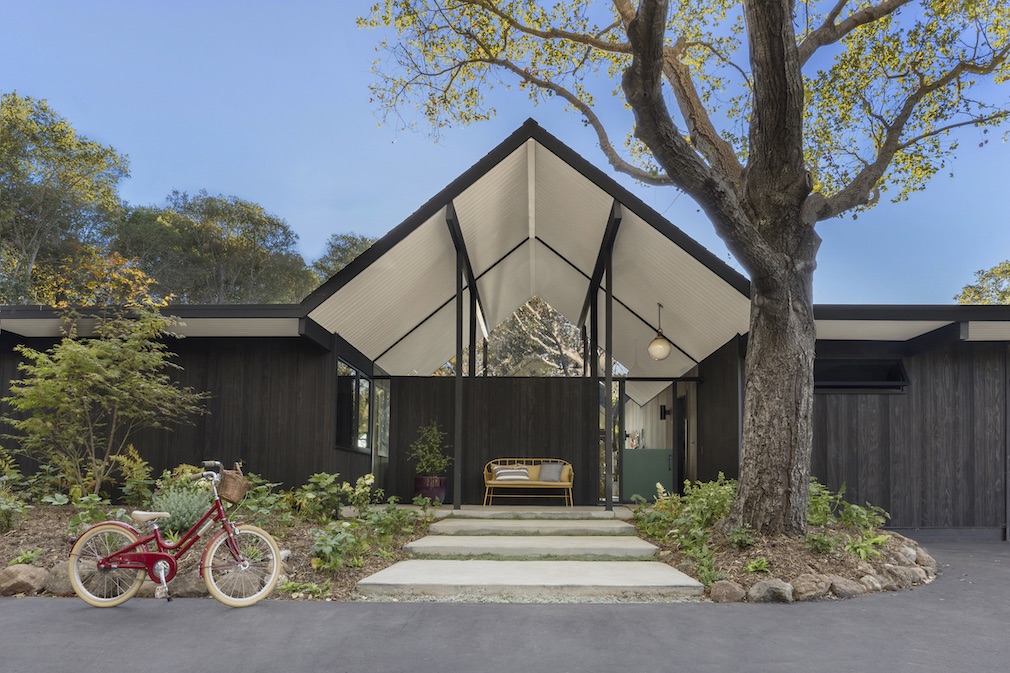

The hills of Northern California are brimming with midcentury-style homes from acclaimed architects, but one name has stood out among the rest in terms of sheer number of projects: Eichler.
An admirer of architect Frank Lloyd Wright’s work, and widely regarded as a social visionary, real estate developer Joseph Eichler took the design principles and values of modern architecture to middle-class Americans. Between 1949 and 1966, his company, Eichler Homes, built an estimated 11,000 modern, tract-style, single-family residences in planned communities, mostly in Northern California; the City of Palo Alto, located along the San Francisco Peninsula, boasts the largest concentration of such homes in the U.S.
Architect-artist Gustave Carlson — whose eponymous residential architecture and design practice works on custom renovations, new construction, and sustainable design across architectural styles — recently adapted an unusually pedigreed ‘Eichler’ to the current homeowners’ vision, while paying homage to its groundbreaking origins.
Unlike most of the ‘Eichlers’ found in Palo Alto, the one that Carlson and the project team worked on is unique. Built in 1971 on a flag lot that backs into what is now a golf course, this ‘Eichler’ was custom-commissioned by John S. Lynd, an architect and personal friend of Joseph Eichler.
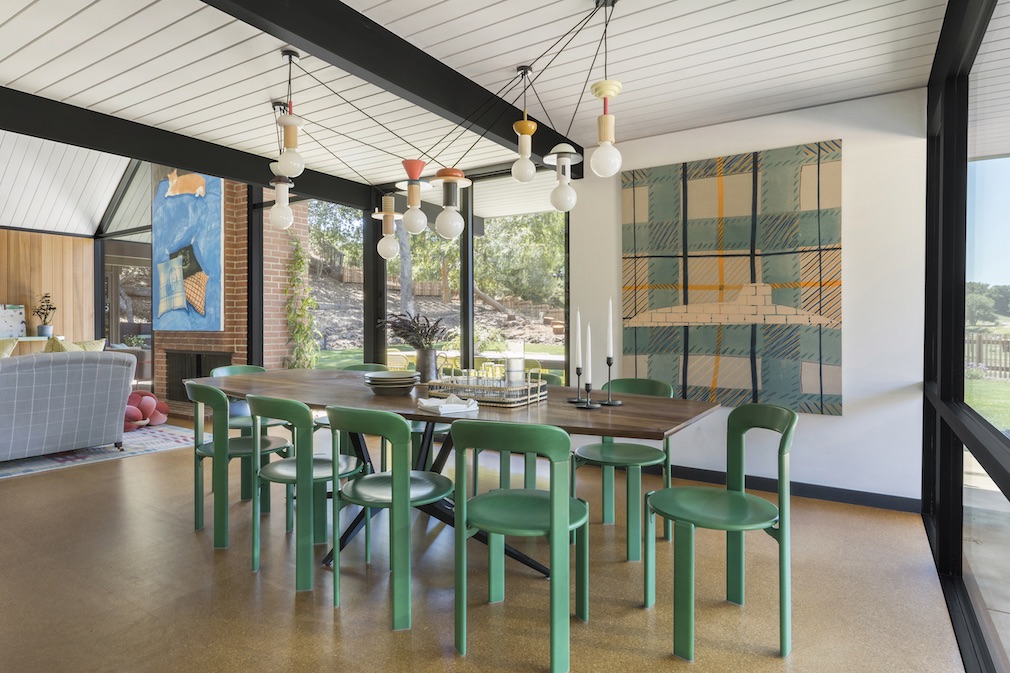
The residence is currently owned by a visionary couple who share four daughters and an art collection of more than 90 works, mainly by emerging female artists. Carlson approached their commission by adapting the structure for contemporary living, integrating energy efficiency and sustainability, while letting its original bones shine through.
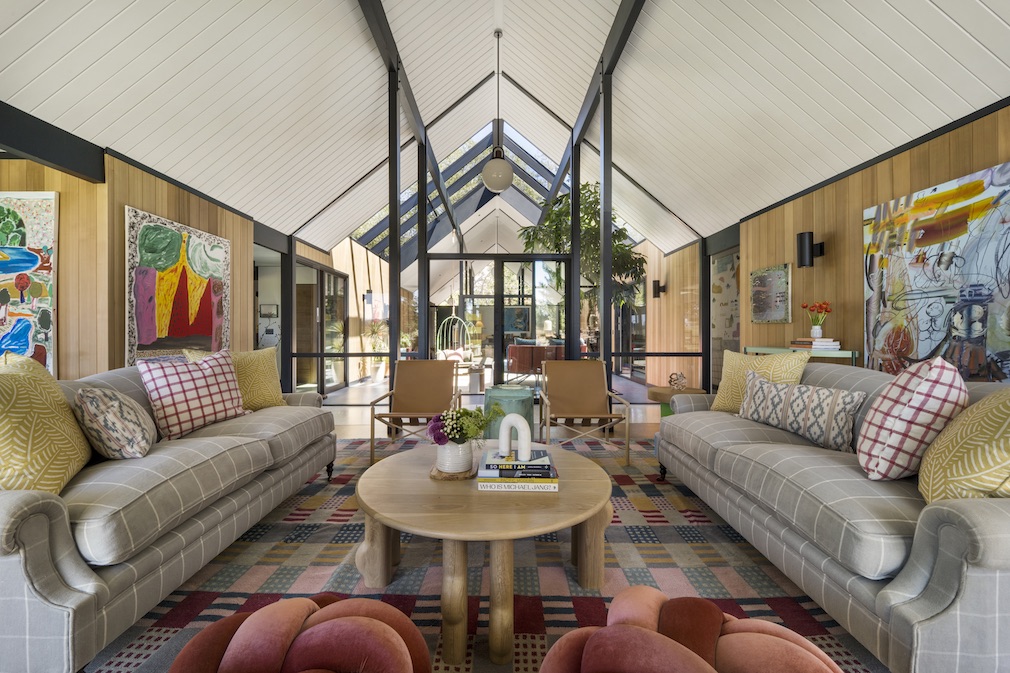
“An ‘Eichler’ captures the word optimism in built form,” notes Carlson, who has worked on dozens of private homes on the U.S. East Coast and in California. “These airy, light-filled, and human scale structures convey the promise of the post-World War ll era, as well as Joseph Eichler’s philosophy on domestic life, and the ability of modern design to enhance our quality of life.”
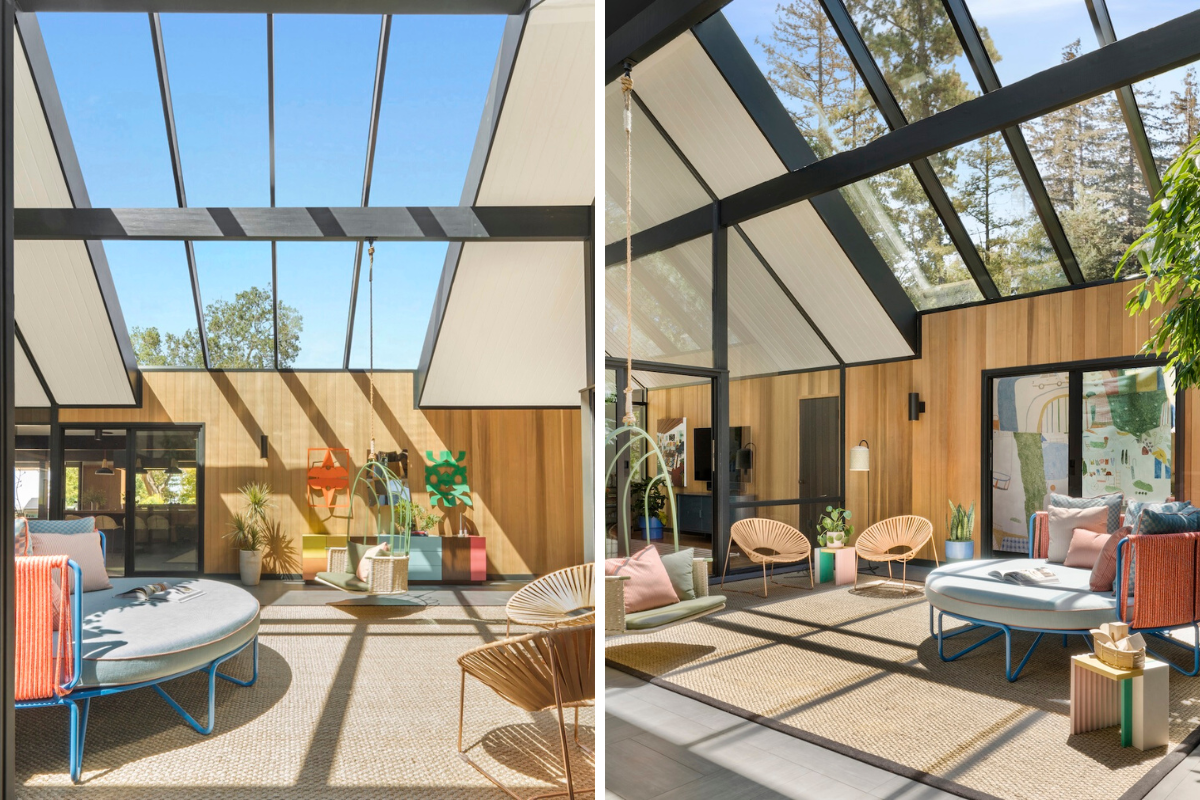

To enhance the sense of space, Carlson removed partitions and cleaned up the interiors, providing a backdrop of wood, cork and natural stone to showcase the homeowners’ extensive art collection and colorful furnishings. Pictured above, the atrium has a verticality that enhances the feeling of expansiveness and a glass roof floods the living area with natural light.
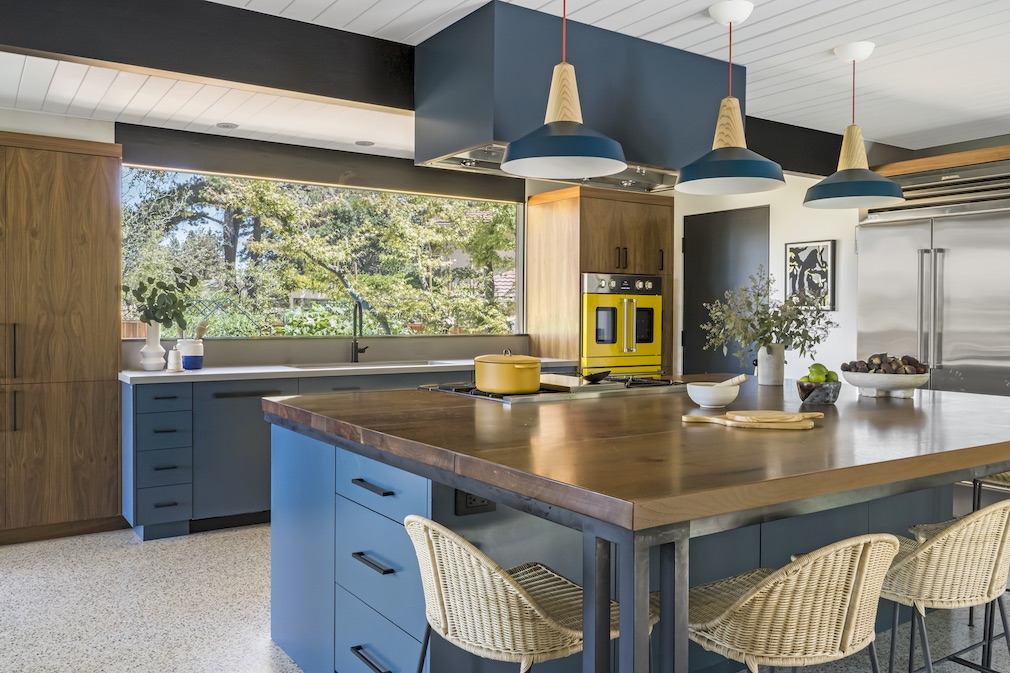
In the natural light-filled kitchen, Farrow & Ball’s Hague Blue No. 30 adds a distinctive flair to the custom cabinetry, designed by Carlson. The central island features a black walnut wood top and custom steel legs.
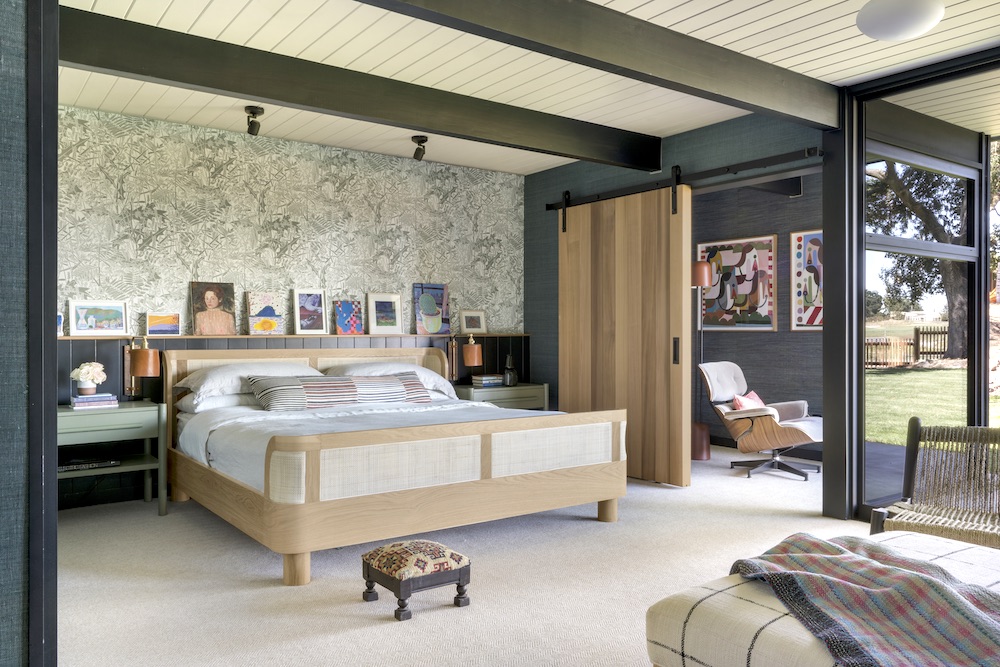

The primary bedroom suite features a display ledge for rotating art and a barn door that encloses a small sitting area. Made from Western Red Cedar, both pieces were custom-designed by Carlson. Floor-to-ceiling retractable glass doors from Fleetwood frame the views of the garden and beyond.
Project team
Gustave Carlson Design (Architecture, interior and custom cabinetry design)
Atelier Davis (Interior design and decoration)
Groundcover Landscaping
Flegel’s Construction
Photography by David Duncan Livingston.
Like what you see? Get it first with a subscription to aspire design and home magazine.