
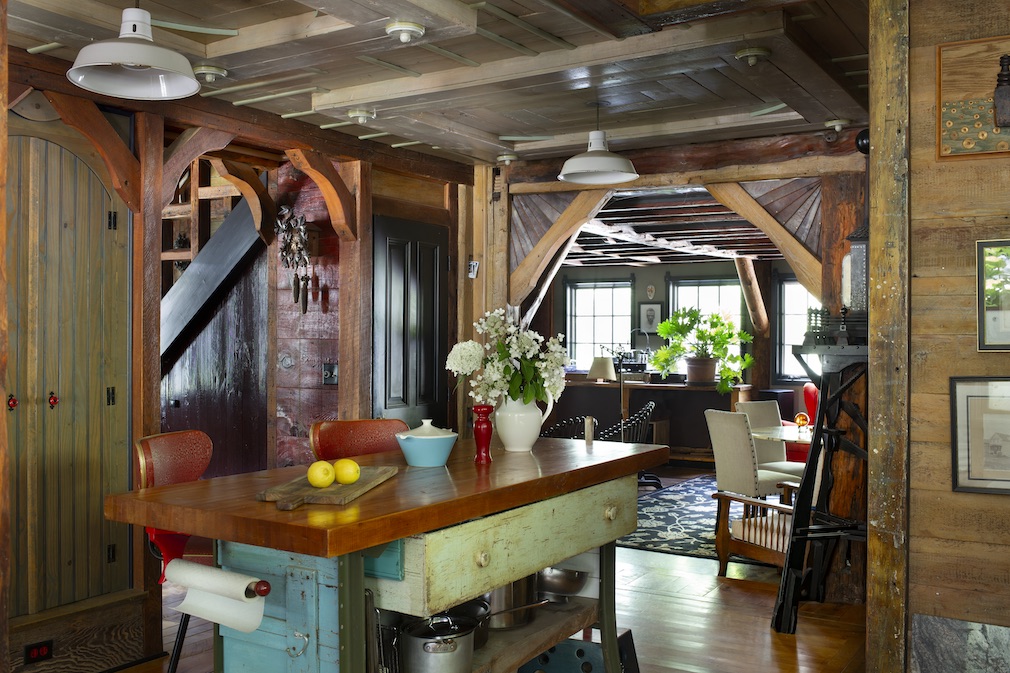
The kitchen island is a “Frankenstein table” Matt Hausmann built from various other pieces of furniture. The German cuckoo clock is from a friend. The ceiling is made of old palette wood.
The 3,000-square-foot, circa 1830s post-and-beam building stood like a ship’s prow at the convergence of three roads in the tiny Catskills hamlet of Durham. “It had been condemned and abandoned,” recalls Amy Hausmann, a curator and arts administrator who is currently executive director of the Maine Arts Commission. “The windows were broken, there was graffiti all over, garbage inside the house, the outside was visible through the dining room wall slats.” To add insult to injury, the resident raccoon population had left the new tenants their droppings.
So, what on earth possessed Amy and her artist-builder husband Matt to buy? “The price was right,” Matt says, “and I couldn’t stop thinking about it. I felt sad for the house. I was so frustrated trying to find affordable studio space in Brooklyn that I just took all my tools up there and started working.” Amy remained in New York, traveling up on weekends, sometimes arriving to demolished walls that exposed rooms to the outdoors. But for Matt, “It was an opportunity to make one of my sculptures into a whole environment.”
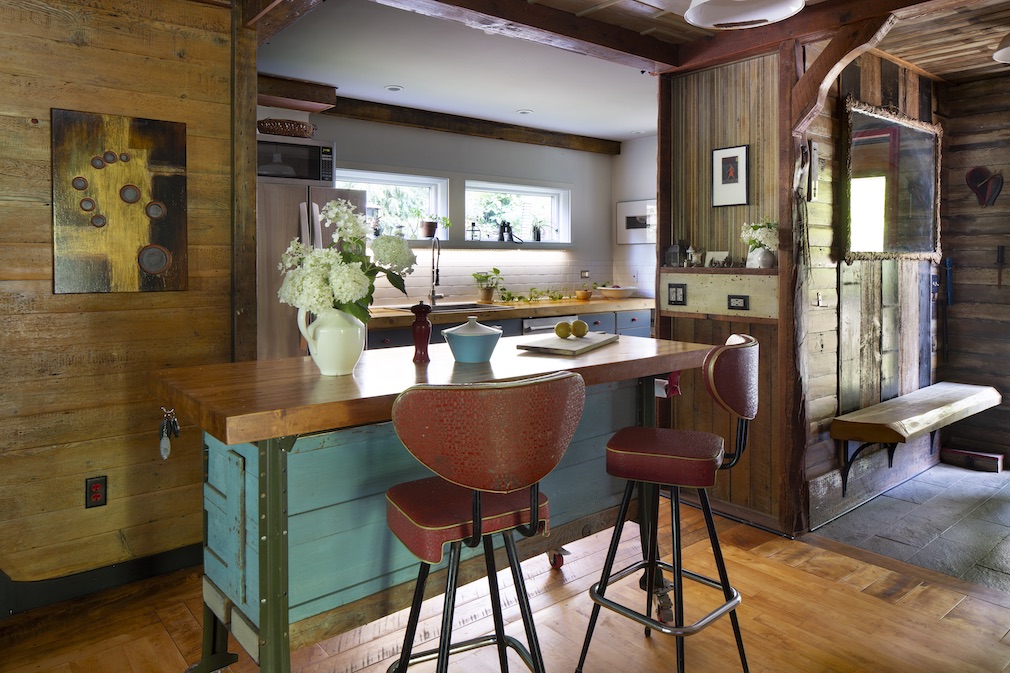
The stools came from a barn sale in Schoharie County, New York. The mirror in the entryway belonged to Amy Hausmann’s father. The kitchen light-switch plates are black and red to match the red kitchen knobs.
Matt’s creation is akin to other artists’ houses such as Wharton Esherick’s in Malvern, Pennsylvania, Kurt Schwitters’s Merzbau in Germany or, more recently, David Ireland’s 500 Capp Street house in San Francisco (an artist Matt assisted for a time). Like these men, Amy says Matt was “thinking about architectural space as sculptural space” — in other words, a site-specific installation.
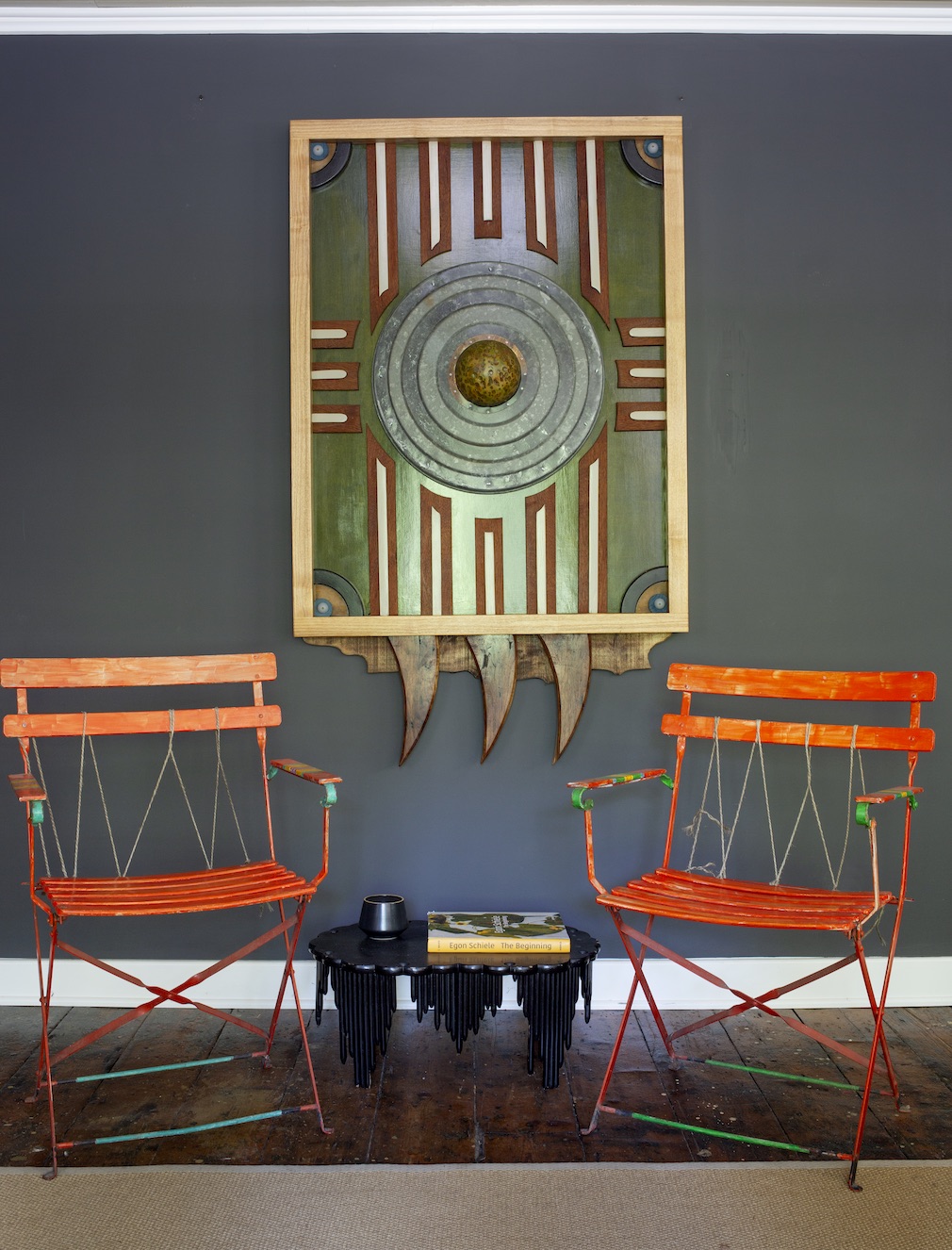
Matt completely disassembled the structure and rebuilt it, filling 10 dumpsters in the process. He didn’t have a specific plan. “It was pretty intuitive, very stream-of-consciousness,” he admits. “Everything is based on the material I’m working with.” That describes his approach to artmaking, too. Matt is a man with scant regard for divisions between categories like art, architecture, building and craft. It’s all of a piece to him. One work started with an antique trash can lid whose metal form, patina and patterns he found intriguing. By building elements around the lid, it became a shield-like artwork that now lives between two cadmium red-painted French garden chairs and an heirloom lacquered Japanese tea table.
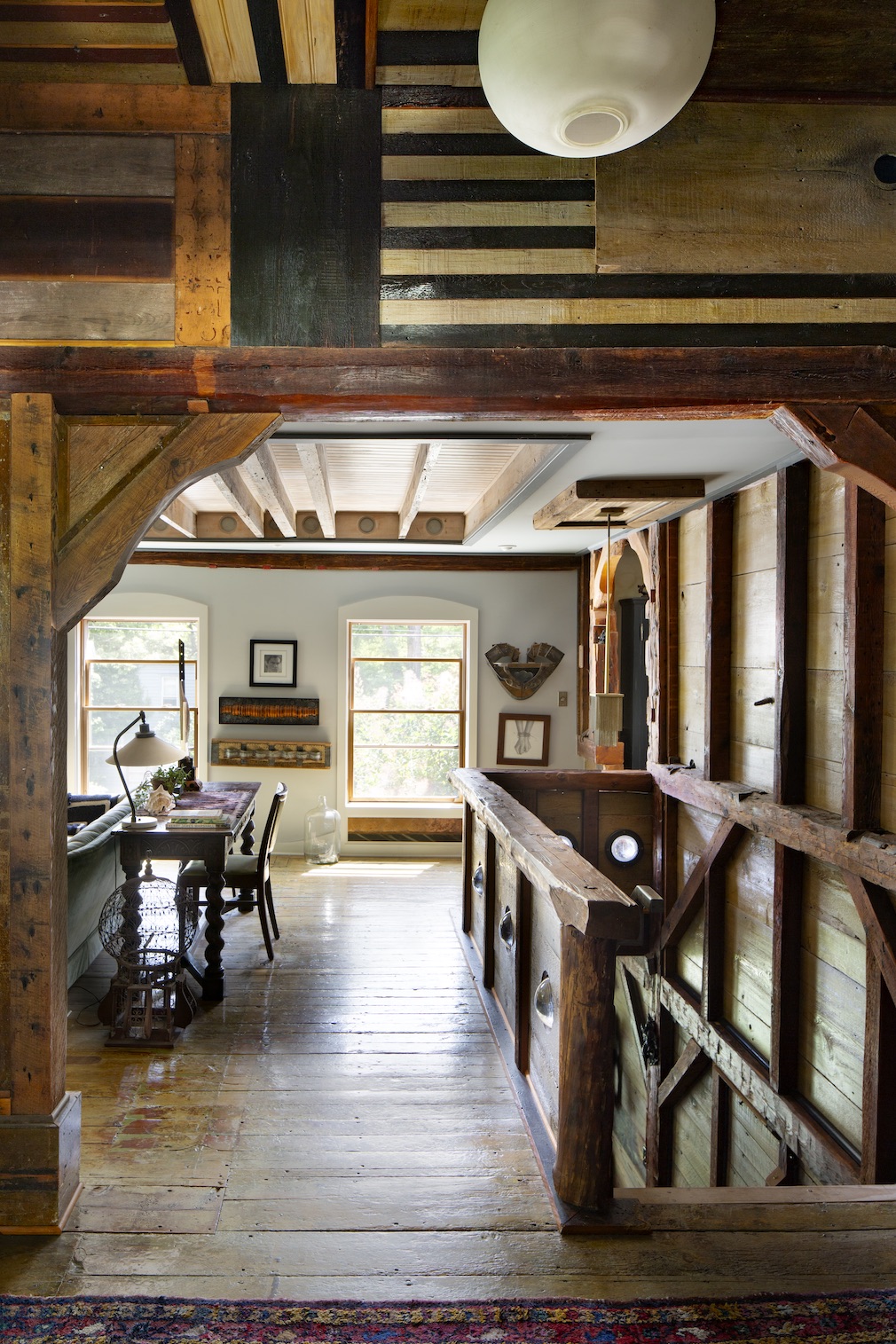
Inside the entry, deck flooring became a wall, while on the perpendicular wall, he repurposed wood from a torn-down hardware store in Brooklyn. Another wall in the kitchen repurposes original upstairs flooring, while its ceiling is made of old palette wood that Matt tinted with multiple layers of iridescent shellac.
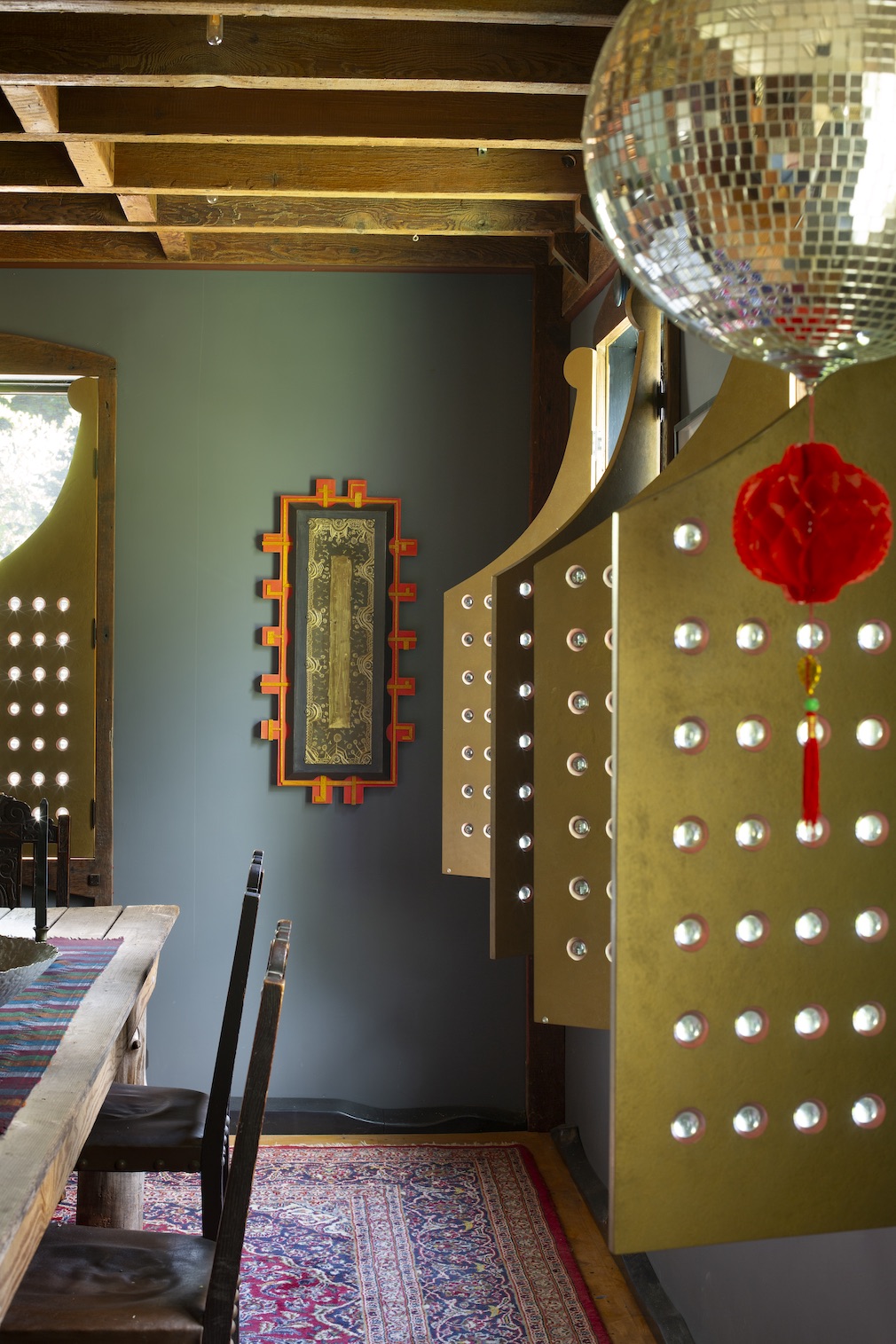
“Each room has its own feeling and flavor,” says Amy. “It’s consistent in its inconsistency.” Matt had done many fine high-end restorations for years, but wanted something with more personality. Window trims do not match (“that’s just boring,” Matt declares unequivocally), the dining room shutters have shooting marbles set into apertures, glass ingots perforate the half wall enclosing the staircase.
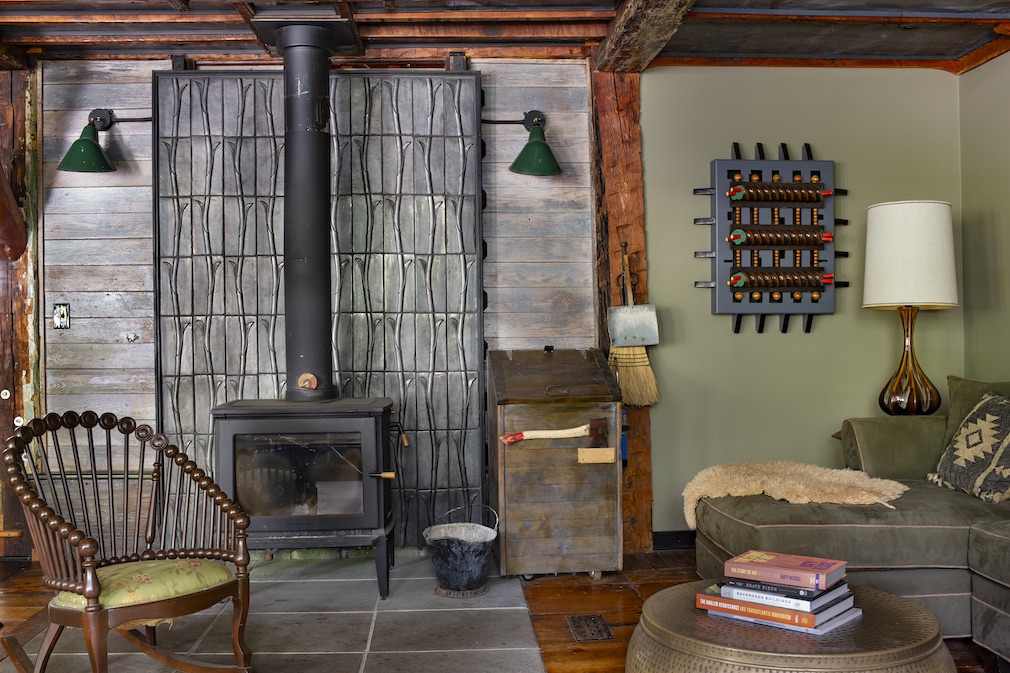
The Hausmanns’ friend, ceramist Frank Giorgini, made the Salt-glazed hearth tiles with embossed sunflower stalk patterns. The sofa and 1960s lamp were flea market finds, and the circa 1880 Hunziger “lollipop” chair was bought at auction. The art is Matt’s.
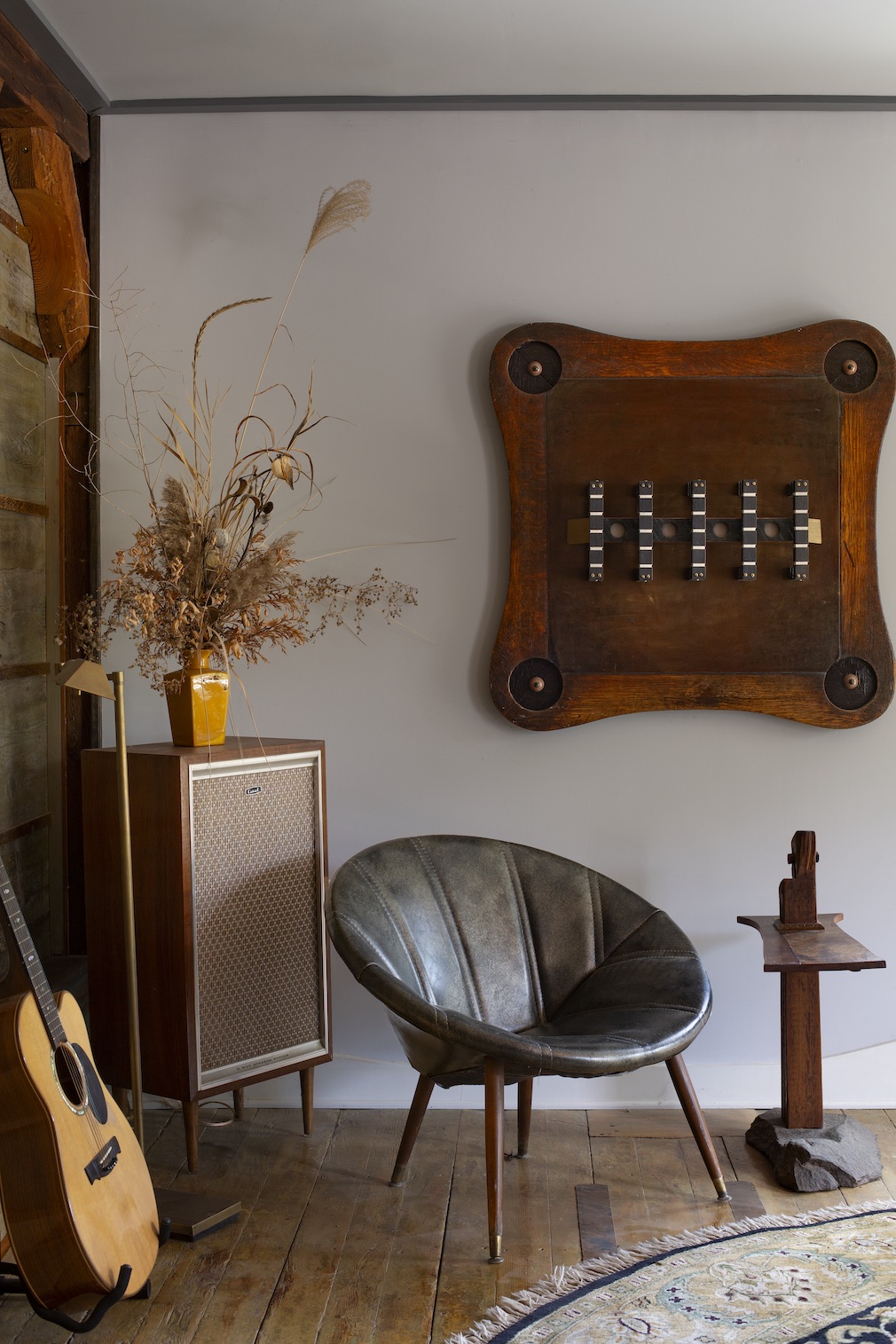
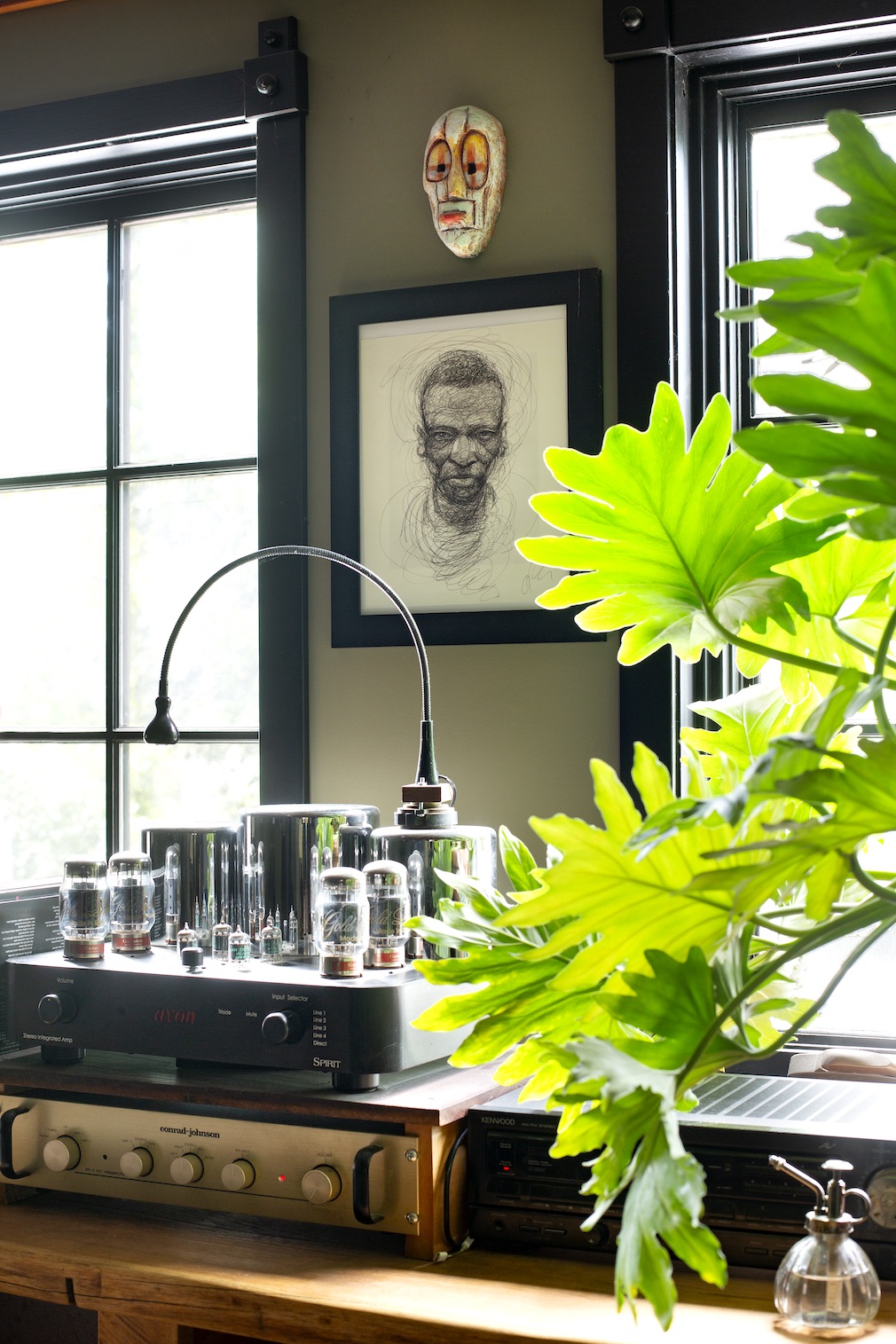
Furnishing the house followed the same nondirected direction. Hand-me-downs (a desk lamp from Amy’s childhood, a mirror that belonged to her father’s secretary, a one-time Playboy bunny), garage sale and flea market finds (1960s lamps, midcentury speakers), auction acquisitions (a pair of 1880s George Jakob Hunziger “lollipop chairs,” a bird cage), Craigslist discoveries (the shooting marbles, all windows, a sofa) and gifts and bequests from friends (a German cuckoo clock, the folding garden chairs)… all of it layers and blends with Matt’s own eccentric creations.
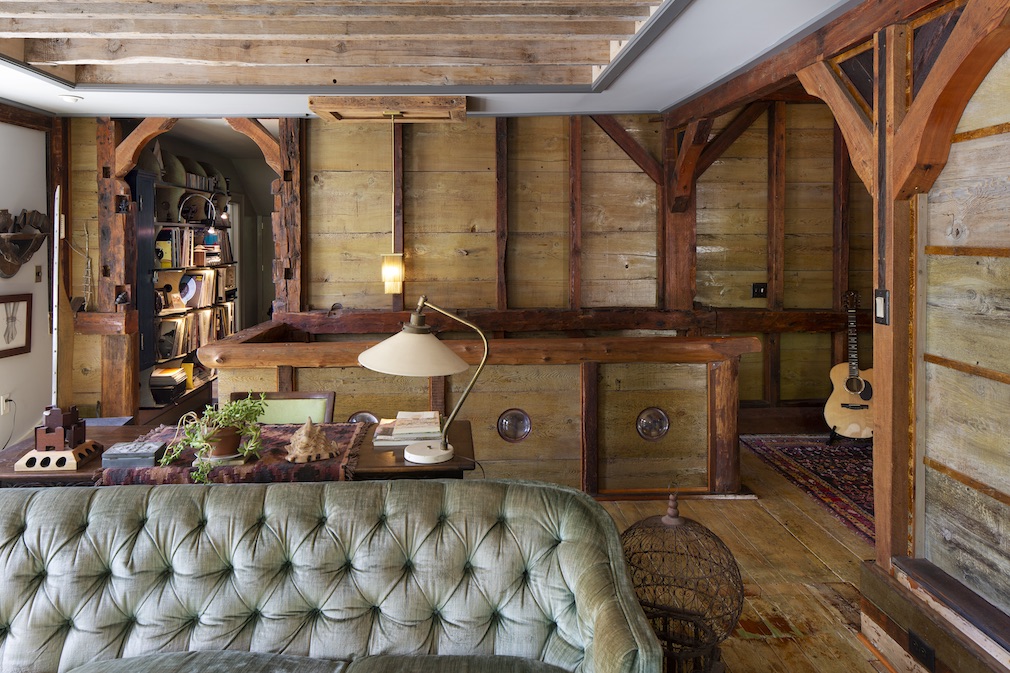
The Craigslist sofa in the upstairs sitting room was $100, and the desk lamp was Amy’s. Glass ingots adorn the stair wall, beyond which is the library.
Having worked at Olana, another artist’s home, but one built by a man with the means to hire others to realize his vision, Amy appreciates the 100-percent hand-built nature of this endeavor. “You can feel it in the heaviness of the doors and in the touch of every fitting and surface.” And, she adds, “It’s very personal. Absolutely everything in it has meaning.”
Photography by Gross & Daley.
Like what you see? Get it first with a subscription to aspire design and home magazine.