
We’re back in the south of France with interior designer Jennifer Farrell for the next piece of our series, digging into the details of her visionary, adaptable home project the Interconnected Changeable Environments House. At interview time, work was audibly underway on the exterior of the house, with time-worn doors being replaced with European-built, modern steel-and-glass, accordion-style French doors that “have a touch of tradition in a very modern way,” according to Farrell, who noted the outdoor terrace and pavilion areas were actively in progress as well. “There’s a lot of sanding and banging and bustle in the background today,” she laughed. “We’re at that particular phase where there’s a lot of dust flying — figuratively and literally.”
For our continuing series that walks through the many phases of the Interconnected Changeable Environments House story, aspire Deputy Editor Jennifer Quail talked with the designer about Indy House and the continuing education a project in the French countryside provides.
Jennifer Quail: Today, we’re going to dig in deeper on Indy House, so let’s begin with a little history. Tell us about its existing characteristics and what purpose this structure served in its original and previous lives.
Jennifer Farrell: Physically, Indy House is the newest of the structures, but these are centuries-old buildings, and so it was still done in the ancient lime compound mortar style. It’s this beautiful style of limestone chunks that are harvested from the quarries here in France, broken by hand, stacked together like a puzzle and mortared together with the lime compound in a sort of over-mortar fashion that’s unlike what we traditionally do in the States, where we clean a lot of that out. Here, the mortar isn’t just the glue, it’s an integral part of the design story that contributes to how the finished wall will look. The results are perfectly imperfect.
The limestone quarries are beneath the villages, including our own village of Sauveterre-de-Guyenne, which was built in 1281 by order of King Edward I. The historic quarrying actually led to a great discovery. In the process of harvesting the limestone to build the gorgeous, medieval chateaus you see throughout the region, they discovered that the caves the extraction left behind were the perfect temperature for storing wine 365 days a year. Outside, it can be 100 degrees or negative 2, but it’s always about 55 degrees in these caves. It’s part of the interesting and symbiotic relationship with the earth that they have here in the southwest of France.
The past of Indy House itself is that it was originally built as a summer kitchen and was used both as a summer kitchen and a pool house by the owners just before us. It was built where there had previously been another house that had a well inside the structure, which is fascinating. When they built the summer kitchen, they placed it right next to the well, so you could easily step outside and pump water up from the well. You can still look down into the well and it still has water. It’s one of two functioning wells on the property.
JQ: What will the final footprint of Indy House entail? How much of the original structure will remain intact and how will it play into the modern elements being added?
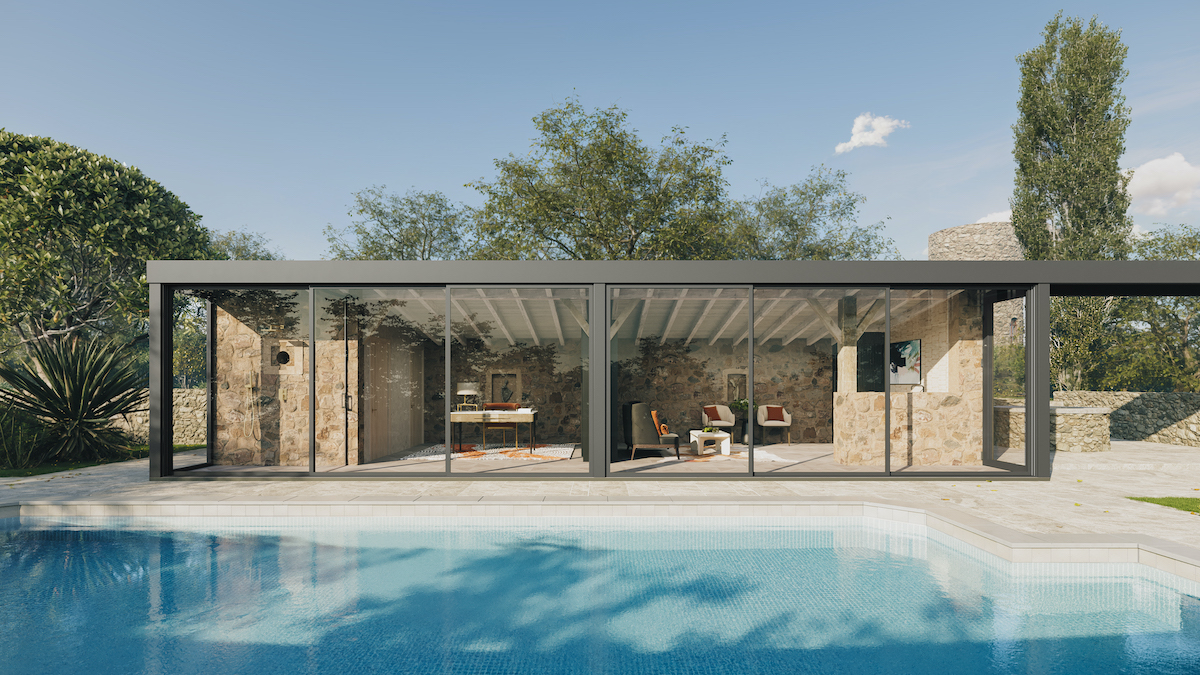
JF: We’re getting underway with the redesign of the existing summer house, which will become Indy House. The work includes the addition of a steel and glass enclosure that extends this house out about one meter along the entire front façade. It will be floor-to-ceiling, foldable steel and glass, so we can shrink and grow the footprint as needed; have this adaptable, changeable, two-room space within; and be able to walk right out to the pool.
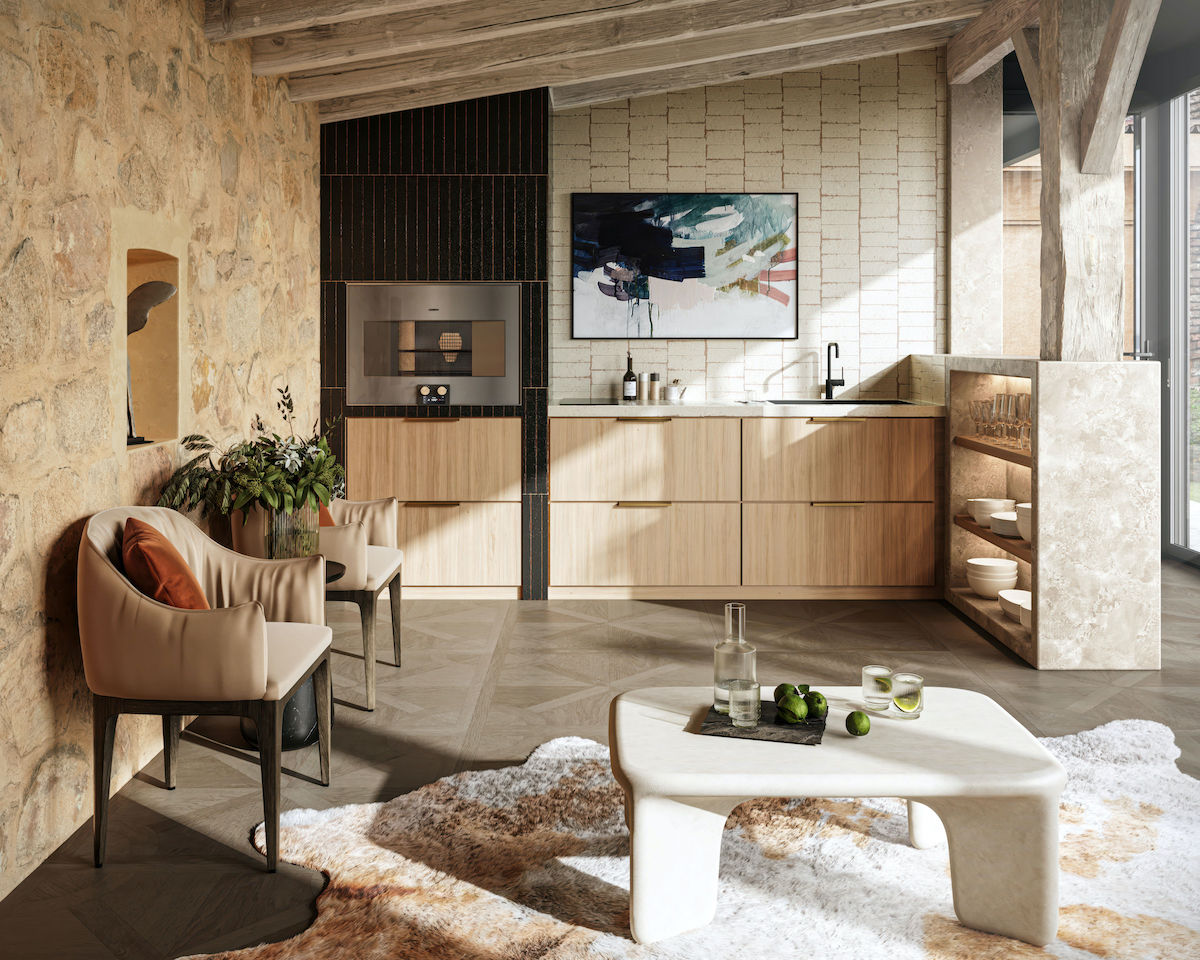
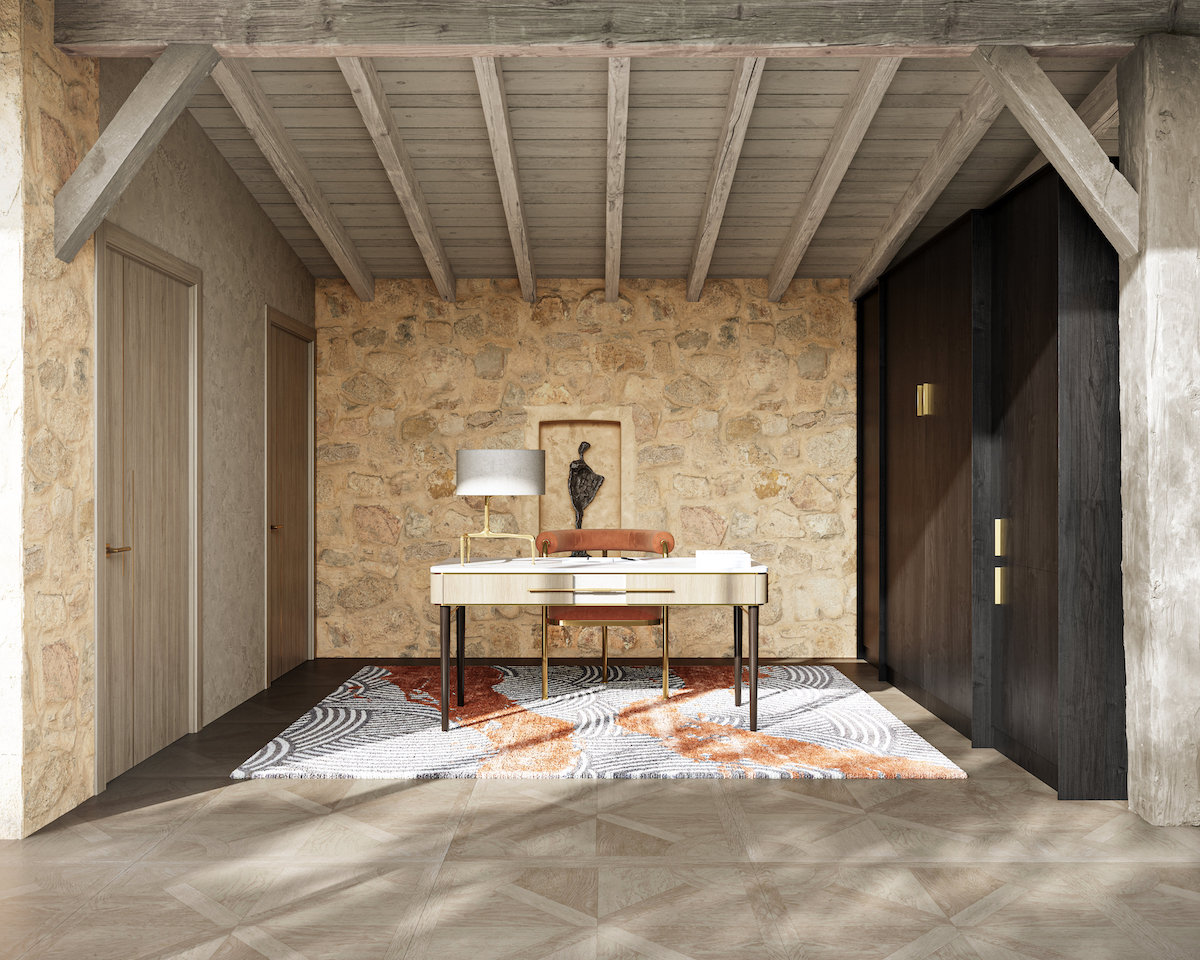
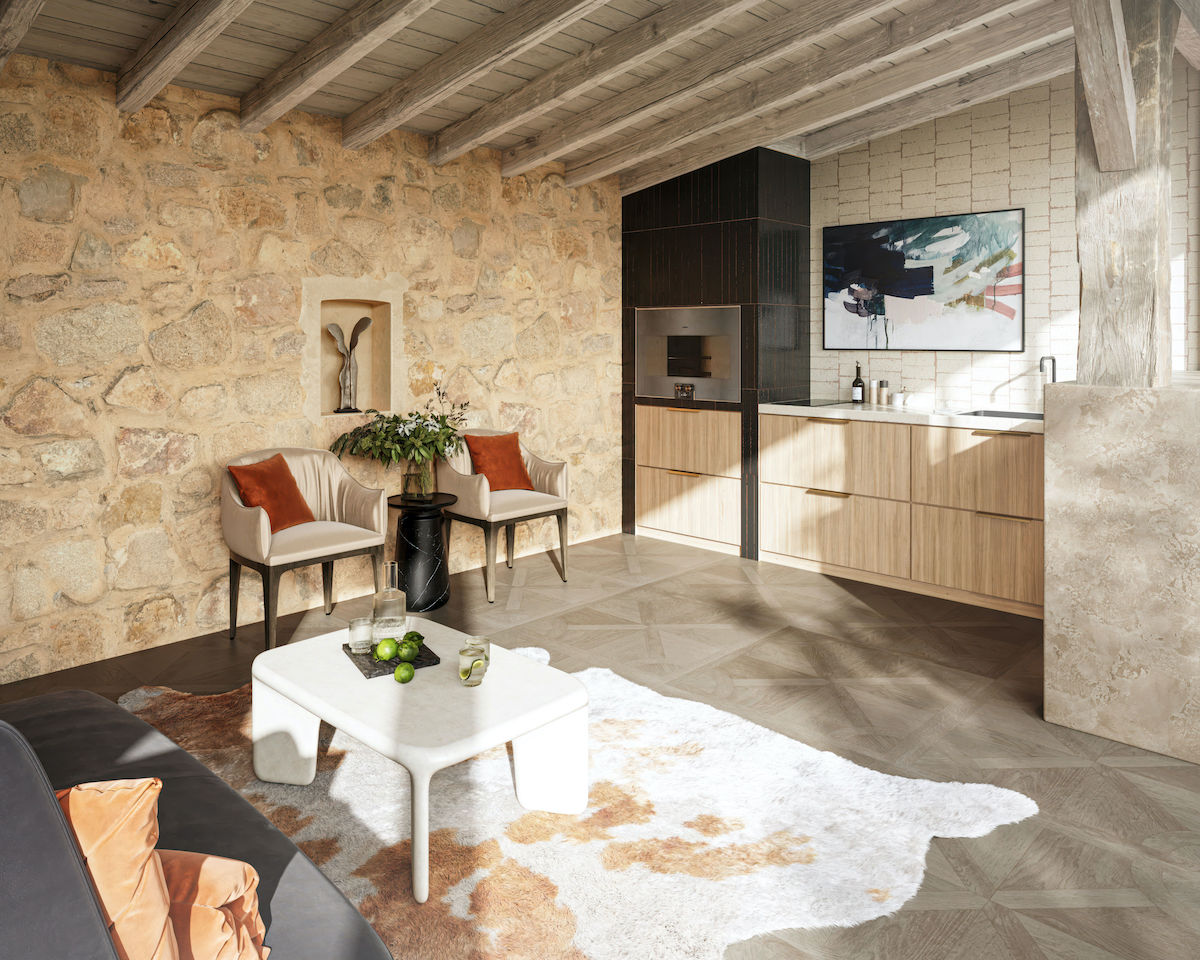
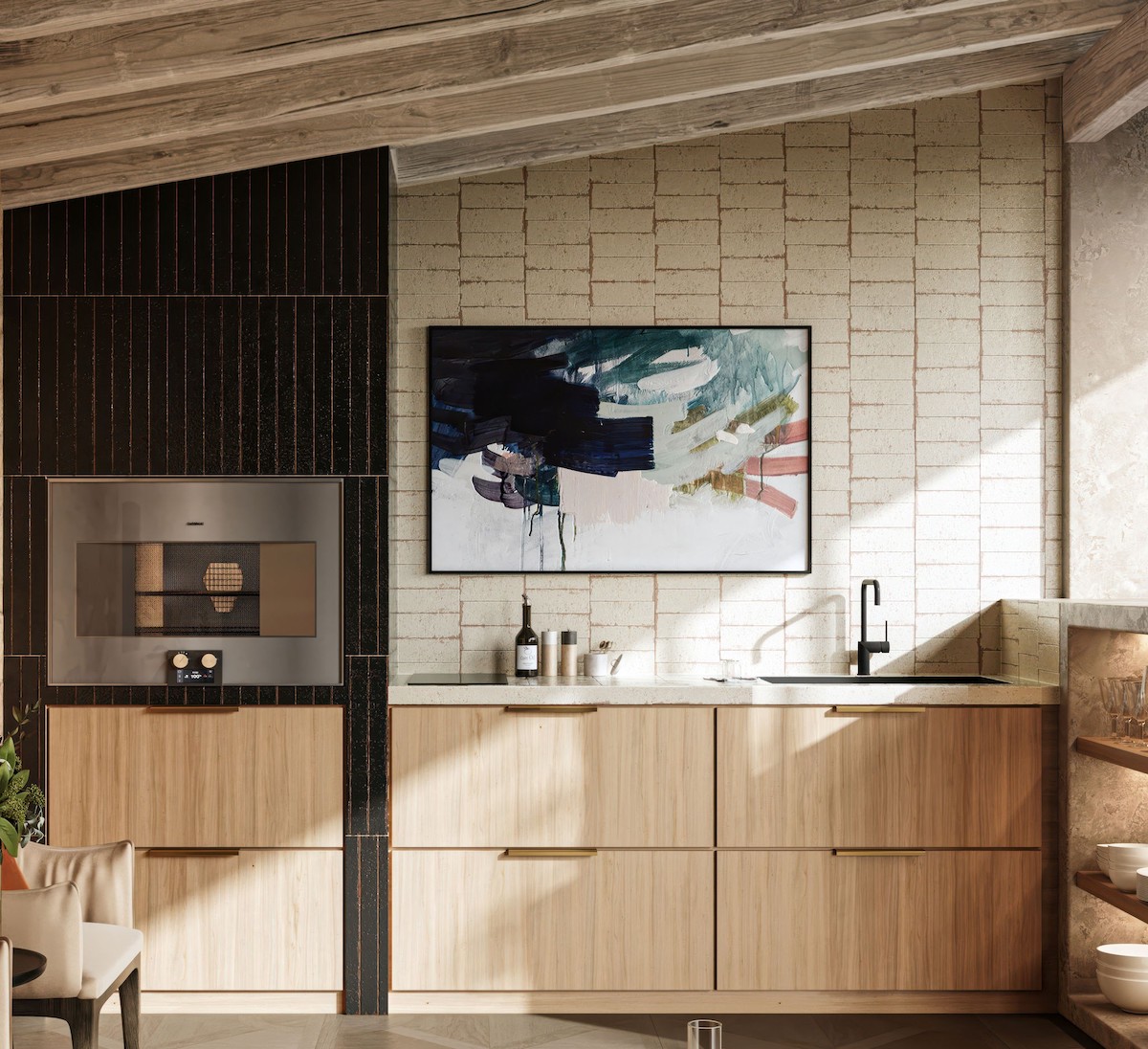
We’re going to keep the structure itself, so the roof and stone walls will remain. There’s already a bathroom and a kitchen, so we’ll keep both spaces but transform them with our brand partners, and an enclosed shower will be added. Right now, though, it’s just one big room and we’re adding a dividing unit to create two usable spaces, one of which will always have a kitchen. It’s a one-wall, micro-kitchen, but it will feature the finest of appliances, cabinetry and surface materials. The dividing unit will be part fold-down bed, part closet, and part wall. And then there’s the adaptable space. In some years, it will be a living room, in others it will be a workout studio, and in others still, it will be a nanny suite, a guest room, or a home office. Over time and as needed, the space will change.
The entire front wall of Indy will be glass, and we’re installing built-in blackout roller shades, of indoor/outdoor material, on the exterior of the glass in a framing system. The shades will roll down to become an outdoor movie screen that can be enjoyed from the outdoor seating and entertaining area, while you’re floating in the pool, and even from Center House, where you can spin around on the kitchen bar stools and watch the movies with all the doors open. It becomes a very multifunctional space, and a complete indoor/outdoor movie experience.
The existing ceilings for Indy are sloped, exposed beam ceilings. We’re going to keep them exposed, but refinish them to give them more of a lighter, bleached wood look. And we’ve chosen to embrace the slope. The ceilings aren’t particularly high, but because they slope toward the pool, it’s like you’re welcoming the sunlight that’s bouncing off the pool into the house. And the light is just extraordinary. When completed, Indy House will be about 450 square feet total. It’s small but mighty.
JQ: Tell us what the living experience of Indy House will be like. How will it grow and morph with its occupant over time?
JF: What’s wonderful about the Interconnected Changeable Environments House in general is that you could live in a few hundred square feet or many thousands of square feet. You have the choice of what works for you and when, because the whole property is designed to change with you. In the story we’re telling, we begin with our homeowner living in Center House, which is the main house. At that time, because it’s freestanding and independent, Indy House can be used as a rental unit to help pay the mortgage, and Extension House is where you would have guest suites and your home office. But that’s just the story we’ve chosen to tell. It could also be flipped where the homeowners decide to live in Indy House initially and rent out all of Extension House, because it actually divides up into multiple units.
The way that Indy House works, there’s an open-air breezeway that connects it to Extension House. This feature could be enclosed in glass to create additional rooms, like a gaming room or an outdoor dining room. When we reveal the spaces, we’re going to sort of freeze our 60-year journey through time at year 40, at which time Indy House is being used as an indoor/outdoor home office with lounge and kitchen space, with the breezeway that connects it to Extension House left open. To illustrate its potential, though, the second breezeway, which connects Center House to Extension House, will be revealed enclosed in glass — and in use as an entertaining kitchen. It’s just one example of how the overall property can adapt and change over time.
JQ: What materials will we find throughout this space? And why were they right for it?
JF: The design aesthetic for the entire project is very ancient meets very modern. The way that translates in terms of materials is a sense of artisanry, hand craftsmanship and the human touch. There’s a sense of hand-worked and -worn personality infused in a lot of the pieces.
The entire first floor of all three houses is being done in my barrel parquet 36-by-36 floor tile. It’s a very traditional parquet wood-style pattern, but it’s actually tile, so that means it’s impenetrable and durable. So when you’re running in from the pool, you’re not ruining real hardwood floors. It’s a very practical living solution in a home that’s very close to water, and Indy House is about five feet from the pool.
The vertical surface materials are from Emser Tile. I do have a bias here because I’m selecting from my own Livable Luxury tile collection with them. The reason behind the selections, though, is the two collections — Eclissi and Metamor — have a very ancient-meets-modern feel with a beautiful patina and edging detail that evokes a feeling of hand craftsmanship. Featuring those in Indy House lends a sense of history, but as told in a very modern way through the scale, shapes and sizes. For example, we created a 2-by-20-inch tile that’s very special due to its unusual scale. We’re doing a lot of vertical installations throughout the Interconnected Changeable Environments House, and that tile has really become a bold and interesting part of the design story.
In terms of soft materials, the furniture, the accessories, and the rugs in Indy House will have a sense of modern warmth to them with warmer hues like creamy beiges and flax, as well as terracotta, copper and a soft black. They’ll be very contemporary pieces, but with a lot of texture and warmth, because what’s really incredible about the stone structures here is that there is an innate warmth to them. There’s a literal, physical temperature balance, thanks to the limestone, but the visual effect of the limestone is very warm as well.
Some of the brands coming into this project are continued relationships for me, and we’ll have some new brand partners to announce that I can’t reveal just yet. These are gorgeous product partners who are contributing some extraordinary pieces to all three of the houses. The brands receive a complete package of assets and deliverables and that’s because the reason I’m creating showhomes like this is multifold. It’s not just to tell a story of design in a new light and from my own perspective, but also to share the brands that are participating in the experience and take them to their most elevated space. To be able to show those brands at their penultimate is not only a service to the brands, but it’s a service to the viewers and to the consumers and to the designers who are experiencing them — they’re getting to see all of these products and materials brought life through my particular lens. It opens up the understanding of their potential.
“There’s something very secure about being able to have a manageable, maintainable environment and put your energy towards enjoying the world around you, instead of into maintaining the home.”
JQ: The property overall is so important here. How does Indy connect with the surrounding nature?
JF: The way the three houses are integrated is in a horseshoe shape around the pool. There’s a big, beautiful courtyard with outdoor seating areas and a pool in the center. Indy House is literally the independent one, even though it’s connected to Extension House by the breezeway.
We’re building on the French mentality of a symbiotic relationship with the environment around you and making this an extremely eco-conscious, green, sustainable, off-the-grid-capable home. We’ll be installing solar power and wind power, and we have two working wells. We have underground water storage tanks and a water recapture system. This is a property where we could literally pull the plug and just live within the confines of nature here. We are able to generate our own food, power and water. So, the relationship between the environment and the house itself in terms of design and sustainability is really one of an ongoing cycle of symbiosis.
Plus, the front facade of Indy House is glass, so you literally have a window onto the world. The view is spectacular. You’re just a few feet from the pool, and so you’re looking out over this body of water and then past it to the sprawling lawn and then to the acres and acres of vineyards and fruit trees beyond. The nature experience here is fascinating: daily visits from deer and rabbits, gophers living in the compost bin, and these fabulous little owls — chouettes — that hop around the lawn and sound like mewing cats. And then there’s the sunsets. I have lived in and visited a lot of really beautiful places, but I don’t think I’ve ever seen sunsets like they are here. I think it’s because the skies are just so big, there’s really nothing to interrupt them — they seem to go on forever.
JQ: Do you have a favorite moment in the design of Indy House?
JF: Honestly, I just want to go and live in Indy House because it welcomes the morning sun and then is cooled by the afternoon because the house is actually built into the sloping terrain — on the backside, you’re actually in the earth, and that keeps it very cool inside, even in the summer. That’s why they built the summer kitchen there: It stays cool, but there’s no afternoon sunlight. You get the glow, but not the heat.
I think the design element I love most about it, though, is its compact living. Despite the mega-mansions I’ve worked on at times, I’ve always been a fan of the micro-home. When I was a teenager, before micro-homes were really a thing, I used to draw them and try to figure out how you could live with a whole universe in 400 square feet. How could we do that? And so I’ve been playing with that idea my whole life, because there’s something very calming about a place for everything and everything in its place. There’s something very secure about being able to have a manageable, maintainable environment and put your energy towards enjoying the world around you, instead of into maintaining the home. These massive homes can require a lot of maintenance and a lot of energy, whereas a micro-home can be kept beautiful and perfect in so many ways without so much effort. And you have all the things you want and need, like a great kitchen and a fabulous bathroom and a wonderful place to sleep with a gorgeous view. But you don’t have to do a lot of work to maintain it. There’s something very calming and centering about that. So, even when I just stand in Indy House and look out onto the world, I feel very, very calm and secure in this beautiful little glass and stone cocoon.
The next installation of our Interconnected Changeable Environments House series will take a deep dive into Center House, the primary dwelling structure on the property.
aspire design and home is a media partner for the Interconnected Changeable Environments House.
Like what you see? Get it first with a subscription to aspire design and home magazine.