
As designer Jennifer Farrell continues the creative journey at her Interconnected Changeable Environments showhome experience, her attention has turned to the spaces where daily life unfolds most intimately — the kitchens and baths. Across the property, these rooms become far more than functional necessities. They are sculptural hubs of gathering, ritual, and restoration, designed to feel timeless yet forward-thinking.
With four kitchens and eight bathrooms spread throughout the property, Farrell shares how each space was crafted as its own experience — distinct in mood and personality, yet woven together through a cohesive material language of stone, tile, texture, and enduring craftsmanship.
SETTING THE STAGE
How did you approach the kitchens and bathrooms across Interconnected Changeable Environments as both functional hubs and design statements?
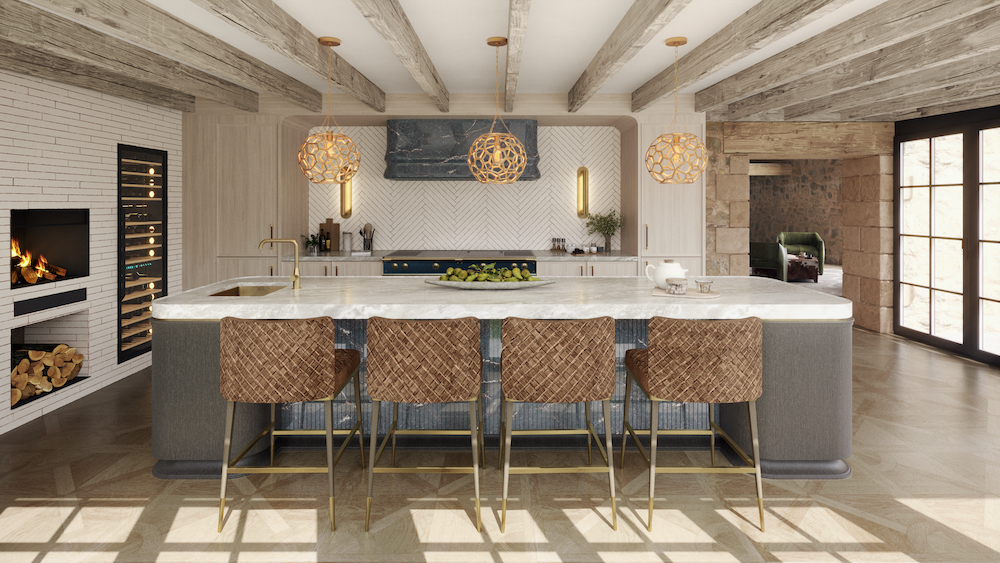
When you’re designing a project this ambitious — three homes on one site, connected but unique, adaptable and changeable — kitchens and baths become the heartbeat of the narrative. They’re the rooms where life unfolds in its most honest form; where we cook, gather, unwind, and reset. So I approached each one as a sculptural environment, a place where function and emotion intersect. These spaces have to work effortlessly, but they also need to feel like curated experiences. I wanted every kitchen and bath to have its own identity, yet still feel unmistakably part of the overall story. That meant thinking deeply about proportion, light, texture, and the choreography of movement. When a space is designed with intention, it becomes more than a room — it becomes a moment.
Why were kitchens and baths such a critical focus in telling the overall story?
Because they’re the rooms that reveal the soul of a home. You can walk through a foyer and admire the architecture, but you live in the kitchen and bath. These are the spaces that shape your daily rituals, and they’re where innovation and craftsmanship matter most. For a project centered on the idea of a “forever home of the future,” I wanted the kitchens and baths to embody that philosophy in a tangible way. They needed to feel timeless yet forward-thinking, luxurious yet grounded in real-world performance. By elevating these spaces, we’re articulating the home’s values — sustainability, longevity, beauty, and a deep respect for how people actually live.
DESIGNING MULTIPLE KITCHENS
How did you differentiate each kitchen while maintaining cohesion across the property?
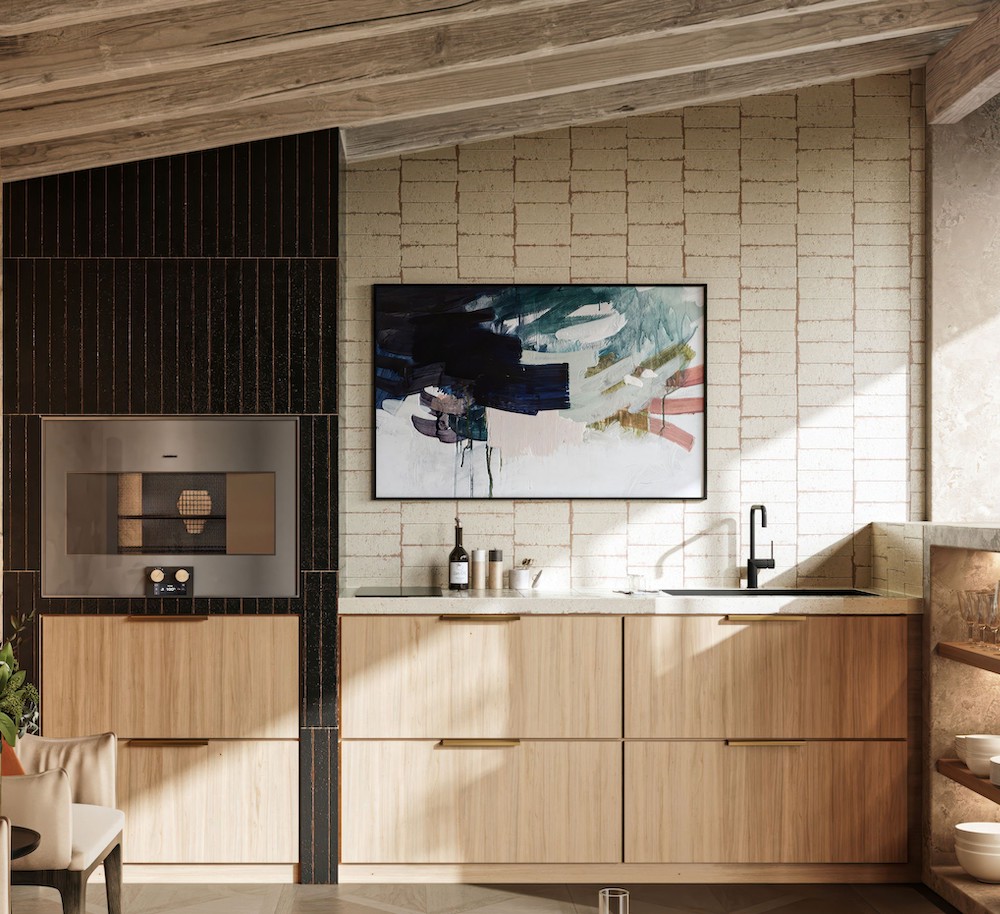
Designing four kitchens on one property is like composing variations on a theme. Each one needs its own personality, but they all have to speak the same design language. I’m creating cohesion through recurring materials, tonal palettes, and architectural lines — those subtle echoes that make the spaces feel related. But differentiation came from the emotional tone of each kitchen. In Center House, the Entertainer’s Kitchen is bold and theatrical, designed for gatherings; whereas the Working Kitchen is intimate and warm, perfect for family cooking. The kitchen in Extension House is serene and minimal, almost meditative; and the kitchen in Indy House is a flexible everyday hub within a micro-home. By tailoring each kitchen to a specific lifestyle moment, I allowed them to stand alone while still feeling like chapters of the same story.
How did layout, flow, and material selection vary from kitchen to kitchen?
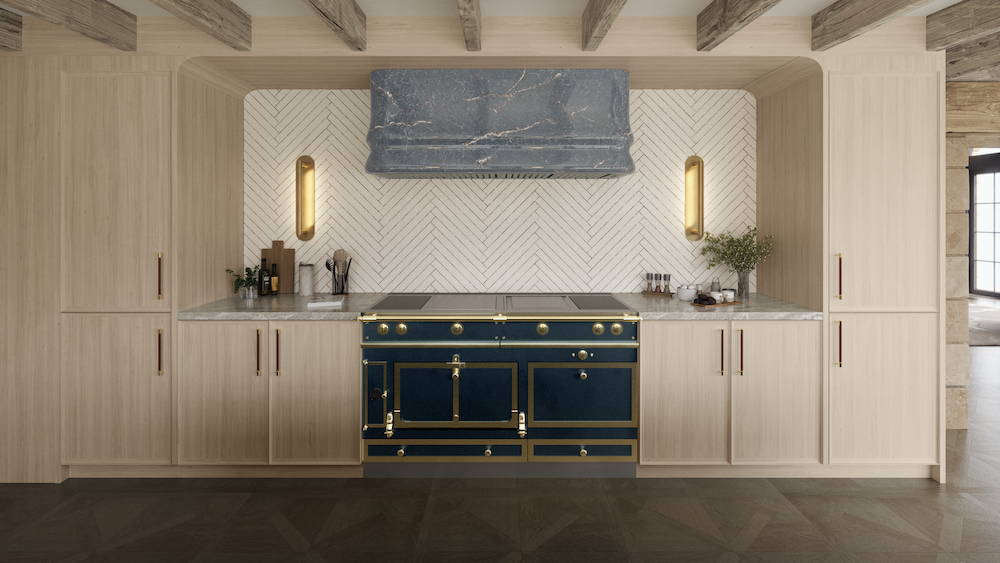
Layout and flow were dictated by how each kitchen would function. Some are open and social, encouraging interaction; others are more architectural and contained, creating a sense of intimacy. Materiality shifted accordingly. In high-use spaces, I leaned into performance surfaces like Silestone and Dekton from Cosentino, which offer durability without compromising beauty. In quieter kitchens, I introduced softer textures and more restrained palettes. Lighting strategies also varied — some kitchens glow with ambient warmth, while others use sculptural fixtures to create drama. Every decision was about aligning the physical space with the emotional experience.
In spaces that are used so frequently, how do you balance beauty with durability and performance?
For me, beauty and performance are inseparable. A kitchen that looks stunning but can’t withstand daily life isn’t luxury — it’s a liability. So I choose materials that age gracefully, finishes that hold up under pressure, and fixtures that perform consistently. Durability becomes part of the aesthetic story. When you select surfaces, hardware, and appliances that are engineered for longevity, you’re creating a space that feels luxurious not just on day one, but for decades. That’s the essence of a forever home.
KITCHEN MATERIALS & FEATURES
What role did surfaces — from tile and stone to cabinetry and hardware — play in shaping each kitchen’s personality?
Surfaces are the emotional foundation of a kitchen. They set the tone before you even register the layout. Tile, stone, cabinetry, and even the smallest details have big impact — like the Signature Hardware cabinet pulls I selected, which are wrapped in leather. Every time you hold the pull in your hand, there’s a textural, tactile connection that literally feels like heritage. A bold stone island can anchor a room with confidence; a soft-touch cabinet finish can create a sense of intimacy. I think of surfaces as the storytellers of the space. They communicate warmth, drama, serenity, or sophistication depending on how they’re layered.
How did you use texture and finish to add depth without overwhelming the space?
Texture is one of my favorite tools because it adds dimension without adding noise. A leathered quartzite beside a brushed metal, a pockmarked wall tile next to a gracefully curved limestone hood — these contrasts create visual interest while maintaining harmony. It’s about creating a sensory experience that feels rich but not chaotic. Texture also helps guide the eye, subtly highlighting focal points or architectural lines. When used thoughtfully, it creates depth that feels effortless.
Were there standout kitchen elements that became focal points within the homes?
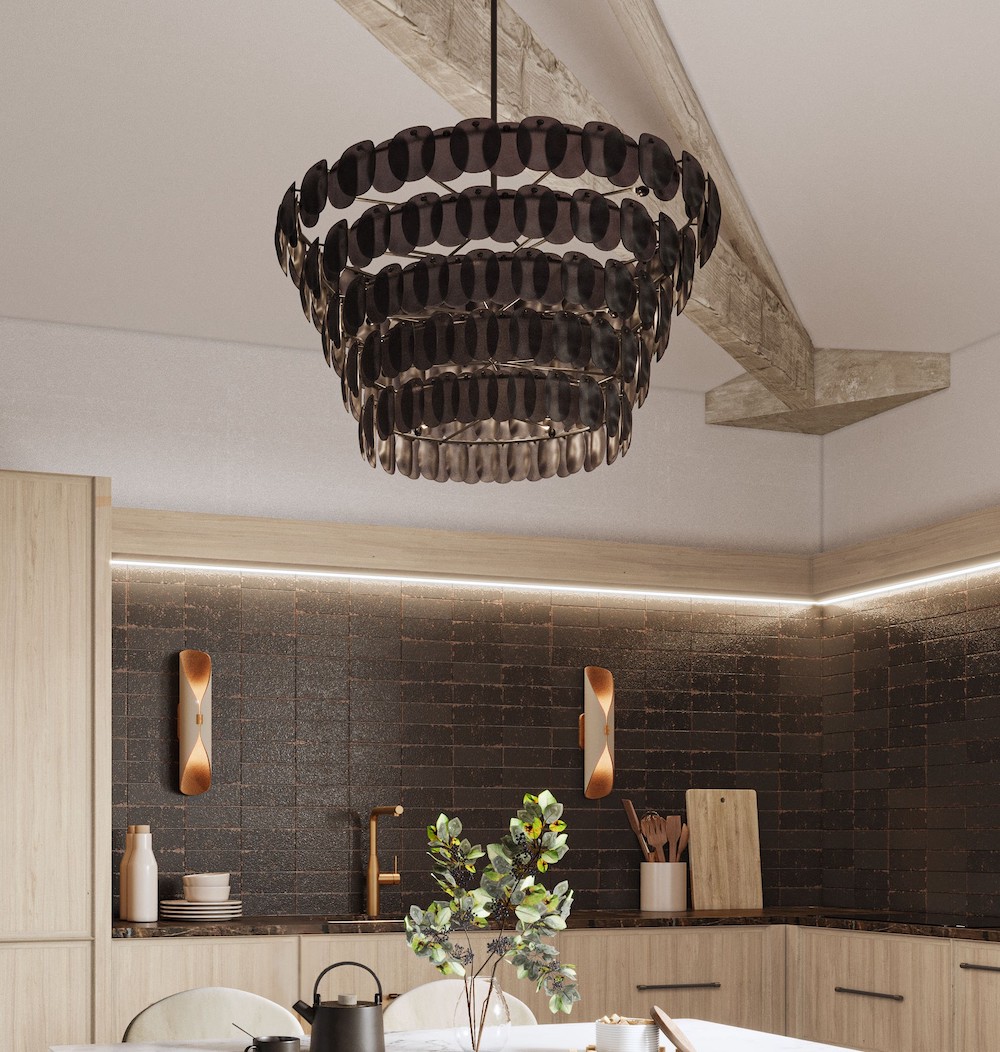
Absolutely. In the Entertainer’s Kitchen, the Château Range from La Cornue is the sculptural centerpiece — a functional work of art that anchors the entire room. In the Extension House Kitchen, a dramatic glass chandelier from Kalco (pictured above) creates a sense of grounded luxury. And throughout the property, the quiet sophistication of Corston’s bespoke switches and sockets elevates the architectural detailing in a way that feels both modern and timeless. These focal points aren’t just decorative — they’re emotional anchors that define the character of each kitchen.
THE BATHROOM EXPERIENCE
Bathrooms often serve as personal sanctuaries. How did you approach designing eight bathrooms that feel restorative rather than purely utilitarian?
Bathrooms are intimate spaces, and designing eight of them meant creating eight distinct sanctuaries. I wanted each one to feel restorative and inviting, not just functional. That meant thinking about how light moves through the room, how materials feel under your hand, how color affects your mood, how sound is absorbed or reflected. Some bathrooms lean into spa-like serenity with soft palettes and organic textures; others embrace a more exciting, vibrant mood with bold lines and sculptural forms. The goal was always to create spaces that invite you to slow down, breathe, and reconnect with yourself.
How did you vary the mood across bathrooms—from spa-like retreats to more dramatic spaces?
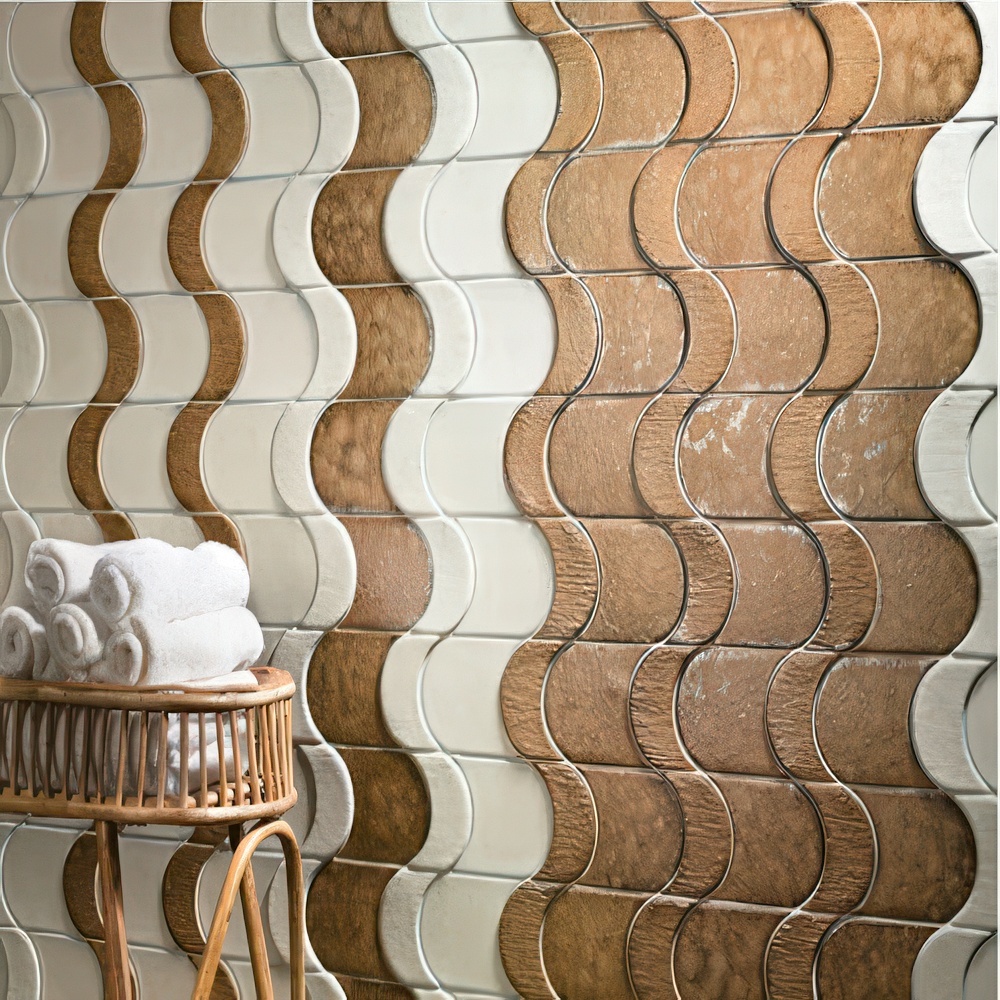
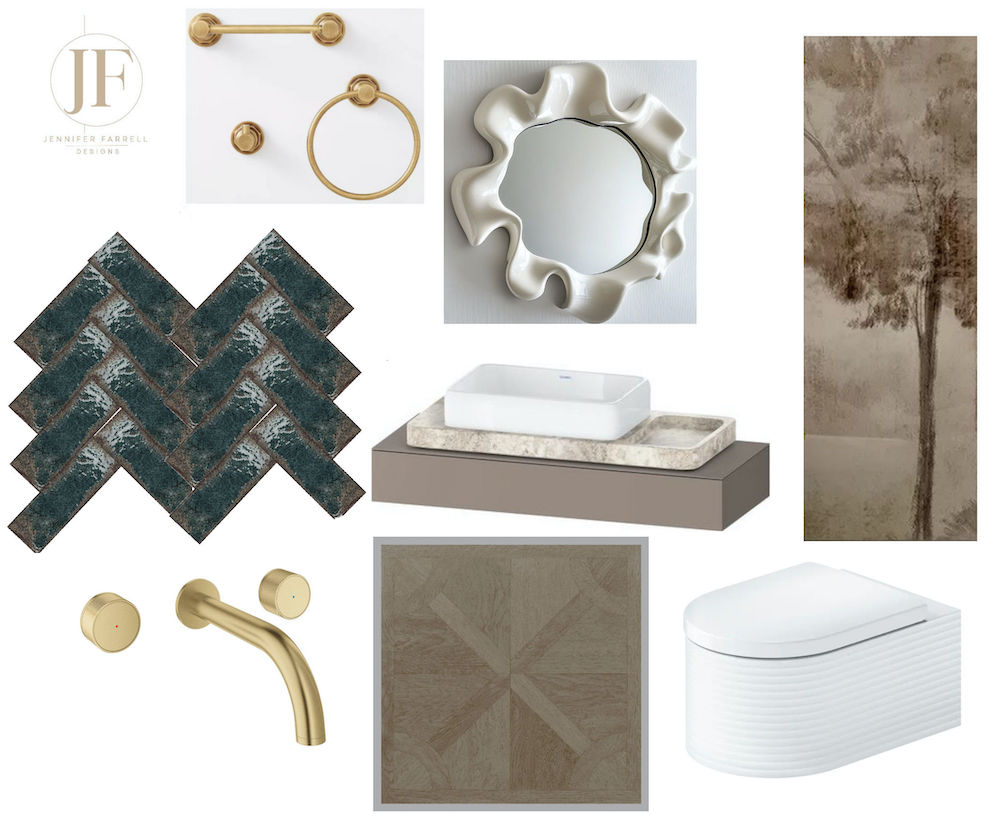
Mood is heavily shaped by color, light, and materiality. In the Center House Primary Suite, the spa-like bathroom features soft sage and cream Metamor tiles from Emser Tile, accented by natural textures and gentle lighting to create a sense of calm. In Extension House, I introduced stronger lines, deeper hues, and sculptural elements that feel modern and refined. The Metamor and Eclissi tiles from Emser Tile allowed me to play with shadow, sheen, and dimensionality in ways that subtly shift the emotional tone of each room. Each bathroom becomes its own world, tailored to a specific experience.
What design elements help create a sense of calm and permanence in these rooms?
Timeless materials, thoughtful lighting, and a commitment to proportion. When a room feels balanced, it feels permanent. When it feels tactile, it feels human. I also think about how the space will age — materials that patina gracefully, fixtures that maintain their integrity, and layouts that remain functional over time. Calm comes from clarity, and permanence comes from intention.
BATH MATERIALS & FIXTURES
How did tile, stone, and surface selections influence the atmosphere of each bathroom?
Tile and stone set the emotional temperature of each bathroom or powder room. A velvety matte tile creates serenity; a reflective glaze adds energy. Stone brings grounding and permanence. These materials shape how the space feels before you even touch a faucet. I used surface selections to guide the emotional experience — whether that meant creating a cocoon of calm or a space that feels crisp and invigorating.
What role do fixtures and fittings play in elevating both form and function?
Fixtures are the jewelry of the bathroom, and they have an outsized impact on both aesthetics and experience. The engineering and elegance of Grohe fittings brought a level of refinement that elevates every interaction — from the feel of the handle to the flow of the water. Beautiful fixtures make the space feel intentional; high-performance fixtures make it feel effortless. And the exceptional finishes available in today’s design world are so varied and enticing. I’m featuring Grohe’s Hard Graphite finish in several spaces — it’s this polished charcoal color that’s absolutely exquisite, and elevates the rooms.
How did you think about longevity, maintenance, and daily use when selecting bath materials and products?
Longevity is essential in a home designed for the future. That’s why I chose Duravit for bath china and vanities — their sculptural silhouettes and thoughtful ergonomics align perfectly with the Interconnected Changeable Environments House’s modern sensibility. And behind the scenes, Litokol grout and installation products ensure that every surface performs as beautifully as it looks. Their products are non-toxic, which is vital in kitchen and bath spaces. When materials are chosen with care, maintenance becomes minimal, and the space remains timeless.
COHESION ACROSS KITCHENS & BATHS
With so many kitchens and baths, how did you maintain a cohesive design language throughout the three homes?
Cohesion came from recurring materials, tonal palettes, and architectural lines. You’ll see echoes of the same stone finishes, warm metals, and textural contrasts throughout the property. These elements create harmony without repetition. It’s like a musical composition — motifs appear and reappear, grounding the experience while allowing each room to express its own personality.
Were there recurring materials, finishes, or details that intentionally connect these spaces?
Yes — tile and stone surfaces, warm metals, and a consistent approach to texture. These elements quietly link the spaces while allowing each room to maintain its own identity. It’s a subtle thread that ties the entire property together, creating a sense of continuity and flow.
How do kitchens and baths help bridge the historic inspiration of the property with its modern vision?
They’re the perfect intersection of past and future. The craftsmanship nods to history, while the clean lines and innovative materials point toward what’s next. Kitchens and baths are where tradition meets technology, where tactile materials meet high-performance engineering. They embody the duality at the heart of our Interconnected Changeable Environments.
BRAND INTEGRATION & SOURCING
How did collaboration with brand partners influence the final design of these spaces?
Collaboration with brand partners is essential. These companies bring innovation, craftsmanship, and reliability to the project. Their products are allowing me to push the design vision forward while ensuring every space performs at the highest level. When you work with partners who share your commitment to quality and longevity, the design becomes richer, more layered, and more meaningful. That’s also where Ferguson Home has been so instrumental. As curator of so many of the world’s greatest kitchen and bath brands, their partnership and design collaboration have elevated every K+B space I’ve designed.
Why was it important that the kitchens and baths reflect products that are both aspirational and attainable?
Because the Interconnected Changeable Environments House is meant to inspire real living. I want people to see what’s possible when you combine thoughtful design, a plan for longevity, and accessible luxury. These spaces show that you don’t need to choose between aspiration and attainability — you can have both when you select products that are beautifully made and built to last.
I think the spaces show that beauty and performance aren’t mutually exclusive. When you choose the right partners, and the right brand products, you can create spaces that are stunning, functional, and built for the long term. The kitchens and baths across the project are proof that innovation and artistry can coexist seamlessly.
REFLECTION & TAKEAWAY
What do you hope designers and homeowners take away from experiencing these kitchens and baths?
I hope they see these rooms as opportunities for storytelling. Kitchens and baths aren’t afterthoughts — they’re the heart of the home. When designed with intention, they can elevate everyday life, inspire creativity, and bring a sense of calm and beauty to daily rituals. Spaces that serve the homeowner, instead of the homeowner serving the home. I want people to feel empowered to create spaces that reflect their values and enhance their lives.
How do these spaces reinforce the idea of Interconnected Changeable Environments as a “forever home of the future”?
They embody the project’s core values: innovation, sustainability, craftsmanship, and timeless beauty. These kitchens and baths are built not just for today, but for decades of living well. They’re designed to evolve with the people who inhabit them, offering durability, adaptability, and enduring style. That’s what makes the Interconnected Changeable Environments House a true forever home.
Like what you see? Get it first with a subscription to aspire design and home magazine.