
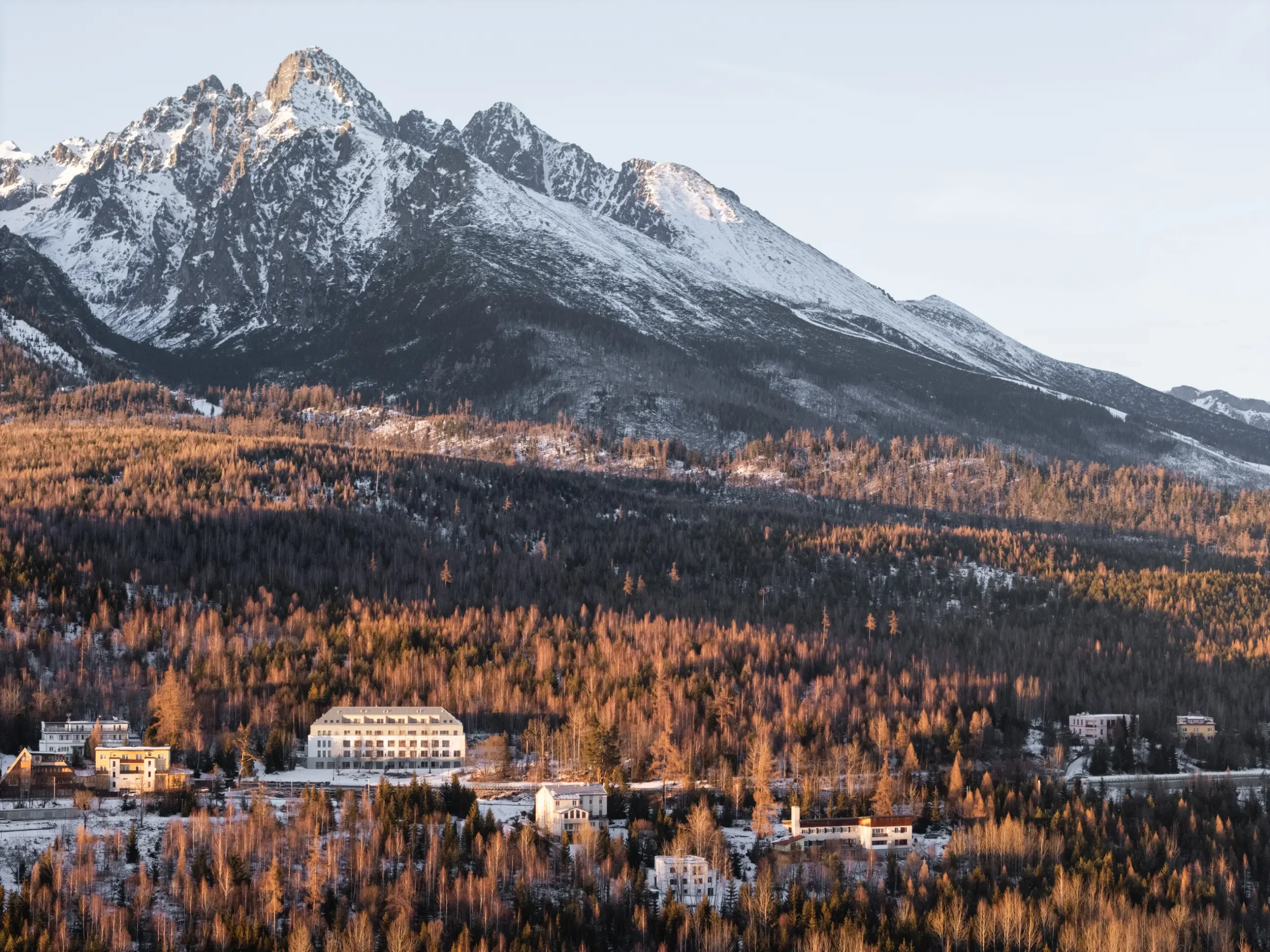
Set at the edge of the forest zone in Horný Smokovec, the Lebenski apartment building reinterprets a former 1960s sanatorium as contemporary mountain living rooted in calm architectural restraint. Atrium Architekti approached the reconstruction as an act of continuity, preserving the original volume and silhouette while carefully expanding its capacity through attic and basement conversions. Drawing on the legacy of High Tatras hotel architecture, the renewed building balances formal clarity with robust materiality — rendered façades, zinc-titanium cladding, and a restored granite plinth anchoring it to the terrain.
From the Architects | The Lebenski apartment building stands solitarily on the edge of the mountain forest zone, behind which the majestic peaks of the High Tatras rise. Its exclusive position in the Horný Smokovec locality, aptly named Pekná vyhliadka (“Beautiful View”), makes it a dominant feature visible from Poprad. Architecturally, the aim was for the building to appear calm in its setting and draw attention with its formal simplicity and purity.
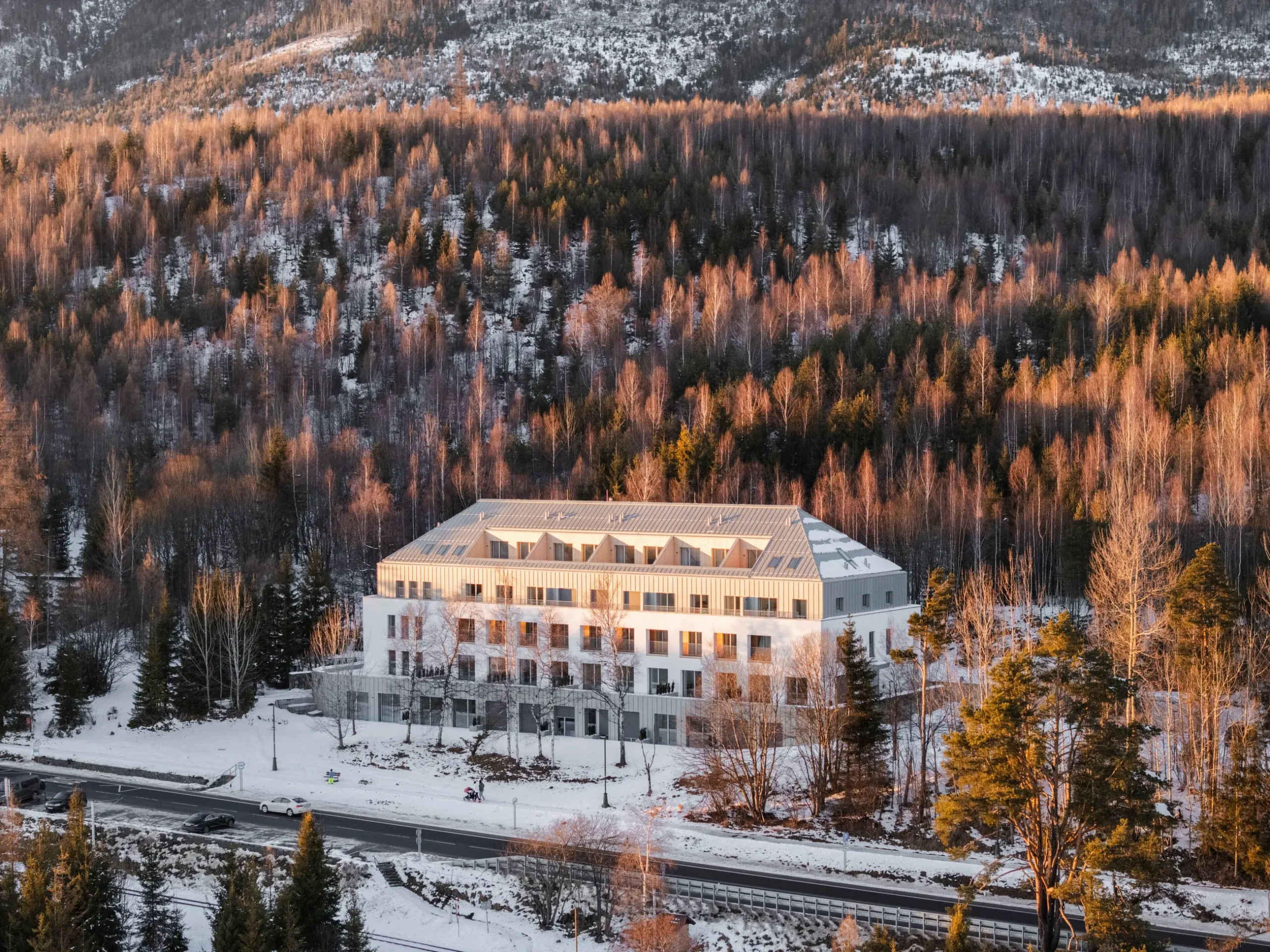
The framework for the reconstruction was defined by the strict regulations of the TANAP National Park and the town of Vysoké Tatry, as well as the investor’s requirement for maximum utilization of all spaces. The architects’ intention was to restore the building’s purposeful elegance, inspired by the architecture of Tatra mountain hotels. The accommodation capacity of the new apartment building was increased by converting the attic and basement into residential spaces, while the original height, built-up area, and silhouette of the building were preserved.
The opportunity to work in the environment of the High Tatras architecture is not a typology we encounter every day. The local Tatra architecture is a historical layer dating back to the Austro-Hungarian era. We found influences from Switzerland, Italy, and Budapest, but also the roots of the local environment and folklore. It is an important architectural footprint of Slovakia, and working in this context was an interesting challenge for which we are grateful.
A sensitive change in architectural expression was achieved by replacing the original gable roof with a hip roof extension, which remains a dominant feature typical of traditional mountain architecture. The new roof now accommodates maisonette apartments with living galleries and recessed terraces, oriented to the south. Balconies and loggias were created around the perimeter of the building, and the enlargement of windows further opened up views of the surrounding High Tatras landscape.
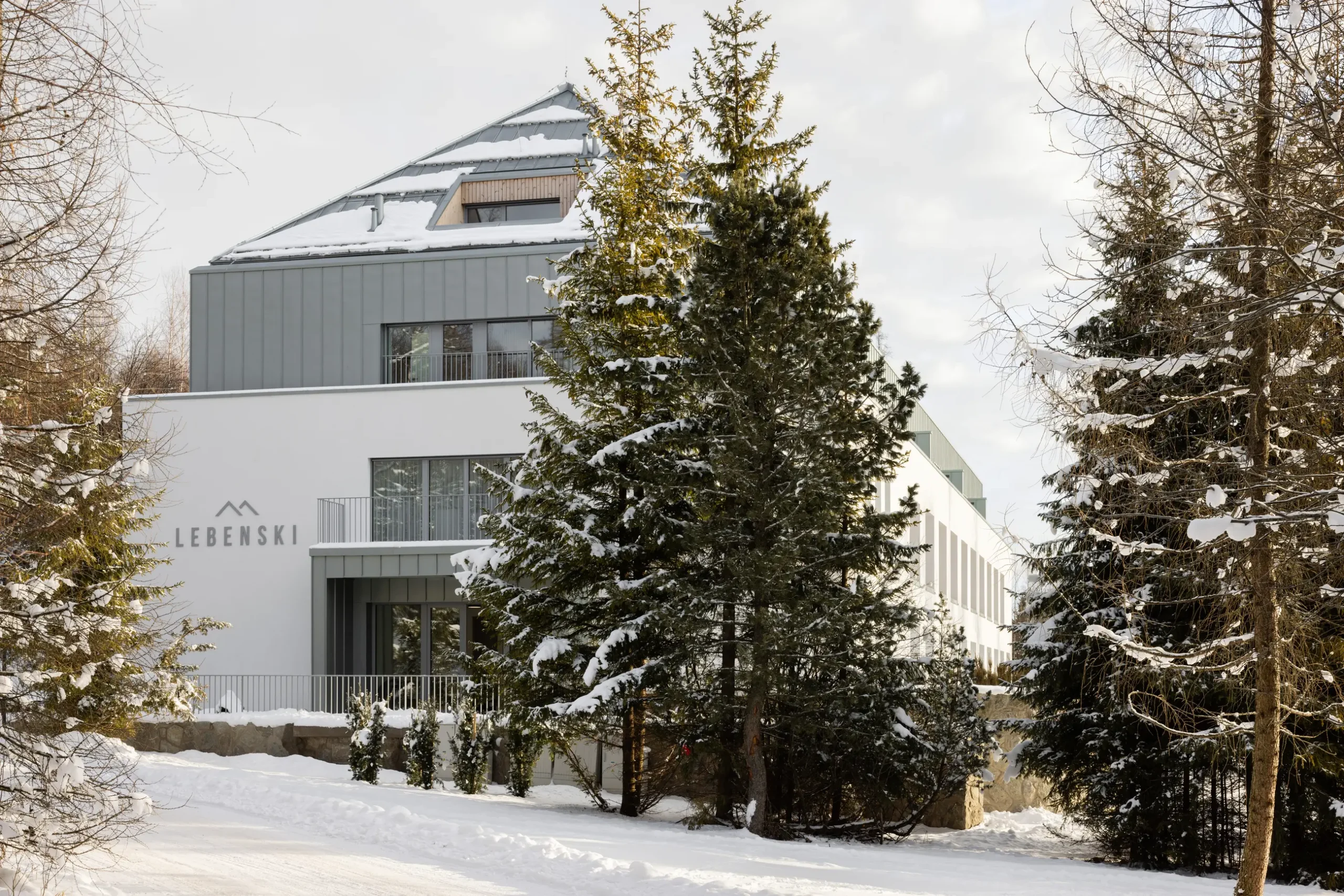
The material solution also respects the object’s character. A zinc-titanium cladding was used on the third floor and in the attic, while the first and second floors have a rendered façade. Despite the significant financial cost, the investor opted to restore the plinth made of massive granite blocks about 40 cm deep, the dismantling and re-laying of which represented an extraordinarily complicated stonework task.
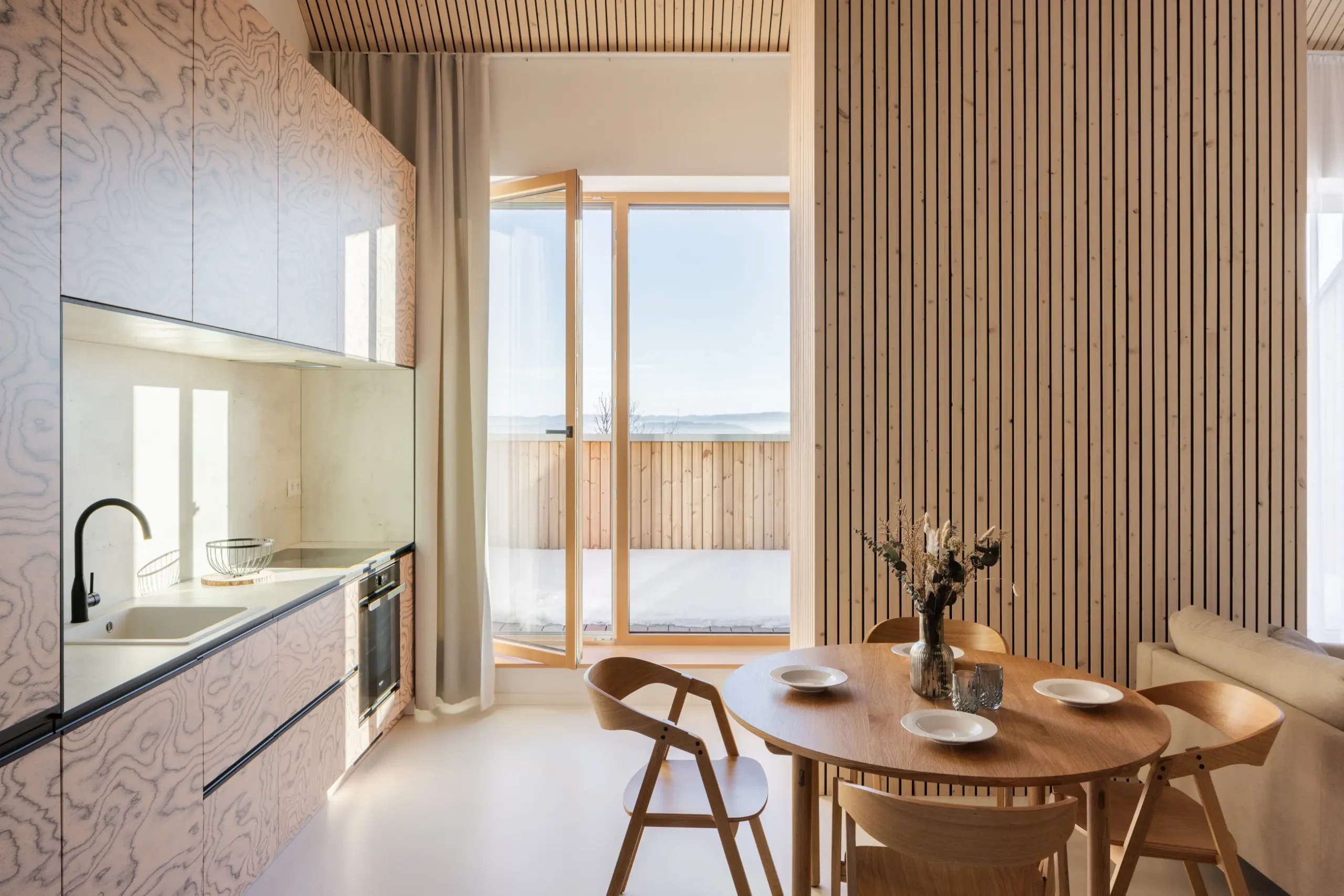
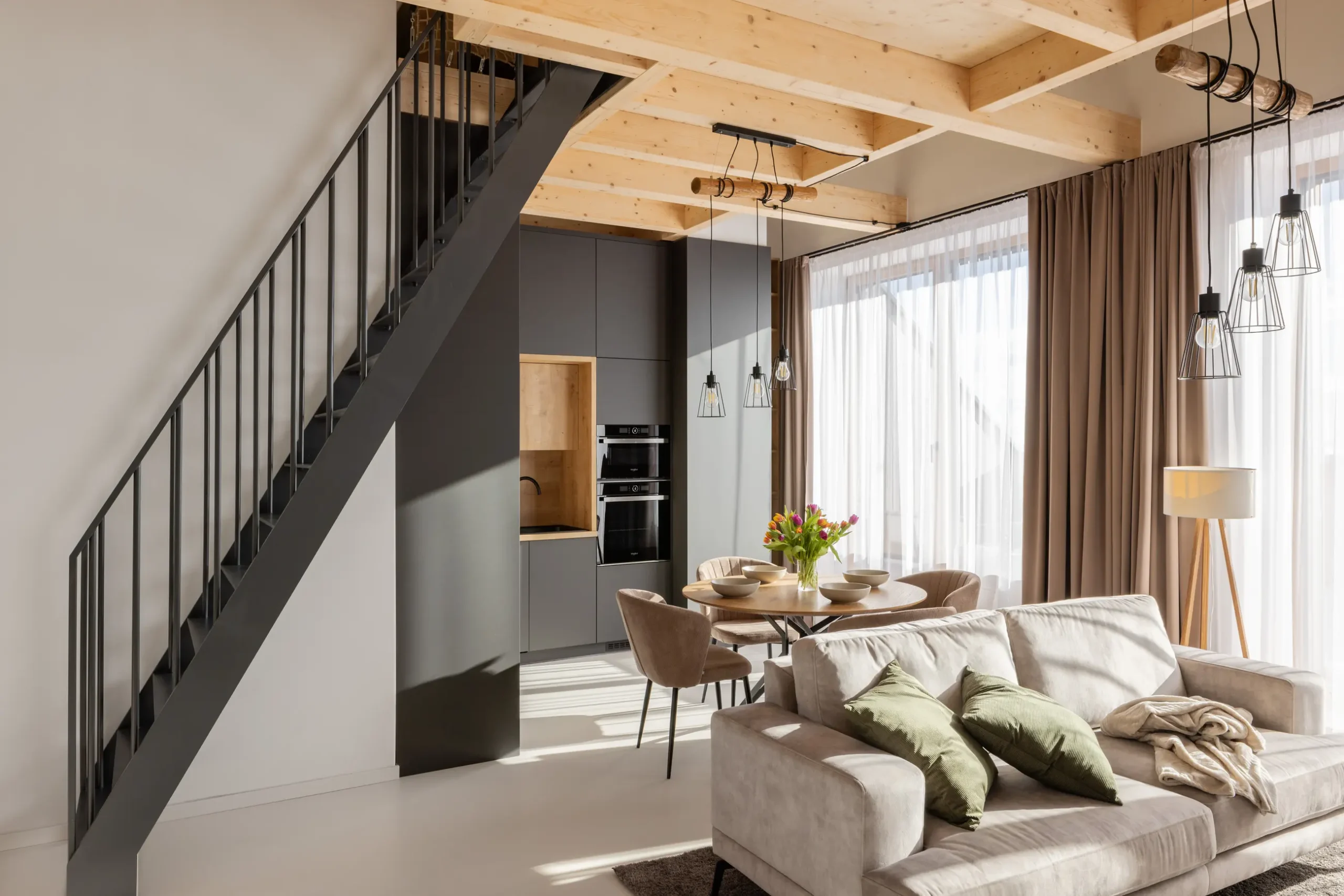
The apartments are designed in various sizes, from smaller units to maisonette apartments with gallery spaces. Within the interior, the architects defined the basic layout, space heights, and key elements, such as a material palette of neutral colors, light floors combined with wood.
Opened views, terraces, and loggias reconnect the interiors with the surrounding landscape, allowing the architecture to remain composed, understated, and deeply attuned to its alpine setting.
Photography by Matej Hakár.
Like what you see? Get it first with a subscription to aspire design and home magazine.