
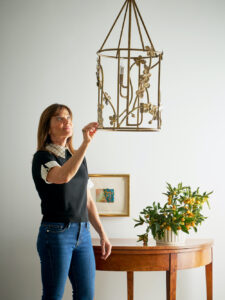
 Claire Crowe is the founder and creative director of Claire Crowe Collection, a Dallas-based metalwork studio known for handcrafted fire screens, lighting, wall sculpture, mirrors, furnishings, and art-forward objects for the interior design trade. For more than a decade, Crowe has built a studio rooted in traditional metalworking techniques and made-to-order design. What began with custom fire screens has grown into a multidisciplinary collection of forged iron, hammered bronze, hand-finished surfaces, and hand-applied patinas, all scaled and finished for the room. Crowe’s work brings long-standing craft methods into contemporary interiors with a point of view shaped by natural forms, movement, proportion, and material restraint. Get to know Claire Crowe and her work in this week’s Maker Monday.
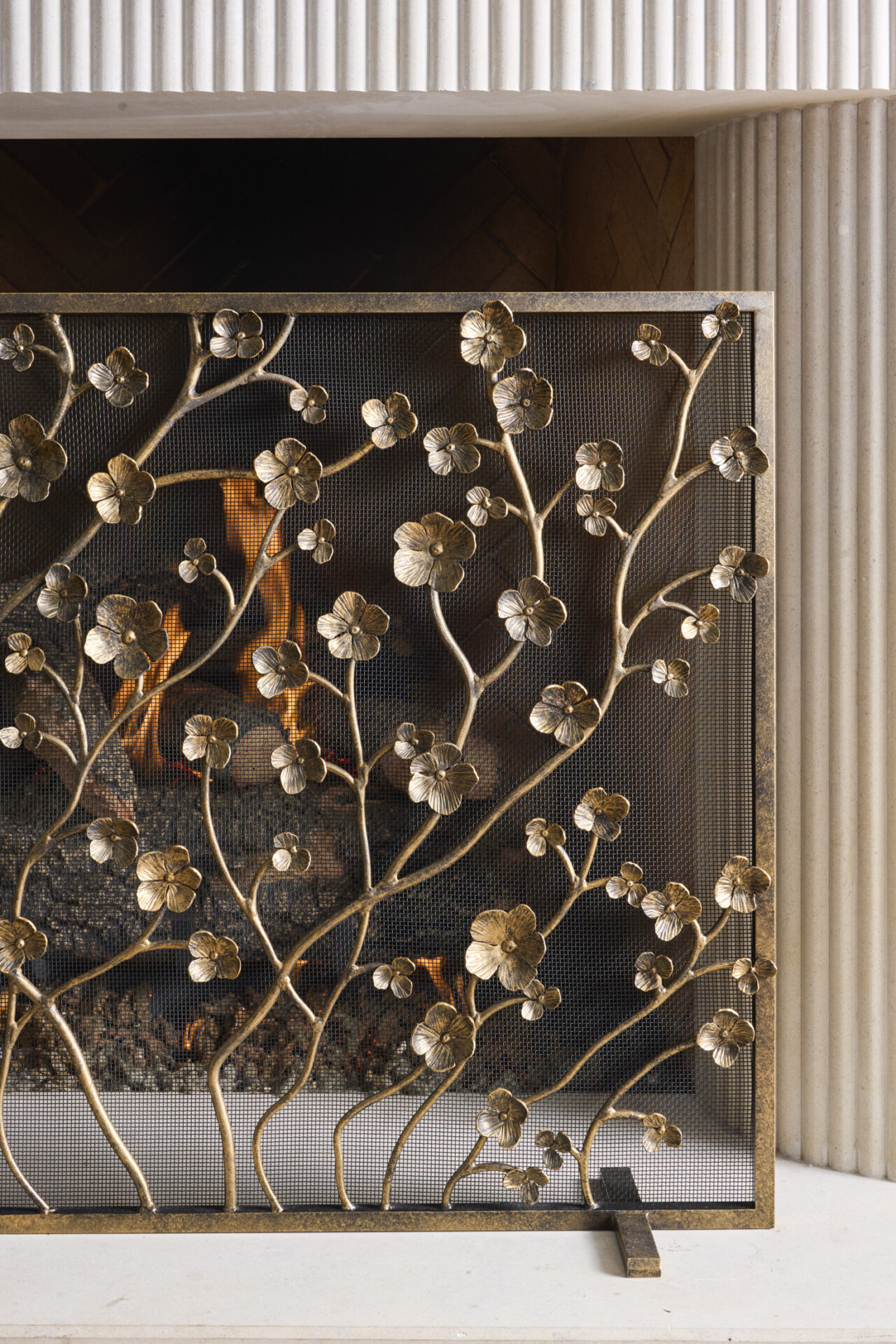
Primrose Garden Fire Screen. Photo by Kate Iwanski Photography
Andrew Joseph: What inspired you to become a designer?
Claire Crowe: I came to design by watching things being made. My mother moved from oil painting to pottery to jewelry to tooled leather belts, and making was always at the center of her life. I spent a lot of my adolescence in my grandmother’s flower shop, around cut stems, fresh soil and the temporary architecture of an arrangement.
My own training is in English literature, not design, and that turned out to matter. I read a piece the way I read a sentence: what’s earned, what’s borrowed, what’s too much, what should be cut. The studio started at home. I designed fire screens for our own fireplaces and saw that the fireplace could be a canvas for hand-forged metalwork, when most people treated the screen as an afterthought. That became the business. Now I’m refining it from a collection of products into a design language of its own
AJ: How do you approach a new design project?
CC: I start with a behavior before I start with a material. Rather than asking which leaf or flower a piece should depict, I ask what it should do: drape, unfurl, hold tension, cast a shadow, darken over time. Then the question is what metal can do that nothing else can. Plaster absorbs light, wood warms a room, stone carries weight. Metal holds a line. It can carry tension across a wall or turn a corner and still stay delicate.
From there it’s visual weight, construction and the room. I usually look for one strong gesture and give it space. Negative space and shadow are part of the drawing from the start, and so is the finish. A hand-applied patina or a moss bronze surface changes how a piece reads as much as its outline does. For the people who live with it, that’s what they notice over time: the shadow moving across the wall through the day, the patina deepening.
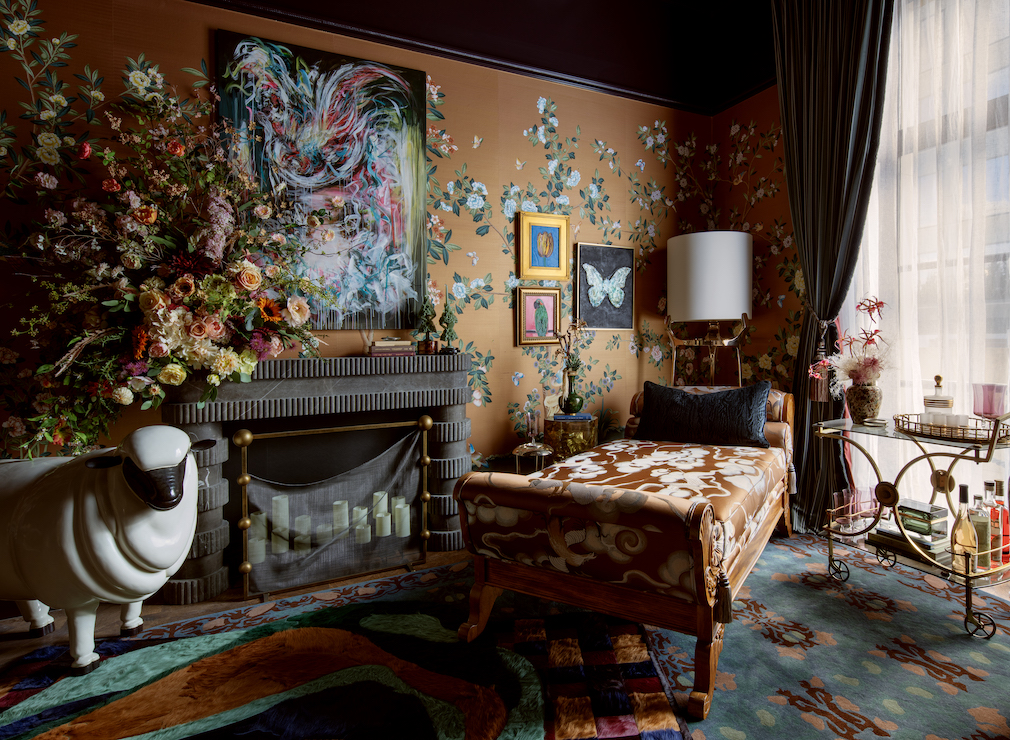
Britt Design Group’s dressing room at the Kips Bay Decorator Show House Dallas. Photo by Nick Johnson
AJ: How do you stay creative and inspired?
CC: Inspiration isn’t the hard part. Ideas come from books, plants, old ironwork, jewelry, a decaying leaf on the sidewalk, and they come faster than we can make them. The hard part is deciding which ones belong to the studio.
That’s where the editor in me does most of the work. I’m looking less for a new subject and more for a clearer language: forged line, shadow, void, patina. An idea earns its place when it moves that language forward, and when it could grow into a family of pieces rather than a single object.
AJ: Can you describe a project that you’re particularly proud of?
CC: Right now it’s a fire screen for Britt Design Group’s dressing room at the Kips Bay Decorator Show House Dallas. The room is theatrical, with draped fabric across the ceiling and layers of textile and texture.
We designed the screen in response to the room. The center panel is draped wire mesh, held at three points by bronze holdfasts we’re developing in-house through lost-wax casting. The frame is deliberately quiet. The mesh behaves like fabric, but it’s held in metal, and tension and shadow carry the piece rather than a motif. It’s the clearest expression so far of where the studio is going. It was conceived with the room, not placed in it.
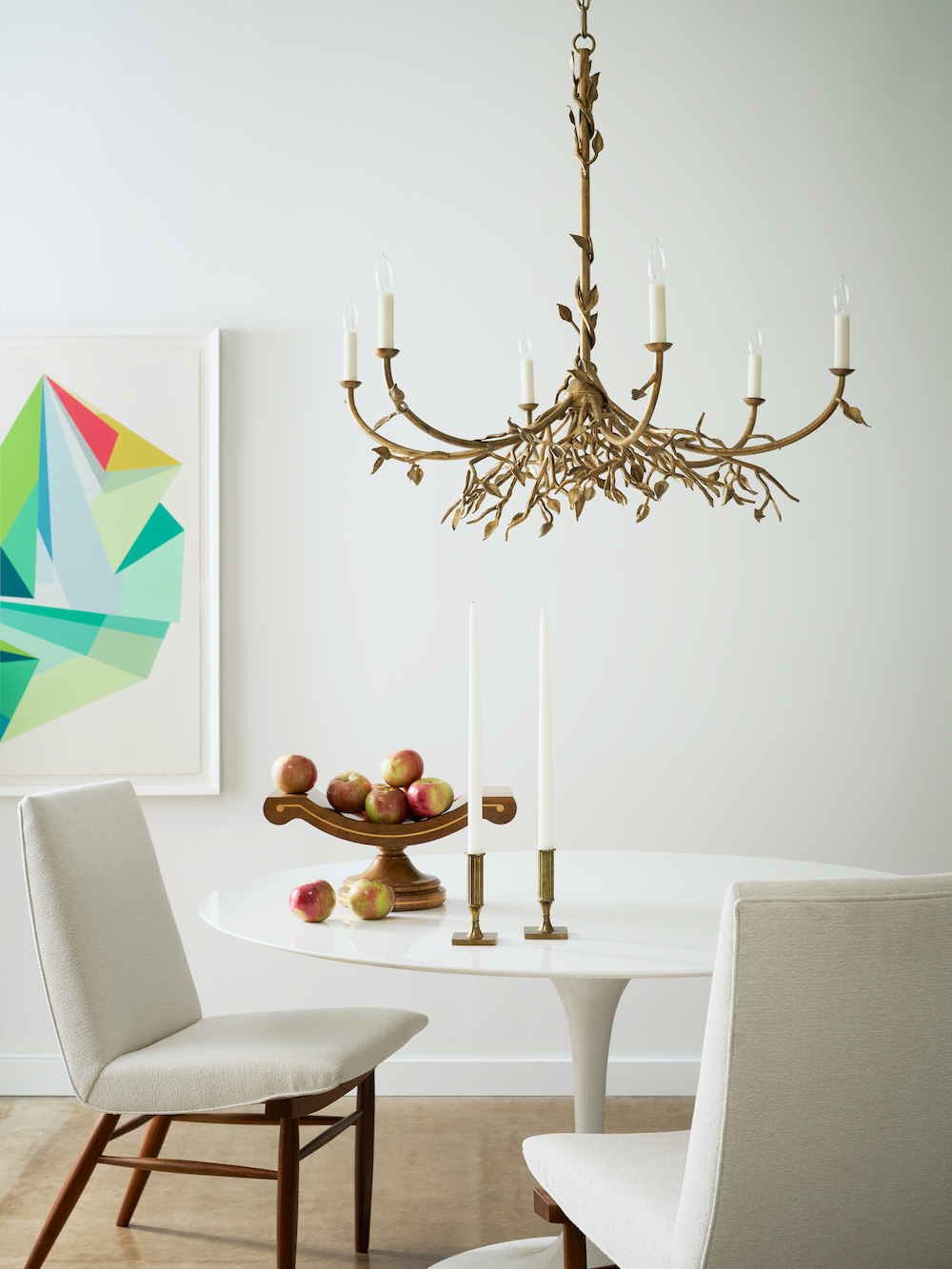
Lennox Chandelier. Photo by Stephen Karlisch
AJ: What would your dream project or dream client be right now?
CC: Projects where the metal becomes part of the architecture instead of an object hung on a wall. A wall sculpture that depends on its shadow. A lighting piece that changes as you move around it. A fireplace opening where the metal, the void and the room all have a role.
That’s where most of our new work is headed, in sculptural lighting and wall pieces. The best version is a real collaboration: a designer thinking about the whole room, and a client who wants to live with something made for it. Fire screens will always be the foundation; they taught us scale, heat, mesh and patina. Hospitality may come later, once that language is fully built.
AJ: What is your favorite aspect of your job?
CC: Seeing an idea move from a sketch to metal. Designs begin as drawings in our studio, with me and our small team, and then we work with local craftspeople who forge, shape, finish and patinate each piece by hand. Everything we make is made to order.
More and more of my attention goes to the finish. Patina is applied by hand, layer by layer, and it’s where judgment shows most. Two pieces from the same drawing can come out slightly different, and they should.
I like that we use methods a medieval smith would recognize (heat, hammer, anvil) to make pieces for contemporary rooms. For me, it’s less about preserving the past than about authorship: every piece starts as a drawing in our studio and ends with a patina applied by hand.
Like what you see? Get it first with a subscription to aspire design and home magazine.