
 Haim Attias is a seasoned CEO and entrepreneur with over 25 years of leadership experience, driving innovation and excellence across various industries. As founder and CEO, Haim is the driving force behind Light and Green, a premier brand specializing in architectural LED lighting fixtures made from eco-friendly plaster and ceramic materials. Under his guidance, Light and Green has become synonymous with sustainable design and high-quality craftsmanship, providing innovative lighting solutions that align with the principles of energy efficiency and environmental responsibility. Haim’s work reflects a deep commitment to blending cutting-edge technology with sustainability. His entrepreneurial spirit, results-driven approach, and dedication to long-term value creation have made him a respected leader in both the lighting and investment industries. See how Haim utilizes the art of subtly in lighting in today’s Maker Monday.
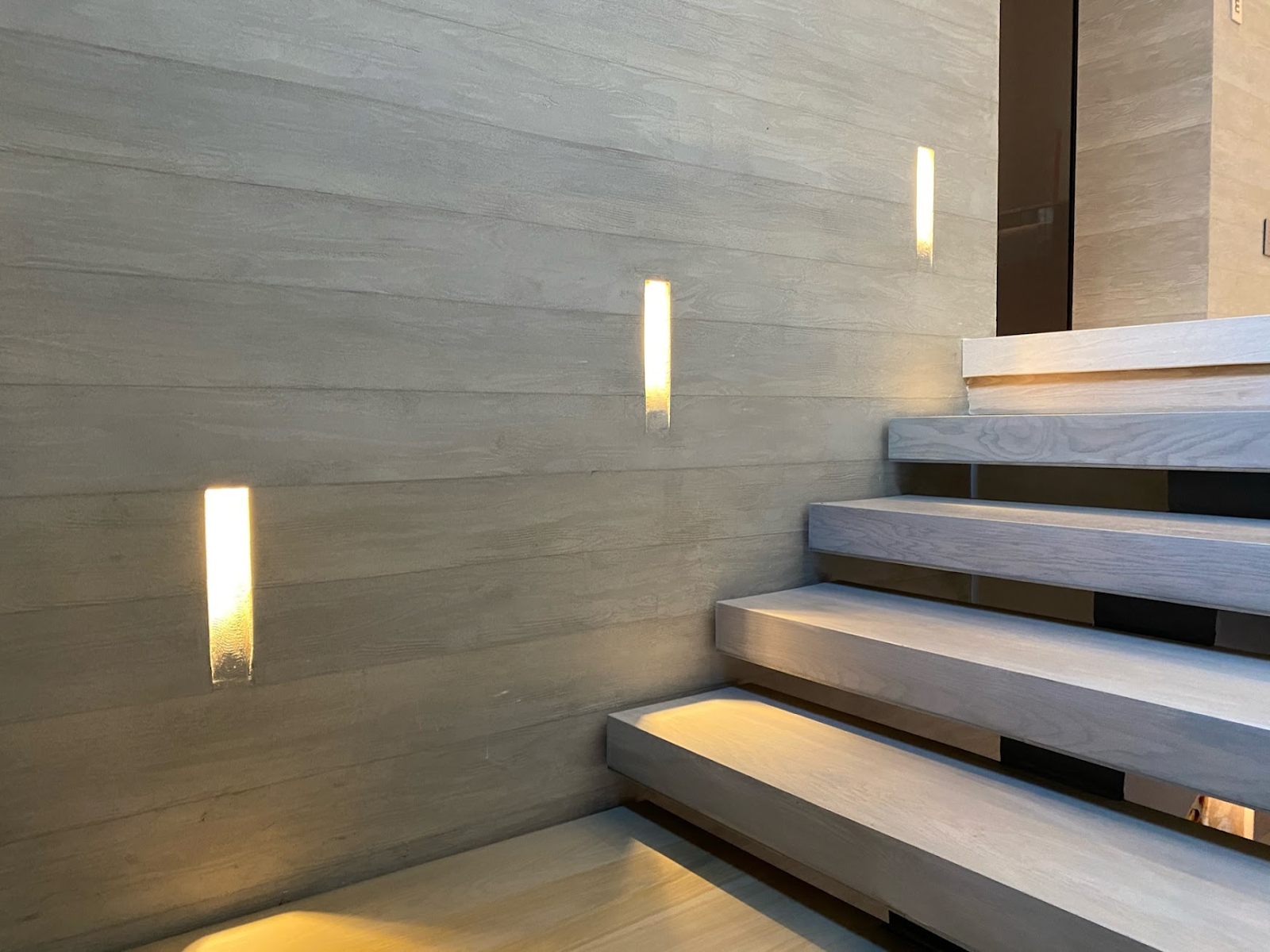
Recessed lighting subtly illuminates the textured wall and floating stairs, blending seamlessly into the architecture to create a serene and understated ambiance.
Andrew Joseph: Can you describe a project that you’re particularly proud of?
Haim Attias: “The One.” Beyond the scale (it’s over 100,000 square feet), what makes this project stand out is the delicate balance we had to strike between luxury and minimalist design. The client was very particular about maintaining an almost invisible lighting presence, while still achieving functional illumination across such a vast area. The challenge was not only technical but also philosophical, aligning our lighting solutions with the architecture and vision for the space. I’m proud of how we maintained the seamless, monolithic aesthetic while providing ample light for every corner of the space, and how we managed to exceed the expectations of such a discerning client.
AJ: How do you stay creative and inspired?
HA: Traveling is more than just a break for me; it’s a way to recharge. When I visit showrooms and see how different designers approach lighting and space, I’m reminded of the endless possibilities we have in this field. Whether it’s seeing a unique fixture or discovering an innovative material, it always sparks new ideas. Additionally, meeting designers from different cultural backgrounds brings fresh perspectives. I love learning how people in various parts of the world use light to enhance their environments — it often inspires me to think beyond the conventional and integrate new ideas into my designs.
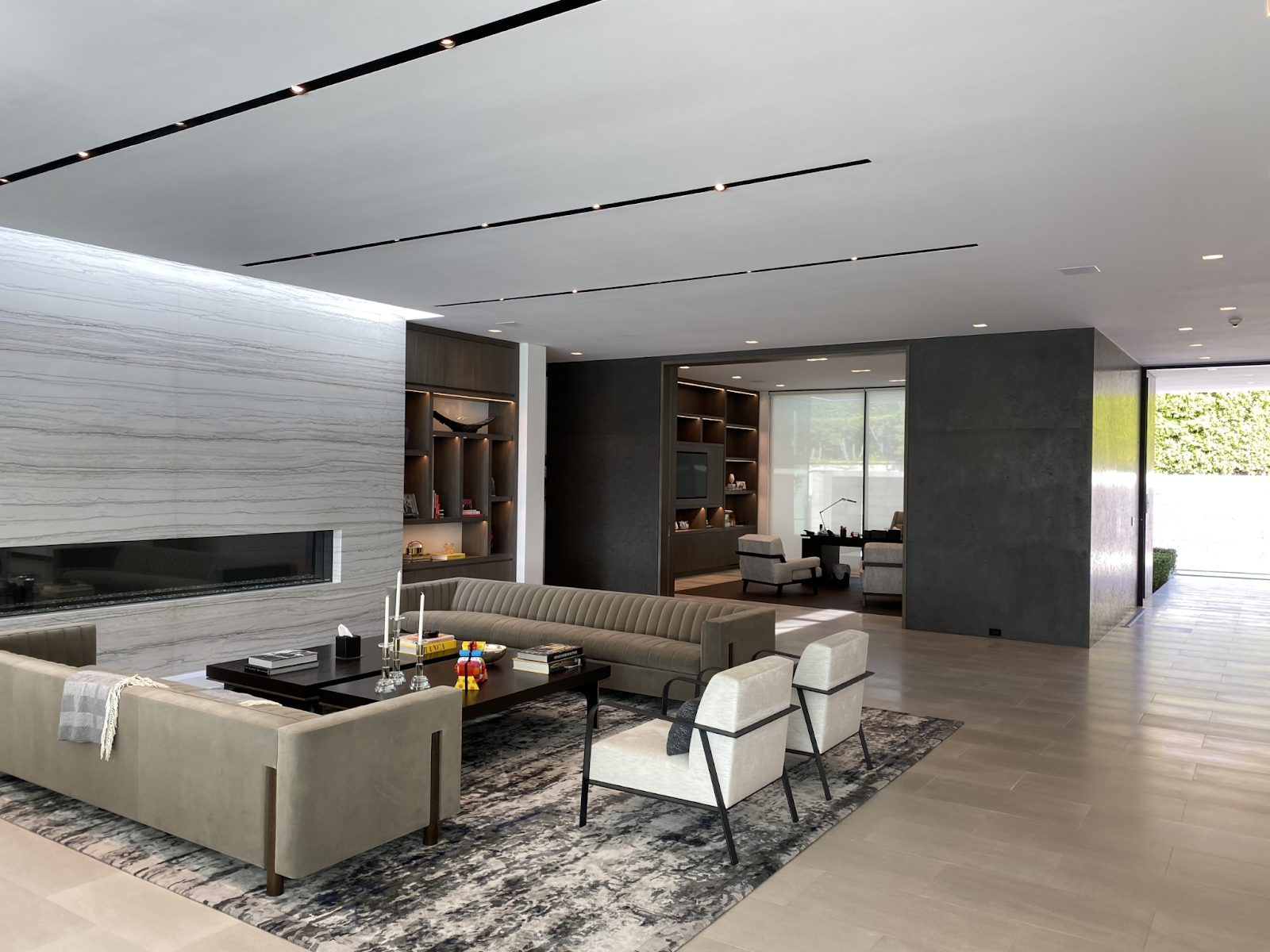
Recessed lighting from Light & Green crafted from solid plaster allows for a trimless, paintable, and texturable installation, elevating the clean aesthetic of any space.
AJ: What is your favorite aspect of your job?
HA: For me, it’s all about the process of creating something that wasn’t there before. Whether it’s the concept for a lighting fixture or the way light interacts with a space, I thrive on the challenge of turning an idea into reality
AJ: How do you approach designing for different types of clients?
HA: My goal is always to design spaces that feel natural and functional for the people who use them. That’s why I take the time to sit down and really understand how a client lives, not just what they want in terms of aesthetics. I ask them about their routines, their needs, and how they envision using each room. By asking the right questions, I can recommend lighting that complements the mood they want to create — whether that’s a warm, welcoming atmosphere or a cooler, more energizing environment. I’ve found that this approach not only delivers beautiful designs but creates spaces where people feel truly at home.
AJ: Can you tell us about a project where you had to overcome a design challenge?
HA: The size of “The One” made it a particularly challenging project. But what made it especially tricky was our commitment to keeping the design as minimalist as possible while still providing enough light for such a massive space. The scale demanded a creative approach — not just in terms of technical lighting solutions but also in how the fixtures were integrated into the architecture. We had to think outside the box to create lighting that was practically invisible, yet still delivered the necessary brightness. The result is a perfect blend of modern luxury and understated elegance, where the lighting complements the architecture without overshadowing it
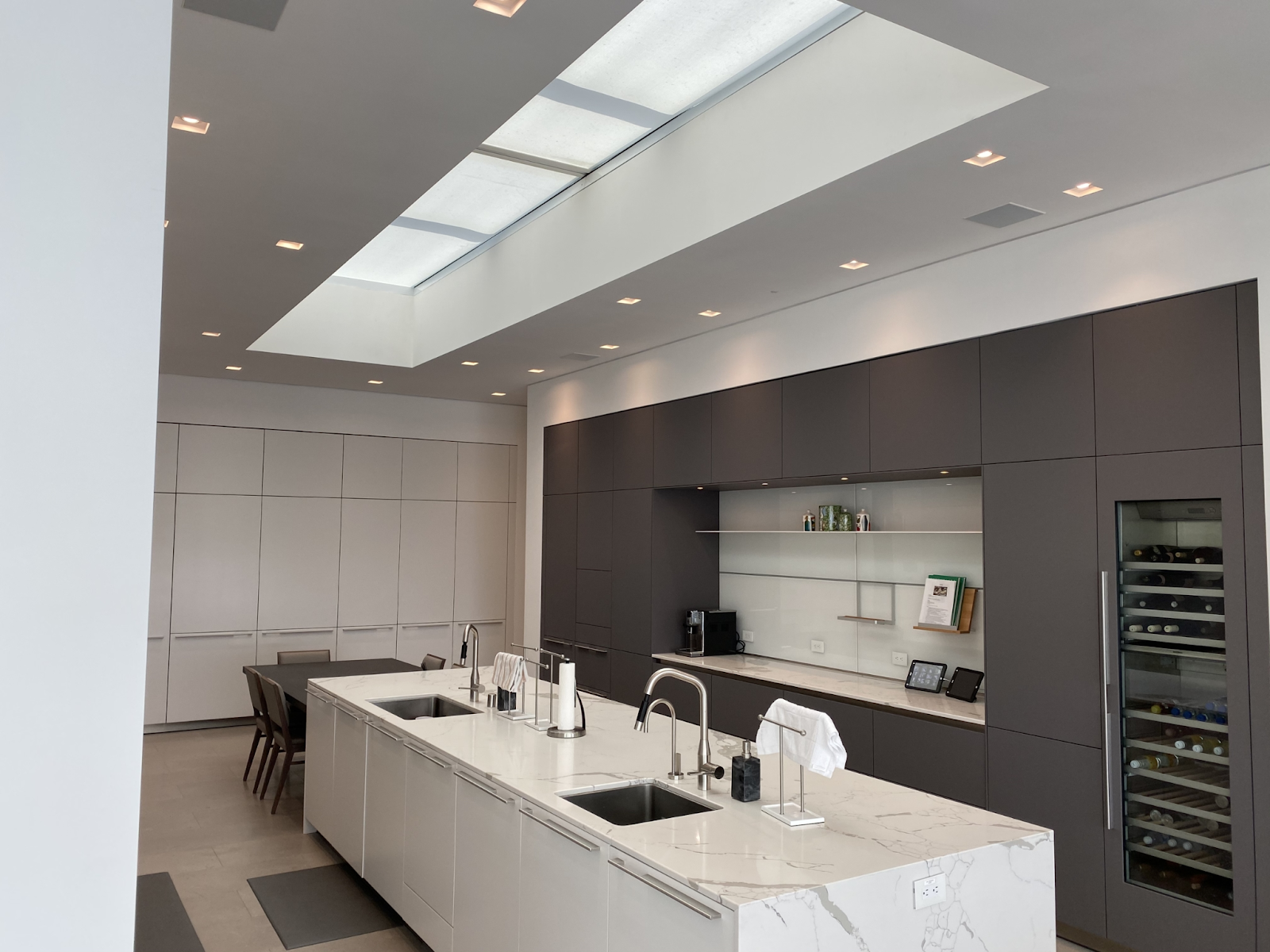
Seamless fixtures create a clean, minimalist ceiling design, eliminating visual clutter for a sleek and modern look.
AJ: How do you incorporate client feedback into your designs?
HA: One of the advantages of my background is the ability to quickly translate client feedback into functional design changes. If a client suggests a modification or if they have a particular vision in mind, I can implement those ideas quickly without compromising the integrity of the design. My engineering and industrial design expertise allow me to immediately assess the feasibility of any adjustments and make them a reality. This flexibility is key to ensuring that the final design not only meets but exceeds client expectations—and provides valuable insights for future projects.
AJ: What is your favorite type of space to design?
HA: I’m drawn to spaces that truly embody daily life. The living room, kitchen, and other common areas are where people connect, relax, and create memories. Designing lighting for these spaces requires understanding not only how they’re used but also the emotional tone they should convey. Lighting can elevate the mood of a space and make it feel alive. These are the spaces where light doesn’t just serve a functional purpose—it creates a sense of comfort.
AJ: What is the most important skill for a successful designer?
HA: To be a successful designer, you must step into the shoes of those who will use the space. It’s about understanding their habits, their preferences, and how they interact with the environment. A great designer doesn’t just think about how a space looks; they think about how it feels and how it works. When you truly understand your clients, the design process becomes more intuitive, and the results are more impactful.
Like what you see? Get it first with a subscription to aspire design and home magazine.