
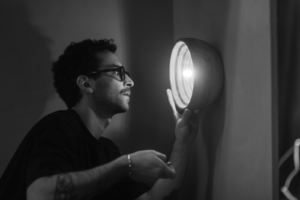
 Martin Espinosa is the founder and creative director of Studio Baldo, a Brooklyn studio working in sculptural lighting and objects. Born in Ecuador, Espinosa came to design by an indirect route. He began in business school before moving to SCAD, where he earned a BFA in industrial design with a minor in furniture design. He graduated in 2020 and moved to New York, where a first job assembling lamps at Roll & Hill became his way into lighting. He went on to spend three years as a designer at Apparatus, then led design and operations at Studio Luddite. He founded Studio Baldo to make work under his own name. The studio debuted at ICFF 2026, with a first body of work in brass, stone and solid wood. The work is built on material honesty. Pieces are designed to function first and to hold up as objects when the light is off, made to be kept and repaired rather than replaced. Espinosa oversees design and production directly, working with artisan fabricators and precision manufacturers across several countries. Learn more about Martin and Studio Baldo in today’s Maker Monday.
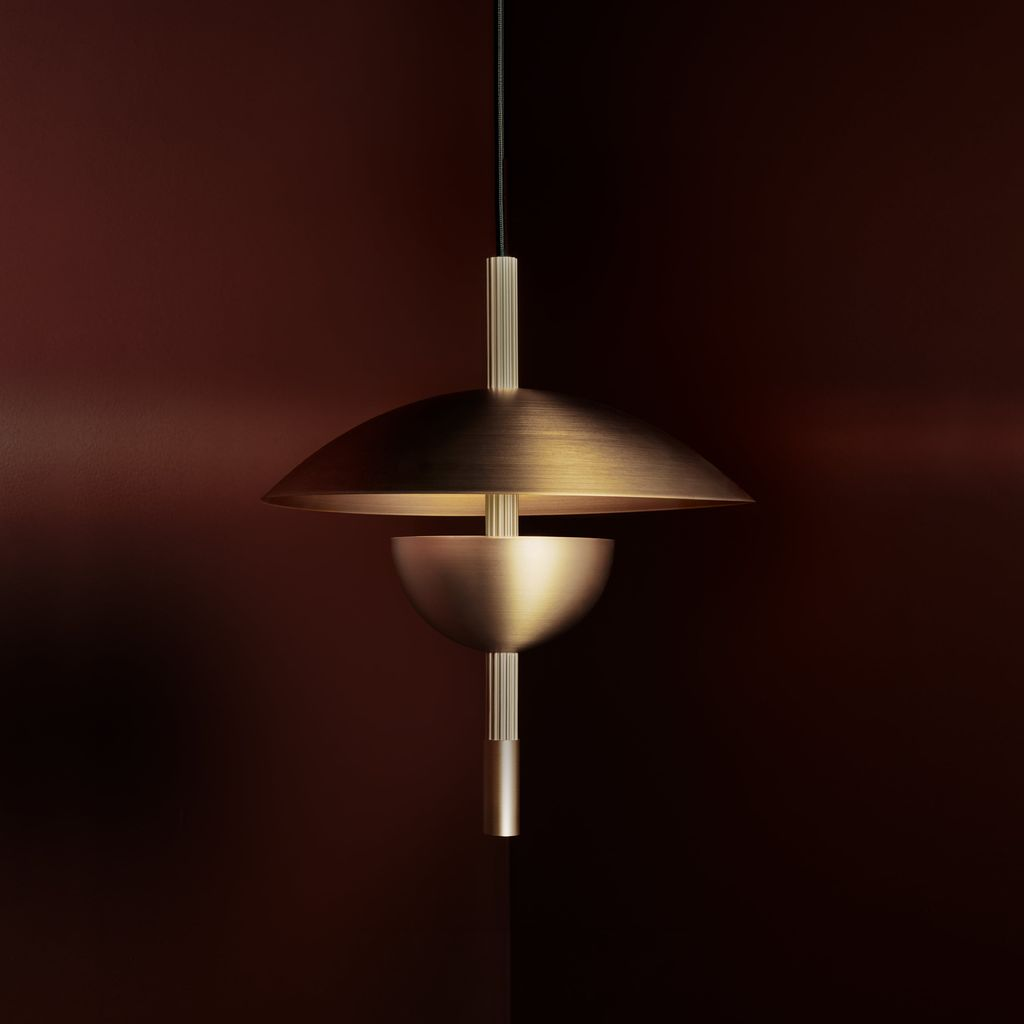
The Orbit Ceiling Pendant uses intersecting metal forms and a central light source to create a balanced halo effect, giving the piece a precise sculptural read from every angle.
Andrew Joseph: What inspired you to become a designer?
Martin Espinosa: I knew I wanted to do something with art, but it never felt like a real option. I didn’t believe I could make a living at it, so I went to study business, entrepreneurship and management at Johnson and Wales, a culinary school in Rhode Island. Being around people who were so passionate about their craft, in the kitchens and at RISD nearby, changed something.
One summer back home in Ecuador, a friend told me about SCAD. That got me to apply, and I earned the scholarship I needed to go. I transferred in as an advertising major, the soft landing my dad could accept. A friend there said that if he weren’t studying architecture, he would be doing industrial design. I didn’t even know what that was, so he walked me through the industrial design building. I was obsessed. It was the thing I had always wanted, and I hadn’t known it existed as a career. I switched my major quietly that week. I spent the next years exploring leather goods, eyewear, footwear and furniture, and finished with a BFA in industrial design and a minor in furniture design.
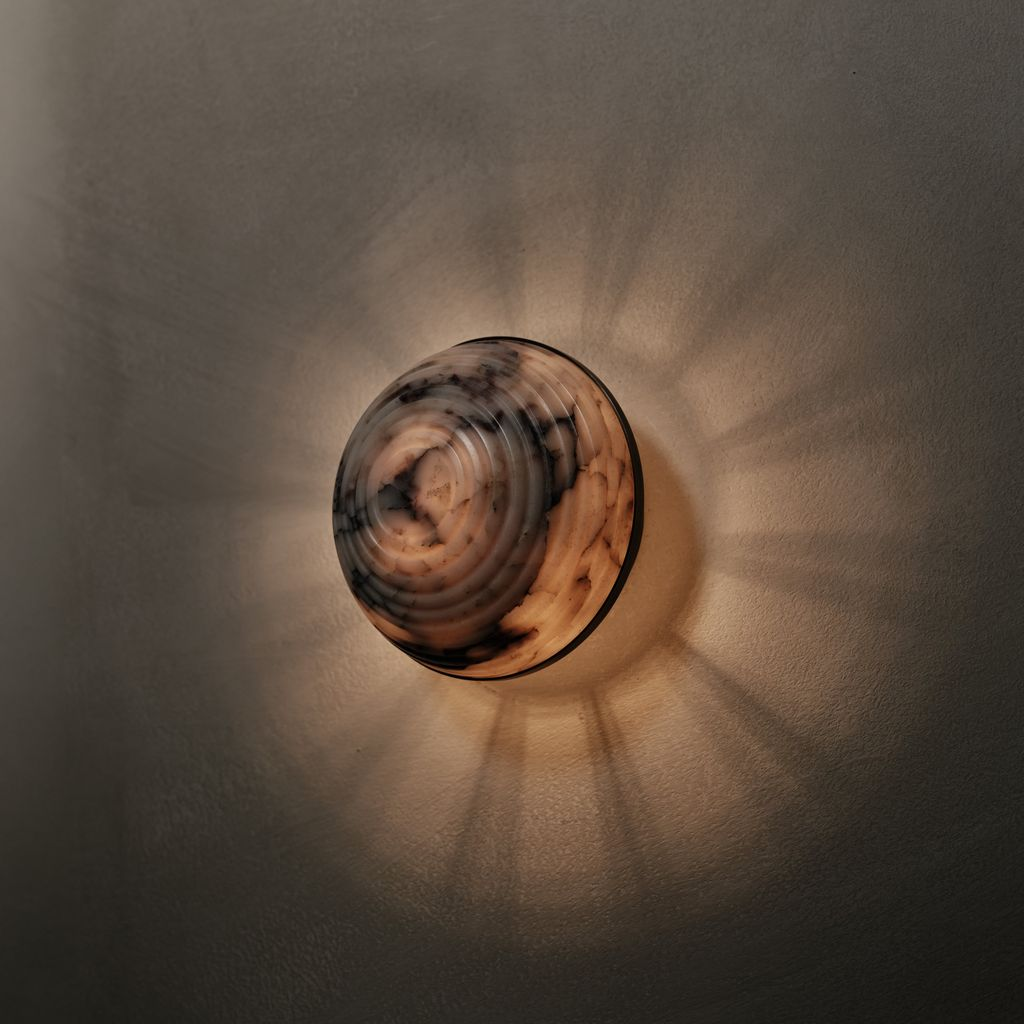
The Contour Wall Sconce turns a heavily veined stone face into a focal point, with carved concentric ridges pushing warm light into a radial wash across the wall.
AJ: How do you stay creative and inspired?
ME: Morning walks with my dog and traveling as much as I can.
AJ: Most challenging project and how you overcame it?
ME: My debut. Getting the first 12 pieces from prototype to production across brass, stone and wood, all speaking the same language in a year and a half. The hardest part was getting a finish to read the same, no matter which workshop made it. The fix was patience, persistence, and a lot of back and forth until the standard held.
AJ: Style or design icon, and why?
ME: Gabriel Hendifar. Both an icon and the person I learned the most from in my professional career. Working under him is where I learned to trust the process and let the work take the time it takes.
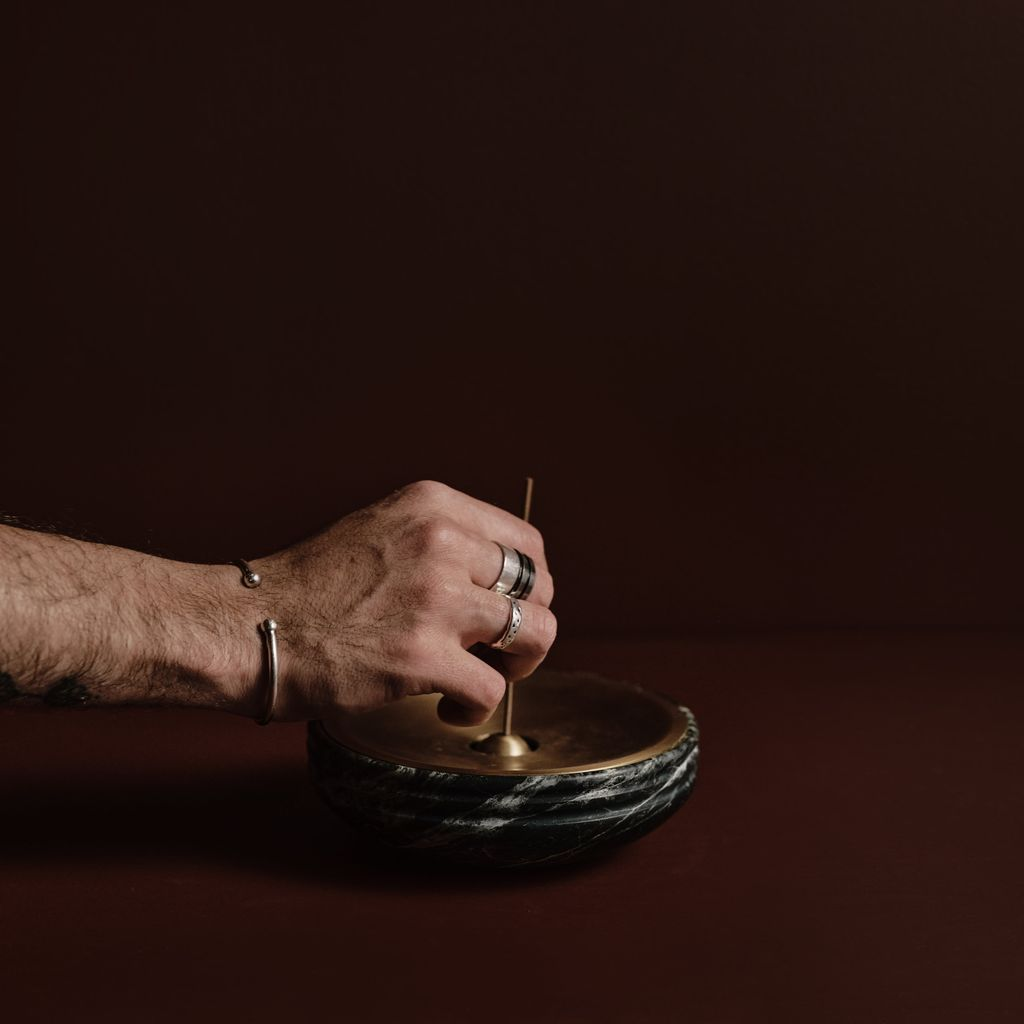
The Nina Incense Burner treats a functional object like a small sculpture, pairing a honed stone vessel with a polished basin and brass incense holder.
AJ: Dream project or dream client right now?
ME: Bad Bunny, or any recording studio. A room built around sound would be a great place to put light.
AJ: If you weren’t a designer, what would you be?
ME: A dropout entrepreneur, probably. I like starting businesses, making something out of almost anything.
AJ: Favorite cocktail?
ME: Negroni or an ice-cold Hazy IPA.
Like what you see? Get it first with a subscription to aspire design and home magazine.