
 Based in Amsterdam and rooted in Taiwanese heritage, lighting brand Taiwan-Lantern was founded by Pei-Ching Hsiao and Jean-Marc Daniëls to sustain and revive traditional East Asian craft through a contemporary lens. Drawing from Pei-Ching’s deep connection to Asian culture, rooted in her upbringing in Taiwan, combined with Jean-Marc’s expertise in conceptual design, Taiwan-Lantern approaches each object with a dual sensitivity: cultural depth paired with a design-led viewpoint, resulting in innovative pieces that honor heritage while breathing new life into traditional practices. Working closely with master artisans who carry generations of knowledge, the studio creates lighting and objects that fuse time-honored techniques with contemporary design. Drawing on bamboo work, natural dyeing techniques, Chinese knotting, and more, each creation embodies a quiet dialogue between hand, heart, and matter, reflecting the unity of maker, material, and soul. Learn more about Pei-Ching and her lanterns in today’s Maker Monday.
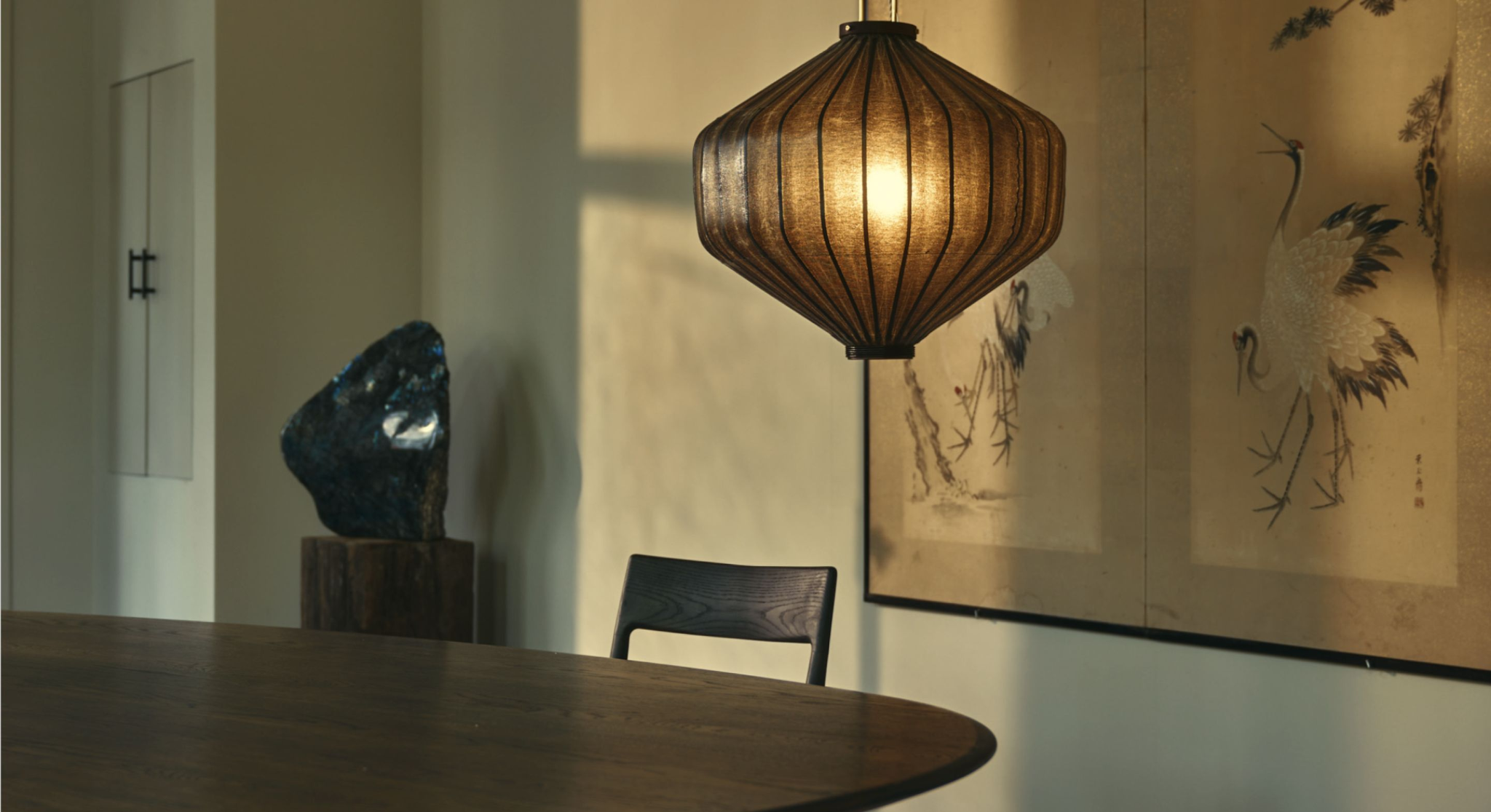
With its generous scale and translucent construction, the Pendant Lantern creates a moment of visual pause within the dining area.
Andrew Joseph: Can you describe your design philosophy in three words?
Pei-Ching Hsiao: Reverence, presence, craftsmanship.
We chose these words to reflect both our approach to design and the philosophy that underpins our work. Reverence speaks to the deep respect we have for traditional crafts, materials and the master artisans who carry these practices forward. Presence relates to how our lanterns carry the “soul” of the maker, the time, attention, and spirit embedded in each piece. Craftsmanship is the foundation, the skill, knowledge, and dedication required to create objects with meaning and longevity.
These values are closely connected to the concept of WùWǒ (物我), which translates to “object and self”, where the boundary between maker and object dissolves, allowing the spirit of the maker to live within the work itself.
AJ: Can you describe a project that you’re particularly proud of?
PCH: For me, inspiration always begins with Taiwan. It’s in the landscapes, the rituals, and the quiet presence of tradition in everyday life. After living in the Netherlands for many years, I became very aware of how little people understood about Taiwan, often reducing it to electronics or confusing it with somewhere else entirely. That contrast pushed me to look more closely at my own roots.
In the Nantou province, where my grandparents lived, there is one of the last traditional lantern workshops in Taiwan. I remember these lanterns from my childhood. When my husband, Jean, and I first visited, we fell in love with the craftsmanship and began working with the artisans, bringing these pieces to Europe and gradually reinterpreting them into a more contemporary design language.
At that time, the artisans were still relatively young, and there was strong demand for these lanterns from temples across Taiwan and mainland China. But over the years, we’ve seen that change. It has become increasingly difficult to find new artisans willing to learn the craft, and demand for traditionally made lanterns is declining, often replaced by cheaper, mass-produced alternatives.
As we started collaborating with more craftspeople, we realized this wasn’t unique to lantern making, but something happening across many traditional crafts in Asia. Over time, our mission shifted from simply putting Taiwanese craft on the map to actively sustaining the crafts we value so deeply. By combining traditional techniques with contemporary design, we are able to reach new audiences and create renewed demand, helping ensure these crafts can continue into the future.
Today, our work still draws deeply from Taiwan, but also increasingly from traditional crafts across Asia. We look at these histories not as something static, but as a foundation to build on, translating them into objects that feel relevant in a modern, global context.
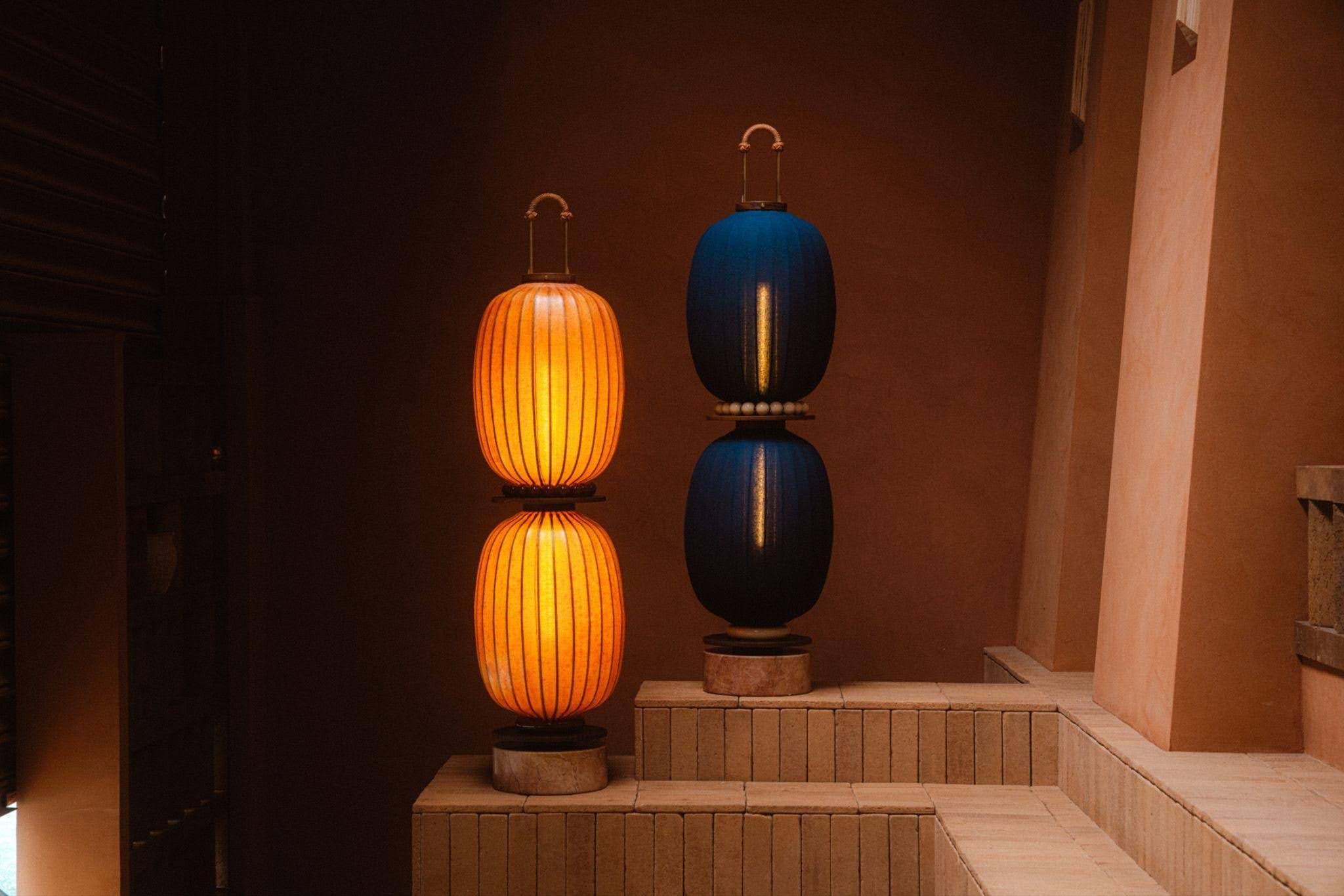
The Table Lantern’s appeal lies not only in its form, but in the atmosphere it creates when lit from within.
AJ: What is your favorite place to find inspiration?
PCH: I’m constantly inspired by Taiwan’s natural richness, from its verdant landscapes and tropical wildlife to the wisdom of its people and the diverse mix of cultural influences on the island. There’s a richness there that continues to guide how we see design today.
But as our studio grows, we’ve also started working with craftspeople across East Asia, which has opened up an even wider field of inspiration. We travel often to collaborate on custom pieces, and in the process, we constantly discover new techniques and traditions I didn’t even know existed. Many of the artisans we work with are older, and the stories they share about their craft and history are incredibly inspiring. We are also deeply influenced by nature in Asia, which we explore whenever possible.
We believe that for these traditions to survive, they need to evolve. By combining age-old craftsmanship with contemporary design, we keep them relevant for modern life and ensure they can be sustained for the future.
AJ: How do you approach designing for different types of clients?
PCH: We approach each project as a close collaboration, especially when working with architects, designers, and brands. Many of our trade clients come to us to customize our lanterns or to develop entirely new pieces, often because of our knowledge and experience with traditional East Asian materials, techniques, and craftsmanship. It’s something we see as both an honor and a responsibility, as it aligns closely with our mission to bring these traditions to a wider, Western audience and help sustain them for the future.
Clients usually come with an initial idea or direction, but the process is always highly collaborative. We immerse ourselves in the project, its context, and its design principles, and then work closely with both the client and our network of artisans to shape the final outcome. Each collaboration is different, often pushing us into new territory, and that’s what makes it so rewarding.
AJ: How do you approach designing for a specific location or cultural influence?
PCH: From the beginning, our intention has been to bring traditional Asian lanterns to a Western audience. While these lanterns, often made for temples, are appreciated for their beauty, they can be difficult to integrate into contemporary Western interiors and architectural projects. Addressing this challenge is at the core of our approach.
In our studio, our team consists of me, my husband, and another designer. Our design process always starts in Amsterdam, so it naturally carries a mix of Eastern and Western perspectives from the beginning. This is especially visible in our standing lantern collection. Traditional temple lanterns are typically hanging objects, while the standing versions reinterpret them through a more contemporary lens, making them easier to place in homes and spaces across the globe.
Our pieces remain rooted in traditional East Asian craftsmanship and techniques, but are reshaped into a new form that bridges East and West, making these cultural references more accessible and relevant today.
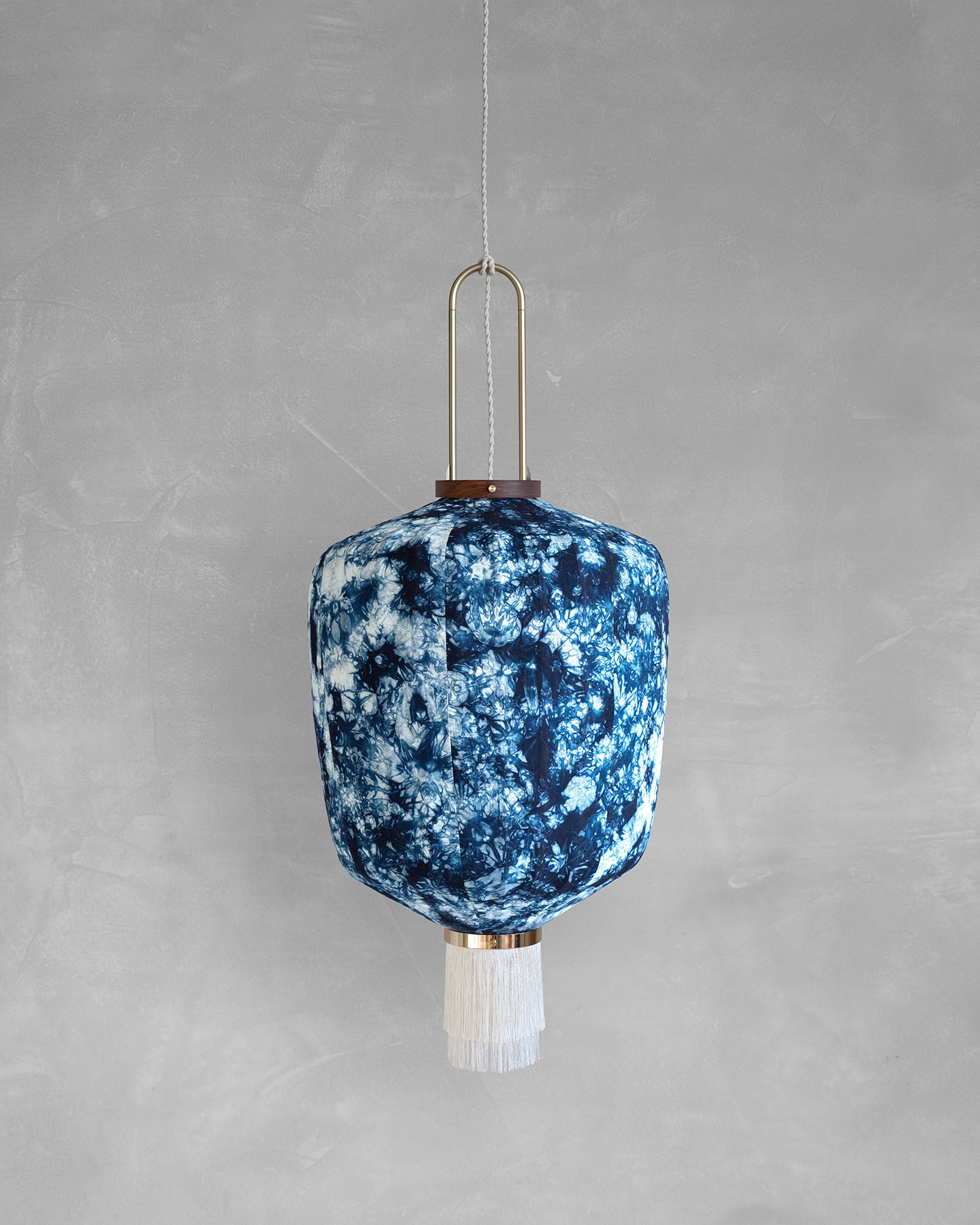
The Taroko Gorge pattern reads almost like a topography of shadow and stone, bringing depth to the lantern’s simple, architectural form.
AJ: What’s your design pet peeve?
PCH: One of our biggest design pet peeves is seeing traditional lanterns replaced by cheaply mass-produced versions, often made of plastic, even in places like temples in Asia. You also see many Western brands creating their own versions, but without any real connection to the tradition behind them.
A true lantern carries deep meaning and symbolism. When it’s made by hand by a skilled artisan, someone who has dedicated much of their life to the craft, it holds a sense of care, knowledge, and even spirit. That depth is completely lost in mass-produced objects made from poor materials for an unaware audience. For us, a lantern should always reflect that craftsmanship and cultural value.
AJ: What would your dream project or dream client be right now?
PCH: A dream project for us would be one that truly celebrates craftsmanship, whether through a meaningful craft award or a collaboration with like-minded brands in Europe or the US that allows our work to be presented at its highest level.
We’re also very interested in developing something beyond products, such as a craft school or workshop that supports education and the transfer of knowledge to future generations.
At the same time, continuing to create new, meaningful pieces that push our collection forward remains an important part of that vision.
AJ: Style (or design) icon and why?
PCH: Isamu Noguchi will always be an inspiration, as it is incredibly inspiring how closely his story resonates with ours. When Noguchi visited Gifu in the 50s, the town where traditional Japanese lanterns, known as chochin, were produced, the local industry had been diluted by the widespread production of cheap imitations in Japan and abroad. Through his work, he was able to transform them into contemporary lighting for people’s homes, giving them new relevance and meaning, while remaining faithful to traditional techniques. In doing so, he helped revitalize the craft behind the chochin and made the difference between handmade quality and mass-produced versions visible again.
We experience a similar reality today, where in Taiwan, cheaply made versions are increasingly replacing well-crafted lanterns. We see it as our responsibility to demonstrate the value of authentically handcrafted, contemporary lighting and objects, while amplifying the voices of the craftspeople and techniques that are increasingly at risk of disappearing. By bringing their work to a wider audience, we aim to make visible what is often overlooked.
Years of dedication result in something you can feel immediately, a presence distinct from machine-made objects. Subtle imperfections tell the story of the hand and the process behind each piece. By making this distinction clear, we hope to breathe new life into this remarkable craft and help ensure its future.
Like what you see? Get it first with a subscription to aspire design and home magazine.