
Architect Paul Masi and his wife, Elizabeth, have had a long relationship with Block Island, about nine miles off the Rhode Island coast. “It stems from our love of the island and its casualness,” shares Masi. They began renting homes there in 1995, married on the island in 1998, then returned with children (two now in high school and one just off to college). So around 2016, when a lot with a 700-square-foot kit home came onto the market, they decided to make their access to that casualness a bit more permanent.
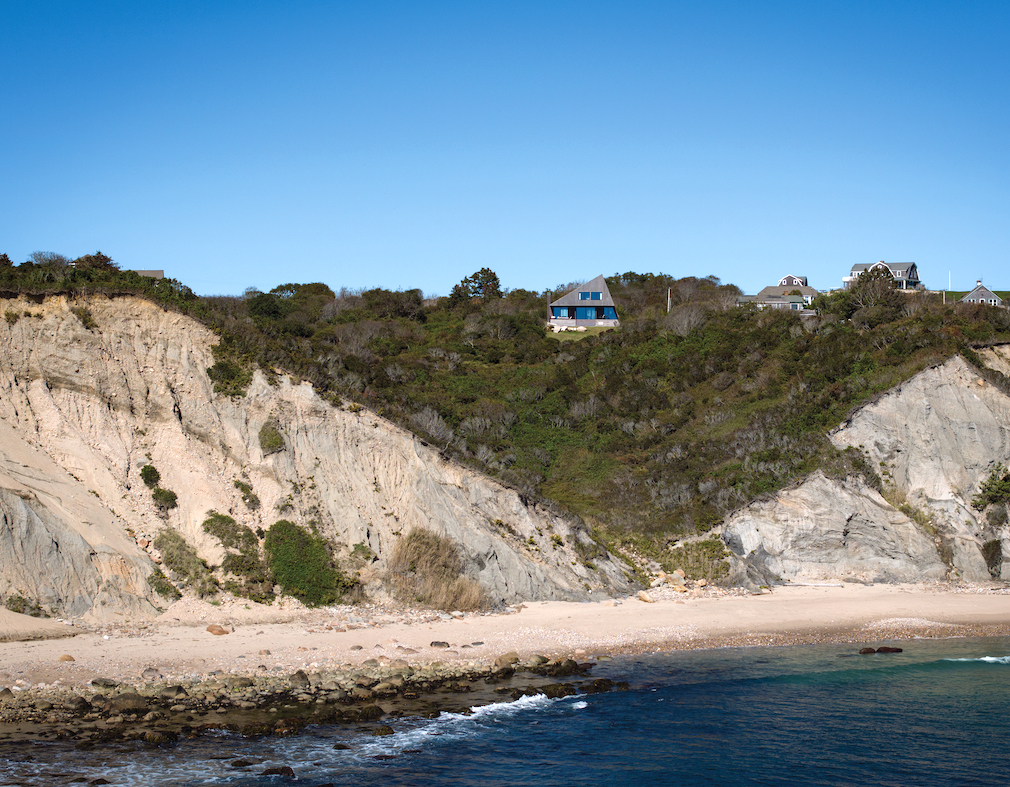
The family visited the cottage, which sat on a windy bluff overlooking the water, for four years before outgrowing it. The decision to build, however, came with some unusual – and challenging – parameters: a paucity of building materials and tradespeople on the island, and in the absence of any cargo transport vessel for materials and equipment, the passenger ferry was the only option, which came with its own strict size and weight limitations. Also, the footprint could not exceed 45 square feet unless Masi broke up the home’s mass.
The architect turned these challenges to his advantage. To erect the eventual 2,400-square-foot structure (with a basement that added about another 650 feet), he chose to simplify both the building form and the palette of materials. Essentially a saltbox cottage typology, the home’s exterior is cedar (in short lengths to facilitate shipping) and glass, with copper accents.
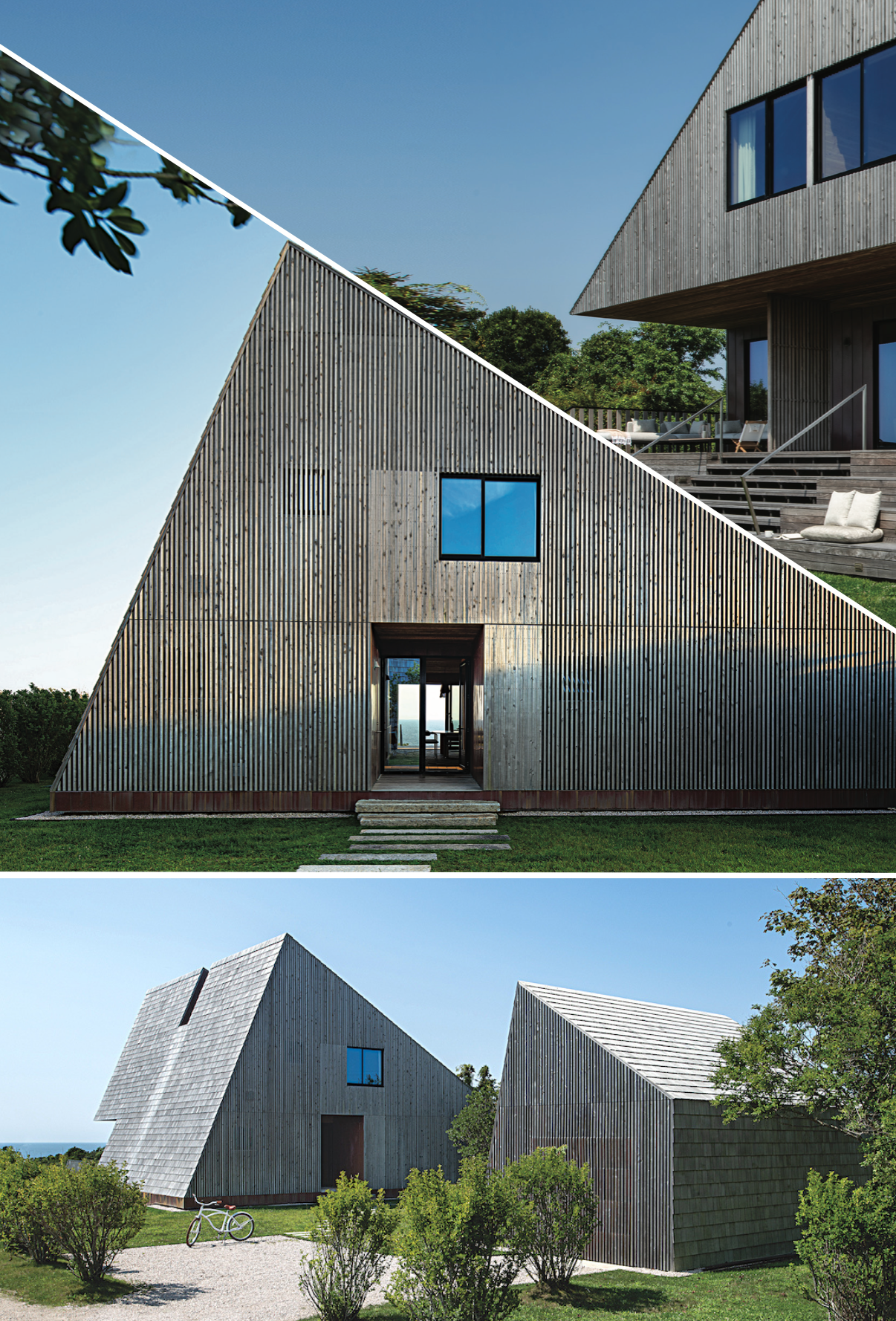
“This blends everything and develops one voice,” Masi explains. “There’s a level of timelessness to it too. It’s something you’re familiar with but more contemporary, yet not in a way that will become dated. All the materials are natural and will weather.”
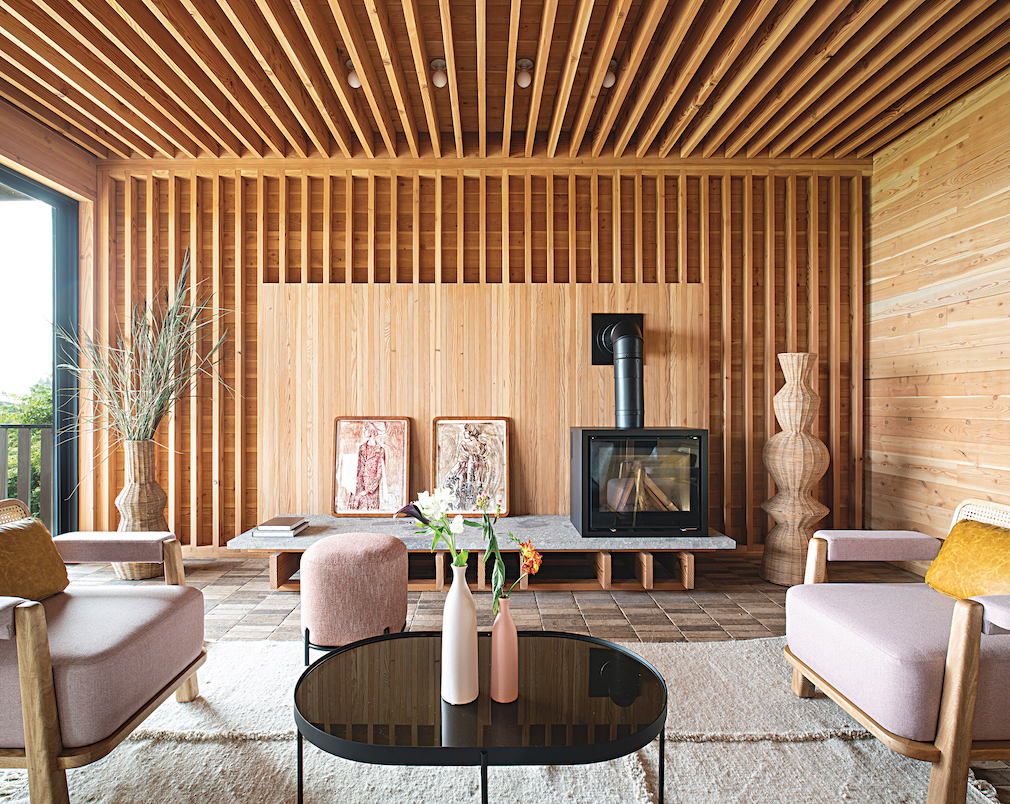
Normally homes are framed out, then sheathed. But with Masi’s home, these become structural and, to some extent, almost one and the same. From the inside, the building appears to be exposed, uninsulated Douglas fir framing. But the fir two-by-eights are spaced closely for sturdiness, which also, Masi observes, “creates a cadence and rhythm that give character to the structure.”
In strategic places – between glass sliders leading to the back porch, for example, or behind the wood-burning stove in the living room – Masi filled in the spaces with two-by-six-foot lengths of cedar that interrupt the cadence, but harmoniously. Yet their function is more than aesthetic. These are through-bolted with threaded iron rods and anchored to the foundation. The whole building is wrapped in hard insulation, then topped with cedar. Masi used copper on the exterior around the water table, but also had it deployed decoratively – and dramatically – as a sheet that becomes the headboard of the primary suite.
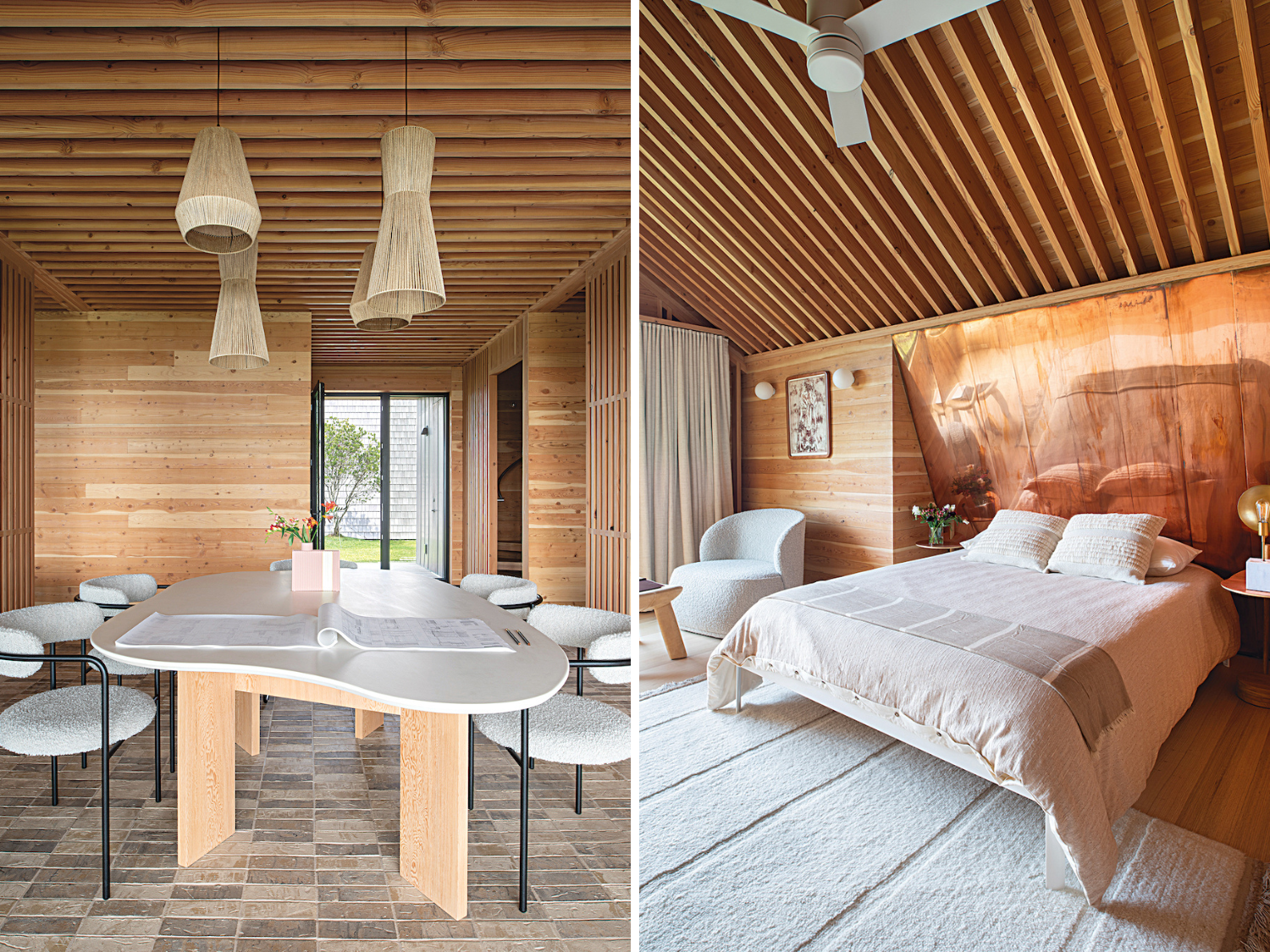
Furnishings are a mix of custom pieces, such as the Corian-topped dining table, and ones, Masi explains, “that are light enough to be in the space and timeless, but with soft lines to contrast with the angles of the architecture.” Many are from Scandinavia and the Netherlands, and “have a classic modern aesthetic, but are a bit more contemporary in terms of finishes and forms.” Sourced through Gestalt New York in Hudson, they include dining chairs and a pair of lounge chairs in the primary suite by Ida Linea Hildebrand (Sweden), barstools by Grazia & Company (Australia) and a living room rug by Samu-Jussi Koski (Finland). Art throughout is by Masi’s parents, both artists.
The utter simplicity of the cottage is intentional, notes the architect – indeed, part of his ethos. “It’s about the environment around you and looking out to the ocean.”
Photography courtesy of Bates Masi + Architects.
Like what you see? Get it first with a subscription to aspire design and home magazine.