
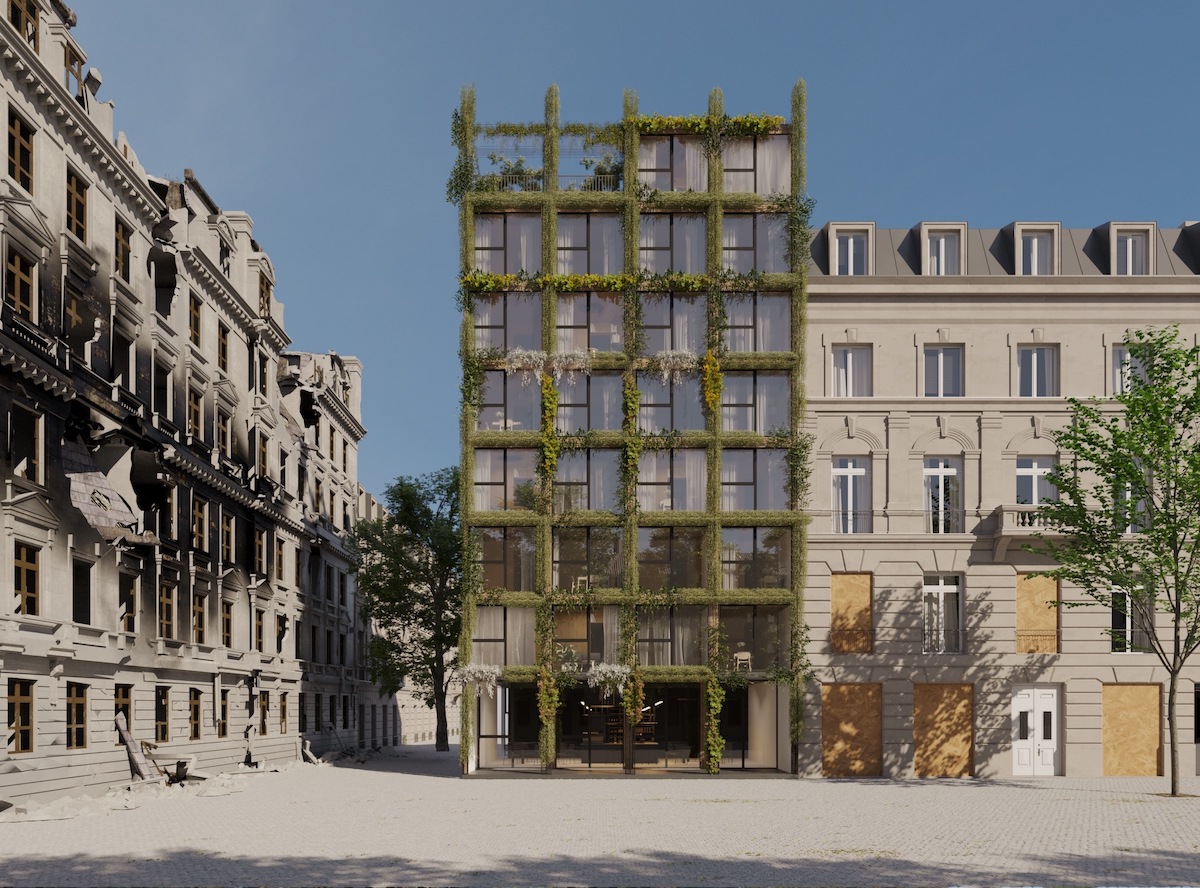
Paris-based award-winning architecture design studio, Cutwork has created ReHome, an off-site modular construction solution that seeks to address the global housing crisis equally in times of emergency and stability and the human right to shelter.
Working with the Deutsche Gesellschaft für Internationale Zusammenarbeit (GIZ – German Society for International Cooperation), ReHome was initially developed as a low-cost, rapid-deployment housing solution to rebuild Ukraine, beginning with a demonstrator project in Lviv to showcase the concept. While the demonstrator project in Lviv is on hold, Cutwork recognised ReHome’s potential as a project with broader scope, relevant for addressing the continued growing global housing crisis, particularly within Europe and USA.
According to the National Association of Realtors, the United States is currently experiencing a housing shortage of between 5.5 and 6.8 million units, with the gap between supply and demand widening every year. Reports show that when people are unable to access suitable housing it can result in overcrowding, more young people living with their parents for longer, impaired labour mobility, which makes it harder for businesses to recruit staff, and increased levels of homelessness.
ReHome is Cutwork’s vital and immediate response to the general housing shortage. Its off-site modular system is able to accommodate many and changing numbers of people comfortably, being easily adaptable and expandible for more spacious living according to the evolving needs of its inhabitants. The modular architecture is far cheaper, easier, and faster to produce than traditional construction methods and can be actioned without any of the time or geographical restraints so commonly associated with housing developments.
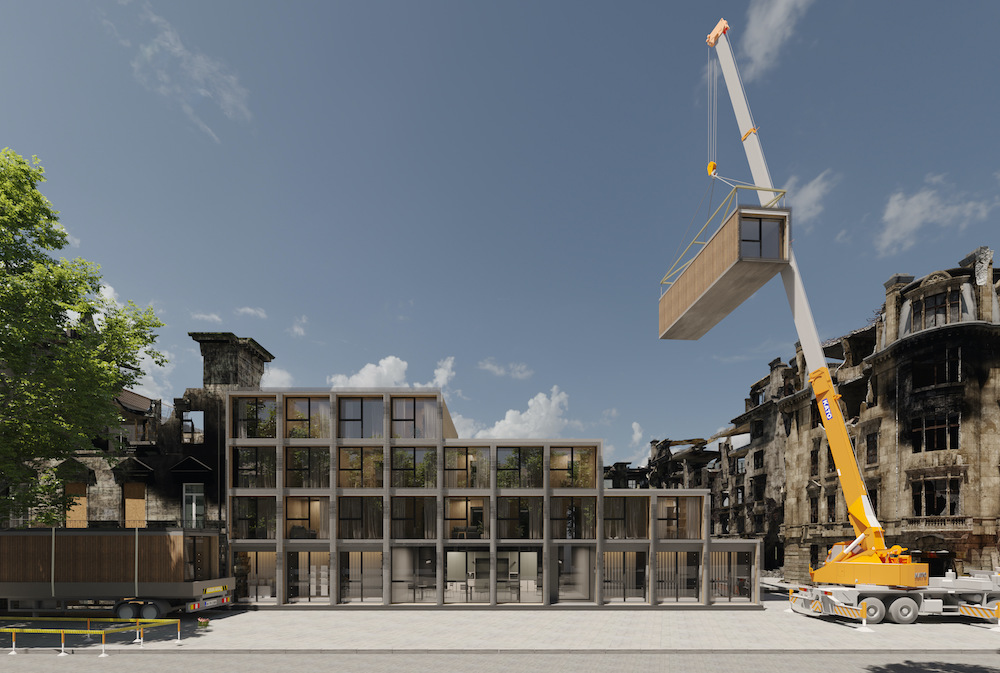
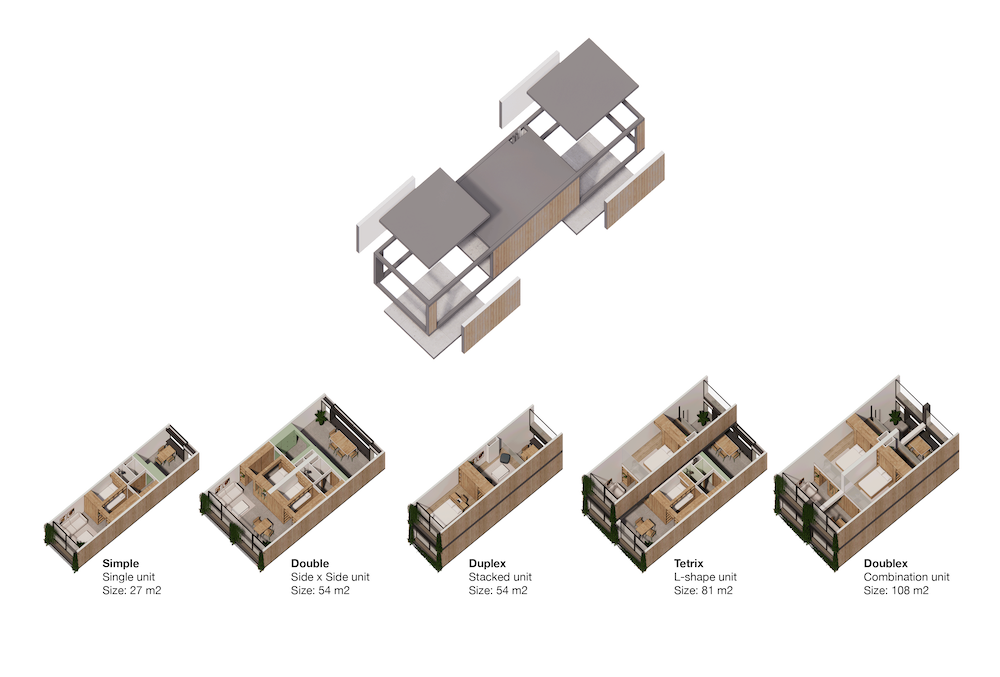
Composed of 27m2 modular units, the blocks can be stacked like LEGO bricks to complete a full residential block up to six stories in significantly less time and cost compared with traditional construction methods (up to 40% less time for teams on-site to complete the building). This modular nature allows ReHome to adapt to a wide-range of conditions and contexts, enabling rapid re-urbanization across diverse environments.
Another key to ReHome is its affordability. Says Cutwork co-founder and lead architect, Antonin Yuji Maeno, “Regarding the size of the challenge ahead, we can see how prefabrication reduces the cost dramatically for creating affordable, modular housing with economies of scale.”
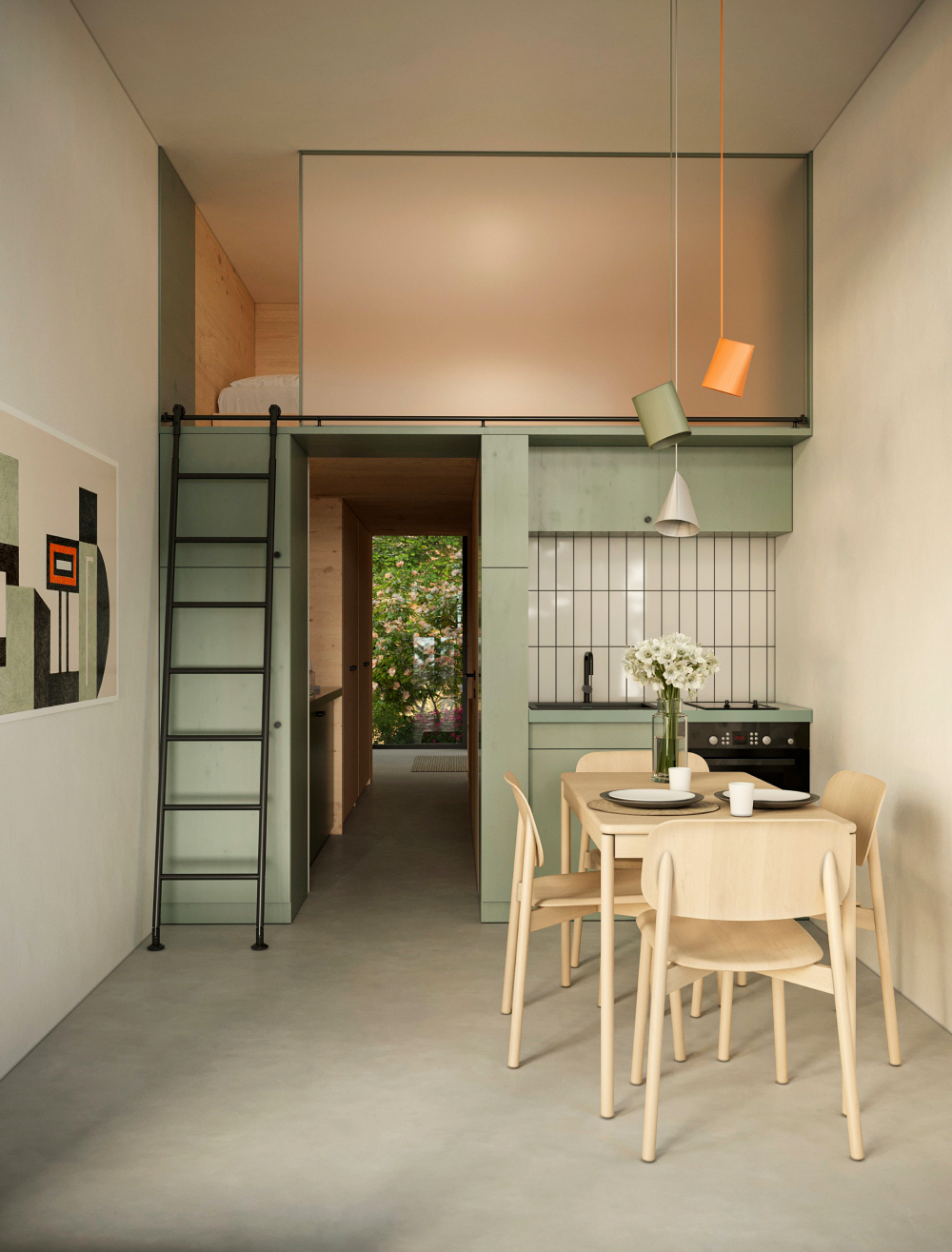
ReHome will not only help address society’s urgent housing needs, but it is carefully designed to stand the test of time. Units can accommodate full families in a compact space while providing comfortable, affordable, well-designed and versatile homes for groups including couples, young professionals, students, and the elderly, when the housing crisis has eased. Specific walls in all unit types are designated as non-load bearing and with no technical elements inside them. These walls can be removed, giving building owners flexibility to easily combine multiple units and create a variety of different sized apartments.
Cutwork’s co-founder and lead architect Antonin Yuji Maeno puts it: “The idea is not to build strictly emergency shelters that won’t be used in the long term, but to build good quality affordable housing that can accommodate the population in and provide shelter and security in all environments and situations.”
Like what you see? Get it first with a subscription to aspire design and home magazine.