
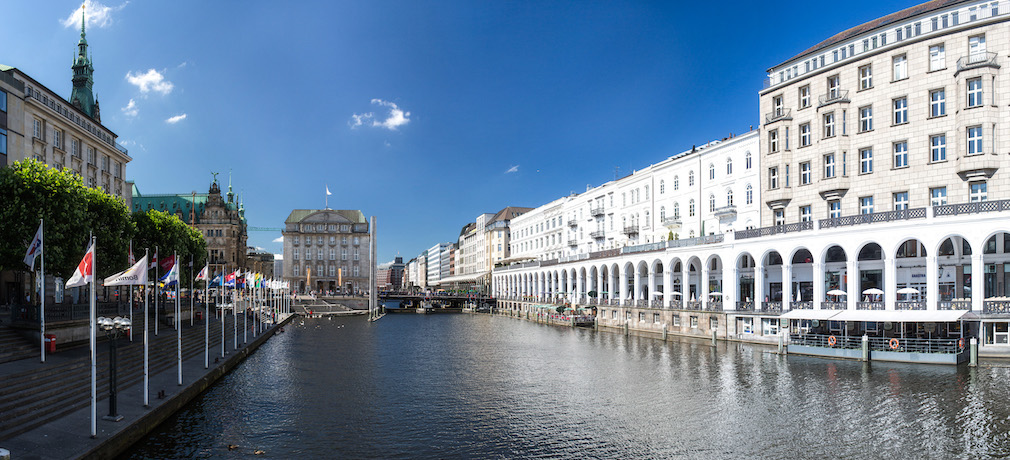
Graceful arcades and elegant neoclassical facades line the Alsterfleet canal in Hamburg.
While Hamburg may be Germany’s second-largest city, most Americans bypass it in favor of Berlin or Munich, especially as there are no non-stop flights from the U.S. But they’re missing out. With a mix of historic charm, forward-thinking architecture and a gritty, maritime edge, this port city quietly ranks among the coolest destinations in Europe.
Nearly half the city is dedicated green space, and sustainability is woven into everyday life. An extensive network of bike lanes makes cycling a breeze, but one of the fastest and most fun ways to explore is by e-scooter. Just scan a QR code from companies like Lime and go.
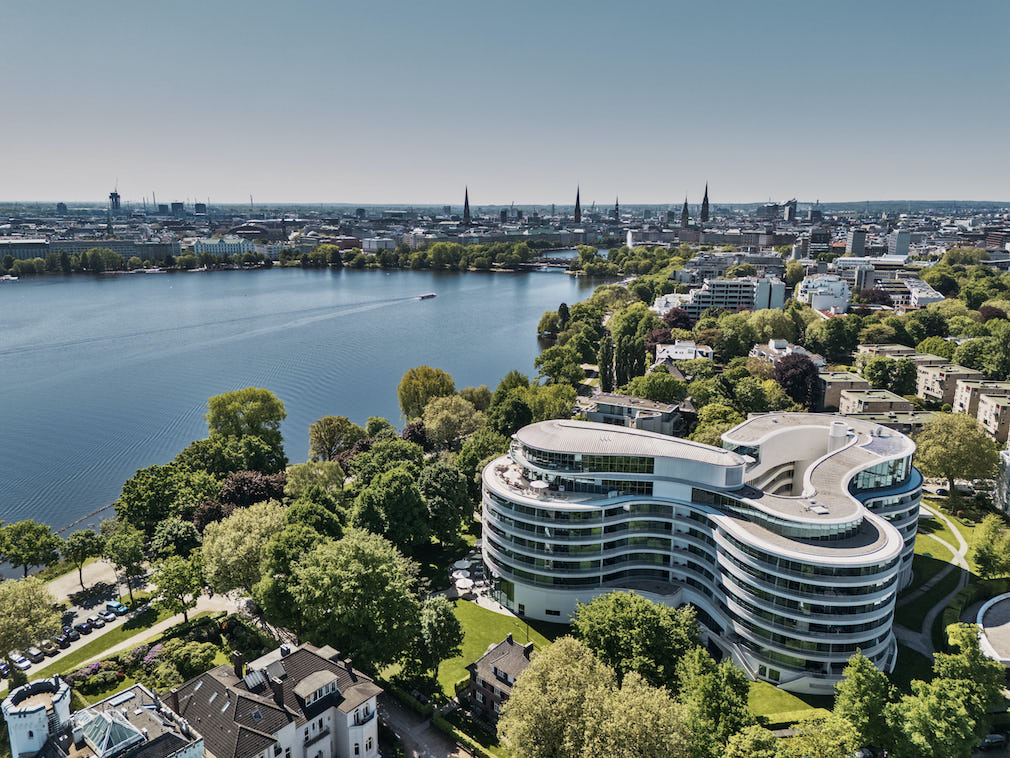
The circular silhouette of The Fontenay hotels echoes the curves of Alster Lake, in a city shaped by water.
Begin in the city center at City Hall (Rathaus), a grand neo-Renaissance building with vaulted ceilings and intricate stonework. Cross the courtyard to visit the ruins of St. Nikolai Church, which hosts rotating art exhibits in the courtyard. The current installation, Between War and Hope, explores themes of war’s brutality and resilience.
Around the corner on Trostbrücke 1 is the Laeiszhof, a late 1800s office building known for its elegant staircase and still-functioning paternoster elevator. One of only about 300 left in the world, this doorless, continuous-loop lift is a surreal time-warp thrill and just a little spooky as the elevator shifts horizontally in the dark when it reaches the top.
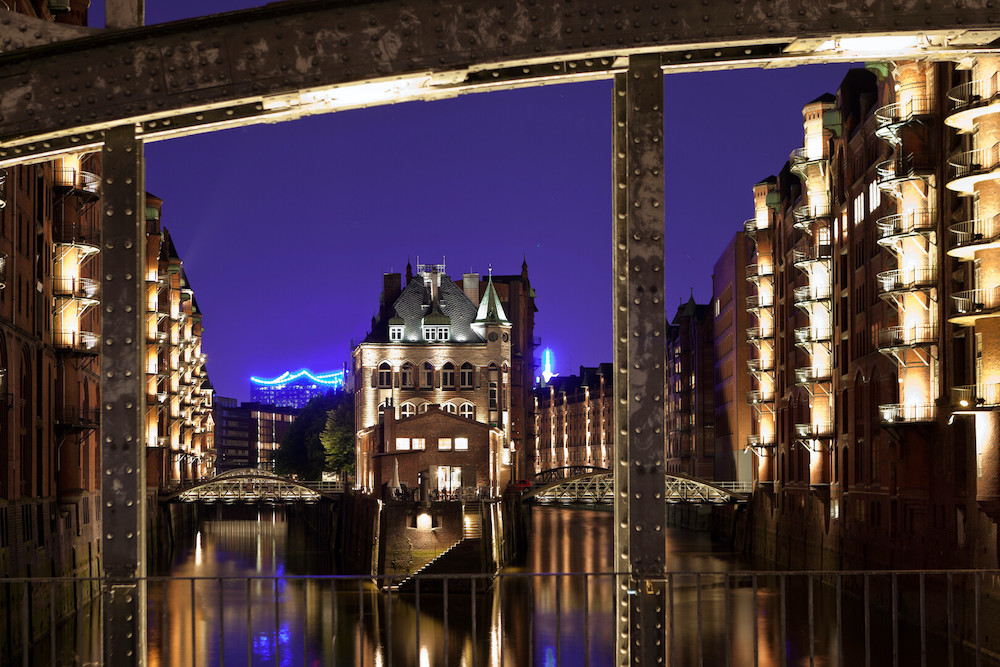
Framed by iron bridges, the Wasserschloss is the crown jewel of Hamburg’s historic warehouse district, the Speicherstadt. Photo by Jörg Modrow
From there, stroll to Speicherstadt, Hamburg’s UNESCO World Heritage-listed warehouse district. The neighborhood is filled with brick buildings and canals, and is also home to Miniatur Wunderland, the world’s largest model railway exhibition.
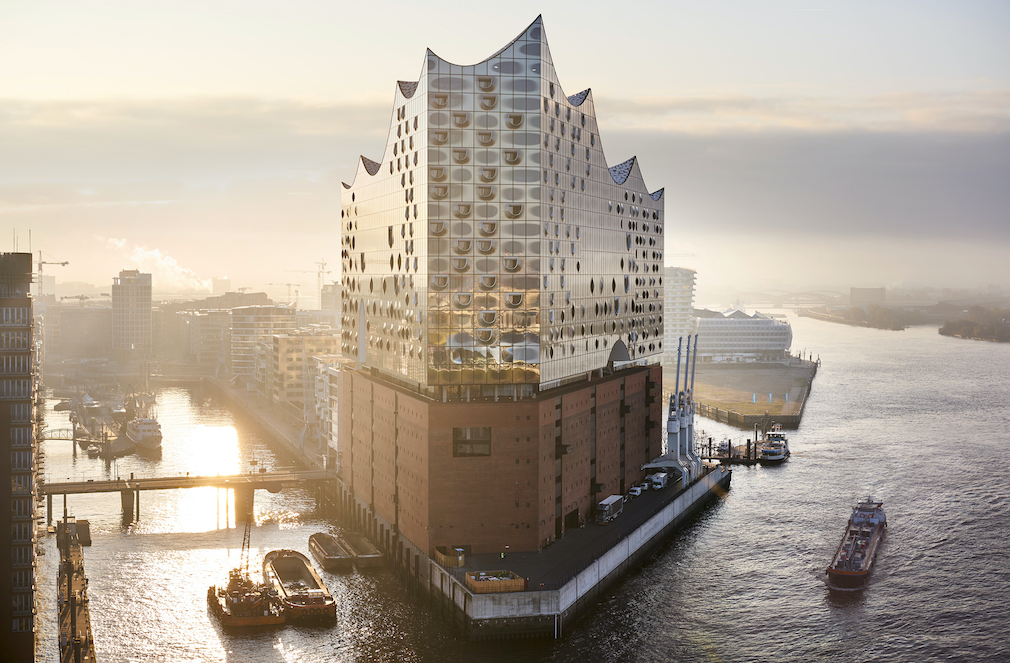
Rising from the Elbe River like a wave of glass, the Elbphilharmonie has redefined Hamburg’s skyline. Photo courtesy Cooper Copter GmbH
The adjacent HafenCity is Europe’s largest inner-city urban development project, which will cover 388 acres of former port land when completed. Its landmark building and new symbol of the city is the Elbphilharmonie, a shimmering concert hall designed by Herzog & de Meuron that resembles a ship’s prow rising from the water. If you can’t catch a performance, tickets to the viewing platform include a glimpse of its stunning interior. Nearby, Zaha Hadid Architects’ sculptural pedestrian bridge at Niederhafen merges form and function. It’s both a vital flood barrier and a striking connector between neighborhoods.
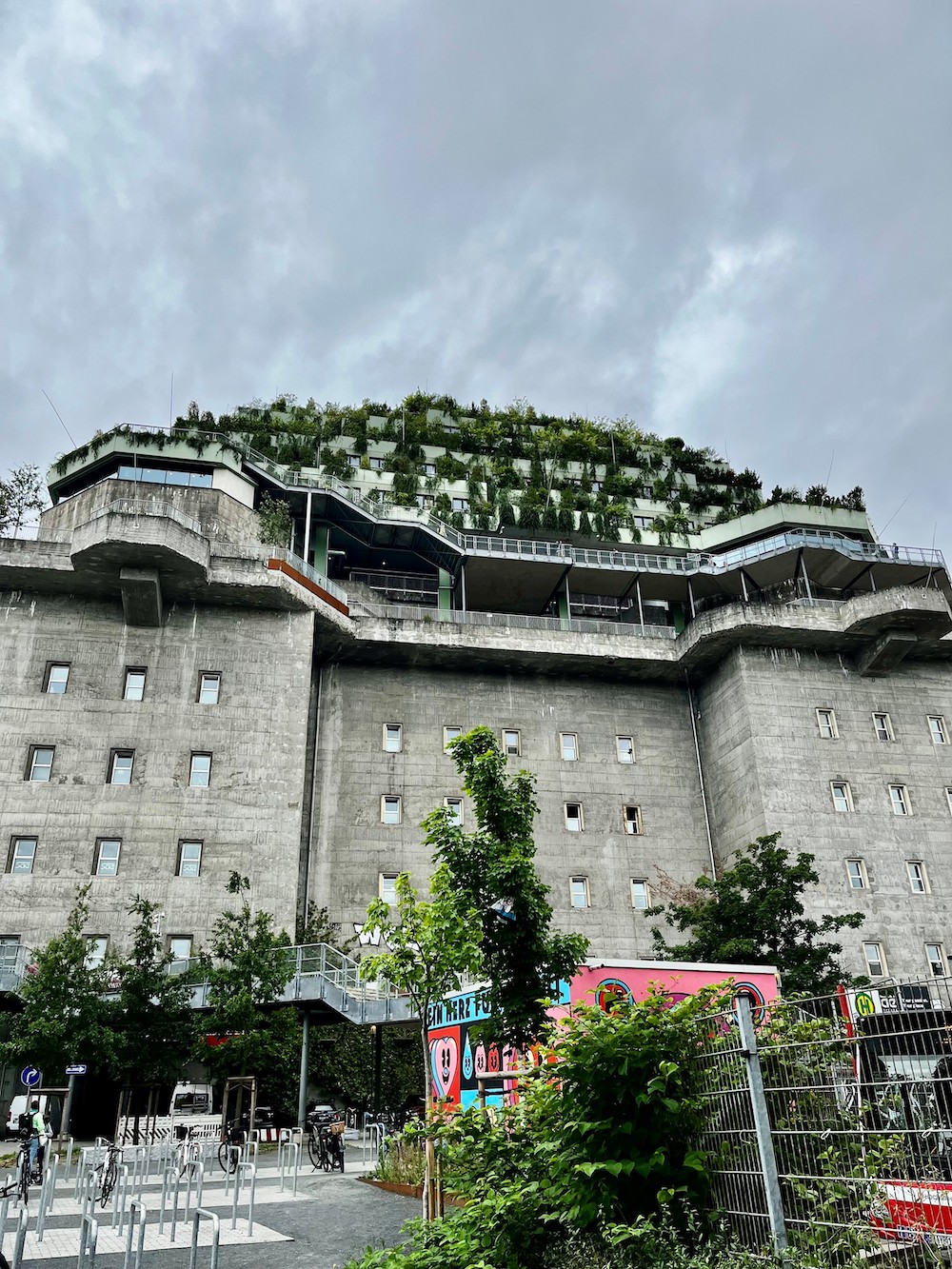
A Brutalist WWII-era bunker has been reborn as a vertical garden and hotel. Photo courtesy Christina Valhouli
A short cab ride away is Bunker St. Pauli, a former World War II bunker that has been converted into a hotel and multi-level rooftop garden, which is free and accessible via a steep hike up the stairs. Once you reach the top, cool off with a drink at the rooftop bar.
To experience Hamburg from the water, book a harbor cruise through Rainer Abicht. You’ll pass working container ships, architectural landmarks like the Fischmarkt, and the sandy banks of Elbstrand, where locals flock on sunny days.
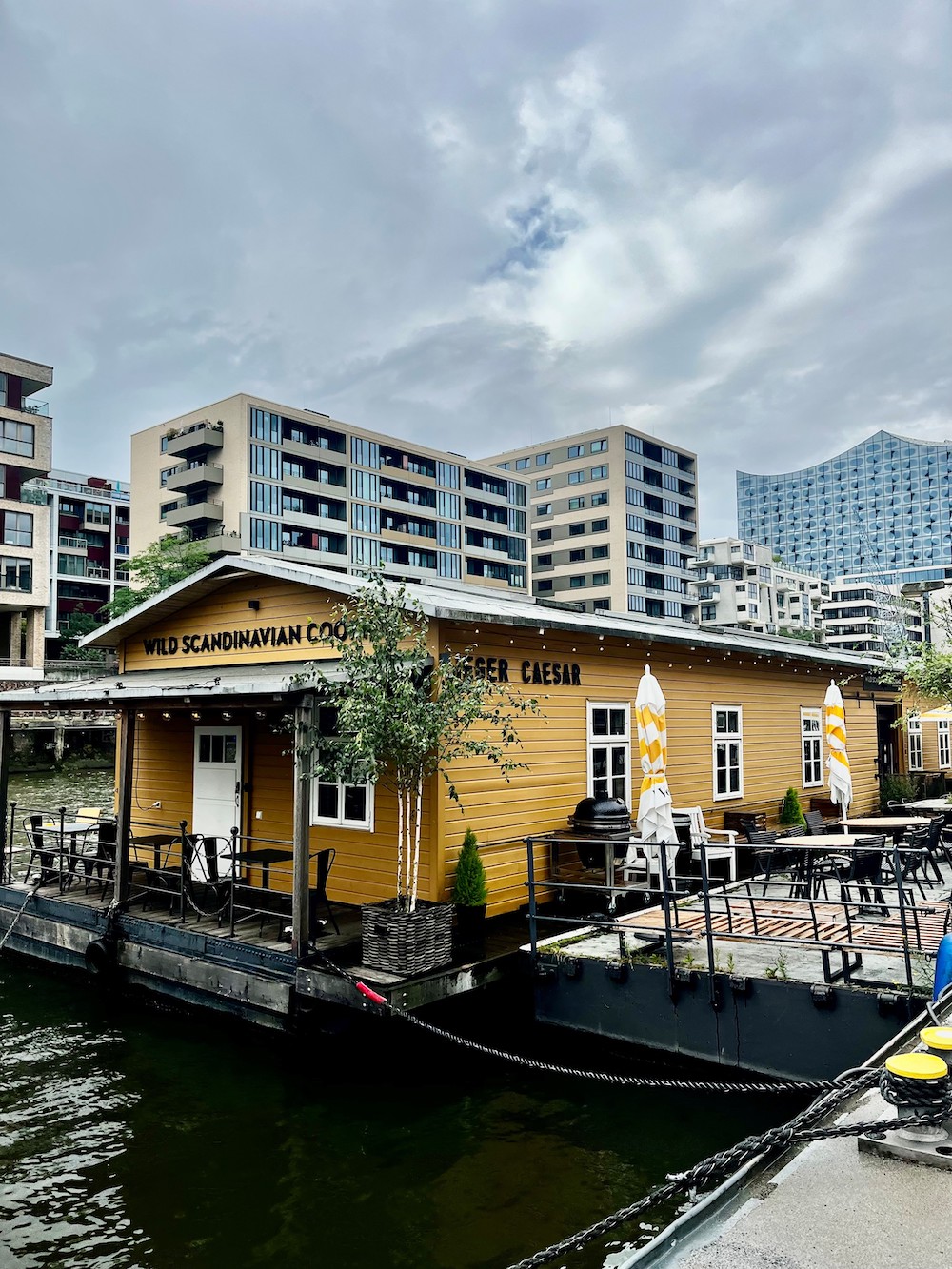
Floating in the HafenCity canals, this houseboat restaurant brings a splash of Nordic cool to Hamburg’s newest quarter. Photo courtesy Christina Valhouli
When hunger strikes, head to Askå – Wild Scandinavian Cooking, a rustic chic houseboat-turned-restaurant in HafenCity, where you can savor fish and chips with lingonberry mayonnaise. For upscale Italian in the elegant Winterhude neighborhood, try Gallo Nero, or enjoy seasonal international fare at Parkview, inside The Fontenay hotel. The tiny wine bar Krug doesn’t have a sign; look for the ivy-covered exterior. The menu typically features just three hearty, home-cooked meals.
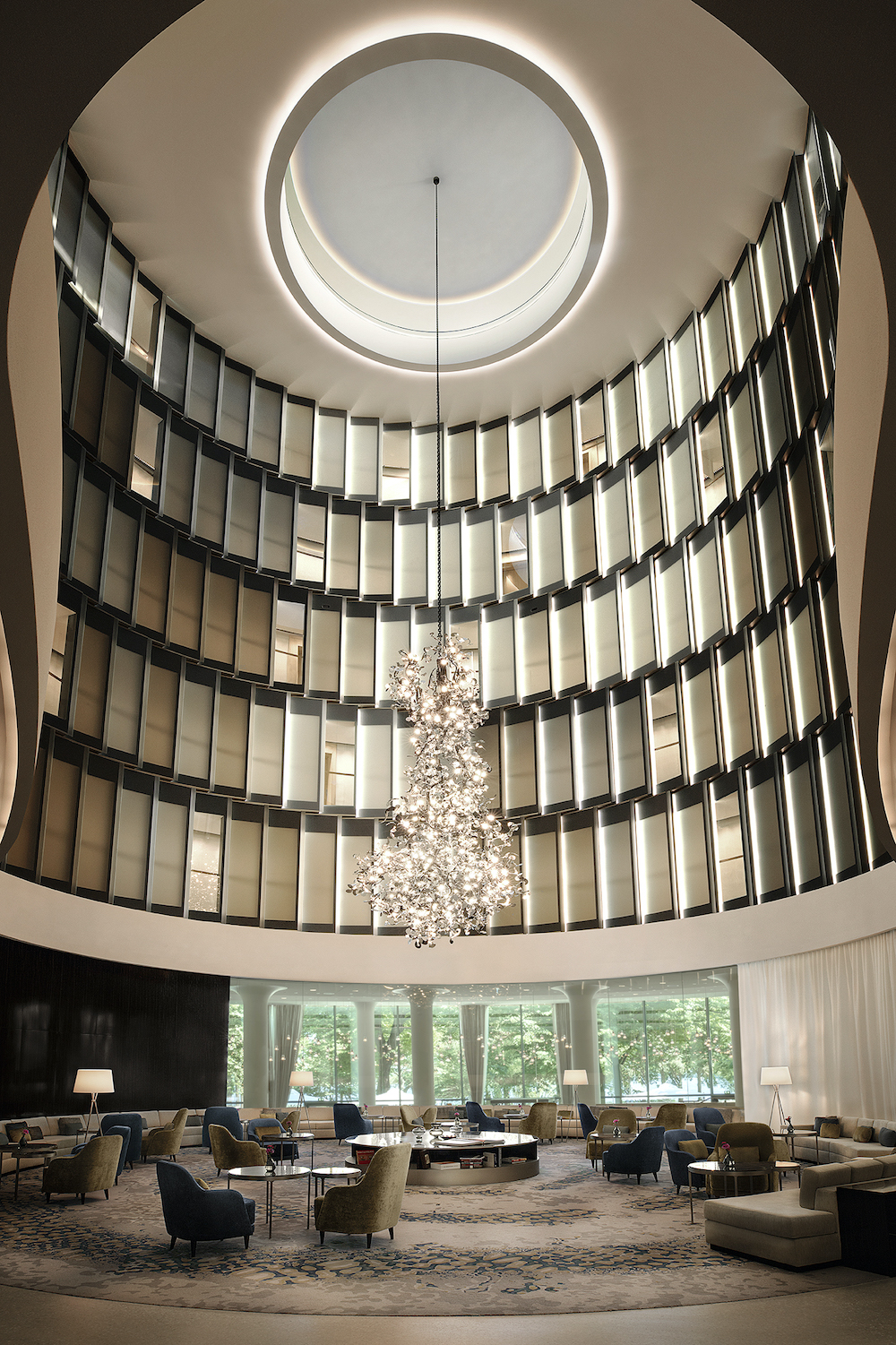
The Fontenay’s soaring circular atrium blends natural light, custom furnishings and a chandelier as the sculptural centerpiece.
Privately owned and a member of Leading Hotels of the World, The Fontenay (pictured above) reflects Hamburg’s modern side and overlooks the Alster lake in a quiet, upscale neighborhood. Its design was inspired by three intertwined trees, and was created as a series of overlapping circles; think of it as the circular soul mate of the Watergate Hotel. There are no straight lines in the building; nearly all furnishings were custom made, from the curved sofas to the rugs in the light-filled atrium. Guest rooms echo this theme, with soft palettes, floor-to-ceiling windows and balconies that draw the outside in.
Like what you see? Get it first with a subscription to aspire design and home magazine.