
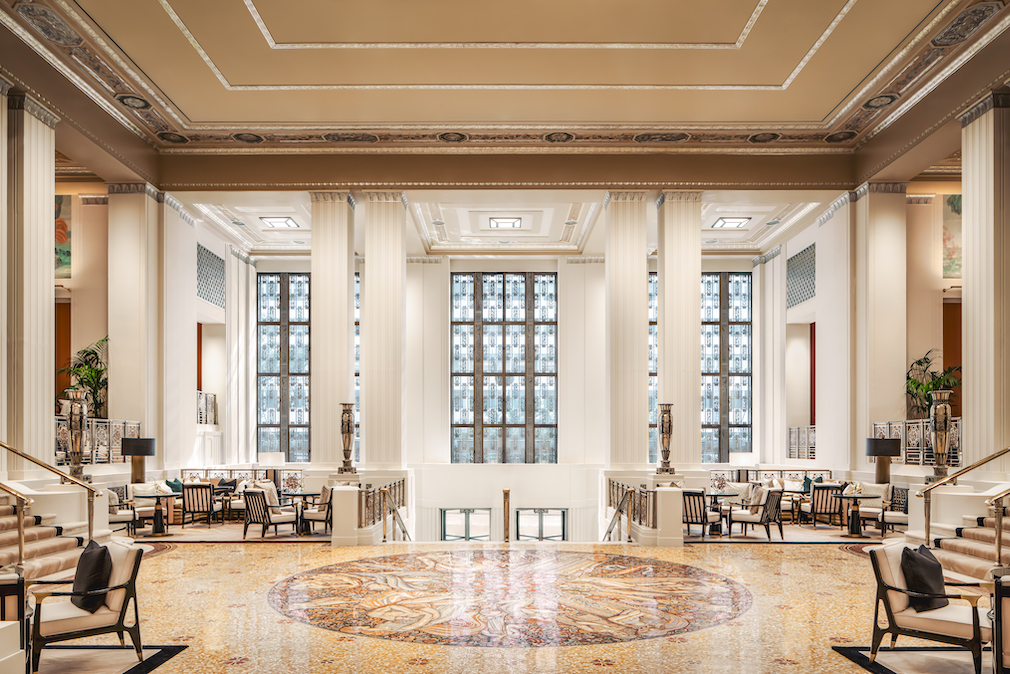
Hotelier Conrad Hilton once called the Waldorf Astoria New York the “greatest of them all.” When it opened in 1931, it was the largest and tallest hotel in the world, an Art Deco icon that defined the luxury hotel experience. In its heyday, the Waldorf was an epicenter of celebrity, society, and politics, attracting the likes of Cole Porter, Frank Sinatra, and Ella Fitzgerald. Its grand ballroom hosted everyone from President John F. Kennedy to Prince, as well as dozens of Rock & Roll Hall of Fame induction ceremonies.
But all grande dames eventually show their age. After closing in 2017 for a sweeping renovation, the Waldorf Astoria New York finally reopened in late 2025 following an eight-year, approximately $2 billion transformation, one of the most ambitious hotel restorations in New York City history. The project reduced the number of guest rooms from 1,400 to 375, while private residences were added to the top floor. Beyond the structural changes, the renovation revealed details from the hotel’s past. When carpet near the Park Avenue entrance was removed during construction, workers uncovered an intricate “Wheel of Life” mosaic by French artist Louis Rigal, composed of 148,000 hand-cut marble tiles.
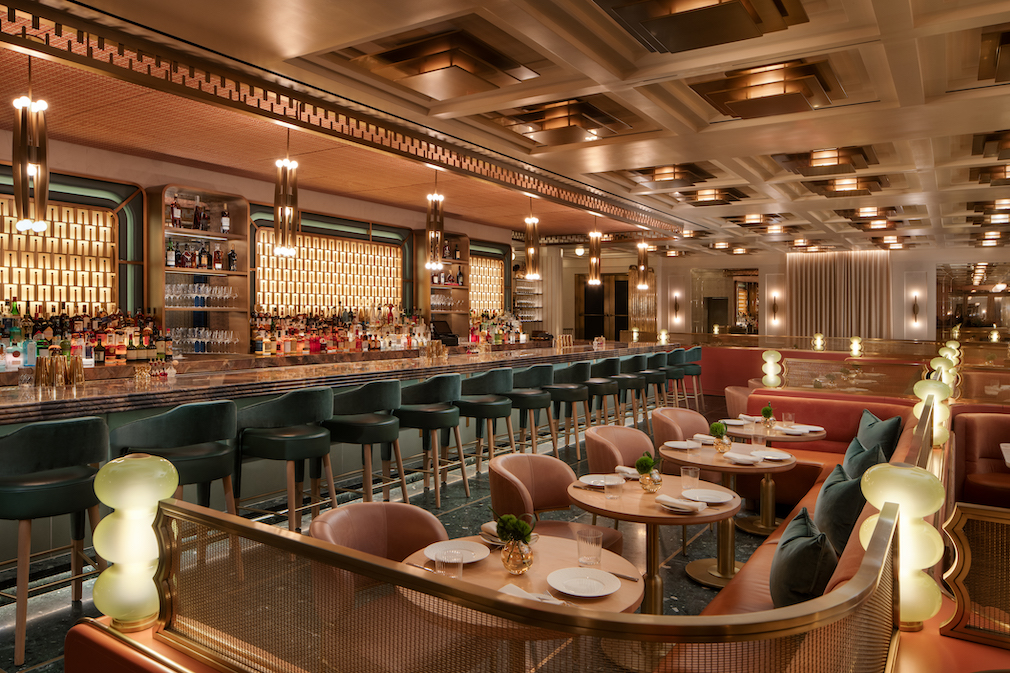
The transformation was led by the renowned architecture firm Skidmore, Owings & Merrill (SOM). As the hotel is landmarked, the firm collaborated closely with New York City’s Landmarks Preservation Commission. SOM’s approach combined preservation, restoration, and adaptive reuse, often requiring architectural forensic investigation.
One of the project’s biggest surprises, said SOM design principal Frank Mahan, was the “intentional choreography of the public spaces.” The hotel occupies an entire city block, and its original layout had been obscured by back-of-the-house operations and alterations. But the original plans reveal a carefully orchestrated sequence of expansion and compression of both light and space — guiding guests from the Park Avenue entrance into the narrowing corridor of Peacock Alley before opening again into larger public rooms.
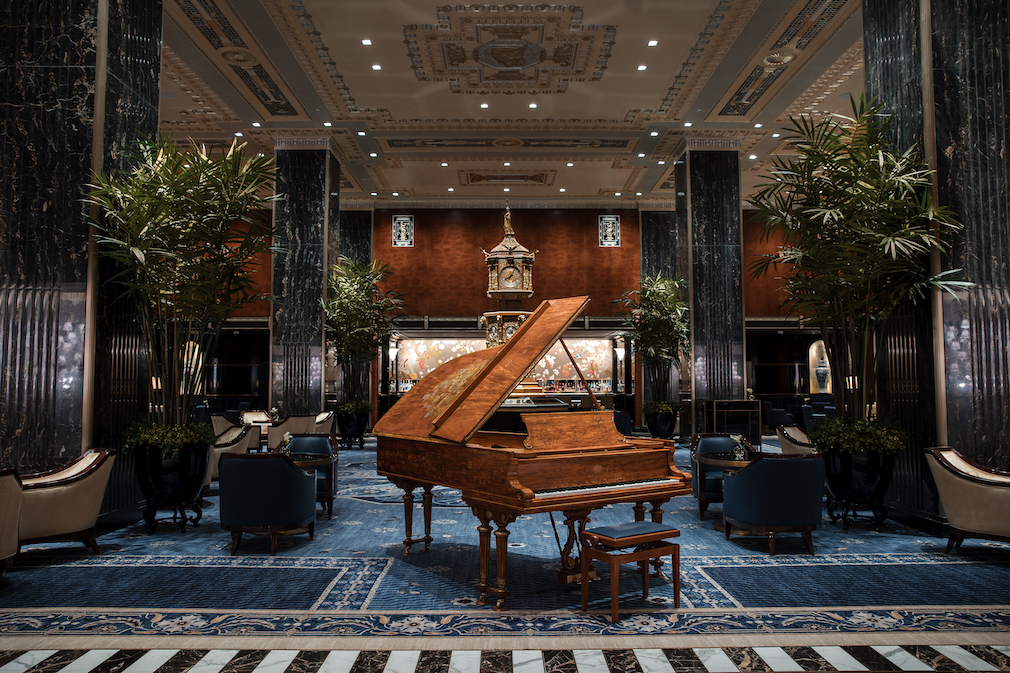
Peacock Alley remains one of the hotel’s most recognizable spaces. At its center stands the gilt Waldorf Astoria Clock, originally created for the 1893 Chicago World’s Fair—so iconic that “Meet me at the clock” was once a common phrase among New Yorkers. Nearby sits a Steinway piano that once belonged to Cole Porter.
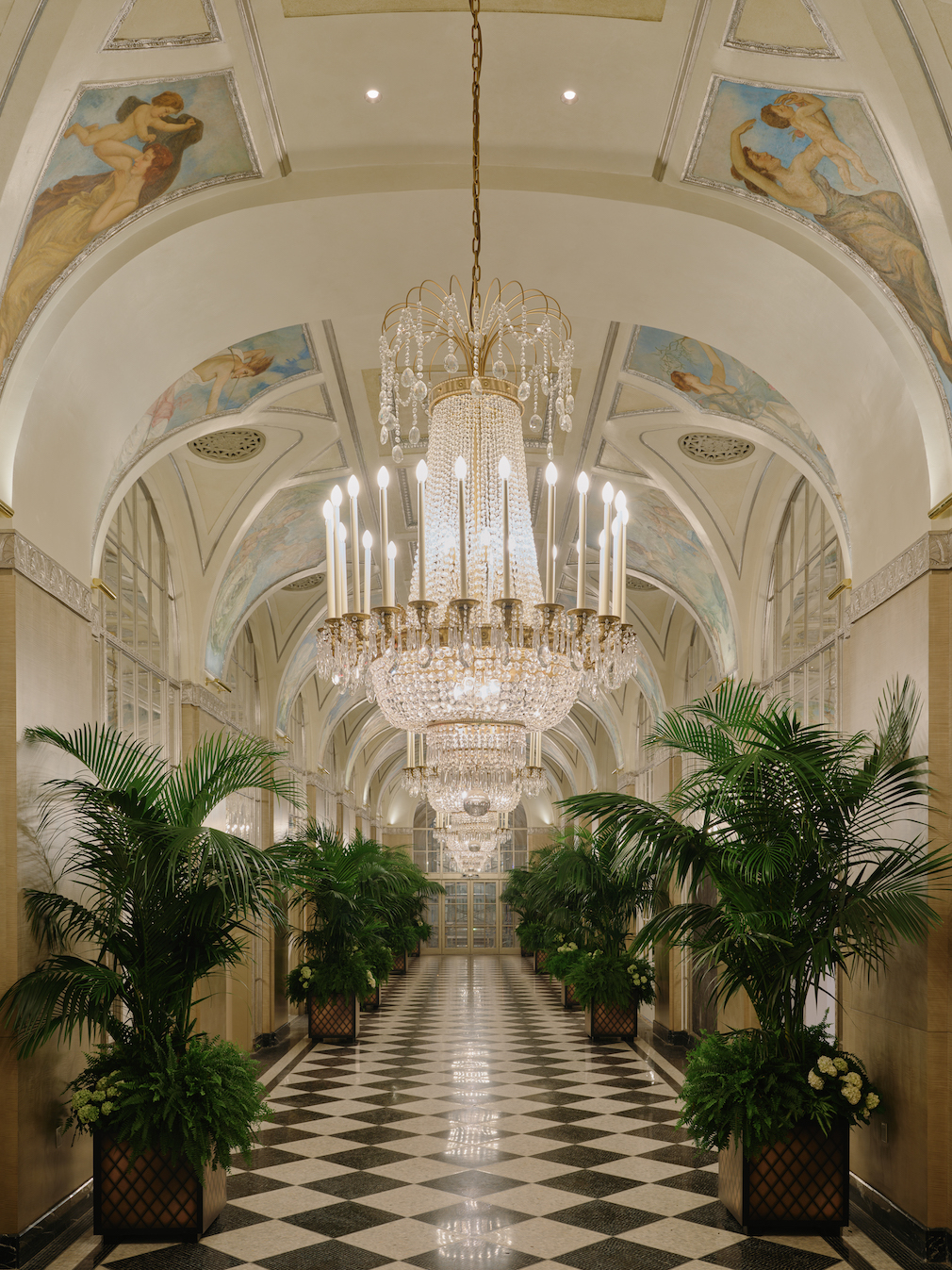
Elsewhere throughout the landmarked public spaces, restoration efforts uncovered layers of forgotten detail. The Silver Corridor, modeled after the Hall of Mirrors in Versailles, features 16 murals representing the months and seasons that had darkened over decades of cigar smoke before being meticulously restored by ArtCare Conservation. The hallway’s extra-wide elevators were originally designed to accommodate women wearing the wide gowns fashionable in the 1930s.
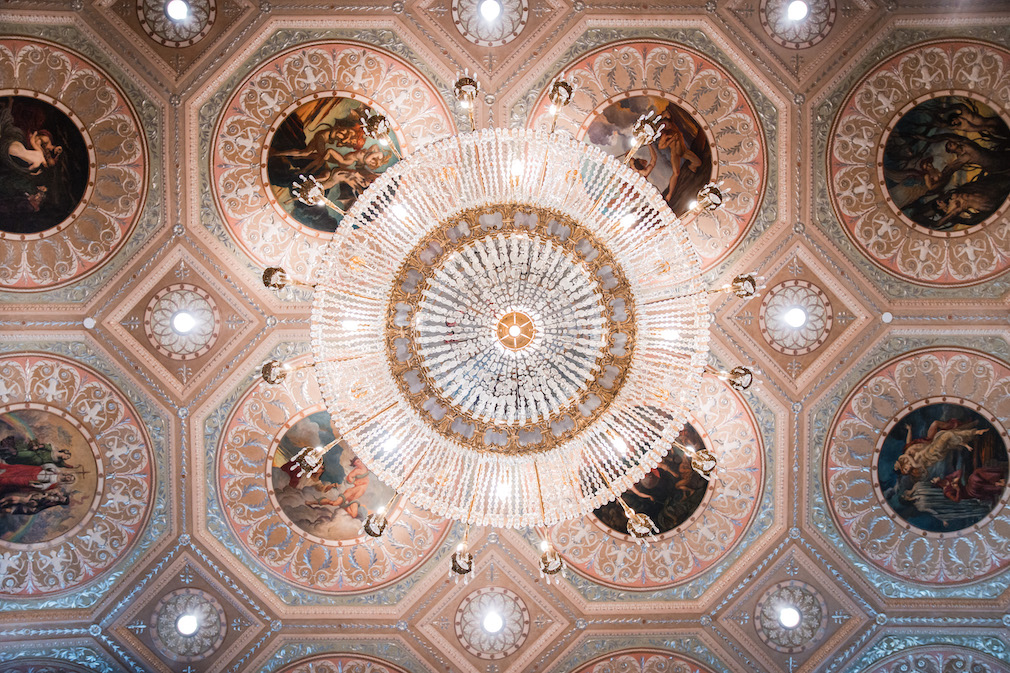
Other historic interiors were carefully revived, including the Basildon Room, whose fireplace and wall paneling were brought from the Basildon estate in England. The room’s intricate ceiling murals had long been hidden beneath velvet coverings before being restored as part of the project. The Grand Ballroom, a soaring three-story space that can accommodate 1,500 seated guests, has hosted some of the city’s most significant events for nearly a century. SOM discovered that part of the ceiling — originally envisioned as a series of illuminated coves — had never actually been built. Using an original drawing from the architects Schultze & Weaver, the team completed the long-unfinished design.
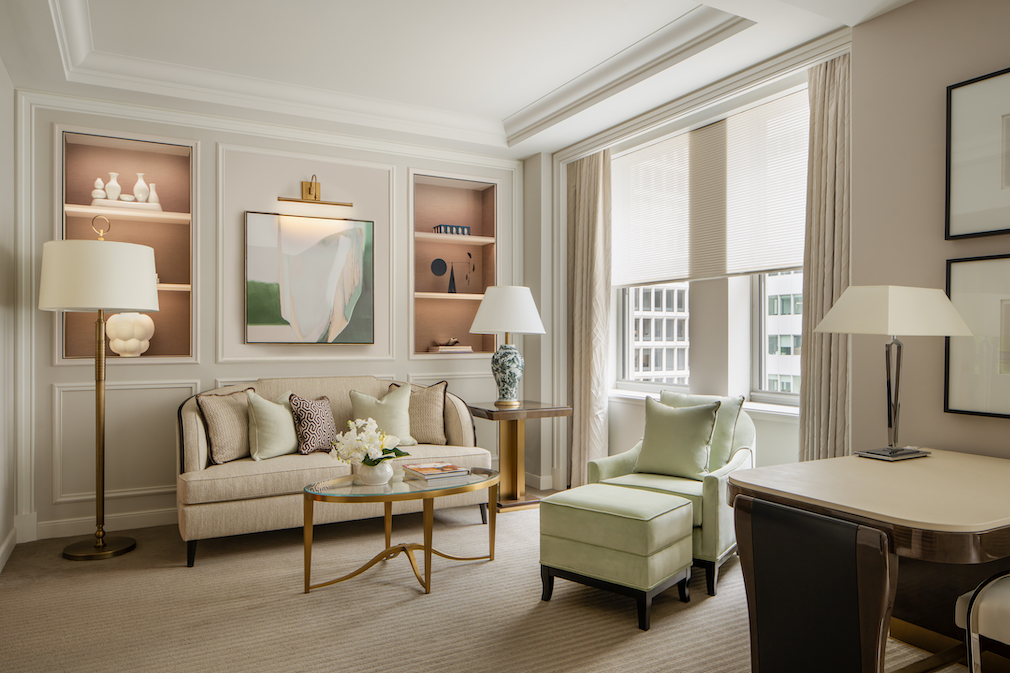
Upstairs, the guestrooms, reconfigured by SOM and designed by Pierre-Yves Rochon, are now nearly twice their original size. The interiors blend contemporary comfort with subtle Art Deco glamour, featuring marble bathrooms, tailored furnishings, and perhaps the greatest luxury in New York City: soundproof windows.
With its thoughtful reinvention, the Waldorf Astoria once again feels ready for its next chapter and invites visitors to gather in Peacock Alley and to meet, as generations once did, beneath the clock.
Like what you see? Get it first with a subscription to aspire design and home magazine.