
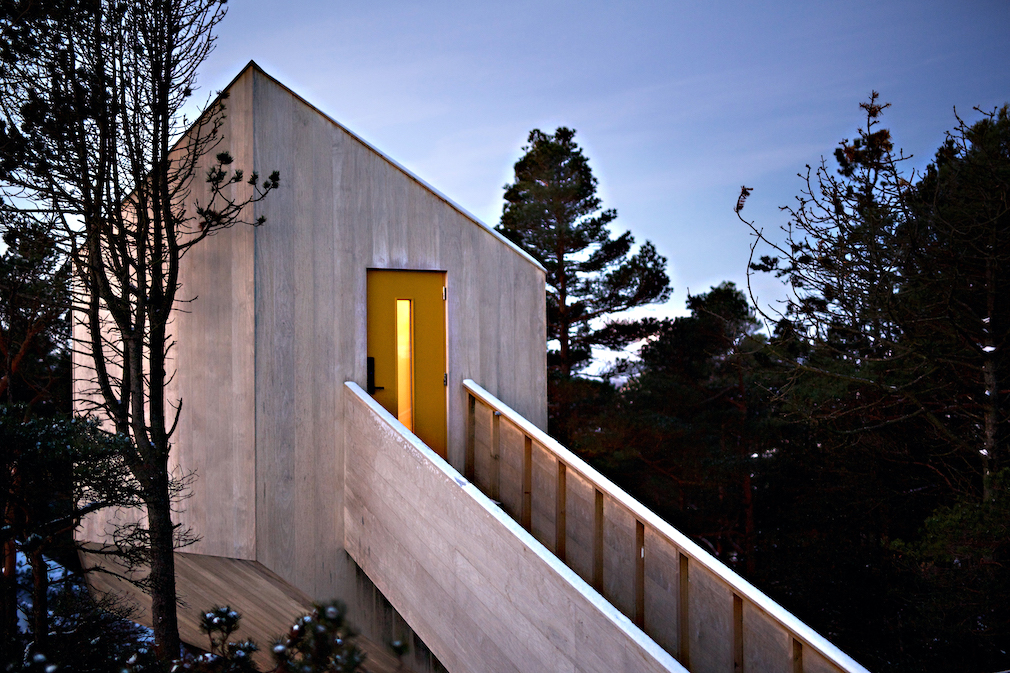
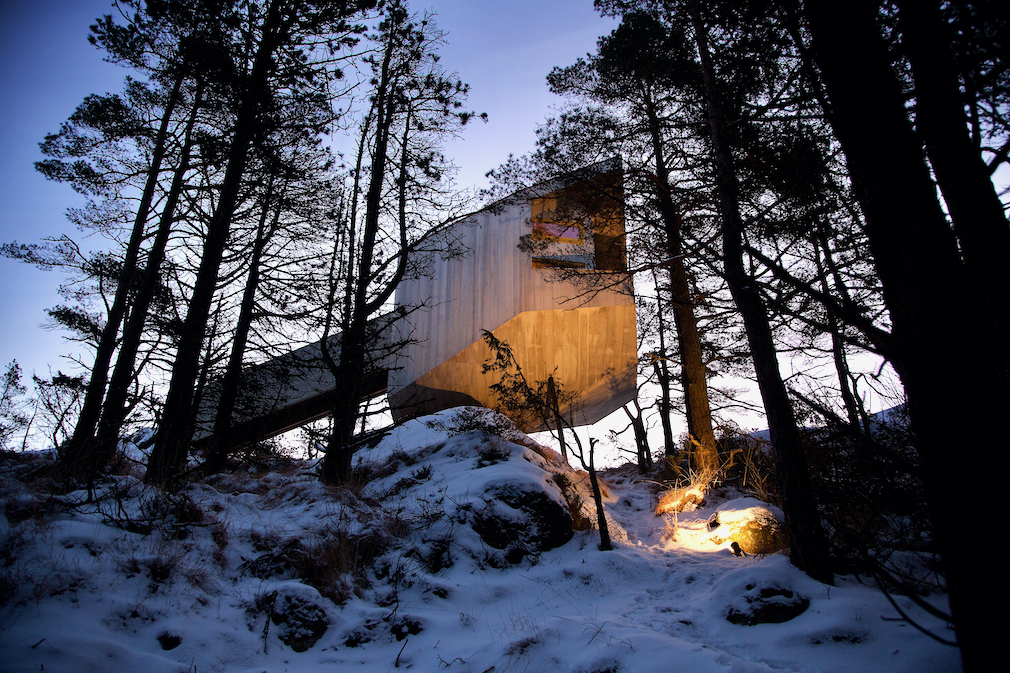
A tiny cabin hovers above the pine-clad slopes of a rocky outcrop, tucked out of sight of passing satellites. Poised on slender steel columns with its angular exterior brushing against branches, this futuristic structure appears intent on getting back to nature.
“We had been walking in this area for decades,” explains owner Henrik Stokkeland, “and always had an idea to do something here. It’s so peaceful.” That peace is all part of the allure, helped by the cabin being set within a 110-acre estate that has been in Henrik’s family for three generations. “My grandfather planted the whole property with trees,” he continues. “We only felled two during this project, one of which was already in Tree Heaven!”
A little slice of heaven in the wild was what Stokkeland and his social worker wife, Lene, sought to create, having witnessed the impact of the COVID-19 pandemic on their local community. “Our first thoughts about treetop cabins began during the lockdown in Spring 2020,” recalls Stokkeland. “Could we do something special for the people around us who needed good and positive experiences?”
Ideas swiftly turned to action, and the pines provided the core design idea, which evolved in partnership with architect Manuela Hardy. “The pinecone was part of the inspiration for me,” describes Hardy. “I also wanted to build on my childhood dreams of cabins in the woods. Henrik gave me artistic freedom but was also clear about what he wanted. We share the same fascination for playful design.”
A trained carpenter himself, Stokkeland took an active role in the construction, and the build soon resembled a community project.
“I was hands-on with basically everything.” He smiles. “And we had a lot of good people around us! When I injured my foot and snapped my Achilles, they were glad to help as volunteers.”
Christened Trekronå, the cabin’s name translates to “tree crown,” the botanical term for the combined elements of a tree’s canopy that radiate from its trunk. Hidden at the cabin’s heart is a hexagonal metal base frame perched above the ground on a delicate tripod of steel legs. A light touch upon the landscape, these legs allow the cabin to be removed almost without a trace.
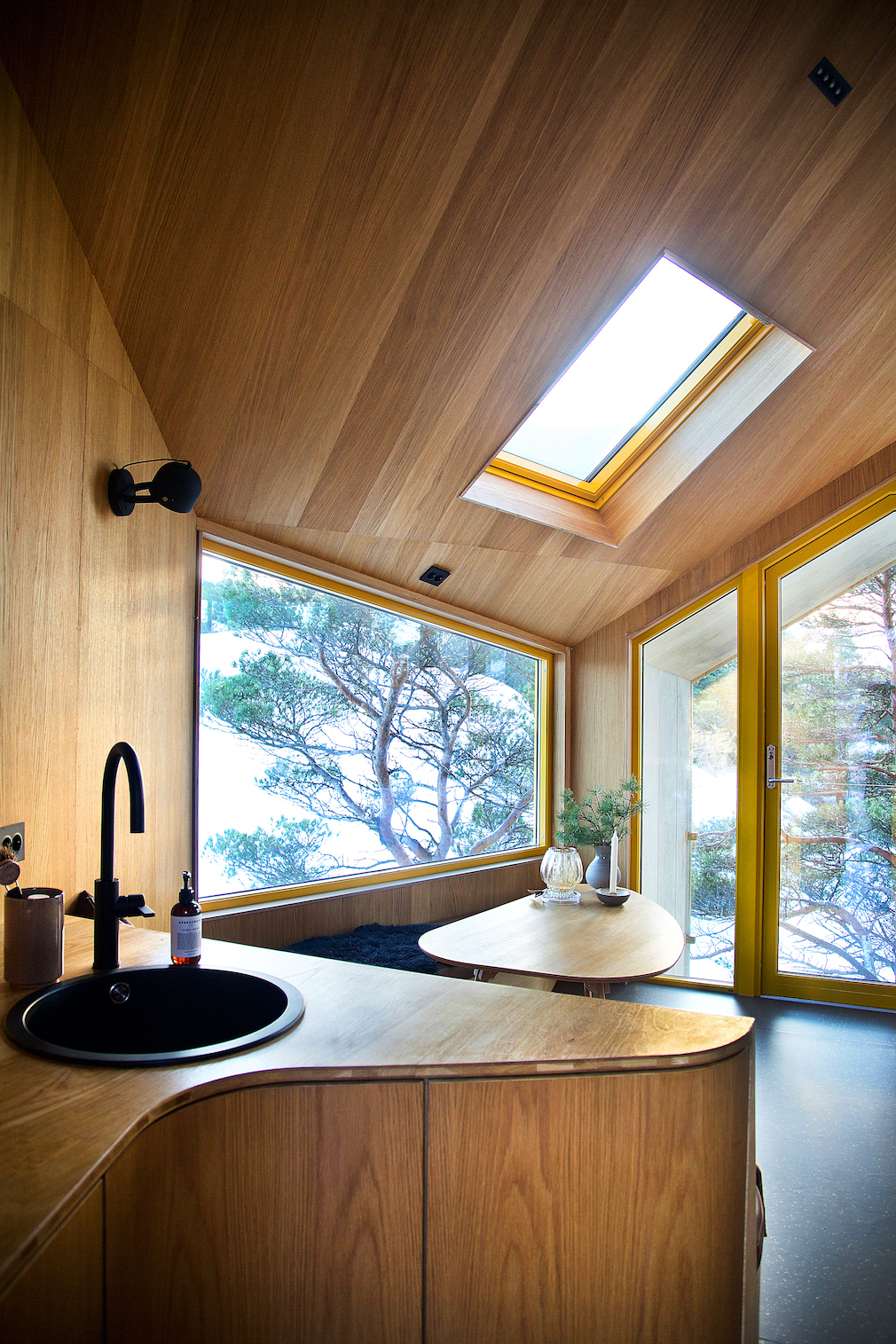
Above and below the steel base, the cabin’s timber framing is clad entirely in a specially treated, pine-based product, Accoya, that is highly stable and rot-resistant. The irregular shapes of the yellow-framed windows sit flush with the cladding, as though the cone’s woody scales have been peeled off to let in the light. Remarkably, Hardy managed to pack a kitchen, shower, eating area and sleeping bunks into a floor area of just 161 square feet.
A second cabin has since been constructed with this award-winning design, but these little gems are destined to be a limited edition of two. “We’re not planning anymore, as we want them to be exclusive,” explains Stokkeland.
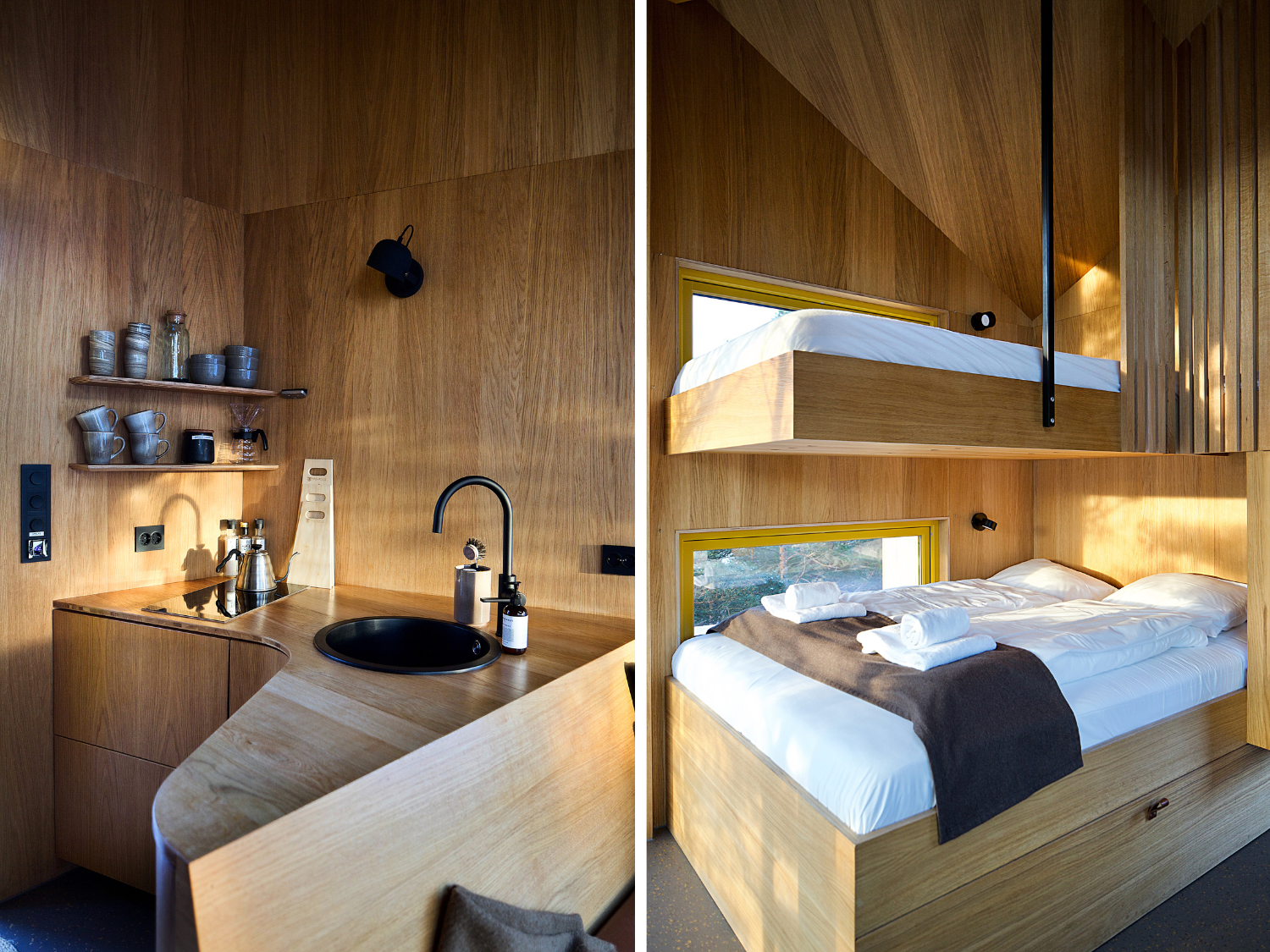
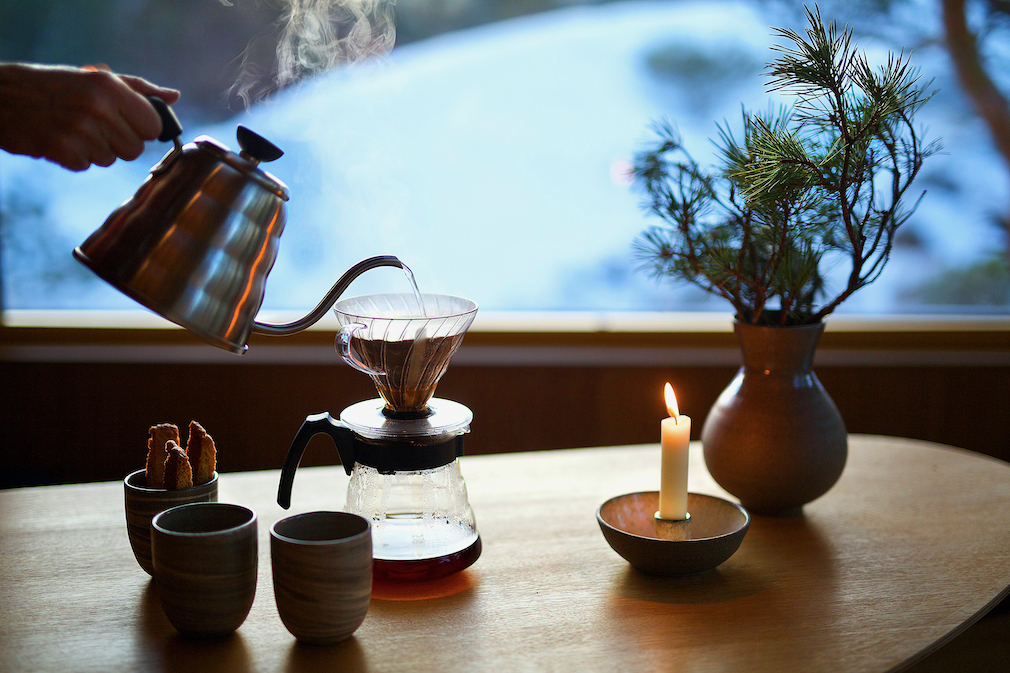
The cabin interior is flooded with natural light from all sides, including the ceiling, uninterrupted by the glass balustrade of the tiny balcony beyond the door. Guests wake each morning to the sensation of being directly suspended in the forest canopy. The compact kitchen comes complete with hob, basin and fridge; all built into a sweeping, stylish counter that hints at Hardy’s admiration for the work of Danish design legend, Arne Jacobsen. Steam serenely curls from a funnel’s filter paper, beside a newly lighted candle: the essence of a tranquil afternoon in this winter hideaway. Though perfect for three, the cabin can sleep up to a family of five (or just very good friends!), thanks to an additional pullout bed beneath the built-in bunks. The restricted palette of natural materials lends a monastic simplicity to the tiny living space, with plain, varnished oak and brown leather upholstery. The craftsmen of Sigurd Lende AG constructed all the bespoke beds and cabinetry.
So what will be the couple’s next project? “Micro Cabins, for sale,” he states with a grin. It’s hard to imagine anything cozier and more compact than these man-made “tree crowns,” but one should never underestimate Norwegian know-how.
Photography by Lise Bjelland.
For more like Trekronå, be sure to check out these boulder-like cabins by Hello Wood.
Like what you see? Get it first with a subscription to aspire design and home magazine.