
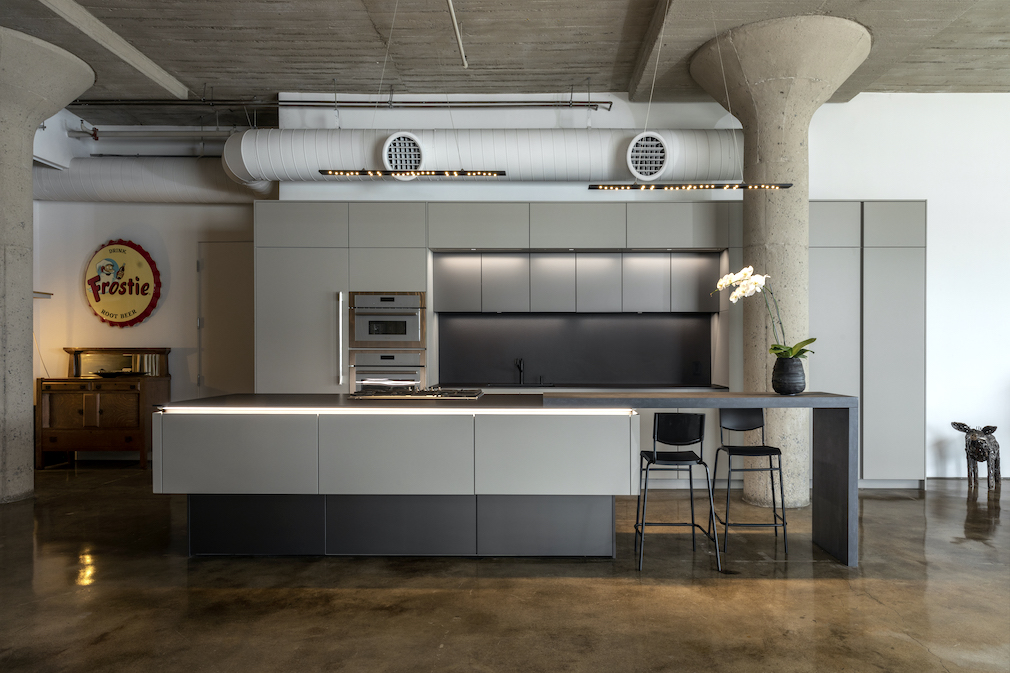
She didn’t want to see hardware on their kitchen cabinets. He did. “I prevailed. Now, I see his point as I wipe my fingerprints off every cabinet and drawer every day,” admits Jane Shay Wald, partner emeritus and chair of the trademark practice group of Irell & Manella LLP. She and her husband, Dr. Charles Kreuter, a forensic psychologist, live in a striking contemporary loft in Los Angeles’ Arts District. “The loft was very much to our taste when we first saw it,” shares Wald. “The only weak link was the kitchen.”
While the couple may not have agreed on cabinet pulls, they did concur on larger issues. The kitchen in one of their previous houses, the former residence of R&B artist Chris Brown, had been painted with graffiti on every surface, including the Boffi cabinetry and all the appliances. “We loved that look,” notes Kreuter, and thought of replicating it in the loft. But doing so would have meant rethinking the rest of the condominium. Wald, the daughter of famed Chicago photographer Art Shay, had pondered incorporating iconic civil rights photographs – including those of her father – into the cabinetry. “Charles was respectful,” she shares, “but pointed out some of the many problems and consequences we might face, and we moved on.”
Moving on meant collaborating with Claire Kim, senior designer in the U.S. headquarters of Leicht, the German kitchen specialists. “Our loft comprises only one room, albeit with some architectural separation of areas,” explains Kreuter. “The kitchen is therefore an integral part of the primary living area, the focal point of the loft.”
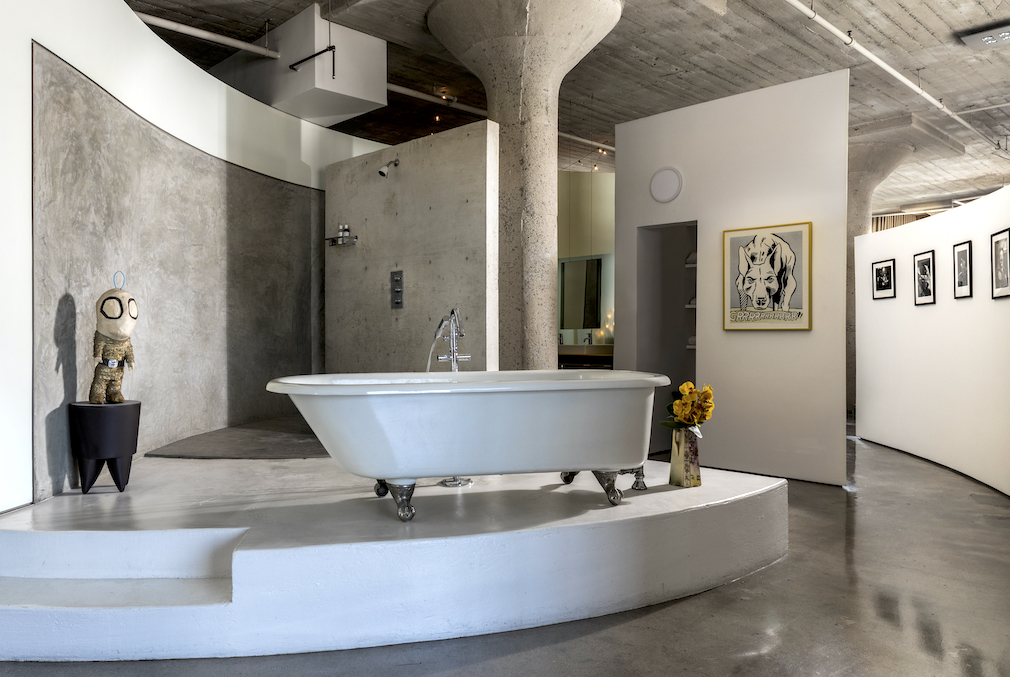
“There’s a lot going on in their home – artwork, color, rounded walls – so my goal was not to take away from that but to create something that melds in and doesn’t scream for attention,” states Kim. To determine the best lacquer hue for the streamlined cabinets, Kim brought multiple samples to the space to see how the light hit them and how they looked against the concrete floors. To lighten the mass of the island, she set it on a recessed plinth painted black. For its work surface, which is beveled so that it floats above the cabinets below, she opted for Inalco’s Silk Negro Abujardado. “A white counter would not have been a good choice,” she observes, “because it wouldn’t have communicated with what was around it.”
“Claire worked with Charles to ensure the perfect scale and visual balance, which included incorporating a giant cement pillar and industrial ductwork to appear as organic, integrated design elements,” describes Wald. “We interviewed other architects and many designers, and they were flummoxed by our pillar and ducts. Claire saw these elements as opportunities for strong design.”
From a functional angle, Wald is thrilled with Kim’s design. “I didn’t want to ‘commute’ to cabinets from my food-prep workstation. Claire laid out in considerable detail where utensil drawers would be most convenient, where my Le Creuset collection should go for quick and easy access, where the pantry should go for maximum convenience.”
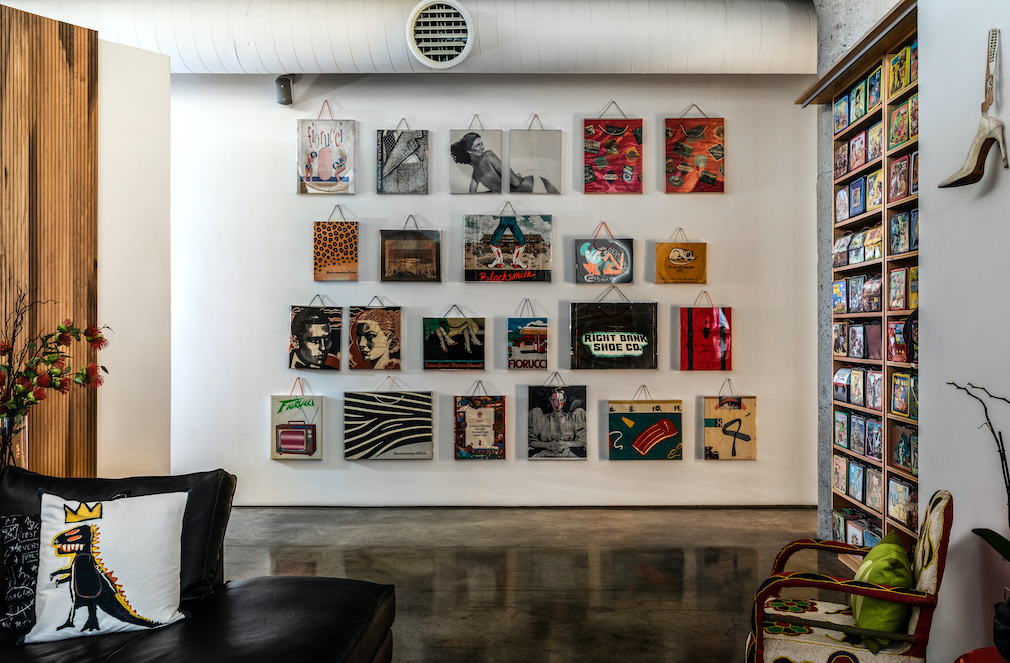
A far cry from the couple’s early, graffiti-inspired concept, this sleek, subtly composed kitchen holds its own while playing nicely with Wald’s extensive trove of metal lunchboxes and Kreuter’s artful array of glossy shopping bags, placed inside plexiglass frames and hung on the wall. Seamlessly integrated and ready to roll, it gives mise en place a whole new meaning.
Photography by Darlene Halaby.
Like what you see? Get it first with a subscription to aspire design and home magazine.